Measuring Blackpowder Substitutes by Volume, Not Weight
One of the most common head-scratchers for new and experienced muzzleloader hunters alike, especially when using modern propellants, is how to measure their powder charge correctly. The assumption that you can just weigh out blackpowder substitutes the same way you would smokeless powder for a cartridge rifle can lead to real problems, from inconsistent accuracy to dangerous pressure spikes. This guide will walk you through precisely why blackpowder substitutes must be measured by volume, not weight, and how to do it right for a safe and successful hunt here in Wyoming.
Understanding the Core Difference: Blackpowder vs. Substitutes
It’s easy to think of all gunpowders as essentially the same, just different strengths. But when it comes to traditional blackpowder and its modern substitutes, we’re talking about fundamentally different compounds with distinct properties. Understanding this distinction is the cornerstone of safe and accurate muzzleloading, especially when you're pursuing big game in challenging Wyoming conditions.
The Chemical Reality of Blackpowder
Traditional blackpowder is a mechanical mixture, usually composed of potassium nitrate (saltpeter), charcoal, and sulfur. These three ingredients are meticulously ground together and then granulated into specific sizes, often designated by an F-rating (e.g., Fg, FFg, FFFg). The beauty of true blackpowder is its relative consistency in density. If you weigh out 50 grains of genuine blackpowder, it will occupy a very similar volume each time, and crucially, produce a very consistent amount of energy when ignited. This consistency is why historical loading data often refers to both weight and volume interchangeably for true blackpowder, or provides a volumetric measure that corresponds to a specific weight. It’s been the standard for centuries, and for those still using traditional powder, a volumetric measure often reliably translates to a known weight.
Why Substitutes Aren't True Blackpowder
Modern blackpowder substitutes, like Hodgdon's Triple Seven or Alliant's Blackhorn 209, are entirely different chemical beasts. They're designed to burn cleaner, be less corrosive, and often offer higher velocities than traditional blackpowder, making them incredibly popular with today's muzzleloader enthusiasts. However, these benefits come with a caveat: their chemical composition is proprietary and often varies significantly from true blackpowder, and even from one substitute to another.
For instance, Triple Seven uses a sugar-based binder, while Blackhorn 209 is a unique blend designed specifically for modern inline muzzleloaders. Because their chemical structures are different, their densities are also different. This means that 100 grains by weight of Triple Seven will occupy a different volume than 100 grains by weight of traditional blackpowder, and it will also likely be different from 100 grains by weight of Blackhorn 209. If you were to weigh out a specific charge, you’d be introducing a variable of inconsistent volume, and thus inconsistent pressure and velocity, which is exactly what we want to avoid.
The Crucial "Why": Volume Over Weight for Substitutes
This difference in chemical composition and density is why the manufacturers of blackpowder substitutes almost universally instruct users to measure their product by volume, not by weight. It's not a suggestion; it's a critical safety and performance directive. Ignoring it can have serious consequences for your muzzleloader and your hunting success.
Density and Energy Output Explained
Imagine you have a cup, and you fill it with feathers. Now, imagine filling the same cup with lead shot. Both are "one cup," but the lead shot weighs significantly more because it's much denser. When you use blackpowder substitutes, the goal is to get a consistent energy output from each shot. In these powders, that consistent energy output is directly tied to a consistent volume of powder, not a consistent weight.
The manufacturers formulate their substitutes so that a specific volume, say 100 grains measured volumetrically, will produce an equivalent performance to a historical 100-grain by weight blackpowder charge. If you weigh out 100 grains of a substitute like Triple Seven, you might actually be getting a much smaller physical volume than a 100-grain volumetric measure. This smaller volume can lead to lower velocities and insufficient energy to ethically harvest an animal, especially something as tough as a Wyoming elk. Conversely, an inconsistent measure could inadvertently create a higher-than-intended charge if the actual physical volume is greater than expected for a given weight, leading to dangerously high pressures. It's a fine line, and volume measurement is the key to staying on the right side of it.
Safety Implications of Incorrect Measurement
The biggest reason for adhering to volumetric measurement isn't just about accuracy; it's about safety. Muzzleloaders, by their very nature, operate at lower pressures than modern cartridge rifles, but they are not immune to dangerous overpressure situations. An incorrect, heavier-than-intended powder charge by volume can lead to dangerously high pressures that could damage your firearm or, worse, injure you. While Wyoming law specifies Muzzleloader Caliber and Powder Charge Minimums, it's up to the hunter to ensure they are meeting those minimums safely and consistently within their firearm's limits.
Modern muzzleloaders are designed to handle specific pressure ranges, and using an incorrect measurement method puts you outside of those parameters. For example, if you mistakenly weigh out 100 grains of a substitute that is less dense than traditional blackpowder, you're actually loading a larger volume of powder than intended, leading to excessive pressure. Always remember that manufacturers’ loading data is developed using volumetric measures for substitutes for a reason. Ignoring this fundamental principle is taking an unnecessary risk, one that could ruin your hunt and endanger your well-being. Always check your specific powder's instructions, as variations exist even among substitutes.
Practical Application: How to Measure by Volume Accurately
So, if you can’t trust your scale for substitutes, what do you use? The answer is simple: a volumetric powder measure specifically designed for blackpowder and its substitutes. These tools are readily available and essential for any muzzleloader hunter.
Tools of the Trade for Muzzleloaders
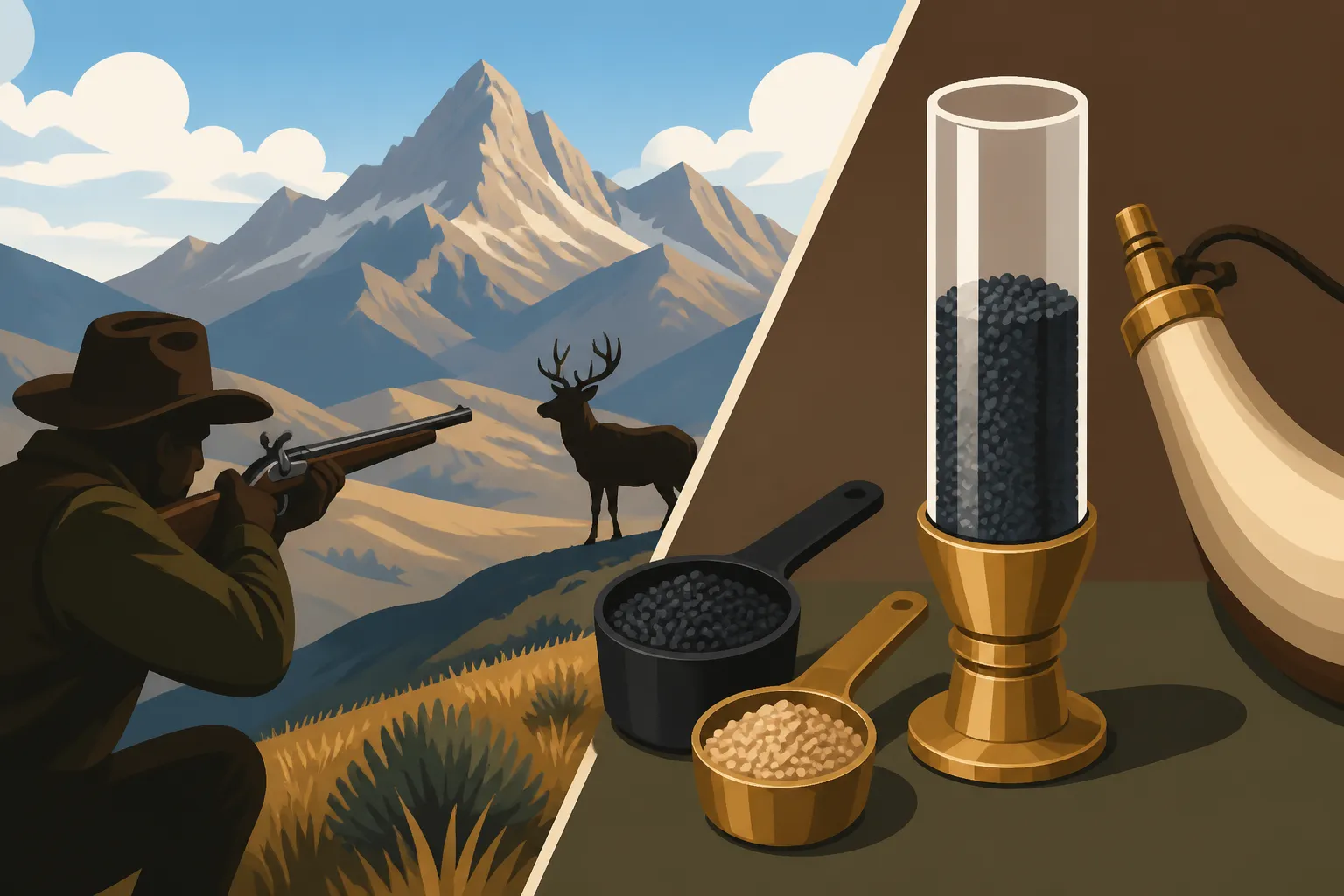
To measure your blackpowder substitutes by volume, you'll need a dedicated blackpowder volumetric measure. These are typically small, adjustable scoops or tubes that have markings in "grains by volume." It's important to differentiate these from scoops used for smokeless powder, which are often calibrated differently.
You'll also need to ensure you're using the correct granulation for your specific muzzleloader and projectile. Most manufacturers recommend FFG (2F) for rifles .50 caliber and larger, and FFFG (3F) for smaller calibers, but always defer to your muzzleloader's manual and the powder manufacturer's recommendations. Platforms like GoHunt can be excellent resources for researching different powder types and their applications, helping you compare notes with other muzzleloader hunters on what performs well in various conditions.
Step-by-Step Measurement for Consistency
Here's a straightforward process for consistently measuring your blackpowder substitute by volume:
- Select Your Measure: Choose an adjustable volumetric powder measure. Ensure it's clean and free of any residual powder from previous use.
- Set the Desired Charge: Adjust the measure to the "grains by volume" setting recommended by your powder manufacturer for your specific projectile and desired velocity. For example, if you're aiming for The Powder Charge a Legal Muzzleloader Needs in Wyoming, you'll set your measure accordingly.
- Fill the Measure: Carefully pour the blackpowder substitute into the measure. Don't tap or compact the powder excessively, as this can lead to an artificially high charge. The goal is a consistent fill, mimicking the manufacturer's testing methods.
- Level the Charge: Use a straight edge, like a plastic card or the flat edge of a knife, to gently level off the top of the powder in the measure. You want the powder to be flush with the top of the measure, ensuring a precise volume.
- Pour into the Bore: Carefully pour the measured powder charge down the muzzleloader's bore. For modern inline muzzleloaders, you might first pour it into a speed loader or a specialized funnel to ensure all powder reaches the breech.
- Maintain Consistency: The key to accuracy and safety is consistency. Practice your measurement technique to ensure you're doing it the same way every time. Even subtle differences in how you fill or level the measure can impact your shot. Remember, when you're preparing for an ethical shot on an animal, consistency is paramount.
Field Considerations and Best Practices
In the field, especially during a high-stakes hunt, maintaining your measurement discipline is crucial. Carrying pre-measured charges in speed loaders is a popular and highly recommended practice. This eliminates the need to fiddle with powder bottles and measures in cold, windy, or stressful conditions. Just ensure your speed loaders are sealed and waterproof.
Consider your environmental conditions. Extreme cold or humidity can subtly affect powder performance, so consistent measurement helps mitigate some of these variables. If you're going to be out in remote areas like the Hunting the Wind River Basin Country, practicing your loading sequence, including powder measurement, until it's second nature will pay dividends when that moment of truth arrives. Moreover, always keep your powder clean and dry. Moisture is the enemy of blackpowder substitutes.
Maximizing Accuracy and Ethics with Proper Loads
Getting your powder charge right is more than just following the rules; it’s about respect for the animal you're hunting and confidence in your own abilities. A precisely measured, consistent charge translates directly to better accuracy and ethical shot placement, especially important when hunting big game with a muzzleloader.
Impact on Ballistics and Shot Placement
The powder charge is the engine behind your bullet. An inconsistent charge leads to inconsistent velocities. If one shot sends your projectile out at 1,800 feet per second and the next at 1,700 feet per second, your point of impact will shift, especially at longer distances. This is a critical factor when considering The Effective Range of a Muzzleloader on Elk or other large animals. You can't compensate for a moving target if your bullet's trajectory is unpredictable.
Precision in powder measurement allows you to truly dial in your muzzleloader. Once you find a charge that groups well and provides sufficient energy, you can then focus on other aspects of accuracy, like bullet choice, primer selection, and proper sighting. Just like with a rifle, understanding your Rifle Zero Distance for Open Country Shooting with your muzzleloader is crucial, and that zero depends entirely on a consistent powder charge. Tools like ballistic calculators, when fed consistent velocity data from your properly measured loads, can help predict trajectory accurately, which is invaluable when hunting in wide-open Wyoming landscapes.
Ethical Hunting and Legal Compliance
For hunters in Wyoming, adhering to proper loading practices is both an ethical and legal responsibility. Wyoming law is clear on requirements like Minimum Muzzleloader Caliber for Wyoming Big Game, for instance, demanding a .40 caliber or larger, and it also sets specific powder charge minimums. For ethical hunting, you need to ensure your muzzleloader load delivers enough energy to ensure a quick, clean kill. An underpowered load from an incorrectly measured substitute could lead to a wounded animal, a situation no hunter wants.
Furthermore, being proficient with your muzzleloader, from loading to shooting, contributes to overall hunting safety. Understanding how your chosen powder, like those used to meet the Wyoming Muzzleloaders Need .40 Caliber and 50 Grains requirement, behaves and how to load it correctly minimizes risks in the field. Every aspect of your gear, from your main firearm to accessories like shooting sticks for stability in the open sagebrush, plays a role in an ethical hunt. While the conversation around legal accessories often involves things like Whether Suppressors Are Legal for Big Game, the fundamental legality and safe operation of your primary weapon system starts with correct loading procedures.
Always consult the most current Wyoming Game and Fish Department regulations for specific requirements. Staying informed and practicing safe, consistent loading techniques ensures you're ready for any opportunity that arises, and that you're upholding the highest standards of ethical hunting.
| Measurement Method | Powder Type | When to Use | Key Consideration |
|---|---|---|---|
| By Volume | Substitutes | Always | Density varies, volume ensures consistent energy. |
| By Weight | True Blackpowder | For consistency (less common now), often corresponds to volume. | Can be used, but volumetric scoops are more common for ease of use. |
| By Volume | True Blackpowder | Most Common | Historical standard, simple and effective for consistent loads. |
Disclaimer
The information provided in this guide is for general informational purposes only and does not constitute professional advice. Always refer to the official regulations published by the Wyoming Game and Fish Department and the specific instructions from your firearm and powder manufacturers. Hunting regulations and safety guidelines can change, and it is the individual hunter's responsibility to ensure full compliance with all applicable laws and safe practices.