Electronic Calls for Predators and Varmint Hunting
It’s a common scenario out here in Wyoming: you’ve heard about the incredible success some hunters have with electronic calls, especially for predators and varmints, and you’re wondering if it’s a tool you can legally and effectively add to your arsenal. The truth is, the regulations can be a bit of a maze, causing genuine frustration for hunters who just want to make sure they’re following the rules while trying to call in that wily coyote or a whole colony of prairie dogs. This guide is here to clear up that confusion, detailing exactly when and where electronic calls are permitted in Wyoming, how to choose the right gear, and some best practices for using them ethically and successfully.
Navigating Wyoming's Rules for Electronic Calls: The Big Game vs. Predator Divide
Wyoming’s hunting regulations are pretty clear-cut when it comes to electronic calls, but the distinction between species is absolutely critical. Missing this nuance could land you in serious trouble, and nobody wants that when they’re just trying to enjoy a hunt. The key takeaway here is simple: electronic calls are generally not allowed for big game, but they are a perfectly legal and highly effective tool for pursuing predators and varmints across much of the state.
The Absolute No-Go for Big Game
Let's start with what you absolutely cannot do. In Wyoming, using electronic calls, or any device that broadcasts recorded or artificially produced sounds, is strictly prohibited when hunting big game animals like deer, elk, antelope, moose, bighorn sheep, or black bears. This rule is in place to maintain the principles of fair chase and prevent an unfair advantage over these animals. Imagine trying to call in a bull elk with a perfectly replicated bugle call played from a speaker – it would significantly alter the challenge of the hunt. This regulation ensures that hunters rely on their own skills, knowledge of animal behavior, and physical prowess rather than technological shortcuts when pursuing these magnificent creatures. It’s about preserving the traditional methods and the spirit of big game hunting that so many of us value. So, if you're out chasing a mule deer buck or hoping for a chance at a pronghorn, leave that electronic caller tucked away. This even extends to species like grizzly bears, though their hunting is far more restricted and specific.
Where Electronic Calls Shine: Predators and Varmints
Now, for the good news! When it comes to predators and varmints, electronic calls are not only legal but widely used and incredibly effective throughout Wyoming. This is where these devices truly shine. We're talking about species like coyotes, foxes (red and swift), bobcats, raccoons, striped skunks, badgers, weasels, and a variety of small varmints such as marmots, prairie dogs, and ground squirrels. The regulations explicitly allow the use of electronic calls for these species because they are managed differently than big game, often with objectives to control populations or for sport hunting that helps local livestock producers.
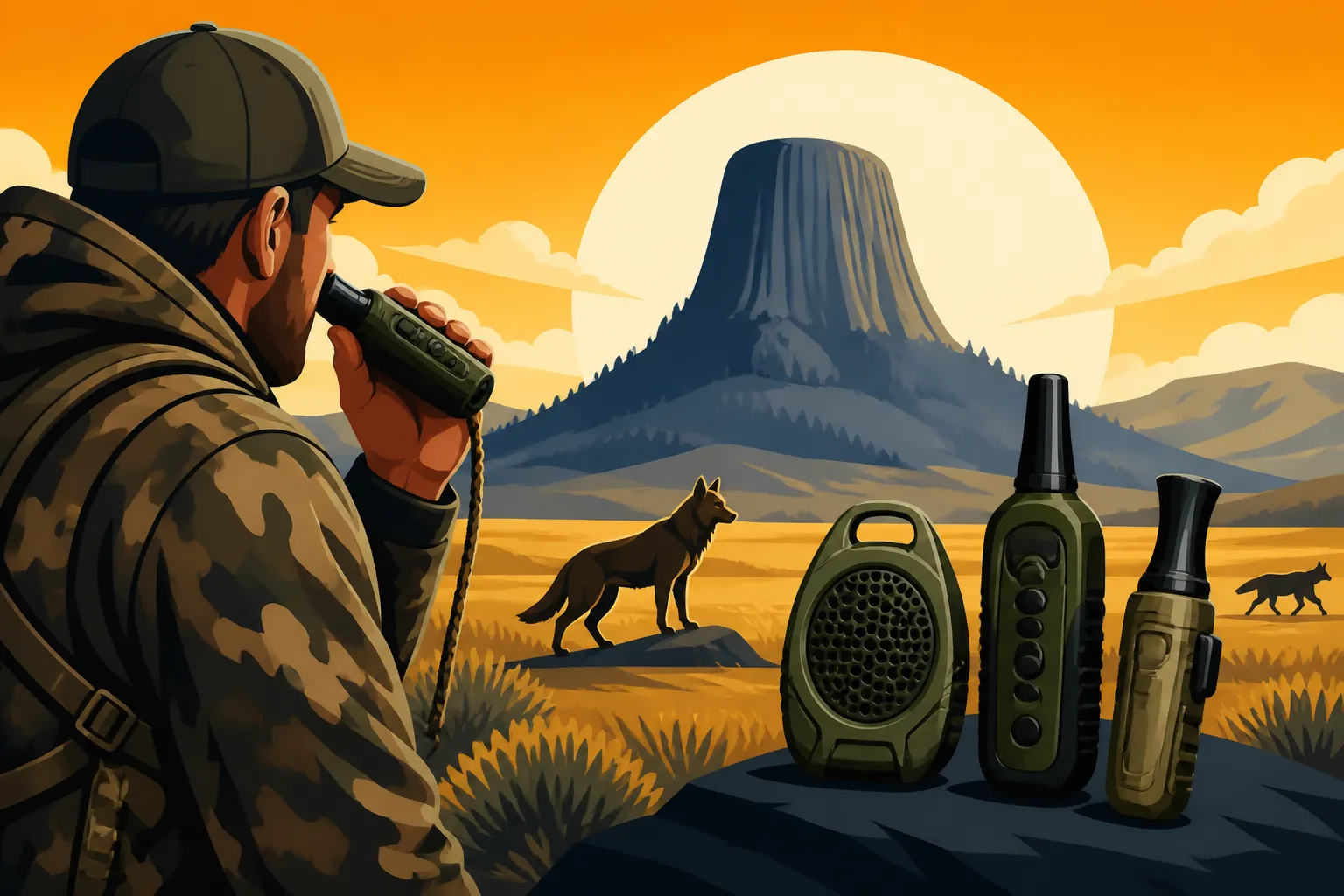
Using an electronic call for coyotes, for example, can dramatically increase your success rate. Coyotes are incredibly intelligent and wary, but they respond strongly to distress calls of their prey, territorial challenges, or even curiosity sounds. A good electronic caller can replicate these sounds with fidelity and volume that's simply impossible with mouth calls, especially across the vast, open landscapes of Wyoming. This also applies to prairie dog shooting, where various "bark" and distress calls can draw them out of their holes, making for more engaging shooting opportunities. If you’re looking to get into predator hunting, investing in a quality electronic call is almost a prerequisite for consistent success. This is also one of the areas where the rules around Electronic Calls for Predators and Varmint Hunting are very permissive.
Understanding the Wolf Zone Nuances
Wolves are a unique case in Wyoming, straddling the line between trophy game and predator, depending on where you're hunting. This distinction is paramount when considering electronic calls. Inside Wyoming's designated "Trophy Game Management Area" for wolves, which includes much of northwest Wyoming near Yellowstone National Park and Grand Teton National Park, wolves are classified as trophy game animals. This means that, just like big game, using electronic calls to hunt wolves in this specific zone is strictly prohibited. The reasoning is the same: to maintain fair chase principles for a species considered a trophy animal within a managed area.
However, outside this Trophy Game Management Area, wolves are classified as predators. In these "Predator Zones," which cover the vast majority of the state, the rules shift, and electronic calls are permitted for hunting wolves, just as they are for coyotes and other predators. This dual classification means that you absolutely must know your hunt area and understand the local wolf regulations. A good mapping system, possibly leveraging tools like GoHunt for its detailed overlays, can be invaluable here to ensure you are always aware of whether you are in a trophy game or predator zone for wolves. Misinterpreting this boundary could lead to serious legal consequences. Always double-check the current regulations and hunt area maps published by the Wyoming Game and Fish Department before you head out.
Why Electronic Calls Are a Game-Changer for Predator and Varmint Hunting
Electronic calls have revolutionized predator and varmint hunting, offering an unparalleled level of realism, versatility, and efficiency that traditional mouth calls often struggle to match. For hunters targeting species across Wyoming's diverse landscapes, from the sagebrush flats to the forested foothills, these devices can significantly improve your chances of success.
Mimicking Natural Sounds to Draw Animals In
The primary advantage of an electronic call is its ability to accurately reproduce a wide array of animal sounds with incredible fidelity and volume. Predator hunting often relies on tapping into an animal's basic instincts: hunger, territoriality, and curiosity. An electronic call can generate realistic distress cries of rabbits, fawns, or rodents, perfectly mimicking a struggling animal, which triggers a predator's hunting drive. For example, a "dying jackrabbit" or "cottontail in distress" sound can instantly pique the interest of a coyote from a considerable distance, drawing it in for an investigation.
Beyond distress calls, many electronic callers come loaded with an extensive library of vocalizations specific to predators themselves. You can broadcast coyote howls, barks, or pup cries to challenge a dominant male or appeal to a curious juvenile. This opens up entirely new strategies; instead of just hoping an animal passes by, you are actively inviting it into your setup, often prompting it to reveal itself and offer a shot opportunity. The sheer realism, volume, and consistency of these calls are what make them so effective, especially on windy days or in areas with thick cover where sound might dissipate quickly.
Versatility and Adaptability in the Field
One of the biggest frustrations with traditional mouth calls is being limited to a few sounds, or struggling to produce consistent, high-quality calls in varying weather conditions or when your hands are cold. Electronic calls eliminate these headaches. Most modern units feature extensive sound libraries—often hundreds of pre-loaded calls—allowing you to switch instantly between different species, distress sequences, or social vocalizations at the touch of a button. This versatility means you can adapt your calling strategy on the fly based on how animals are responding, or what type of animal you encounter.
Furthermore, many electronic calls come with remote controls, allowing you to place the speaker unit some distance away from your hiding spot. This is a huge advantage in predator hunting. By placing the sound source away from your position, you draw the animal's attention away from you, making it less likely to spot your movement and more likely to present a clean shot as it approaches the sound. Imagine setting up on a cold morning in a windswept basin. You can be comfortably tucked away, while your electronic caller, perhaps a FoxPro or a Lucky Duck unit, broadcasts its sound from a hundred yards out, drawing in a curious fox. This adaptability to field conditions and hunting scenarios is invaluable, particularly in Wyoming's vast and often unforgiving terrain.
Species-Specific Strategies and Call Libraries
The vast sound libraries available on electronic calls aren't just for variety; they enable highly specialized, species-specific hunting strategies. Different predators and varmints respond to different stimuli, and a good electronic call provides the tools to target them effectively.
For example, when hunting coyotes, you might start with a soft female howl to locate an animal, then switch to a fawn distress call to bring it in. For foxes, a mouse squeak or bird distress call might be more effective, as they often target smaller prey. Prairie dogs, while not predators, are highly responsive to alarm barks and "all clear" calls that can draw them out of their burrows for shooting. Even bobcats, known for their elusive nature, can be called in with specific bird or rabbit distress calls, sometimes even house cat sounds.
A quick look at the sound lists on leading brands like FoxPro or Primos Alpha Dogg will show you just how many options are available. They often categorize sounds by species and scenario, making it easier for hunters to learn and apply effective sequences. For example, a general "predator mix" might cycle through several distress sounds, while a specific "coyote challenge" sequence would use various barks and howls. Resources found through hunting platforms like GoHunt often detail these specific sound strategies, helping hunters maximize their success by understanding which calls work best for which species and under what conditions in a given area.
Here’s a quick overview of common call types and their applications:
| Call Type | Primary Target Species | Common Scenarios | Effectiveness |
|---|---|---|---|
| Distress Calls | Coyotes, Foxes, Bobcats | Mimicking injured prey (rabbit, rodent, fawn) | High; taps into hunger instinct |
| Locator Calls | Coyotes, Owls, Crows | To make predators howl or bark, revealing location | Moderate; for scouting/locating |
| Territorial Calls | Coyotes, Wolves | Challenging dominant animals (howls, barks) | High; good for aggressive animals |
| Pup/Kitten Calls | Coyotes, Bobcats | Evoking protective/curiosity response from adults | Moderate; good during denning season |
| Varmint Calls | Prairie Dogs, Ground Squirrels | Alarm barks, all-clear, various chirps | High; for drawing out small game |
Selecting the Best Electronic Call for Wyoming's Tough Conditions
Choosing an electronic call isn't just about having a wide array of sounds; it's about finding a unit that can withstand the rigors of Wyoming's challenging hunting environment and perform reliably when it counts. The wrong call can quickly become a frustrating paperweight.
Key Features and Durability for Western Hunting
Wyoming's weather can change in an instant, and its terrain is rarely forgiving. From bitter cold winds to sudden snow squalls or dusty, hot days, your electronic call needs to be built tough.
- Rugged Construction: Look for calls made with durable, impact-resistant materials. A heavy-duty plastic or metal casing is a must, capable of shrugging off bumps, drops, and the occasional tumble. Units like those from FoxPro, known for their robust builds, are popular for a reason in Western states.
- Weather Resistance: This is non-negotiable. Your call should be at least water-resistant, if not fully waterproof, to protect against rain, snow, and even heavy dew. Look for sealed battery compartments and speaker grilles to prevent moisture and dust intrusion.
- Volume and Sound Quality: In the vast, open spaces of Wyoming, you need a call that can project sound over long distances and through wind. High-quality speakers are essential for clear, realistic sounds that won't distort at maximum volume. Multiple speakers or directional sound capabilities can be a bonus.
- Remote Control Range and Reliability: A strong, consistent remote signal is crucial. You want to be able to place your call well away from your position, perhaps 100-200 yards, and control it seamlessly without signal dropouts. Look for remotes with clear displays and easy-to-use buttons, ideally backlit for low-light conditions.
- Battery Life: Calling sessions can be long, and charging opportunities might be scarce. Opt for units with excellent battery life, or consider models that run on readily available batteries like AAs or Cs, and always carry spares. Some units offer rechargeable battery packs, which can be convenient if you have a way to charge them in the field or at camp.
- Portability: You'll be covering ground, often on foot. A lightweight, compact design that's easy to pack and carry is a significant advantage.
Popular Brands and What to Look For
Several brands dominate the electronic call market, each with its strengths.
- FoxPro: Often considered the industry standard, FoxPro calls like the Shockwave or X-Wave are renowned for their ruggedness, exceptional sound quality, and extensive, customizable sound libraries. They offer a range of models suitable for various budgets and hunting needs. Their remotes are intuitive, and their customer service is highly regarded.
- Lucky Duck: Lucky Duck calls, such as the Reaper Rinehart or Roughneck, have gained popularity for their innovative features, competitive pricing, and solid performance. Many models offer rotating base units for 360-degree sound projection and integrated decoys, which can be highly effective for drawing in curious predators.
- Primos: Primos offers a variety of calls, from entry-level units to more advanced models like the Alpha Dogg. They are generally user-friendly and provide good value for their price point, often appealing to hunters looking for reliable performance without breaking the bank.
- ICOTec: ICOTec offers more budget-friendly options that still pack a punch. While they might not have the sheer volume of sounds or advanced features of a top-tier FoxPro, they are excellent entry points for new predator hunters or those on a tighter budget, offering good basic functionality and durability.
When evaluating these brands, consider your primary targets, typical hunting conditions, and budget. Read reviews, compare features, and if possible, try out the remote control in a store to get a feel for its ergonomics and ease of use. It's an investment, so choose wisely.
Integrating Calls with Scouting and Strategy
An electronic call is just one tool in your predator hunting toolbox; its effectiveness is amplified when integrated with thorough scouting and a well-planned strategy. Before you even set up your call, you should have a good idea of where animals are likely to be.
- E-Scouting and Mapping: Utilize digital mapping tools like onX Hunt or resources often highlighted by platforms like GoHunt. These can help you identify potential ambush points, travel corridors, and denning areas for coyotes or fox. Look for terrain features like creek beds, draws, timber edges, or isolated brush pockets that offer cover for an approaching predator.
- Wind Direction: This is absolutely critical. Predators almost always approach from downwind to use their sense of smell. You must position yourself and your call so that the prevailing wind carries your scent away from where you expect the animal to approach, while the call itself broadcasts into the wind or crosswind to maximize its reach.
- Setting up an Ambush: Don't just plop down anywhere. Find a location that offers good concealment for you, a clear shooting lane, and a backdrop that breaks up your outline. Position your electronic call 50-100 yards out, preferably slightly off to the side, to draw the animal's attention away from your immediate location. This setup increases your chances of getting a shot before the animal spots you.
- Call Sequences: Don't just blast one sound repeatedly. Start with softer, more subtle sounds, then gradually increase volume and intensity. Mix up distress calls with locator howls or territorial barks. Pause between sequences to listen for responses and allow animals time to approach. A common mistake is calling too loudly or continuously, which can spook wary animals. Learning when Bugle and Cow Call Timing Through the Rut is effective for elk can be analogous to understanding proper calling sequences for predators; it's about timing and understanding animal behavior.
Ethical Hunting and Best Practices with Electronic Calls
Using electronic calls for predators and varmints in Wyoming is perfectly legal, but responsible hunting goes beyond simply following the law. It involves ethical considerations and best practices that ensure respect for the wildlife, adherence to fair chase principles, and a positive image for all hunters.
Respecting Wildlife and Fair Chase Principles
Even though electronic calls provide a significant advantage, maintaining an ethical approach is paramount. The goal is to draw an animal in, not to exploit it unfairly.
- Target the Right Animals: While coyotes and other predators are often managed for population control, it's still important to treat every animal with respect. Don't call in animals purely for target practice or to needlessly wound them. Take responsible shots within your effective range.
- Avoid Over-Calling: Continuously blasting calls, especially aggressive territorial ones, can stress wildlife unnecessarily. Use calls judiciously and with purpose. The aim is to entice, not to harass. Understanding the local populations and their behavior, perhaps through a system like Wyoming's Elk Population Estimate Explained (though for predators), can help inform responsible calling.
- Understand the Role of Predators: While you're hunting them, remember that predators play a vital role in the ecosystem. Your hunting efforts contribute to managing their numbers in areas where they might impact livestock or other game species, but it's not about eradication.
- No Big Game Exception: Reiterate this point firmly: electronic calls are for predators and varmints only. Under no circumstances should they be used for big game, regardless of how tempting it might be. This strict adherence to the rules protects the integrity of big game hunting and prevents potential legal ramifications.
Combining Calling with Responsible Fieldcraft
The most successful and ethical electronic call hunters combine their technology with solid fieldcraft and a deep understanding of the environment.
- Concealment is Key: An electronic call might draw attention to its location, but your presence still needs to be hidden. Wear appropriate camouflage that blends with the Wyoming landscape, whether it’s sagebrush patterns or timber camo. Break up your outline, use natural cover, and remain motionless. Even the best caller won't overcome poor concealment.
- Wind Awareness: We've mentioned it before, but it bears repeating: wind is your enemy and your friend. Always set up so your scent blows away from where you expect the animal to approach. A shifting wind can ruin a setup quickly, so always be aware of wind currents, perhaps using a wind checker. This is as important for predators as it is for Playing Wind Direction on an Open Sagebrush Stalk for antelope.
- Positive Identification: Always identify your target clearly before taking a shot. In the heat of the moment, with an animal rapidly approaching, it can be easy to make a mistake. Be sure of your target and what lies beyond it.
- Respect Private Land: Many excellent predator hunting opportunities exist on private land, but you must have permission before stepping foot on it. Even if a coyote crosses onto private land, retrieving it without permission is trespassing. Always know your boundaries, especially with tools like Using onX Public Land Layers in Wyoming or other mapping resources.
- Pack It In, Pack It Out: Leave no trace of your presence. This includes spent casings, food wrappers, and any other trash. Maintain the pristine nature of Wyoming's wild places.
- Knowledge of Regulations: Stay current with all Wyoming Game and Fish Department regulations. Rules can change, and it's your responsibility as a hunter to know and abide by them. Always consult the most recent regulations for Wyoming Legal Shooting Hours for Big Game and other species you plan to hunt, as they apply to predators and varmints too.
By combining the powerful tool of an electronic call with responsible, ethical hunting practices, you can enjoy incredibly rewarding predator and varmint hunting experiences in Wyoming while upholding the high standards of our hunting community.
Disclaimer
Please be aware that hunting regulations, seasons, and licensing requirements can change. This guide is intended for informational purposes only. It is the hunter's responsibility to consult the most current regulations issued by the Wyoming Game and Fish Department before engaging in any hunting activities. Always prioritize safety and ethical hunting practices.