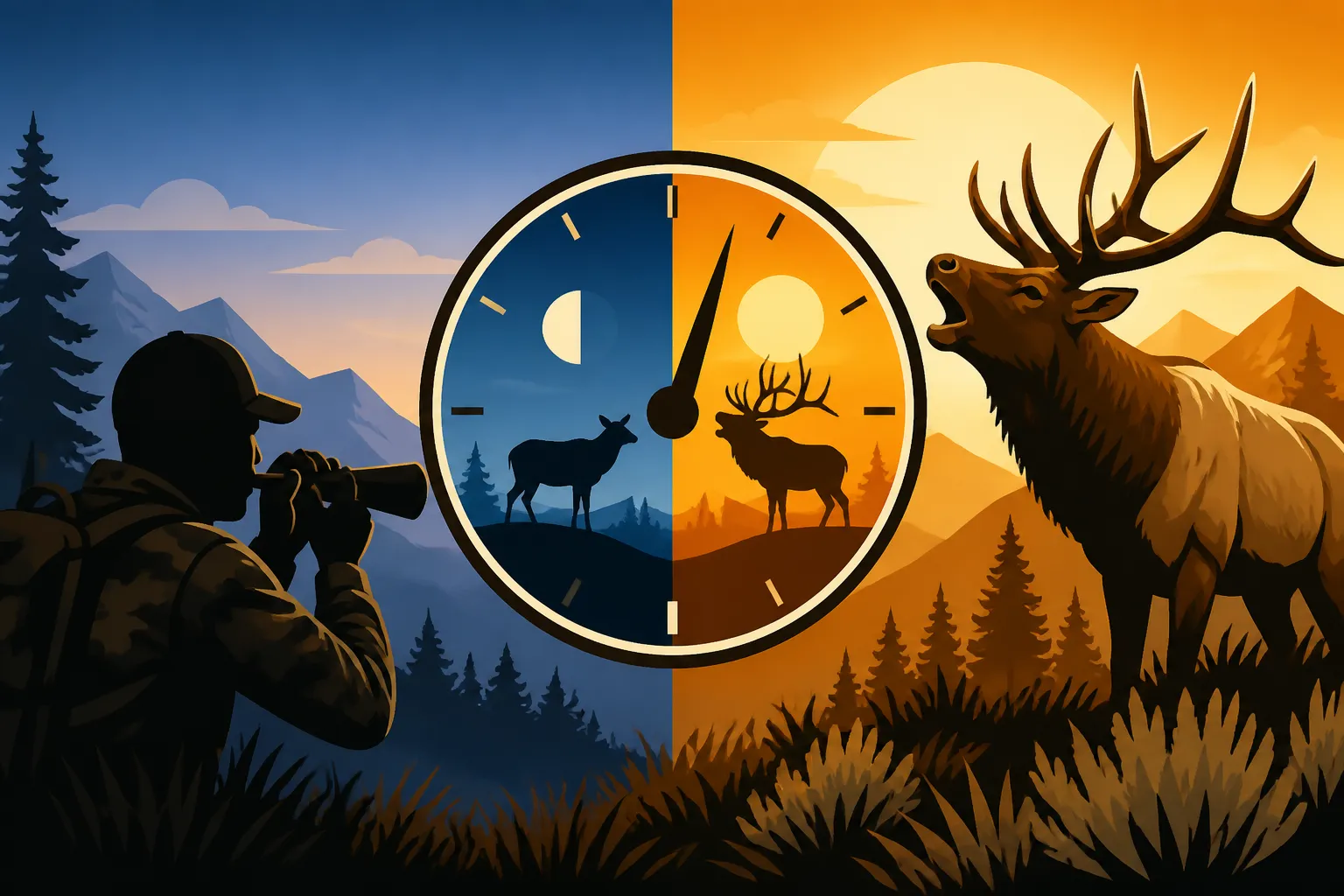
Bugle and Cow Call Timing Through the Rut
There’s nothing quite like the sound of an elk bugle ripping through the crisp Wyoming mountain air. It's exhilarating, heart-stopping, and often, incredibly frustrating when they just don't respond the way you expect. You spend countless hours practicing calls, watching videos, and dreaming of that perfect shot opportunity, only to find yourself in the field, making what you think are all the right sounds, and hearing… silence. This guide is all about demystifying elk vocalizations and teaching you the nuances of bugle and cow call timing to give you a real edge during the rut in the rugged landscapes of Wyoming.
Understanding the Rut's Phases in Wyoming
Elk rut isn't a single, uniform event; it's a dynamic progression, and successful calling hinges on understanding where the elk are in this cycle. Just like a good drama, there are acts, and each one calls for a different script. Knowing the general timeline and specific behaviors for each phase is key to making your calls sound believable and effective.
The Pre-Rut: Locator Calls and Initial Interest
Before the real fireworks begin, typically in late August and early September, bulls are still often bachelor groups, feeding heavily and starting to feel the stirrings of the rut. They're not fighting yet, but they're aware of each other and definitely starting to pay attention to cows. This is a subtle, yet crucial, time for calling.
During the pre-rut, think of your calls as feelers. You're not looking to challenge a dominant bull to a fight, but rather to locate elk and gauge their interest. Soft cow mews and chirps can pique a bull's curiosity, causing him to bugle in return, revealing his location without him committing to come in. Similarly, soft, questioning bugles from you might prompt a bull to respond. The goal here is information gathering. You're trying to figure out who's in the neighborhood and where they're hanging out before the full-blown chaos. Many experienced hunters use this phase to scout, and tools like GoHunt's mapping features can be invaluable for identifying potential bedding areas and travel corridors where these early interactions might occur. Remember, at this stage, discretion is your best friend. A Locator Bugles for Finding Bulls at Dawn strategy can be incredibly effective here, letting you pinpoint bulls without alerting them to your exact position or spooking them with aggressive calls.
The Peak Rut: Chaos, Challenge, and Harem Dynamics
This is it – the time everyone dreams about. The peak rut, generally spanning from mid-September through early October in much of Wyoming, is a period of intense activity. Bulls are actively gathering and defending harems, challenging rivals, and breeding. The mountains literally echo with bugles, grunts, and cow calls.
During the peak rut, elk are vocal, often to a fault. Dominant herd bulls are constantly bugling to advertise their presence and warn off challengers, while satellite bulls lurk on the periphery, trying to cut off cows or entice them away. This is when aggressive bugling can be highly effective, especially if you can mimic a rival bull trying to move in on a herd master. Challenge bugles, interspersed with grunts and even raking sounds (if you can manage them), can infuriate a herd bull and bring him in on a string. However, be cautious: a herd bull might also push his cows away from perceived threats. Cow calls are equally, if not more, important during this phase. Estrus mews can pull a bull away from his cows, or a lost cow call can bring him searching. Satellite bulls, often younger and less confident, are particularly susceptible to cow calls as they look for an easy opportunity. It's a complex dance of sound, and your ability to mimic various roles within the elk herd will be tested. Understanding When the Elk Rut Actually Peaks Out West is critical to planning your hunt and knowing what kind of behaviors to anticipate.
The Post-Rut: Waning Interest and Satellite Bulls
As October progresses, the intensity of the rut begins to wane. Most cows have been bred, and the dominant bulls are exhausted, having expended massive amounts of energy. Their vocalizations decrease significantly, and their focus shifts back towards feeding and recovering. This doesn't mean the hunting is over, but your calling strategy needs a serious adjustment.
In the post-rut, aggressive bugling is usually a wasted effort and can often spook tired bulls. Instead, focus on softer, more subtle cow and calf calls. Think of a lonely cow trying to find the herd, or a lost calf. Bulls, particularly satellite bulls who may not have had a chance during the peak, might still be cruising for unbred cows or simply looking for companionship. They're less likely to respond to a challenge and more likely to investigate a seemingly available cow. Sometimes, a soft, social chuckle or grunt can get a response from a bull simply looking for other elk to join up with before winter. This phase often requires more patience and glassing than aggressive calling. You might also find bulls starting to group up again, creating new opportunities.
The Art of the Bugle: When and How to Use It
Bugling is iconic, thrilling, and often misunderstood. It's not just about making noise; it's about making the right noise at the right time, with the right inflection, to convey a specific message to the elk. Your bugle needs to tell a story.
Challenge Bugles: Asserting Dominance
A challenge bugle is exactly what it sounds like: a direct, aggressive vocalization aimed at asserting dominance or provoking a fight. These bugles are typically loud, drawn out, and often end with grunts, indicating a bull's size, strength, and willingness to engage.
You'll use challenge bugles primarily during the peak rut, when bulls are actively defending their harems or looking to establish their place in the hierarchy. When you hear a bull bugle, particularly a deep, guttural one that seems to carry a lot of attitude, a strong challenge bugle back can often be the trigger that brings him in. The key is to sound like a rival, not just a random noise. Add some deep, throaty grunts at the end of your bugle to really sell it. You might also scrape a stick on a tree or rake the ground with a branch to mimic a bull tearing up the earth. Be ready, because a truly fired-up bull will often come in fast and silently, looking for the source of the challenge. This is where your position and setup are paramount.
Location Bugles: Pinpointing Elk
Sometimes, you just need to know where the elk are. Location bugles are less aggressive and more of a querying vocalization, designed to elicit a response without necessarily inviting a confrontation.
These are particularly useful in the pre-rut or early rut, and even in the post-rut when bulls are quieter. A good location bugle is often shorter, less intense, and might have a questioning tone. You're essentially asking, "Is anyone out there?" without throwing down a gauntlet. If you hear a distant bugle, a softer, respectful bugle back can often get a second response, helping you pinpoint the bull's exact position. This allows you to then plan your approach or adjust your calling strategy. For bowhunters, getting a precise location is the first step in closing the distance, and learning How to Bugle a Wyoming Bull Into Bow Range involves mastering these softer, more strategic calls. GoHunt often provides articles or forum discussions where hunters share their best tactics for using locator bugles in specific Wyoming units, which can be a valuable resource.
Grunts and Growls: Close-Range Communication
Once you're close to elk, or when a bull is responding to your calls, sometimes the most effective vocalizations are the quieter, more intimate grunts and growls. These are the sounds elk make when they're communicating within a tight group or when a bull is particularly worked up and close.
Bulls grunt for several reasons: to keep their harem together, to express dominance, or simply as a natural extension of their breathing when excited. Deep, guttural grunts can convey a bull's size and aggression without the full-blown intensity of a bugle. Growls are often associated with a bull being very agitated or about to fight. If you've got a bull responding to your bugles but he's hanging up just out of sight, sometimes dropping down to a series of soft grunts can convince him to take those last few steps. It sounds like he's almost there, trying to round up a stray cow. These sounds are critical in the final stages of an encounter, when you need to lure a wary bull into your shooting lane without over-calling.
Mastering Cow and Calf Calls for Different Scenarios
While bugles grab attention, cow and calf calls are the bread and butter of elk communication, often proving more consistently effective, especially on pressured elk. They convey a sense of social interaction, availability, or distress that can be incredibly powerful.
Lost Cow and Estrus Chirps: Attracting Attention
These are some of the most versatile and effective calls in your arsenal. A lost cow call is a series of mews, often with a slightly pleading or searching tone, meant to sound like a cow separated from the herd. An estrus chirp or mew is a short, sharp, often nasal sound that signifies a cow is ready to breed.
The lost cow call works wonderfully throughout the entire rut, particularly on satellite bulls who might be cruising for unattached cows. It can also bring in a herd bull checking to see if one of his cows has wandered off. The key is to make it sound genuinely lonely and somewhat vulnerable. Estrus chirps, on the other hand, are pure bull magnets during the peak rut. They tap directly into the bull's primary instinct to breed. Use these strategically when you know bulls are close and actively seeking cows. A single, well-timed estrus chirp can often stop a bull in his tracks or send him charging in. Comparing these to bugles, Bugling Against Cow Calling Through September reveals that cow calls often draw less suspicion and can be more effective for bringing in a wary bull.
Calf Cries and Mews: Drawing in Protective Cows and Curious Bulls
Don't underestimate the power of a calf call. These sounds, particularly distress cries, can evoke strong protective instincts in cows and sometimes even curiosity in bulls.
A soft, pleading calf mew can often draw in a cautious cow, thinking it's her own calf or one from her herd that's lost. Where there are cows, bulls often follow. A more urgent calf distress call can sometimes provoke a very aggressive response from a cow, drawing her in quickly to investigate. Bulls might also come to check on the situation, especially if they are herd bulls who see themselves as protectors. This can be a great way to bring in a bull that's otherwise call-shy or hanging up. Always be ready for a fast approach when using these, as animals responding to distress are often on high alert.
Herd Chatter: Creating a Realistic Soundscape
Sometimes, the best calling isn't a single, perfect sound, but a tapestry of realistic elk vocalizations that paint a picture of a bustling, active herd. This "herd chatter" can convince wary elk that there's a real group of animals just over the ridge.
Herd chatter involves a mix of soft cow mews, chirps, calf calls, and even soft bull grunts. You're trying to create the impression of multiple animals going about their daily business, feeding, communicating, and interacting. This works particularly well in areas where elk might be accustomed to hearing individual calls that seem out of place. By creating a whole soundscape, you're making your presence more believable. If you're hunting with a partner, one person can be the "bull" while the other is the "cow," adding to the realism. Imagine using a GoHunt map to identify a likely feeding meadow, then setting up to mimic a small herd moving through it.
Combining Calls for Maximum Effectiveness
Few real-life elk encounters involve just one type of call. The most effective strategies usually involve a combination of vocalizations, often mimicking an interaction between multiple animals. This adds realism and can engage elk on multiple levels.
Two-Hunter Calling Strategies
Hunting with a partner opens up a whole new world of calling possibilities. A two-hunter setup allows you to mimic multiple elk, creating a more convincing scenario and providing tactical advantages.
The classic setup involves one caller staying back (the "voice") while the other hunter moves forward to a shooting position (the "shooter"). The back caller uses a mix of bugles, cow calls, and grunts to draw the elk's attention away from the shooter. For instance, the back caller might engage a bull with aggressive bugles, while the shooter sets up 50-100 yards ahead, ready to intercept the bull as it comes in to confront the perceived rival. Alternatively, one hunter can act as a cow, using estrus mews, while the other is a satellite bull making soft grunts. This creates a compelling scene that can pull bulls in, especially during the peak rut. Remember, communication between hunters is key, and understanding specific Two-Hunter Calling Setups That Actually Work on Bulls can dramatically increase your success rate.
Solo Calling: Sequence and Pacing
Even as a solo hunter, you can combine calls effectively. It requires more careful sequencing and pacing to avoid sounding like a single, frantic animal.
The trick to solo calling is to create the impression of multiple elk without overdoing it. Start with a locator bugle, then pause. If you get a response, switch to a series of cow mews, perhaps with an estrus chirp if the bull sounds hot. Then, you might follow up with a soft grunt, as if the bull you're mimicking is rounding up his cows. The key is to pause between different call types, giving the illusion of a small herd rather than one animal making all the noises. Adjust your calls based on the bull's response. If he's coming hard, keep him engaged with moderate calls. If he's hanging up, try a subtle shift in tone or switch to softer cow calls, making him think his "rival" is getting bored or moving away, potentially pulling him closer.
Incorporating Visuals: Decoys and Scents
Calling is primarily auditory, but adding visual cues and scents can make your setup irresistible to an elk, especially when trying to seal the deal on a wary animal.
Elk decoys, particularly cow or young bull decoys, can be incredibly effective when combined with calling. Place a cow decoy out front of your position, so an approaching bull focuses on the decoy rather than your concealed spot. As you call, the visual confirmation can provide the confidence an elk needs to commit. Similarly, using elk urine or estrus scents can add a layer of realism, especially if you're trying to mimic a hot cow. Place scent wafers downwind of your position, so the scent carries into the area you expect the elk to approach from. Just remember to be mindful of Blaze Orange Rules While Decoying in Wyoming to ensure safety, especially in rifle seasons. Combining the sound of an estrus cow with the sight of a decoy and the smell of real elk can be a truly potent combination.
| Call Type | Rut Phase (Best Use) | Purpose | Intensity | Common Mistake |
|---|---|---|---|---|
| Locator Bugle | Pre-Rut, Early Rut | Find elk, gauge interest | Moderate | Too aggressive, sounding like a challenge |
| Challenge Bugle | Peak Rut | Provoke fight, assert dominance | Loud, Aggressive | Used too early or too late, spooking elk |
| Cow Mew (Lost) | All Rut Phases | Attract curious bulls, social communication | Soft, Moderate | Too repetitive, sounding unnatural |
| Estrus Chirp | Peak Rut | Signal readiness to breed, attract hot bulls | Moderate, Nasal | Used outside of peak rut, ignored |
| Calf Distress | All Rut Phases | Evoke protective instinct, curiosity | Urgent | Used without caution, spooking cows |
| Bull Grunt | Peak Rut, Close Range | Keep harem, express presence, close the deal | Deep, Soft | Used too loudly, sounding fake |
Reading Elk Behavior and Adapting Your Calling Strategy
Elk are intelligent animals, and their responses to calls are rarely cookie-cutter. A successful caller is not just a master of sounds, but a keen observer of elk behavior, constantly adapting their strategy based on what the animals are telling them.
Interpreting Body Language and Vocalizations
Elk communicate extensively through both vocalizations and body language. Learning to read these signals in real-time is crucial for adjusting your calling approach.
When a bull bugles back aggressively, rakes trees, or charges through brush, he's clearly signaling his intent to come in and fight. You should respond with confident, aggressive calls to keep him engaged. If a bull bugles but sounds distant or moves away, he might be pushing his cows, or simply not interested in a confrontation. In this case, switching to softer cow calls might be more effective than continuing to challenge. Watch for ears laid back, heads held high, or a bull turning broadside to size up his opponent – these are all cues. Similarly, if you hear short, agitated mews from cows, it might mean they're nervous, and you should ease off the aggressive calling. Paying attention to subtle cues, like Reading Fresh Elk Sign in Dark Timber might also give you insights into their current mood and travel patterns, informing your calling decisions. The best hunters don't just call; they listen and watch intently.
Adjusting to Pressured Elk
Wyoming's public lands see a lot of hunting pressure, and elk quickly learn to associate certain sounds with danger. Calling pressured elk requires a more nuanced, subtle approach.
On pressured ground, loud, aggressive bugles often do more harm than good. Elk have heard it all before, and they're wary. Instead, focus on softer, more social cow and calf calls. Think subtle mews, chirps, and light grunts – sounds that suggest peace and normalcy, rather than a direct threat. Silence can also be a powerful tool; sometimes, the best call is no call at all. Let the elk come to you, or make soft, infrequent calls to pique their curiosity. A great piece on Calling Elk on Pressured Wyoming Public Land emphasizes the importance of patience and realism over sheer volume. You might also need to use topography and dense cover to your advantage, making calls from unexpected angles to disorient wary animals.
Wind, Terrain, and Sound Travel
No matter how good your calls are, they're useless if the elk can't hear them or if your scent gives you away. Wind and terrain are critical factors that dictate how sound travels and how you should position yourself.
Always hunt with the wind in your favor. Elk have an incredible sense of smell, and if your scent drifts towards them, your hunt is over before it begins. Reading Wind on an Open-Country Stalk is not just about avoiding detection; it's also about understanding how it carries your calls. Sound travels differently in different terrains. In thick timber, sounds are muffled and don't carry far, requiring you to get closer and use louder calls. In open country, sounds carry much further, but there's less cover, making approaches more challenging. High elevations can also affect sound transmission. Use draws, ridges, and timber lines to your advantage, not just for concealment but for directing your calls and masking your approach. A call bouncing off a ridge can sound incredibly realistic, mimicking an elk on the move.
Common Calling Mistakes to Avoid (and How to Fix Them)
Even seasoned hunters make mistakes, especially when the adrenaline starts pumping. Recognizing and rectifying these common calling blunders can save your hunt.
Over-Calling and Unrealistic Sequences
One of the biggest pitfalls for enthusiastic elk callers is simply making too much noise or using call sequences that don't sound natural.
It's easy to get excited and start blasting bugles and mews every 30 seconds, especially when you hear a bull. But real elk don't do that. They communicate, then pause, listen, and assess. Over-calling can sound artificial, make you seem desperate, or simply alert elk to your presence without drawing them in. The fix is simple: less is often more. When you call, give the elk time to respond and process the sound. Wait several minutes, even 10-15, especially after a successful bugle. Vary your call types and intensity. Don't always go from a bugle straight to an estrus mew. Think about the natural flow of conversation in an elk herd and try to replicate that, rather than just hitting every call in your repertoire.
Ignoring the Wind and Topography
As mentioned, wind and terrain are your biggest allies or worst enemies. Ignoring them is a surefire way to spook elk.
Hunting directly into the wind is ideal for scent control, but it means your calls won't carry far. Calling with the wind at your back sends your scent directly to the elk, even if your calls carry well. The solution is always to prioritize wind direction for scent. Position yourself so the wind is blowing from the elk towards you, or crosswind, carrying your scent away from their likely approach path. Use topography to your advantage. Call from a hidden position, behind a rise or in thick timber, allowing the sound to travel but concealing your visual presence. If a bull bugles from a dense valley, you might need to drop down into it rather than calling from the ridge above, where your sound won't penetrate as effectively. Remember, Terrain That Hides an Approach is just as important as the calls you make.
Not Being Ready for the Shot
All the perfect calling in the world means nothing if you're caught flat-footed when a bull charges in. Elk can be incredibly fast and silent, appearing out of nowhere.
This is a mistake many hunters, myself included, have made. You're so focused on calling that you're not physically ready for the shot. Your bow might be on the ground, your rifle slung, or you might be in an awkward position. The moment you make a call, especially an aggressive one, assume an elk is coming in. Nock an arrow, get your rifle shouldered, or at least have it in a ready position. Always ensure you have a clear shooting lane or an understanding of where the elk is most likely to appear. Be mindful of How Close a Bowhunter Really Needs to Get to make an ethical shot. This means practicing shooting from various positions, moving slowly and quietly, and always being prepared for the immediate payoff of your calling efforts.
Disclaimer
Hunting involves inherent risks, and conditions in Wyoming can be unpredictable. Always consult the latest Wyoming Game and Fish Department regulations before heading afield. This guide provides general information and recommendations but cannot cover every specific scenario or rule. Your safety and adherence to all laws are your sole responsibility.