Calling Elk on Pressured Wyoming Public Land
There’s almost nothing more frustrating for an elk hunter than pouring your heart and soul into a calling sequence, only to be met with absolute silence. Or worse, hearing an elk bugle once and then inexplicably vanish. On Wyoming’s vast public lands, where elk have heard every trick in the book, getting a response and closing the distance can feel impossible. This guide dives deep into proven strategies for calling wary elk on pressured public ground, helping you adapt your approach and find success.
Understanding Pressured Elk Behavior
Wyoming's public lands are an incredible resource, offering millions of acres of prime elk habitat. But with that access comes pressure. Elk that reside in these areas, especially those near popular trailheads or easily accessible sections, are not the same animals you might encounter on heavily managed private ranches or in true wilderness areas. They've been hunted, they've been called, and they've learned a healthy dose of skepticism.
Why Public Land Elk Are Different
It’s easy to think an elk is an elk, but years of hunting pressure fundamentally alter their behavior. These are creatures that have developed an acute wariness. They've likely had unpleasant encounters with hunters who were too loud, too aggressive with their calls, or simply didn't understand how to play the wind. As a result, public land elk become incredibly sensitive to anything that doesn't sound "right." They might ignore calls entirely, circle far downwind to catch your scent before committing, or offer a single, half-hearted bugle before retreating deeper into cover. They're masters of silent evasion, using the terrain and timber to their advantage to disappear without a trace.
This isn't to say public land elk are uncallable, but rather that a different strategy is required. Forget the aggressive, in-your-face bugling that might work in less-pressured locales. Here, subtlety, patience, and a deep understanding of elk behavior become your most potent weapons. You’re playing a chess game, not a game of checkers, and every move needs to be calculated to overcome their learned caution.
Interpreting Their Cues
Learning to read the subtle body language and vocalizations of pressured elk is crucial. A bull that answers your bugle immediately but then goes silent after a second call might not be a hot bull. He could be curious but also highly suspicious, trying to pinpoint your location without revealing too much of his own. If an elk cuts off your bugle with its own, it could be a sign of aggression, but on public land, it could also be a tactic to draw you out into the open while he circles downwind. Pay attention to how quickly they respond, the tone of their calls, and any movements you detect.
Often, a soft, nervous mew or a quiet chirp might be the only indication an elk is even in the vicinity. If you hear this, it's not a sign to amp up your calling; it's a sign to back off and listen even harder. Any elk that quickly fades away after a response has likely pinpointed you and is attempting to give you the slip. Recognizing these subtle cues can save you from blowing a setup and teach you invaluable lessons about which calling sequences are working and which are simply confirming their suspicions.
The Art of Subtle Calling
When hunting pressured elk on public land, the common mantra "less is more" takes on a whole new meaning. Over-calling is one of the quickest ways to educate an already wary animal or send it silently sneaking away. Your goal isn't to make the loudest noise, but the most convincing.
Less Is Often More
Forget those epic bugle sequences you hear on hunting shows. On public land, a simple, soft cow mew, a lonely chirp, or a quiet lost calf call can be far more effective than an aggressive bugle battle. These subtle sounds are non-threatening and often pique an elk's curiosity without triggering their ingrained wariness. Think about it: an elk hears dozens of loud bugles during the season. What truly stands out is something natural, something that mimics the everyday sounds of the herd. When you're trying to draw in a bull, especially a satellite bull, a soft "chirp, chirp, mew" can be interpreted as a cow looking for company, or a calf simply announcing its presence.
Focus on realism. Can you make your calls sound like an actual elk, not just a human blowing into a tube? Practicing control over the volume and tone of your calls is paramount. Consider how Bugle and Cow Call Timing Through the Rut changes; early in the season, subtle sounds are often more appropriate than late-rut aggression. A quiet estrous whine can be incredibly effective when a bull is trying to round up his cows or is looking for a lone cow. These sounds should be short, sweet, and spaced out, allowing ample time for an elk to respond and for you to listen intently.
The Power of Silence
Perhaps even more important than the calls you make is the silence you employ. After a short sequence of calls, stop. And then wait. And wait some more. Pressured elk often won't respond immediately. They might hang up, listen for additional calls, or circle to get a better vantage point or a sniff of your scent. If you keep calling, you strip away their motivation to come closer, and you give them more opportunities to pinpoint your exact location. Remember, every time you call, you're giving away your position.
Silence creates curiosity. An elk that hears a few calls and then nothing might decide to investigate on its own terms. It fosters the illusion that the "elk" it heard has moved on, leading it to follow up. This "cat and mouse" game is where many public land elk are ultimately fooled. Use silence to your advantage, giving the elk time to move, listen, and make a mistake. It requires immense patience, but it pays dividends when a silent bull suddenly appears, trying to locate the source of the calls.
Advanced Calling Strategies for Public Land
Beyond the basic mews and bugles, there are specific, nuanced tactics that can help you fool the most educated public land elk. These often involve mimicking movement or integrating environmental elements to create a more believable scenario.
The Retreating Call Tactic
One of the most effective ways to draw a wary bull in is to make him think you're moving away. This plays on a bull's possessiveness and curiosity. Instead of calling from a stationary position and hoping he commits, try making a few soft cow mews or a quiet bugle, and then immediately move 50-75 yards away from where you think the bull is, all while being incredibly quiet and mindful of the wind. Then, issue another, even softer, call. This subtle retreat can convince the bull that the "cow" or "rival" is leaving his territory or moving out of his immediate vicinity. His instinct might be to cut her off or investigate before she gets too far.
This tactic works particularly well when an elk has responded once and then gone silent or appears to be hanging up. It often creates a sense of urgency, prompting the bull to commit. When you're trying to How to Bugle a Wyoming Bull Into Bow Range, a retreating call can be the trick that brings that last 100 yards into range. Just remember that every step you take and every branch you snap must be done with extreme caution to maintain the illusion. Sometimes, even just backing up a few steps, out of sight, and calling again can convince a bull that the other elk are starting to move off.
Incorporating Environmental Sounds
Elk aren't just vocal; they make a lot of noise moving through their environment. Integrating sounds like raking trees, breaking branches, or even subtle stomps can add incredible realism to your calling sequence. If you're calling from thick timber, gently raking a branch against a tree trunk can mimic a bull rubbing his antlers. A quick, sharp snap of a small branch can sound like a moving elk. These are not loud, attention-grabbing sounds, but rather subtle additions that paint a more complete picture of an elk moving naturally through the woods.
When you're trying to call an elk that's hanging up, adding these sounds can be the tipping point. Imagine a bull listening intently, trying to figure out if what he heard was real. If he then hears the soft crunch of leaves or a branch breaking, it reinforces the idea that there's an actual elk there, not just a disembodied call. Think about what Reading Fresh Elk Sign in Dark Timber tells you; elk are constantly moving, rubbing, and breaking branches. Mimicking these sounds can make your setup far more believable and pull in a cautious bull.
Aggressive but Calculated Bugling
While subtlety is key, there are moments when a more aggressive approach, used judiciously, can trigger a response. This is where the "calculated" part comes in. Never start with an aggressive bugle on public land unless you are absolutely certain of the elk's mood and location. An aggressive challenge is generally used when a bull has already responded several times to softer calls and is clearly interested but hanging up, or when you’re sure he’s a satellite bull without cows. You're trying to push his buttons, challenging his dominance.
The key is to listen to his response. If he comes back with a full-throated, pissed-off bugle, he might be ready to commit. But if he goes silent, you've likely overplayed your hand. An aggressive bugle can also serve as a Locator Bugles for Finding Bulls at Dawn, but once you've located him, immediately shift back to more cautious and subtle tactics. The rule of thumb on public land is: let the bull dictate the aggression. If he's hot and screaming, you can respond in kind. If he's quiet, you stay quiet. Never try to bully a pressured elk; it almost always ends with him disappearing.
Scouting and Situational Awareness
The best caller in the world will struggle if they're calling in the wrong place or at the wrong time. On pressured public land, advanced scouting and an acute awareness of your surroundings are paramount to putting yourself in a situation where calling can actually work.
Pre-Season Digital Scouting
Long before your boots hit the ground, you should be pouring over maps, both digital and physical. Tools like onX Hunt, BaseMap, or even Google Earth are invaluable for identifying potential elk habitat, understanding terrain, and finding those hidden pockets of public land that receive less pressure. Look for areas with difficult access – steep slopes, dense timber, or parcels surrounded by private land but with legal public access. These are often the places where elk feel safer and are therefore more likely to respond to a call. Pay close attention to north-facing slopes, dense bedding cover, and natural pinch points that elk might use to travel between feeding and bedding areas.
Consider using platforms like GoHunt, which provide detailed draw odds, harvest data, and unit breakdowns. This information, combined with aerial imagery, can help you identify historical elk concentrations and areas with less hunter density. By e-scouting, you can pinpoint specific ridges, drainages, and saddles where you might set up an ambush or initiate a calling sequence, maximizing your chances even before you arrive. This careful planning is a crucial part of E-Scouting a Unit Before the Season Opens, ensuring you don't waste precious hunting time figuring out the land.
In-Season Scouting and Reading the Landscape
Once you're in the field, your digital intel should be combined with real-time observation. Fresh elk sign is your most reliable indicator of current activity. Look for tracks, fresh droppings, and recent rubs on saplings. Pay attention to wallows – especially those that are muddy and recently used, as these can be magnets for bulls during the rut. If you find a hot wallow, setting up nearby and using soft cow calls can be incredibly effective, as elk often visit these spots throughout the day.
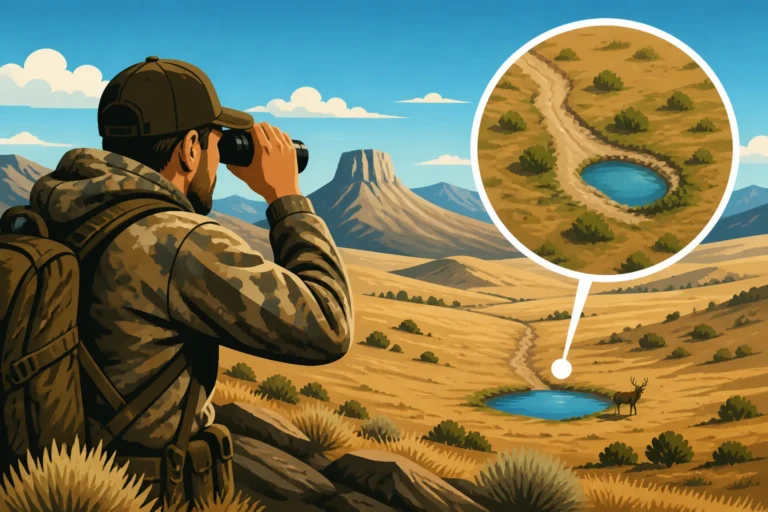
Understand how elk use the terrain to their advantage. They will typically bed on north-facing slopes during warm weather to stay cool, and in dense cover to feel secure. They'll move along contours, in and out of drainages, and use terrain features to avoid detection. When you plan a calling setup, think about where the elk might come from and how they will approach. Will they circle downwind? Is there dense cover for them to hide in as they approach? Knowing how to read the land for these indicators, and even for things like Finding Water Sources in Dry Hunting Country, is essential for setting up in a spot that offers both good visibility and a tactical advantage.
Wind Direction Is King
You can be the most skilled caller and the most meticulous scout, but if you don't respect the wind, your hunt is over before it begins. Elk have an incredible sense of smell, and on pressured public land, they will almost always try to circle downwind to scent-check the source of a call before committing. This is an instinct that has been reinforced by countless negative encounters with hunters. Always position yourself so that the prevailing wind, and any expected thermal shifts, will carry your scent away from where you anticipate the elk will approach.
In mountainous terrain, thermals are a critical factor. In the morning, as the sun warms the earth, air currents typically rise (updraft). In the evening, as the air cools, currents fall (down-draft). You must factor these shifts into your approach and calling strategy. If you're calling in the morning, make sure your scent is blowing up the mountain, away from where elk might be feeding below. In the evening, reverse that logic. Failing to understand and adapt to wind and thermals is the single biggest reason why elk go silent or bust hunters on public land. Always carry a small wind indicator powder bottle or piece of string to constantly check the subtle currents around you.
Two-Hunter Calling Setups and Tactics
While solo hunting has its merits, a two-hunter setup can dramatically increase your success rate on pressured public land, especially when it comes to calling wary elk into shooting range. It allows for a more realistic calling scenario and separates the caller from the shooter, mitigating the risk of the elk pinpointing the human presence.
The Caller/Shooter Dynamic
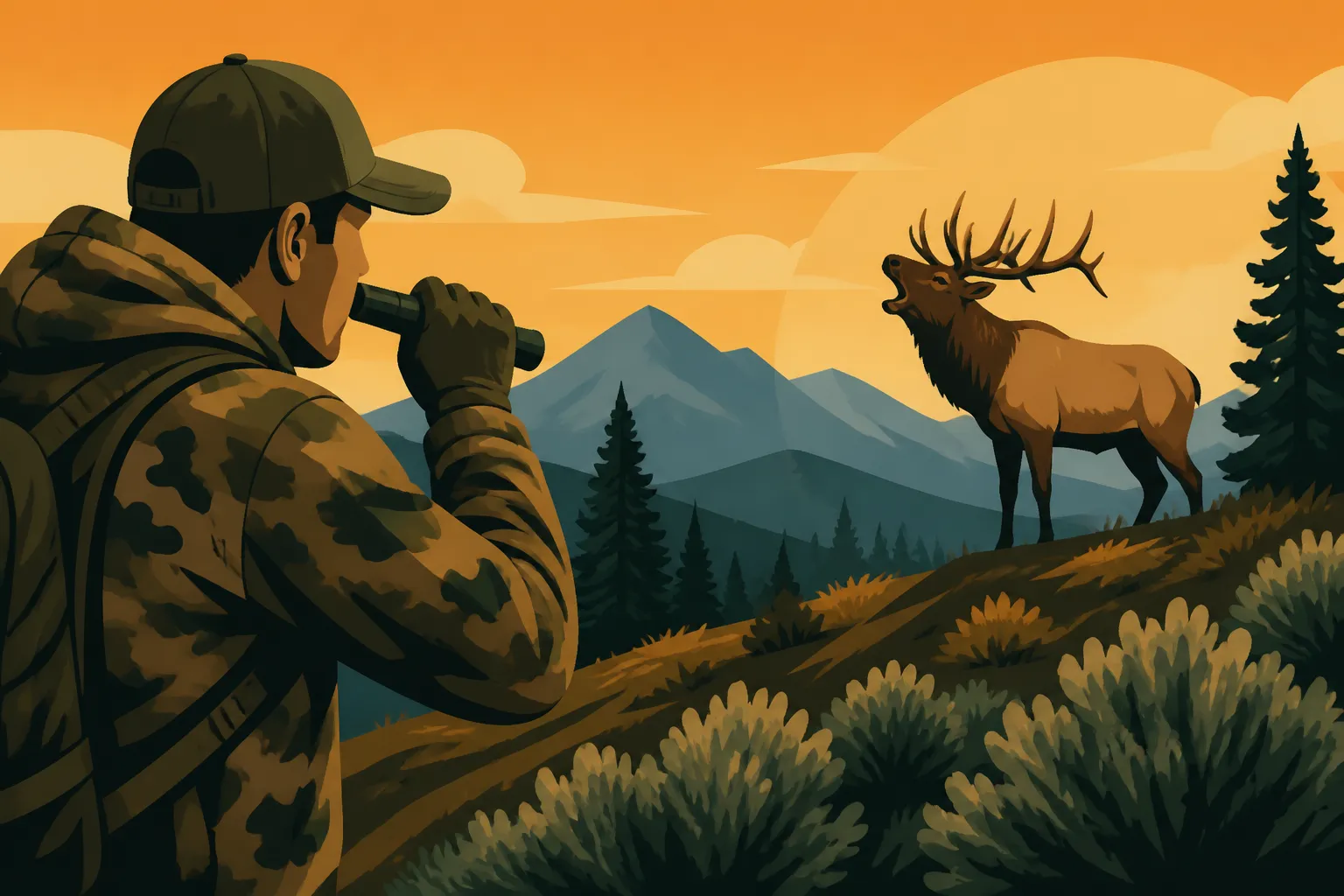
In a two-hunter setup, one person acts as the primary caller, while the other is positioned as the shooter. The key is strategic positioning. The caller should be 50-100 yards behind the shooter, or slightly off to the side, allowing the elk to focus their attention and approach on the calling sounds, drawing their eyes away from the shooter. The shooter is then in a prime position to take a shot when the elk comes in, distracted by the sounds of the "other" elk. This setup is perfectly designed for scenarios like Two-Hunter Calling Setups That Actually Work on Bulls.
Communication between the caller and shooter must be minimal and silent. Hand signals are paramount. Discuss likely approach lanes beforehand and agree on signals for "elk coming," "elk is close," "ready," or "don't shoot." The caller's role isn't just to make noise, but to become a master of deception, using the terrain to appear as if the calls are coming from an elk moving through the woods. The shooter must be absolutely silent, hidden, and ready to shoot the moment the elk offers a clear, ethical shot. This coordinated effort creates a much more believable scenario for a wary elk than a single hunter trying to call and shoot simultaneously.
The Decoy Strategy
Adding a decoy to a two-hunter setup can elevate the realism and distraction factor even further. The caller positions themselves behind a lightweight, collapsible decoy (like those from Montana Decoy), perhaps 70-100 yards beyond the shooter. The decoy acts as a visual focal point for the approaching elk, often drawing their gaze directly to it, allowing the shooter to remain undetected. This is particularly effective for satellite bulls who might be looking for a lone cow or for herd bulls that respond to a challenge and want to visually confirm the intruder.
However, decoys come with pros and cons, especially on public land. While they can be incredibly effective at drawing attention, they also present an ethical dilemma. In areas with high hunter density, another hunter might mistake your decoy for a live animal. Always ensure your decoy is clearly visible to you and your partner, and consider adding blaze orange to your gear if hunting during rifle season, even if using an archery tag. Use decoys sparingly and in situations where you have good visibility and are confident of your surroundings. Their primary purpose is to pull the elk's attention away from the shooter, providing those precious few seconds for a clean shot.
| Feature | Single Hunter | Two-Hunter Setup |
|---|---|---|
| Stealth | Easier to move quietly, less scent footprint. | More movement/scent, requires coordination. |
| Calling Realism | Can be harder to simulate a herd convincingly. | Excellent for creating realistic herd dynamics. |
| Shot Opportunity | Caller and shooter are same, difficult to draw attention away from hunter. | Caller draws attention, shooter gets cleaner shot. |
| Complexity | Simple, focus on personal execution. | Requires communication, roles, trust. |
| Effectiveness on Pressured Elk | High risk if elk pinpoints hunter. | Better potential to fool wary animals. |
| Gear | Minimal | Extra call, potentially a decoy for the "caller." |
Gear and Practice for Success
No matter how refined your strategies or how diligent your scouting, success in calling pressured public land elk often boils down to two things: proficiency with your gear and unwavering patience.
Essential Calling Gear
The market is flooded with elk calls, and it can be overwhelming to choose. For public land hunting, a diverse arsenal allows you to adapt to different situations. Diaphragm calls (also known as mouth reeds) are often favored by seasoned hunters because they allow for hands-free calling, enabling you to keep your bow drawn or rifle shouldered. Companies like Phelps Game Calls and Bugling Bull Game Calls offer a wide variety, from single to triple reeds, each producing slightly different tones. Open-reed calls are fantastic for realistic cow and calf mews and can be easier for beginners to master. A good quality bugle tube is also essential for amplifying sounds and producing realistic bull bugles, especially when trying to locate elk or challenge a distant bull.
It’s not just about having the calls; it’s about knowing how to use them to mimic a variety of elk sounds—from soft, pleading mews to the aggressive growls of a herd bull. Spend time learning to produce realistic estrous mews, lost calls, chuckles, and various bugle tones. Each call should serve a purpose in your sequence, either to locate, to attract, or to challenge. Keep your calls clean and maintained, as a faulty reed or a clogged bugle tube can ruin an otherwise perfect setup.
Year-Round Practice
Becoming proficient with elk calls isn't something you can do the week before the season opens. It requires consistent, year-round practice. This means practicing in your car, at home, and even out in the woods. The goal isn't just to make noise, but to make realistic, convincing elk sounds. Practice volume control, working from soft, subtle mews to louder, more aggressive bugles. Record yourself and listen back critically. Do you sound like an elk, or like a human making elk noises?
Work on different calling sequences. Practice a series of soft cow mews, followed by silence, then a few chirps. Experiment with bugles – short locator bugles, long drawn-out challenges, and the growls that indicate a bull rounding up his cows. Just as you spend time with Realistic Archery Practice Distance for Big Game for your shooting, you need to put in the reps for your calling. The more natural your calls sound, the more confidence you’ll have in the field, and the more likely you are to fool a wary public land bull. Practice making calls while drawing your bow or raising your rifle, ensuring seamless transitions in the heat of the moment.
Patience and Persistence
Hunting pressured elk on public land is not for the faint of heart. It will test your patience, your resolve, and your belief in your own abilities. There will be days of silence, days of blown stalks, and moments where you question everything. But it’s in these challenging moments that true hunters are forged. Learning to be patient, to sit silently and listen for extended periods, and to adapt your strategy on the fly is what separates successful public land hunters from those who go home empty-handed.
Remember that every encounter, successful or not, is a learning opportunity. Analyze what worked, what didn't, and why. Was your calling too loud? Was the wind wrong? Did you move too quickly? Persistence, coupled with a willingness to learn and adapt, is your ultimate tool. Keep grinding, keep practicing, and eventually, that elusive public land bull will make a mistake, and you’ll be ready to capitalize.
Disclaimer
Please remember that hunting regulations, seasons, and access rules can change frequently. Always consult the most current Wyoming Game and Fish Department regulations before planning or undertaking any hunting activity. This guide is for informational purposes only and does not supersede official legal requirements.