How Far to Stalk a Bedded Pronghorn
Trying to sneak up on a bedded pronghorn in Wyoming can feel like attempting to hug a ghost in a wide-open prairie. Their incredible eyesight and the vast, flat landscapes they call home combine to create one of hunting's ultimate challenges. This guide will dive deep into the art and science of stalking bedded pronghorn, helping you understand how close you truly need to get, and more importantly, how you might actually pull it off in the land of the antelope.
Understanding the Pronghorn's Unrivaled Senses and Habitat
Before you even think about putting one foot in front of the other, you need to deeply appreciate what you're up against. Pronghorn are often called the "ghosts of the prairie" for a very good reason – they blend in, move quickly, and have senses that are arguably the sharpest of any big game animal in North America.
Their Incredible Eyesight: The Ultimate Challenge
Imagine having binoculars permanently attached to your head. That's pretty close to the reality of a pronghorn's vision. Their large eyes are set high and to the sides of their heads, giving them an almost 360-degree field of view without even turning their head. This isn't just "good" eyesight; it's designed to detect movement and change at incredible distances across vast, unobstructed terrain. They can spot a hunter cresting a distant ridge or a vehicle slowing down miles away. This makes a direct approach nearly impossible and means you need to be incredibly mindful of how you expose yourself, even when seemingly far away. For a deeper dive into their visual prowess, you might want to read about the specific challenges posed by Pronghorn Eyesight and the Stalking Distance It Forces.
Open Country Realities: Where They Bed and Why It's Tough
Pronghorn aren't generally timber animals. They thrive in wide-open, arid to semi-arid grasslands, sagebrush flats, and rolling plains. When a pronghorn beds down, it's almost always in a spot that offers an expansive view of its surroundings. They'll pick a slight rise, the edge of a small dip, or a sparse patch of sagebrush that offers some minimal cover, but primarily, they rely on their eyes. This means there's rarely a "natural blind" that's going to get you within spitting distance without a lot of effort. The lack of tall trees, dense brush, or dramatic elevation changes forces hunters to get creative and often means long, exposed crawls. Their preferred bedding areas are strategic, allowing them to spot danger long before it becomes a threat.
The Wind Factor: Scent Control and Approach Direction
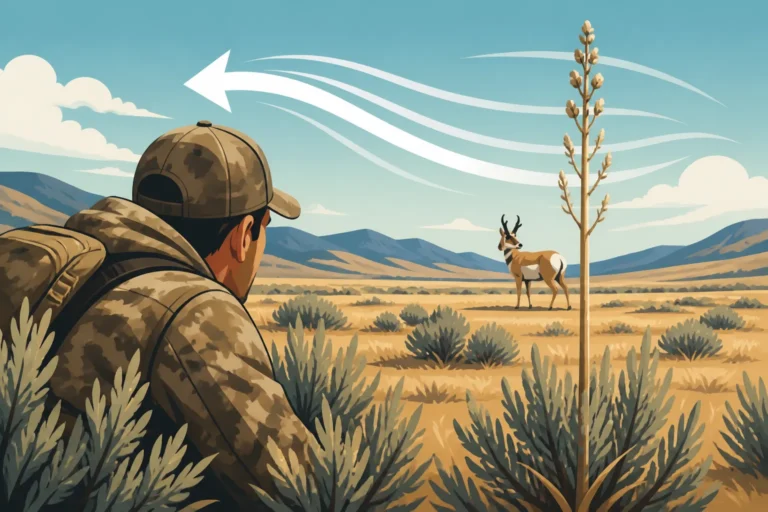
While their eyesight is legendary, we can't forget their nose. Pronghorn possess a keen sense of smell, vital for detecting predators that might try to use terrain to their advantage. Even if you manage to avoid their eyes, an errant puff of wind carrying your scent can send them bolting into the next county. This means the wind direction is absolutely non-negotiable when planning your stalk. You must approach from downwind, or at the very least, across the wind, ensuring your scent cone is carried away from the animal. A sudden shift in wind can completely derail a meticulously planned stalk, so always be monitoring it. Checking a local weather forecast for wind changes and using a wind checker frequently during your stalk are essential tools. You can learn more about how crucial this is in Playing Wind Direction on an Open Sagebrush Stalk.
Determining Your Effective Stalking Range
The "how far" question is complex because it's not just about the pronghorn; it's about you and your weapon. A 400-yard rifle shot is very different from a 40-yard bow shot, and each demands a different approach to the stalk.
Bowhunting Realities: Getting Up Close and Personal
For bowhunters, the challenge of stalking a bedded pronghorn is amplified immensely. Most ethical bow shots for big game are within 20-60 yards, with many hunters preferring to be inside 40 yards. This is a truly daunting distance to cover undetected in open country. To close this gap, bowhunters often rely on extreme patience, crawling for hundreds of yards, using every ripple in the landscape, or deploying decoys.
Let's consider a hypothetical: you spot a nice buck bedded 800 yards away, directly into a rising sun (which might help your approach slightly, but don't count on it). The wind is perfect, quartering towards you, pushing your scent away. You identify a small cutbank 300 yards out. That's your first goal. You crawl, belly-flat, sometimes for an hour, using the sparse sagebrush for what little visual break it provides. From the cutbank, you realize the next piece of cover is a barely perceptible dip 150 yards further. You decide to try. As you slowly peek over the cutbank, the buck stands up, stretches, and then beds back down, facing a slightly different direction. This is where many stalks end.
To get within that 40-yard window, a bowhunter needs to embrace the "zero visibility" approach, often literally disappearing into the landscape. This might involve army crawling through thorny patches, slowly inching forward on hands and knees, or waiting hours for the animal to adjust its position or for a cloud to pass. Sometimes, a well-timed decoy, like a Montana Decoy "Pronghorn Buck," can provide that last bit of distraction needed, but even then, the decoy distance needs to be carefully managed. The true measure of a successful bowhunting stalk on pronghorn is getting to a point where you feel absolutely confident in making an ethical shot, which for most, means a range they've practiced extensively at. A great internal resource to check out is Realistic Archery Practice Distance for Big Game.
Rifle Hunting Distances: Precision From Afar
Rifle hunters have a significant advantage in range. While a 500-yard shot is certainly pushing the ethical limits for many, a 200-300 yard shot on a bedded pronghorn is very achievable with proper practice and equipment. The goal for a rifle hunter stalking a bedded pronghorn is still to get closer, but "closer" means something entirely different than it does for a bowhunter. If you spot a bedded buck at 800 yards, your goal might be to cut that distance in half, getting to 400 yards, or even to a more comfortable 250-300 yards. This greatly reduces the chances of misjudging wind, bullet drop, and human error.
For example, a hunter using a .308 Winchester zeroed at 200 yards might feel confident out to 350-400 yards with practice, but would much rather close the gap to 250 yards. This might involve a stalk of 300-400 yards using terrain features like washes, gullies, or large sagebrush clumps to obscure their movement. The fewer variables you have at play, the higher your chances of a clean, ethical harvest.
One crucial aspect for rifle hunters is ensuring a solid rest. A bedded pronghorn is a smaller target, and you'll need maximum stability for precision. A bipod, shooting sticks, or a backpack rest are essential tools. Remember, even with a rifle, the wind still plays a huge role in bullet trajectory, so your wind calls need to be spot-on for those longer shots. Understanding your rifle's capabilities and practicing at various distances and wind conditions is paramount. You can find useful information on this in Rifle Zero Distance for Open Country Shooting.
Muzzleloader Challenges: Bridging the Gap
Muzzleloaders sit in a unique position between bows and rifles. While they offer more range than a bow, their effective ethical range is typically limited compared to modern centerfire rifles, often falling in the 100-200 yard range for most hunters. This means a muzzleloader hunter faces a challenge almost as great as a bowhunter in terms of closing the distance, but with a bit more wiggle room.
The stalk for a muzzleloader hunter will resemble a rifle stalk in its use of terrain, but with the added pressure of needing to get substantially closer. If you spot a buck at 600 yards, your ideal goal might be to cut that distance down to 150 yards. This means a longer, more careful approach than a rifle hunter might undertake. The slower projectile speed of a muzzleloader makes wind drift a more significant factor, and shot placement becomes even more critical due to projectile dynamics. You'll need to know your muzzleloader's specific ballistics inside and out. While the article is about elk, the principles of ethical range and powder charge can be adapted from The Effective Range of a Muzzleloader on Elk.
Here's a quick comparison of typical ideal maximum stalking distances to a bedded pronghorn, assuming favorable conditions and practiced marksmanship:
| Weapon Type | Ideal Stalking Distance (Yards) | Typical Max Ethical Shot Range (Yards) | Key Stalking Challenge |
|---|---|---|---|
| Compound Bow | 20 – 40 | 60 | Closing the final, exposed distance |
| Recurve/Longbow | 15 – 30 | 40 | Extremely limited range, requires perfect execution |
| Muzzleloader | 100 – 150 | 200 | Managing trajectory and wind at closer rifle-like distances |
| Rifle | 200 – 300 | 400+ (depending on caliber/skill) | Minimizing variables for precision |
Note: These are general guidelines; your personal ethical range may vary. Always practice extensively.
Executing the Stalk on a Bedded Pronghorn
Alright, you've spotted your pronghorn, assessed the wind, and understand your weapon's limitations. Now comes the hard part: moving. This is where patience, observation, and adaptability become your greatest allies.
Using Terrain to Your Advantage: Draws, Cutbanks, and Sagebrush
Wyoming's seemingly flat landscape is, in fact, full of subtle undulations, dry washes, and larger arroyos. These are your highways to success. A "draw" or "wash" that seems insignificant from afar can offer complete concealment for hundreds of yards, allowing you to walk upright, covering ground quickly and silently. Cutbanks, especially those along ephemeral streams, provide excellent, hard cover to move behind. Even dense patches of sagebrush, while not offering full concealment, can break up your outline and allow you to move in a crouch.
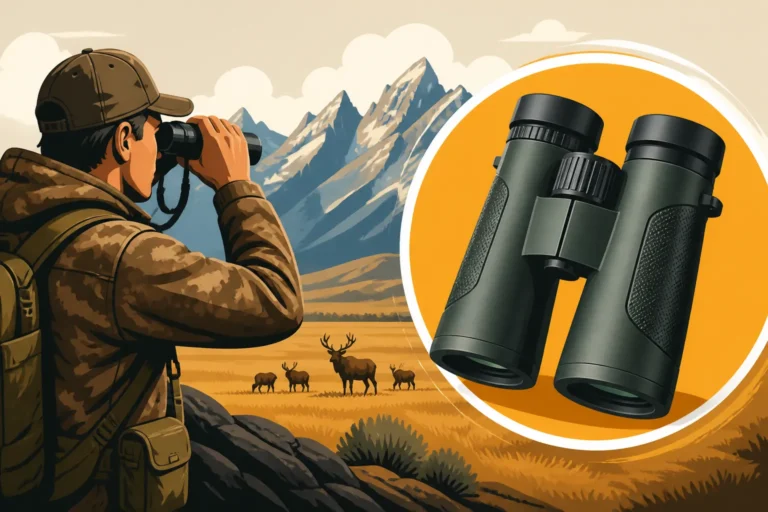
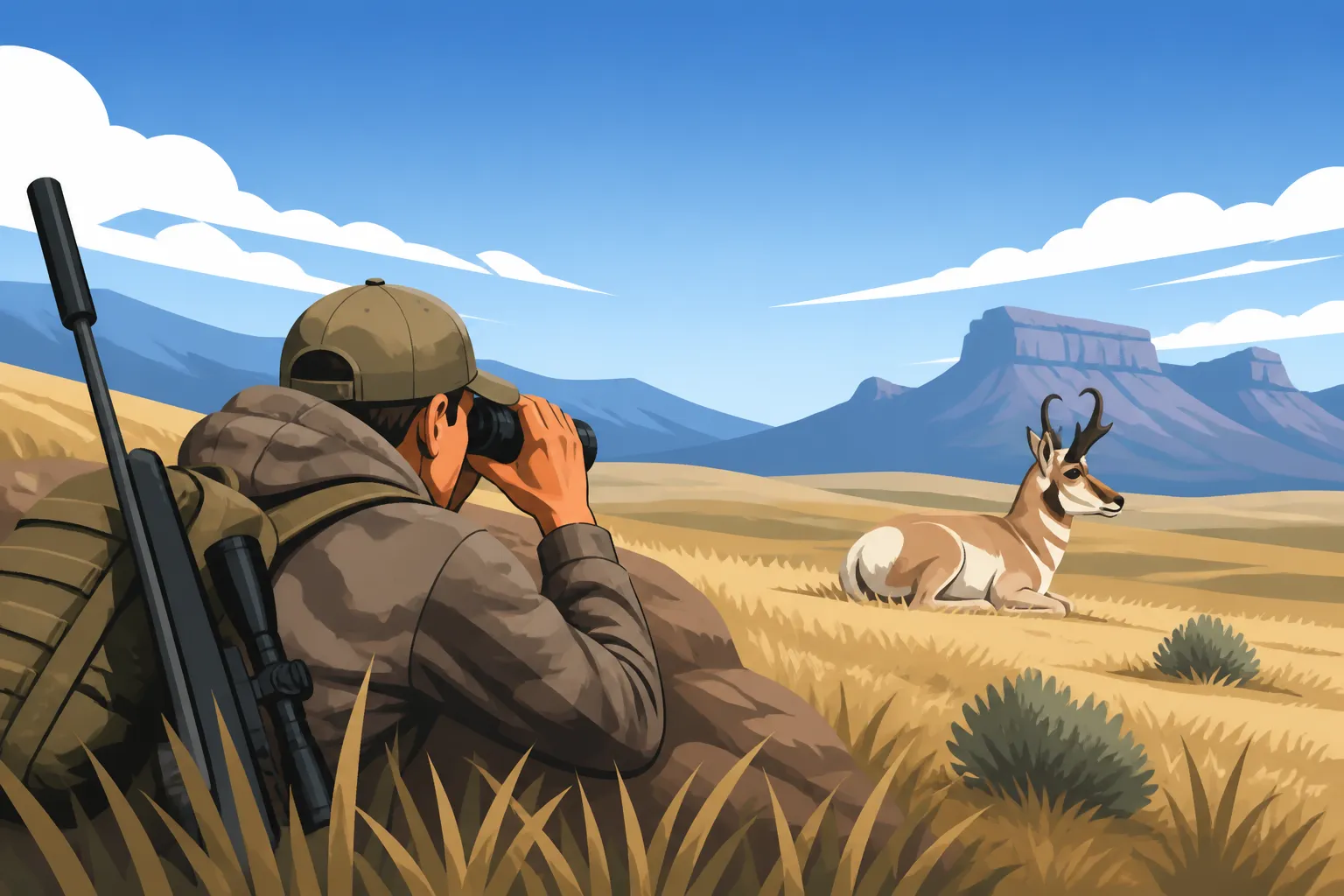
The key is to use your optics—binoculars and a spotting scope—to identify these features before you move a single step. Scout your route from a distance, looking for the path of least resistance and most concealment. For instance, using a platform like GoHunt can be invaluable for e-scouting a unit before the season opens, allowing you to identify these terrain features digitally. Once you're on the ground, a high-quality pair of binoculars will help you identify smaller features as you get closer. When you're ready to move, plan your route from one piece of cover to the next. Never just walk directly at a pronghorn unless you're prepared for it to bust out. This methodical use of cover is explored in more detail in Using Cutbanks and Draws to Close on Antelope.
The Art of the Slow Approach: Patience is Key
Once you start moving, slow down. A pronghorn's eyes are always scanning. Sudden, jerky movements are what they detect best. Think of yourself as a slow-motion video. If you need to peek over a ridge, do it glacially, starting from the lowest point possible, using your hat or a piece of foliage to break your outline first. If you're crawling, move inches at a time, making sure your pack doesn't scrape rocks or your clothing doesn't snag.
This part of the stalk is as much mental as physical. You will get frustrated. You will feel exposed. You might spend an hour covering fifty yards. But every inch gained is critical. If the pronghorn stands up, freezes. If it looks in your direction, freeze. It might just be stretching or surveying its surroundings. Wait for it to settle back down or turn its head away before resuming your movement. Sometimes, you'll reach a point where you simply can't get any closer without being seen. This is where you might set up for your shot if you're a rifle hunter, or consider a different tactic if you're a bowhunter.
Dealing with Unforeseen Obstacles: Other Animals, Changing Wind
No stalk is ever perfect. You might be halfway to your target when a herd of cows wanders into your path, or a secondary group of antelope pops up, blowing your cover. The wind might shift unexpectedly, carrying your scent towards your target. These are moments where you need to be adaptable and ready to change your plan.
If other animals appear, assess their threat level. A small herd of pronghorn nearby can be your undoing, as one alert animal will set off the rest. If they spot you, you might have to backtrack and find a new route or abandon the stalk altogether. Wind shifts require immediate action. If the wind turns unfavorable, you must adjust your approach, retreat to safer ground, or wait it out if possible. Sometimes, the most frustrating thing is having to pull out of a promising stalk because a variable outside your control changes, but that's part of hunting the wily pronghorn.
Another often overlooked obstacle is the sun. A pronghorn bedded with the sun at its back will have an advantage. Approaching with the sun in their eyes can give you a slight edge in breaking up your silhouette, but be mindful of casting long shadows if the sun is low.
Practice and Preparation for Pronghorn Success
The best way to increase your odds of success on a pronghorn stalk is through meticulous preparation and consistent practice. It's not just about shooting; it's about the entire process.
Range Time is Critical: Knowing Your Limits
This seems obvious, but it's especially true for pronghorn. Given the often-long shot opportunities, you need to be intimately familiar with your weapon's ballistics. For rifle hunters, this means practicing at varying distances, not just 100 or 200 yards. Practice shooting from prone positions, using a bipod or shooting sticks, as this is how you'll likely be shooting in the field. Test your rifle with your hunting ammunition to understand its true capabilities. Practice your wind calls at the range. For bowhunters, extend your practice range beyond 40 yards, not necessarily for hunting shots, but to build confidence and form. Focus on smooth, quiet drawing, especially if you're going to be drawing on an animal after a long crawl. Knowing your ethical limits under pressure is paramount. For more on this, check out Realistic Archery Practice Distance for Big Game.
Gear for the Stalk: Optics, Clothing, and Footwear
Your gear can make or break a pronghorn stalk.
- Optics: High-quality binoculars (10×42 or 12×50 are popular choices) are non-negotiable for spotting pronghorn at vast distances and for picking apart terrain during a stalk. A good spotting scope (20-60x) is also immensely helpful for identifying bedded animals, judging their size, and planning your route from a mile away. Consider a brand like Maven or Vortex for reliable performance. You'll definitely want to ensure you have the right Optics Power for Wyoming's Long Sightlines, and the right Binocular Size That Survives an All-Day Glassing Session.
- Clothing: Earth-toned, quiet clothing that blends with the sagebrush environment is essential. Many hunters opt for light tan, sage green, or multicam patterns. Layers are key for Wyoming's unpredictable weather. Most importantly, choose fabric that won't make noise when you're crawling or brushing against vegetation.
- Footwear: Comfortable, durable boots that offer good ankle support for traversing uneven ground are important, but also consider lightweight "stalking shoes" or even going without shoes for the final, quiet approach if conditions allow.
- Other Essentials: A comfortable, low-profile backpack (even an empty one can provide a rifle rest), knee pads for crawling, a wind checker, a rangefinder, and plenty of water are all vital for long hours in the sun and endless crawling.
E-Scouting for Stalking Opportunities
Technology has become an invaluable asset for pronghorn hunters. Platforms like GoHunt offer detailed satellite imagery, public/private land overlays, and topographical maps that can help you identify potential bedding areas, draws, and cutbanks long before you even set foot in the field. You can mark potential stalking routes, identify key pieces of cover, and even anticipate wind patterns by studying the topography. This kind of preparation can save you hours of aimless wandering and dramatically increase your chances of finding a stalkable animal. E-Scouting a Unit Before the Season Opens is a skill every modern hunter should cultivate, especially for wide-open country.
Remember, stalking a bedded pronghorn isn't just about getting close; it's about getting undetected to an ethical shooting distance. It's a game of chess against an animal with an unparalleled defensive strategy. With patience, practice, and a keen understanding of their world, you can turn that seemingly impossible stalk into a hard-earned success story.
Disclaimer
Hunting is a challenging and inherently risky activity. Always prioritize safety, respect wildlife and the land, and adhere strictly to all Wyoming Game and Fish Department regulations. This guide provides general information and recommendations; however, conditions in the field can vary greatly. It is your responsibility to ensure you are properly prepared, skilled, and equipped for your hunt.