Binocular Size That Survives an All-Day Glassing Session
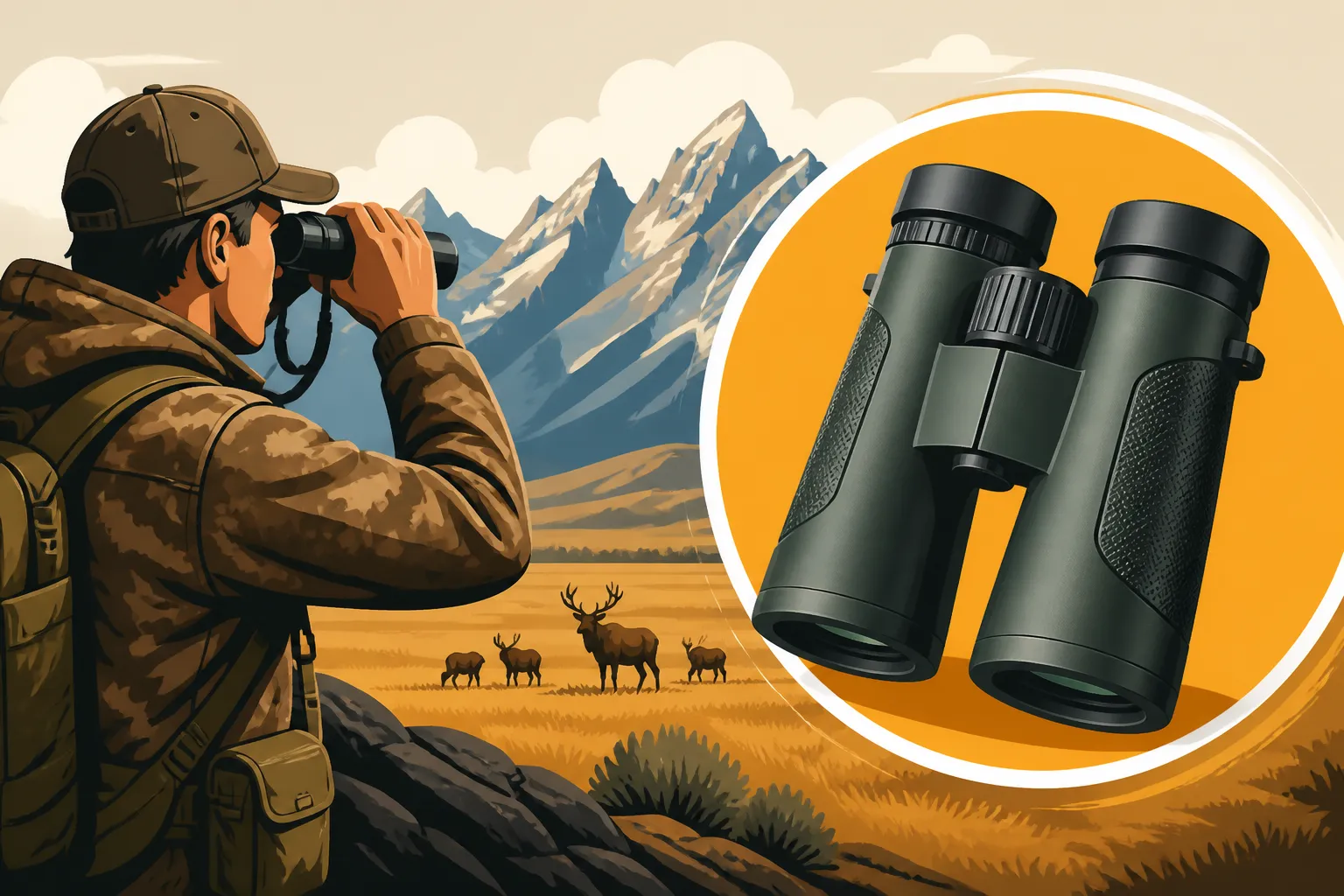
There’s nothing quite like spending a crisp Wyoming morning glassing a vast basin, hoping to turn up a mule deer buck or a herd of elk. But let’s be honest, that dream can quickly turn into a neck-ache nightmare if your binoculars feel like anchors hanging from your chest. Choosing the right binocular size for those long, arduous glassing sessions isn't just about magnification; it's about comfort, fatigue, and ultimately, your ability to stay in the field longer and more effectively. This guide is all about helping you strike that perfect balance, so you can spend less time adjusting and more time finding game.
The Harsh Reality of All-Day Glassing in Wyoming
Wyoming hunting often means covering immense, open country. Whether you're scanning the sagebrush flats for pronghorn in the Red Desert or picking apart timberlines for elk in the Bighorn Mountains, you're going to spend hours behind glass. This isn't like a quick peek in the treestand; this is an endurance sport for your optics and your body. Many hunters, especially those new to the expansive West, quickly realize that the gear they used back East might not cut it when it comes to sustained, high-performance glassing. It's a rude awakening when your arms are screaming, and your neck is stiff, all because your chosen binoculars are simply too much for the task at hand.
Why Weight Becomes a Major Factor
When you're trying to identify the flicker of an ear or the subtle movement of a deer bedded hundreds of yards away, stability is paramount. The heavier your binoculars are, the harder it is to hold them steady for extended periods without a tripod. Even with a harness, that weight adds up over hours, creating strain on your neck, shoulders, and arms. Imagine you're doing a "grid glassing" pattern across a massive hillside, meticulously searching every nook and cranny. If your binoculars are heavy, fatigue sets in, your hands start to shake, and suddenly, that tiny spot you might have noticed becomes impossible to discern, or worse, you give up prematurely. Lightweight binoculars, on the other hand, allow you to remain comfortable, steady, and persistent, which often makes all the difference in spotting that wary animal.
The Trade-Off Between Magnification and Usability
It's a common misconception that "more magnification is always better" for Western hunting. While higher power certainly brings distant objects closer, it comes with significant trade-offs, especially for handheld, all-day glassing. Higher magnification amplifies natural hand shake, making it incredibly difficult to hold an image steady. This means that a 15x binocular, while powerful, might be less effective than a 10x or 12x if you're trying to use it freehand for long stretches. The narrower field of view that often accompanies higher magnification also makes it harder to initially locate game or follow moving animals, adding to the frustration. When you're trying to effectively cover vast areas, the ability to quickly scan and then zoom in with stability often outweighs sheer magnifying power for the initial sweep.
Understanding Binocular Specifications for Western Hunting
Deciphering binocular specs can feel like learning a new language. You see numbers like 10×42, 12×50, 15×56, and while you might grasp the magnification, the second number, the objective lens diameter, is just as crucial, if not more so, for all-day use. Understanding these core numbers and other often-overlooked features is key to selecting a pair of binoculars that will truly enhance your Wyoming hunting experience, rather than hinder it.
Objective Lens Diameter: The Light Gatherers
The second number in a binocular’s description, like the "42" in 10×42, refers to the diameter of the objective lens in millimeters. This is the big lens at the front of the binocular, and its size directly impacts how much light the binocular can gather. More light means a brighter, clearer image, especially in low-light conditions like dawn and dusk, when animals are most active. A larger objective lens also generally means a larger exit pupil, which is the column of light that enters your eye. A larger exit pupil is more forgiving, making it easier to acquire a full image, especially if your eyes are dilated in low light or if you're not holding the binoculars perfectly steady. However, larger objective lenses also mean more glass, which translates to increased weight and bulk. For all-day glassing, you're looking for that sweet spot where light-gathering is sufficient without becoming a burden to carry and hold.
Magnification: How Close is Too Close?
The first number, like the "10" in 10×42, indicates the magnification power. A 10x binocular makes objects appear 10 times closer than they are with the naked eye. For most Western hunting, a 10x magnification is widely considered the sweet spot for a primary binocular. It offers a good balance of bringing distant objects into view without being overly sensitive to hand shake or having an excessively narrow field of view. When you're trying to figure out your optimal setup, consider that anything higher, like 12x or 15x, will likely require a tripod for comfortable, stable viewing over long periods. While a 15x binocular might allow you to confirm antler points on a buck at extreme distances, trying to hold it still for an hour straight while glassing a canyon will quickly tire you out. Knowing your personal limits and what kind of hunting you'll primarily be doing, whether it's primarily open country or more timber, will help determine if pushing past 10x is truly beneficial for your all-day glassing needs. For many, a 10x binocular serves as the primary tool, supplemented by a spotting scope for extreme range detail.
Field of View and Eye Relief: Overlooked Comfort Factors
Beyond magnification and objective lens size, two other specifications significantly impact your all-day glassing comfort and effectiveness: field of view and eye relief.
Field of View (FOV) refers to the width of the area you can see through your binoculars at a specific distance, usually 1,000 yards. It's often expressed in feet or degrees. A wider field of view is incredibly beneficial for quickly scanning vast landscapes, locating game, and following moving animals. Imagine trying to find a specific landmark or a camouflaged animal in a sea of sagebrush; a wide FOV makes that initial sweep much faster and less strenuous on your eyes and brain. Generally, as magnification increases, the field of view narrows, which is another reason why moderate magnification (like 10x) often wins out for general all-day glassing over higher powers if you're not on a tripod.
Eye Relief is the distance your eye can be from the ocular lens (the one you look into) and still see the full, unvignetted image. This is particularly important for hunters who wear eyeglasses or sunglasses. If the eye relief is too short, you won't be able to see the entire picture comfortably without removing your eyewear, which is a constant nuisance. Good eye relief, typically 15mm or more, allows you to comfortably use your binoculars with glasses on, preventing eye strain and ensuring you don't miss any of the view. Adjustable eyecups are also a common feature that helps customize this distance for optimal comfort, whether you wear glasses or not. A long day behind the glass can quickly become miserable if you're constantly fighting with uncomfortable eye relief.
Recommended Binocular Sizes for Optimal Comfort and Performance
When you're facing those long, sun-drenched days in the Wyoming backcountry, the choice of binocular size isn't just a preference; it's a strategic decision. You're looking for an optic that can handle the vast distances and varied terrain without turning your glassing session into a test of physical endurance. While there's no single "perfect" binocular for everyone, certain sizes consistently prove their worth for all-day use in Western hunting scenarios. It’s about finding the best tool for the job that you can comfortably operate hour after hour.
The Versatility of 10×42 Binoculars
For the vast majority of Western hunters, a 10×42 binocular is the undisputed workhorse and often the best all-around choice for all-day glassing. The "10x" magnification offers a superb balance, bringing distant objects into clear view without magnifying hand shake to an unbearable degree. This means you can comfortably use them freehand for extended periods, scanning broad areas for signs of life. The "42mm" objective lens diameter gathers ample light, ensuring bright, clear images from the first hint of dawn until the last sliver of twilight, crucial times when animals are most active.
Furthermore, 10×42 binoculars strike an excellent balance between performance and portability. They are typically light enough to carry comfortably around your neck or in a good binocular harness all day, minimizing fatigue. Many premium brands, from Swarovski to Zeiss to Vortex, offer exceptional 10×42 models that stand up to the rigors of Western hunting. When planning your hunt, whether you're trying to figure out which Optics Power for Wyoming's Long Sightlines is right for your needs or you're honing your The Grid Glassing Method, Step by Step, a good 10×42 should be at the core of your optical strategy. They are simply versatile enough to handle everything from mule deer in open country to elk in scattered timber, making them a wise investment for any hunter serious about spending significant time glassing.
When to Consider 12×50 or 15×56 for Specific Scenarios
While 10×42 binoculars are fantastic all-rounders, there are specific situations in Wyoming where stepping up to a 12×50 or even a 15×56 can be incredibly advantageous, provided you manage the weight and stability challenges. These higher-powered optics excel when you need to really pick apart extreme distances or when the ability to discern fine details is paramount.
A 12×50 binocular offers a noticeable bump in magnification compared to a 10x, making it easier to evaluate animals at greater ranges, especially in truly wide-open landscapes like those found in parts of the Red Desert or while Stalking Pronghorn Across Wyoming's Open Sagebrush. The larger 50mm objective lens helps maintain good light transmission despite the increased magnification. While you can still use a 12×50 handheld for shorter durations, for sustained glassing, you'll likely want to couple it with a tripod. This significantly reduces shake and allows you to capitalize on the added power without fatigue.
Stepping up to a 15×56 binocular is generally for specialized scenarios where maximum reach is desired, and a tripod is almost always required. These are often referred to as "big eyes" and are phenomenal for Spotting Scope Power for Open Country Glassing where you need to identify trophy quality from a mile away. They are heavier and bulkier, making them less suitable for casual handheld use. However, when you're set up on a vantage point overlooking miles of territory, meticulously Glassing Wyoming Basins Before You Take a Step for bedded animals, a 15×56 on a sturdy tripod can reveal details that smaller binoculars simply can't. Many hunters find success by carrying 10x42s for general scouting and quick checks, and then deploying a 15×56 or a spotting scope from a fixed position for serious, long-range reconnaissance.
Harnessing the Power of a Tripod Adapter
Regardless of whether you settle on a 10x, 12x, or 15x binocular, a tripod adapter is arguably the most underrated accessory for all-day glassing in Wyoming. Seriously, this simple, often inexpensive piece of gear will revolutionize your long glassing sessions. Hand holding any binocular for more than a few minutes inevitably leads to fatigue and noticeable image shake. The moment you mount your binoculars to a sturdy tripod, that shake disappears, revealing a vastly clearer, steadier image.
This newfound stability not only reduces eye strain and physical fatigue but also significantly increases your ability to pick out subtle details that would be impossible to see handheld. You'll be able to watch animals for longer, study their patterns, and confirm details like antler points or body size with confidence. Even with a 10×42, a tripod makes a huge difference, allowing you to sustain detailed glassing for hours. For those considering larger binoculars like a 12×50 or 15×56, a tripod adapter is not optional; it’s absolutely essential to get the most out of your investment. It allows you to transform your binoculars into a high-powered, stable viewing station, perfect for those extended sessions scanning for mule deer at a great distance or picking apart a distant timberline. Many experienced Western hunters, like those often consulted by platforms like GoHunt, will tell you that a quality tripod setup is just as important as the optics themselves for effective, all-day glassing.
| Binocular Size | Typical Weight Range (oz) | Handheld Usability (All-Day) | Best Use Case (Wyoming) | Pros | Cons |
|---|---|---|---|---|---|
| 10×42 | 22-30 | Excellent | General glassing, versatile, all species | Lightweight, wide FOV, bright image, good balance | Limited extreme range detail compared to higher power |
| 12×50 | 28-38 | Good (short periods), better on tripod | Open country, longer distances, deer/elk | More magnification, good light gathering | Heavier, narrower FOV, tripod recommended for long glassing |
| 15×56 | 40-55+ | Poor, tripod essential | Extreme long-range spotting, trophy evaluation | Maximum magnification, excellent light gathering | Very heavy, bulky, narrowest FOV, tripod mandatory |
Real-World Considerations Beyond the Numbers
Choosing binoculars for all-day glassing isn't just about the technical specs; it's also about how those specs translate into a practical, comfortable, and effective tool in the field. After all, a binocular that looks great on paper but feels terrible in your hands or fails when you need it most is ultimately useless. When you're out there on the vast landscapes of Wyoming, things like brand reputation, ergonomics, and how you carry your optics become just as critical as magnification or objective lens size.
Brand Reputation and Optical Quality
Let's face it, investing in good optics is a significant expense, but it's one area where cutting corners can severely impact your hunting success and enjoyment. Reputable brands consistently deliver superior optical quality, which translates to a sharper, clearer image, better color fidelity, and reduced chromatic aberration (that annoying color fringing). This optical clarity is paramount when you're trying to differentiate a distant branch from an antler tine, or a rock from the ear of a bedded animal. Brands like Swarovski, Zeiss, Leica, Vortex, and Maven have earned their stripes in the Western hunting world for a reason. They build binoculars that withstand harsh weather, hold their zero, and provide exceptional glassing experiences. While budget options exist, for all-day glassing where optical performance is constantly under scrutiny, investing in a mid-to-high-tier binocular from a trusted brand will pay dividends. Many hunters consult resources like GoHunt for gear reviews and recommendations, understanding that quality optics are a foundational piece of their hunting kit.
Ergonomics and Personal Fit
This is where the rubber meets the road. No matter how technically advanced a binocular is, if it doesn't feel good in your hands, it's going to be a pain to use for hours on end. Pay attention to the binocular's balance, texture, and how naturally your fingers fall on the focus wheel. Some binoculars are compact and sleek, while others are larger and more robust. Do the barrels fit comfortably in your hands for long periods without causing cramping? Is the focus wheel smooth and easy to manipulate, even with gloves on?
Consider the eye cups as well – do they twist up and down smoothly and stay in position? As we touched on earlier, eye relief and eyecups for eyeglass wearers is a big deal, but even without glasses, poorly designed eyecups can be uncomfortable. If you have the opportunity, handle different models in person. Hold them up to your eyes, adjust them, and imagine doing that for an entire day while climbing hills or hunkering down in the wind. A binocular that fits your hands and face well will significantly reduce fatigue and allow you to stay focused on the task of finding game, which is crucial whether you're working through E-Scouting a Unit Before the Season Opens or out in the field.
The Importance of a Good Harness
You've chosen the perfect binocular size for all-day glassing, but how you carry it is just as important as the optic itself. A flimsy neck strap might be fine for a quick trip to the bird feeder, but for traversing rugged Wyoming terrain for miles, it's a recipe for discomfort and a perpetually swinging optic. A quality binocular harness is an absolute game-changer for all-day glassing comfort and accessibility.
A good harness distributes the weight of your binoculars across your shoulders and back, taking the strain off your neck. It holds the binoculars securely against your chest, preventing them from swinging and bouncing as you hike, which also protects them from bumps and scrapes. When you need them, they're right there at your fingertips, ready to be deployed instantly. Look for harnesses that are comfortable, durable, and offer additional storage for things like lens caps, a wind checker, or a small rangefinder. Brands like FHF Gear, Kuiu, and Marsupial Gear make excellent harnesses that are trusted by Western hunters. This combination of a well-chosen binocular and a comfortable harness ensures your optics are always where you need them, ready for action, and won't cause you undue fatigue, allowing you to focus on the hunt itself, from Scouting a Wyoming Unit From Your Kitchen Table to the moment of truth.
Disclaimer
Please remember that hunting regulations and best practices can change. Always consult the most current Wyoming Game and Fish Department regulations before planning your hunt. The information provided here is for general educational purposes and should not be considered legal advice.