How Many Years It Takes to Draw Wyoming Moose
For many passionate hunters, drawing a Wyoming moose tag isn't just a goal; it's a lifelong dream that often feels impossibly out of reach. The sheer rarity of these permits can lead to years, sometimes even decades, of applications and accumulating preference points, leaving hopeful applicants feeling a mix of anticipation and deep frustration. This guide aims to pull back the curtain on the Wyoming moose draw, explaining exactly why these tags are so elusive and providing realistic insights into how many years it truly takes to draw a Wyoming moose license, especially for non-residents.
The Elusive Nature of Wyoming Moose Tags
Let's face it: Wyoming moose tags are among the most coveted and difficult-to-draw permits in the entire West. It’s not just a matter of applying; it's entering a lottery with astronomically long odds, especially if you're a non-resident. This extreme rarity isn't due to a lack of moose in Wyoming, but rather a deliberate management strategy to maintain healthy populations and provide incredibly high-quality hunting experiences for those lucky few who do draw a tag.
The Shiras moose, a subspecies known for its majestic antlers and solitary nature, thrives in specific habitats across the state, primarily in the denser timber and willow bottoms of the northwestern and western mountains. Biologists work tirelessly to manage these herds responsibly, balancing conservation with hunting opportunity. This often means very conservative tag allocations, ensuring the long-term health and stability of the species. When the number of available tags is so minuscule compared to the massive pool of applicants, the wait becomes inevitable.
Why Moose Licenses Are So Hard to Come By
The primary reason for the extreme difficulty in drawing a Wyoming moose license boils down to simple supply and demand, heavily skewed in favor of demand. Each year, the Wyoming Game and Fish Department (WGFD) determines a very limited number of moose tags, far fewer than for species like elk or deer. These are often considered "once-in-a-lifetime" opportunities for many, and the rarity only adds to their allure.
Adding to this challenge is the fact that moose habitat, while robust in certain areas, isn't as widespread or abundant as that for other big game species. This means fewer potential hunt areas can support sustainable moose populations that are open to hunting. The combination of limited habitat, strict conservation goals, and overwhelming interest from hunters creates a bottleneck that makes drawing a tag a statistical long shot year after year. It's a testament to the quality of the hunting experience that so many are willing to play the long game.
The Impact of Limited Quota Hunt Areas
Wyoming's hunting is managed through a system of specific hunt areas, and moose are no exception. Unlike a general license that might cover vast swathes of the state, moose tags are always allocated to very specific, limited quota hunt areas. This hyper-specific allocation further restricts the number of tags available for any given area.
Each of these hunt districts has its own unique characteristics, moose population dynamics, and therefore, its own set of draw odds. Some areas might have a handful more tags than others, slightly improving the odds, but generally, we're talking about single-digit tag allocations for non-residents in most units. This system ensures that hunting pressure remains low and the quality of the hunt remains exceptionally high, but it undeniably contributes to the prolonged wait times that applicants experience. You're not just drawing a moose tag; you're drawing the moose tag for a particular piece of country, which is what makes it so special.
Understanding Wyoming's Moose Draw System
Navigating Wyoming's draw system can feel like learning a new language, especially when it comes to species as highly sought after as moose. It's not a straightforward random draw for everyone; there's a nuanced system involving preference points and a specific allocation split that heavily favors residents, which directly impacts how many years it takes to draw a Wyoming moose tag. Understanding these mechanics is crucial for setting realistic expectations and planning your application strategy.
The WGFD employs a preference point system for moose, which means that with each unsuccessful application, you gain a point, incrementally increasing your odds in future draws. However, this isn't a guaranteed linear progression. The system is designed to reward loyalty, but it's still a lottery, and the sheer number of applicants with many points means that even top-tier point holders can face disappointment for several years.
The 90/10 Resident vs. Non-Resident Split
Perhaps the most significant factor influencing non-resident draw times for moose (and other premium species like bighorn sheep and mountain goat) is Wyoming's 90/10 split. This rule dictates that 90% of the available moose tags in any given hunt area are reserved for resident hunters, leaving a mere 10% for non-residents. This allocation dramatically skews the odds.
Imagine a hunt area with only ten moose tags. Under the 90/10 split, nine of those tags immediately go to Wyoming residents, leaving just one tag for all non-resident applicants. If there are 1,000 non-resident applicants, that's one tag out of a thousand, even before accounting for preference points. This structure, put in place to ensure local hunters have ample opportunity, means that non-residents are competing in a much smaller pool with an incredibly slim chance of success, often leading to wait times measured in many years, sometimes even decades. This system is comprehensively explained in The 90/10 Split That Reshaped Wyoming's Sheep and Moose Draws, which details how these allocations affect various trophy species.
Preference Points and Their Role in Moose Draws
Wyoming uses a preference point system, meaning each year you apply for a moose tag and are unsuccessful, you accrue one point. These points are then used in subsequent draws to improve your chances. While they don't guarantee a tag, they are weighted in the draw process. The more points you have, the higher your "weighted" entry into the draw.
For moose, accumulating preference points is not just a good idea; it's practically a necessity for non-residents. With the 90/10 split, entering the draw with zero or very few points as a non-resident is almost always a losing battle. Most successful non-resident applicants have accumulated a significant number of points over many years. This system means that anyone starting fresh should expect a very long-term commitment to applying annually for points before they even have a realistic shot at drawing a tag. You can learn more about how this system works in How Wyoming Preference Points Accumulate Year to Year.
Consider this table illustrating hypothetical draw odds based on point levels for non-residents. These are illustrative, as actual odds vary wildly by hunt unit and year, but they paint a clear picture of the challenge:
| Non-Resident Preference Points | Approximate Odds of Drawing a Moose Tag (Illustrative) | Estimated Years to Draw (Based on Odds) |
|---|---|---|
| 0-5 Points | < 0.1% | 100+ |
| 6-10 Points | 0.1% – 0.5% | 20 – 50 |
| 11-15 Points | 0.5% – 1.5% | 7 – 20 |
| 16-20+ Points | 1.5% – 5% | 2 – 7 |
Note: These are highly generalized and for illustrative purposes only. Actual draw odds depend on the specific hunt area, the number of applicants, and the exact number of tags available in a given year. Always check the official WGFD draw odds reports and resources like GoHunt for the most current data.
Realistic Expectations for Non-Resident Moose Applicants
Setting realistic expectations is paramount when you're dreaming of a Wyoming moose hunt. The truth is, for many non-residents, drawing a tag is a multi-decade endeavor, if it happens at all. It's not meant to discourage you, but rather to arm you with the knowledge to make informed decisions about your application strategy and manage your anticipation. The journey to a Wyoming moose tag is a marathon, not a sprint, and patience is truly the most valuable asset you can bring.
Many hunters dedicate years to simply accruing preference points, fully aware that the actual draw might still be a distant hope. This long-term commitment means you'll be checking your draw results year after year, sometimes with a glimmer of hope, but often with the familiar "unsuccessful" notification. It's a test of endurance and dedication, but the reward of a Wyoming moose tag is considered by many to be well worth the wait.
The Multi-Decade Journey for Non-Residents
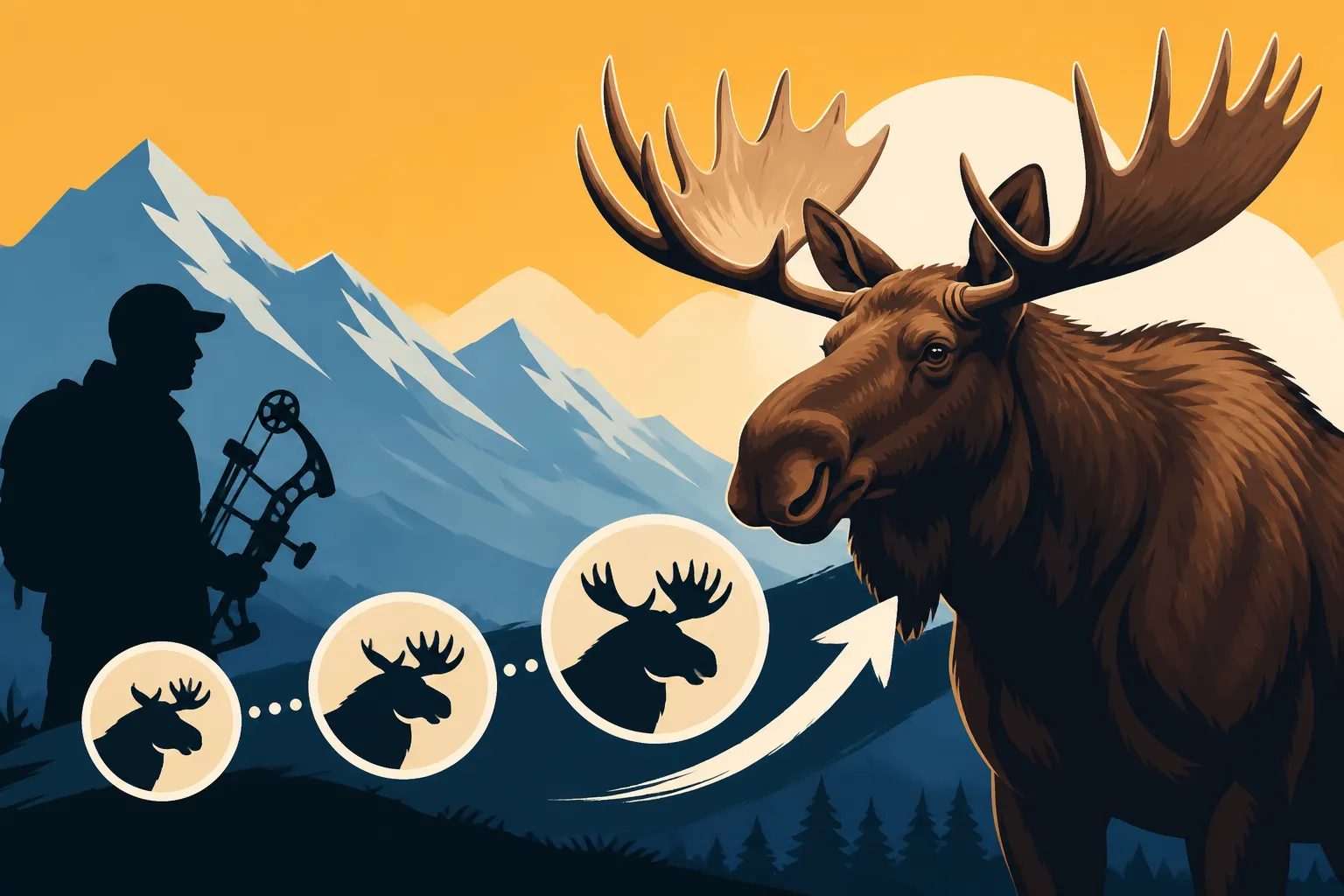
For non-residents, drawing a Wyoming moose tag is realistically a multi-decade commitment. We're talking 15, 20, even 25 years or more of accumulating preference points before your odds become genuinely competitive for some of the better units. This is particularly true for those trophy units that produce exceptional bulls. The competition for these coveted tags is fierce, and the number of applicants with maximum or near-maximum points continues to grow, a phenomenon often referred to as "point creep."
This means that if you're just starting out, you might be looking at applying for preference points annually for a significant portion of your hunting career. This isn't to say it's impossible to draw sooner through sheer luck in the random draw, but statistically, the odds are heavily weighted towards those with a substantial point accumulation. Websites like GoHunt provide detailed draw odds for Moose Draw Odds by Hunt District, allowing you to see firsthand the point levels required for success in various areas, which often confirms these long timelines.
Strategic Point Accumulation vs. Applying Annually
Given the extremely long odds, non-residents often face a strategic choice: do you apply for a moose tag every year, hoping for a long shot, or do you focus solely on accumulating preference points? For most, the smartest approach, especially in the early years, is to prioritize point accumulation.
Applying for a moose tag typically requires paying the full license fee upfront, which can be a significant amount of money that is refunded if you are unsuccessful. However, simply buying a preference point outright costs far less and still gets you that crucial point towards your goal. Many hunters will simply opt to buy a point each year without applying for the tag, especially if they have very few points, knowing that their chances of drawing are practically zero anyway. This way, they save the upfront license fee and continue building their points for when their odds become more favorable. The application window for moose typically closes in late April, as highlighted in Sheep, Goat, Moose and Bison Close April 30 in Wyoming, so make sure you mark your calendar if you're pursuing this strategy.
Checking Draw Odds and Planning Your Hunt
Once you've built up a respectable number of preference points, it's time to start meticulously researching draw odds for specific hunt areas. This is where detailed planning comes into play. Not all moose units are created equal, and some might require slightly fewer points than others, perhaps due to harder access or smaller moose populations.
Platforms like GoHunt offer invaluable tools for analyzing historical draw data, allowing you to see what it actually took to draw a tag in previous years for each unit. This data can help you identify units where your accumulated points might give you a realistic shot. It also helps manage expectations: if a unit consistently draws with 20+ points and you only have 10, it's probably best to continue accumulating points. Remember, the game is patience, and choosing the right unit at the right time is part of playing the long game for a Wyoming moose tag.
Maximize Your Chances: Tips for a Successful Moose Application Journey
Even with the daunting odds, there are proactive steps you can take to maximize your chances and make the application process as efficient as possible. While there's no magic bullet to instantly secure a moose tag, a well-thought-out strategy can certainly shorten your wait or at least make the long journey more enjoyable. It's about being informed, persistent, and realistic every step of the way.
Remember, the goal isn't just to draw a tag; it's to be prepared for the incredible experience of a Wyoming moose hunt when your number finally comes up. This means not only navigating the application system effectively but also being physically and mentally ready for the challenges of hunting these magnificent animals in their rugged habitat.
Understanding Moose Hunt District Boundaries
Before you even think about applying, it's absolutely critical to understand the specific boundaries of Wyoming's moose hunt districts. Each district is distinct, and the draw odds, tag allocations, and even the type of terrain and moose concentrations can vary wildly from one to another. Just because you know there are moose in "northern Wyoming" doesn't mean you understand the nuances of a specific unit.
Utilize resources like the WGFD's online hunt planner and detailed mapping applications. These tools will show you the exact geographical lines that define each hunt district. Knowing these boundaries is essential not only for applying but also for future scouting and hunt planning. Understanding the terrain, access points, and public land distribution within these specific areas can give you a significant advantage once you do draw that coveted tag. This level of detail is critical, as illustrated in Moose Hunt District Boundaries Explained.
The Value of Annual Preference Point Applications
I've touched on it before, but it bears repeating: consistency is key. If your dream is to hunt a Wyoming moose as a non-resident, then applying for a preference point every single year is non-negotiable. Missing even one year means you fall behind in the race against point creep and the ever-increasing pool of dedicated applicants.
The cost of a preference point is relatively low compared to the value of the hunt itself, and it's an investment in your future hunting opportunities. Even if you're not ready to commit to a full license application, make sure you put in for that point. The application deadline for purchasing points (without applying for a license) typically runs from July through November, as discussed in The July to November Point-Only Window in Wyoming. Don't let that window close without securing your annual point. This diligent accumulation is the cornerstone of any successful long-term strategy for drawing a Wyoming moose tag.
Preparing for Your Once-in-a-Lifetime Hunt
Drawing a Wyoming moose tag isn't just about the application; it's about being ready for the hunt of a lifetime when that coveted license finally arrives. Moose hunting in Wyoming can be physically demanding, often requiring long hikes through rugged, sometimes swampy, terrain in potentially challenging weather conditions. These aren't hunts you walk off a couch and accomplish.
Start thinking about your physical fitness years in advance. Practice shooting your rifle accurately, perhaps even under simulated hunting conditions. Research potential outfitters if you plan to go guided, or begin e-scouting specific hunt areas if you intend a DIY adventure. Understand How Big a Shiras Moose Bull Gets and the challenges of recovering an animal of that size in difficult terrain. This forethought ensures that when your decades of patience finally pay off, you're not just a successful applicant, but a well-prepared, ethical hunter ready to make the most of an extraordinary opportunity.
Disclaimer
This article is for general informational purposes only and does not constitute professional advice. Laws, prices and regulations vary by location and change over time. Consult a qualified professional for guidance on your specific situation.