The Powder Charge a Legal Muzzleloader Needs
There's nothing quite like the feeling of chasing big game during Wyoming's muzzleloader seasons, but honestly, trying to nail down all the specific legal requirements for your setup can feel like navigating a maze. One of the biggest head-scratchers for new and even seasoned hunters is figuring out exactly what kind of powder charge your muzzleloader needs to be legal in the Cowboy State. It’s not just about getting enough "oomph" to take down an animal cleanly; it's about following the letter of the law. This guide is here to cut through the confusion and explain Wyoming's muzzleloader powder charge rules so you can hunt with confidence.
Understanding Wyoming's Muzzleloader Powder Charge Regulations
When it comes to muzzleloader hunting in Wyoming, the regulations aren't just suggestions; they're strict guidelines designed to ensure humane harvests and fair chase. The powder charge, the very heart of your projectile's energy, is clearly defined. It’s not enough to just load up; you need to know you're meeting the legal minimum to avoid a frustrating situation in the field, or worse, an ethical one.
The Mandatory 50-Grain Minimum Explained
Wyoming law states that for legal big game hunting, your muzzleloader must use "a projectile that is propelled by at least 50 grains of black powder or its equivalent." This 50-grain rule is the absolute cornerstone of legality for your powder charge. It means that whether you're loading up with traditional loose black powder or modern substitutes, your propellant must generate at least the energy and pressure equivalent to 50 grains of actual black powder.
It’s crucial to understand that "50 grains" in this context refers to a volume measurement, especially for loose powder, rather than a strict weight. Traditional black powder, like brands such as Goex or Swiss, is measured by volume. So, when you see "50 grains," picture filling a volumetric measure designed for black powder. For many modern granular substitutes, like Hodgdon's Triple Seven or Pyrodex, their manufacturers often provide clear instructions on how their product's volumetric measure compares to traditional black powder. For instance, a 50-grain volume charge of a substitute might actually weigh a different amount on a scale, but it's the equivalent energy output and volumetric measurement that Wyoming cares about. You need to be sure your chosen powder, in the amount you load, lives up to that 50-grain black powder equivalent benchmark. Remember, it's not just about the projectile; the powder charge itself needs to meet the standard. This regulation works hand-in-hand with the other requirements, like those detailed in Wyoming muzzleloaders need .40 caliber and 50 grains, ensuring a complete legal setup.
Distinguishing Between Powder Types and Legal Equivalents
The world of muzzleloader propellants has evolved dramatically beyond just FFG or FFFG black powder. Today, hunters have a plethora of choices, from traditional black powder to synthetic substitutes and even compressed pellets. But how do these modern options stack up against that "50 grains of black powder or its equivalent" rule?
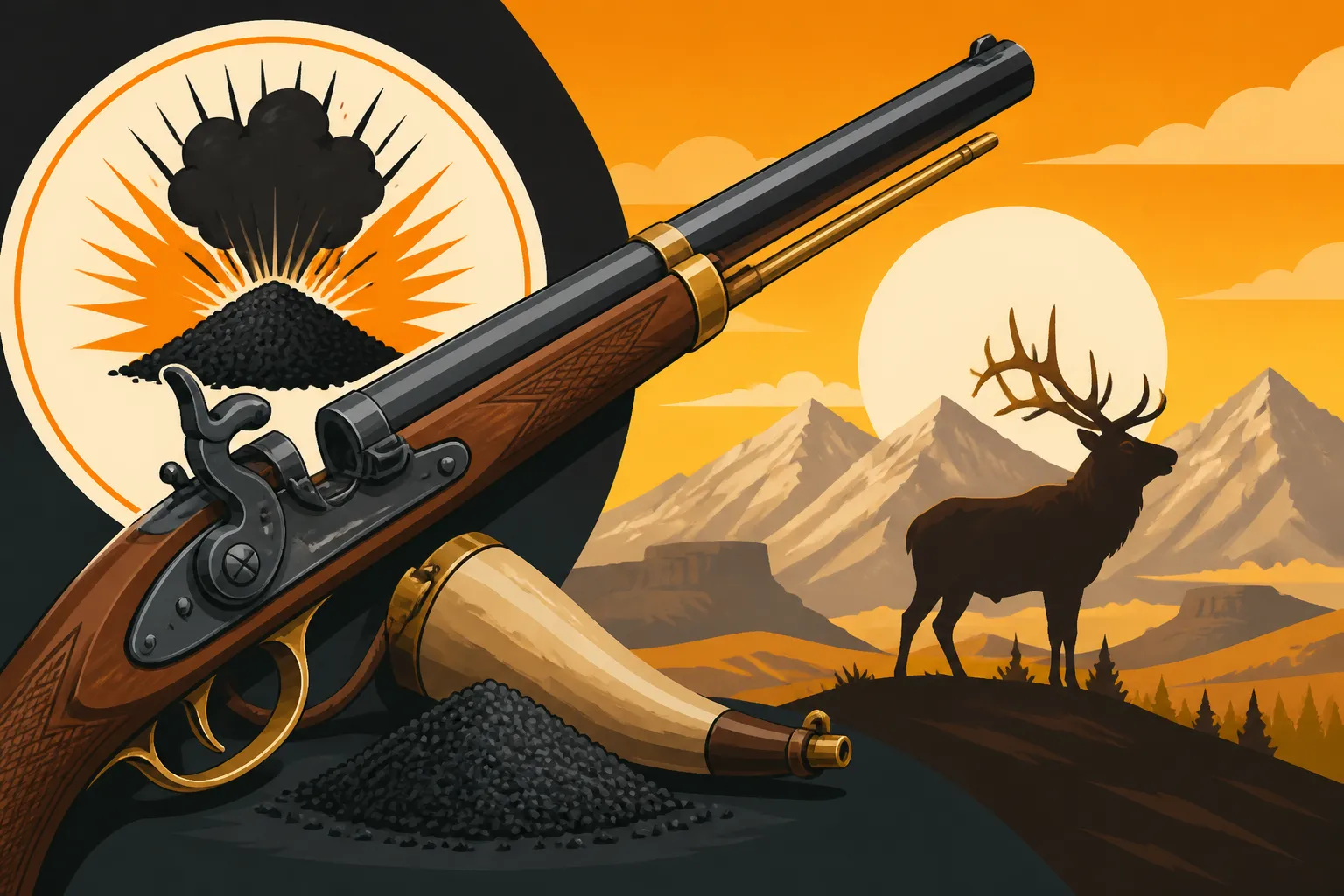
Traditional Black Powder: This is the original, and the standard everything else is measured against. Brands like Goex, Schuetzen, and Swiss are classic choices. When using loose black powder, you’ll typically measure it by volume using a powder measure. If you dial that measure to 50 grains, you're meeting the minimum without question. It’s straightforward, but requires careful handling and cleaning.
Black Powder Substitutes (Granular): These are designed to burn cleaner and be less corrosive than traditional black powder, while still mimicking its performance characteristics. Popular examples include Hodgdon Pyrodex (P, RS, or Select grades), Hodgdon Triple Seven (FFg or FFFg), and Blackhorn 209. Each of these substitutes has its own specific loading recommendations. For instance, Pyrodex is often measured volume-for-volume with black powder, meaning a 50-grain volume charge of Pyrodex would satisfy the 50-grain black powder equivalent. Triple Seven is denser and typically produces more energy per volume, so a reduced volumetric charge might be considered equivalent to black powder. Always refer to the manufacturer's guidelines, which will explicitly state the volume equivalencies. They’ll tell you if 50 grains by their volume measure equals 50 grains of black powder. This is a critical point, and one where careful reading of the product instructions saves you headaches and ensures legal compliance. For more on this, you might find it useful to look into measuring blackpowder substitutes by volume, not weight.
Pelletized Powders: These are perhaps the most convenient option, especially for hunters new to muzzleloading. Pellets, like those from Hodgdon (Pyrodex Pellets, Triple Seven Pellets) or IMR White Hots, are pre-measured charges compressed into a solid form. They eliminate the need for a powder measure, making loading quicker and often more consistent in the field. However, you still need to ensure your chosen pellet combination meets the 50-grain equivalent minimum. For example, a common setup might involve using two 50-grain equivalent pellets, which would give you a 100-grain equivalent charge – well over the minimum. A single 50-grain equivalent pellet, if available and designed for big game, would technically meet the minimum. Always check the packaging to confirm the "grain equivalent" for each pellet. This is where hunters can sometimes get confused, thinking a 30-grain pellet means 30 grains by weight when it really might be a 50-grain equivalent by design. For example, some brands offer 50-grain equivalent pellets, and stacking two of those will get you a 100-grain equivalent, which is perfectly legal and often preferred for larger game.
Ultimately, the key is knowing what your specific powder or pellet system delivers in terms of black powder equivalent. Don't guess; consult manufacturer data. Websites like GoHunt often have forums or resources where experienced Wyoming hunters discuss their legal and effective muzzleloader loads, which can be a great place to cross-reference your research.
Why Specific Powder Charges Matter for Ethical Hunting
Beyond just adhering to the legal requirements, understanding and selecting the correct powder charge is paramount for ethical hunting. We, as hunters, owe it to the animals we pursue to make the most humane and effective shot possible. This means having enough power behind our projectile to ensure a clean kill.
Ensuring Sufficient Knockdown Power for Wyoming's Big Game
When you're out in the sprawling landscapes of Wyoming, whether you're chasing a big mule deer buck in the foothills or a bull elk deep in the mountains, you need confidence that your muzzleloader has the power to do the job. The 50-grain black powder equivalent minimum isn't arbitrary; it's set to ensure that even at the lower end of legal charges, you have enough muzzle energy and bullet velocity to penetrate vital organs and bring down an animal quickly.
Imagine finally getting that once-in-a-lifetime shot on a mature bull elk, only to realize your load was underpowered. The projectile might not penetrate deep enough, leading to a wounded animal and a difficult, if not impossible, recovery. This is a hunter's worst nightmare and exactly what Wyoming’s regulations aim to prevent. While a 50-grain equivalent charge is the legal minimum, many experienced hunters opt for significantly higher charges, often 90 to 120 grains (equivalent), especially when targeting larger game like elk or moose. This provides a greater margin for error in shot placement and ensures maximum energy transfer for a quick, ethical kill. The bigger the animal, the more energy you typically need. While the specific requirements for different species aren't directly tied to the powder charge beyond the 50-grain minimum, considering the size and resilience of a mature elk versus a pronghorn will naturally lead you to choose a more robust load. This is part of the deep dive into Muzzleloader Caliber and Powder Charge Minimums that every serious hunter should undertake.
Impact on Accuracy and Ballistics at Range
It's a common misconception that simply increasing your powder charge will automatically make your muzzleloader more powerful and therefore better. While more powder generally means more velocity, there's a delicate balance to strike, especially when it comes to accuracy. Every muzzleloader, like any firearm, has a "sweet spot" where a particular bullet, powder, and charge combination performs optimally for accuracy.
Loading too little powder, just barely scraping by the 50-grain minimum, might result in insufficient velocity, leading to excessive bullet drop and less reliable expansion of your projectile, particularly at longer ranges. Conversely, stuffing in too much powder can lead to excessive recoil, making accurate shooting difficult, and could even reduce accuracy by stressing the bullet or distorting its flight path. Over-pressuring your rifle is also a safety concern.
To find your rifle's sweet spot, diligent range practice is non-negotiable. Start with a charge that comfortably exceeds the 50-grain minimum (e.g., 80-90 grains equivalent of your chosen powder or two 50-grain equivalent pellets) and work your way up or down in small increments. Pay close attention to group sizes at various hunting distances. What performs well at 50 yards might not at 150 yards. You'll likely find that accuracy begins to degrade past a certain powder charge, even if velocity is still increasing. This is why understanding The Effective Range of a Muzzleloader on Elk is so important; it's not just about how far the bullet can fly, but how far you can accurately place it with your chosen load. Testing different bullet weights and designs with varying powder charges is also key. A heavier bullet might stabilize better with a slightly higher charge, while a lighter one might prefer less. Good data resources like GoHunt often publish field reports and ballistic charts that can help you understand common muzzleloader performance in Wyoming's diverse terrain.
Navigating Powder Types and Legal Minimums
The sheer variety of muzzleloader powders can be daunting, but understanding their characteristics and how they relate to Wyoming's 50-grain minimum is crucial. It’s not just about the numbers; it’s about the safe and effective application of these propellants in your specific rifle.
Black Powder: The Traditional Standard
Black powder is the original propellant for muzzleloaders, and it's the benchmark against which all substitutes are measured. It comes in different granulations, typically Fg, FFg, FFFg, and FFFFg (or 1F, 2F, 3F, 4F), with smaller numbers indicating coarser grains. For big game hunting, FFg (2F) is generally recommended for rifles .50 caliber and larger, while FFFg (3F) is often used in smaller calibers or pistols.
Wyoming's "50 grains of black powder" rule implicitly refers to a charge measured by volume, not weight. When you use a volumetric powder measure, you're directly complying if you measure out 50 grains of genuine black powder. However, black powder is corrosive and requires immediate, thorough cleaning after shooting to prevent rust and damage to your firearm. This traditional approach offers a classic hunting experience, but it demands attention to detail both in the field and after the hunt. Many hunters, when discussing What Wyoming Counts as a Legal Firearm for Big Game, will highlight the nuances of traditional black powder versus modern alternatives.
Modern Substitutes: Pyrodex, Triple Seven, and Blackhorn 209
Modern black powder substitutes were developed to offer similar ballistic performance to traditional black powder but with improved cleanliness and reduced corrosiveness.
-
Pyrodex: One of the oldest and most widely used substitutes, Pyrodex (available in granular forms like RS, Select, or P, and in pellets) is often advertised as a volume-for-volume replacement for black powder. This means if you measure 50 grains (by volume) of Pyrodex RS, it's generally considered equivalent to 50 grains of black powder and meets the Wyoming minimum. It's less corrosive than black powder but still requires diligent cleaning.
-
Triple Seven (Hodgdon): Triple Seven (T7) is another popular synthetic substitute, available in granular (FFg, FFFg) and pelletized forms. It's known for producing higher velocities than Pyrodex or black powder with the same volumetric charge. This is a critical distinction: T7 is often recommended to be loaded with a 15% reduction in volumetric charge compared to black powder to achieve similar pressure levels. So, if the rule is 50 grains of black powder equivalent, and 50 grains by volume of T7 is more powerful, you might be well over the minimum. Always consult the manufacturer's data. If you measure 50 grains by volume of Triple Seven, you are definitely exceeding the 50-grain black powder equivalent, making it a safe choice for meeting Wyoming's legal requirements.
-
Blackhorn 209: This is a newer generation of propellant that burns very cleanly and is virtually non-corrosive, allowing for extended shooting sessions without immediate cleaning. Blackhorn 209 is measured by weight for accuracy, though its volume equivalency to black powder is also published by the manufacturer. It requires a specific 209 primer (and sometimes a magnum 209 primer) for reliable ignition and is often considered a high-performance choice for modern inline muzzleloaders. When using Blackhorn 209, you must consult the manufacturer's data to ensure your measured weight charge translates to at least the 50-grain black powder equivalent in energy. For instance, a common starting load for a .50 caliber with Blackhorn 209 might be around 70-80 grains by weight, which will easily surpass the 50-grain black powder equivalent. GoHunt forums are a great place to find discussions on specific load data for Blackhorn 209 and other powders, with many hunters sharing their successful Wyoming setups.
Pellets: Convenience Meets Compliance
Pelletized powders offer unparalleled convenience in the field. Instead of pouring loose powder, you simply drop one or more pre-formed pellets down the barrel. They usually come in specific "grain equivalent" denominations, such as 50-grain or 60-grain equivalents.
To meet Wyoming's 50-grain minimum, you would need to use at least one pellet that is rated as a 50-grain black powder equivalent or greater. Many hunters choose to stack two 50-grain equivalent pellets for a 100-grain equivalent charge, especially for larger game, giving them ample power and consistent performance. However, always double-check the packaging. Don't assume a "50-grain pellet" means it meets the legal minimum; confirm it states "50-grain equivalent of black powder." These pellets, like Pyrodex Pellets, Triple Seven Pellets, or IMR White Hots, are very reliable, but they do require proper storage to prevent moisture absorption, which can degrade performance. While incredibly convenient, always confirm your pellets provide the minimum charge required by Wyoming regulations.
Remember, regardless of the powder type, your goal is consistent, accurate, and powerful performance that meets the legal standard.
Practical Tips for Muzzleloader Season Success in Wyoming
Hunting with a muzzleloader in Wyoming is a unique and rewarding experience, but it comes with its own set of considerations. From preparing your rifle to understanding the nuances of field conditions, a little extra knowledge goes a long way.
Pre-Season Load Development and Practice
The time to figure out your ideal powder charge and bullet combination is definitely not the day before opening season, or worse, when you're staring down a trophy animal. Load development is a critical pre-season activity that can make or break your hunt.
Start by researching common, proven loads for your specific muzzleloader model and caliber. Online forums, manufacturer websites, and hunting resources like GoHunt are invaluable for this. Pay close attention to Wyoming Game and Fish regulations to ensure your choices are legal, including Wyoming's 40-pound Minimum for Deer, Antelope, and Sheep or the more demanding The 50-pound Bows Elk and Moose Require if you’re looking at archery, as these details are equally important as muzzleloader regulations.
Once you have a few potential loads in mind, head to the range. Begin with the minimum legal charge (or slightly above, like 70-80 grains equivalent) and work your way up in small increments (e.g., 5-grain steps for loose powder, or trying different pellet combinations). Shoot groups at realistic hunting distances – 50, 100, 150, and even 200 yards, if you anticipate those shots. Keep meticulous notes on powder type, charge, bullet type, weight, and primer. Look for the load that gives you the tightest groups and the most consistent performance.
This is also the time to practice your loading sequence. Muzzleloaders are not quick to reload, and fumbling with powder, bullet, and ramrod when the moment of truth arrives can cost you an animal. Practice in varying conditions – cold, windy, gloved hands – to build muscle memory. Understanding your rifle's capabilities and your personal limitations will define Realistic Archery Practice Distance for Big Game for a bowhunter, but for muzzleloaders, it's equally about knowing your effective range with your specific load.
Considerations for Weather and Altitude
Wyoming weather is famously unpredictable, and its impact on muzzleloader performance cannot be overstated. From scorching early-season days to frigid late-season snowstorms, temperature and humidity can significantly affect powder burn rates and bullet ballistics.
- Temperature: Cold temperatures can cause powder to burn slower, potentially reducing muzzle velocity and leading to greater bullet drop. Hot temperatures can increase pressure and velocity. It's wise to practice in conditions similar to what you expect during your hunt. If you primarily practice in summer heat but hunt in freezing temperatures, your point of impact could shift.
- Humidity/Moisture: Black powder and most substitutes are highly hygroscopic, meaning they readily absorb moisture. Even a small amount of humidity can degrade powder performance or, worse, lead to misfires. Always store your powder and loaded charges in waterproof containers. Many hunters use pre-measured charges in sealed vials or film canisters, ready to be poured down the barrel.
- Altitude: Much of Wyoming's prime hunting ground is at high altitude. The thinner air at elevation offers less resistance to a bullet, which can result in a slightly flatter trajectory and slightly higher velocity compared to sea level. While this effect is often minor for typical muzzleloader ranges, it's another variable to be aware of. More importantly, strenuous activity at altitude can leave you winded, making a steady shot more challenging.
Your choice of powder can also be influenced by weather. Blackhorn 209, for example, is known for its stability across a wide range of temperatures and humidity levels. No matter your choice, always protect your powder and primers from moisture. A small, waterproof box for your pre-measured charges is cheap insurance against a spoiled hunt. Hunters using tools like GoHunt will often check weather forecasts for their planned hunt areas weeks in advance, allowing them to adjust their preparation.
Here's a quick reference table for Wyoming's general muzzleloader powder requirements for big game:
| Component | Requirement | Notes |
|---|---|---|
| Caliber | Minimum .40 caliber (.400 inch) | Applies to both projectile and bore diameter. |
| Powder Charge | Minimum 50 grains of black powder or its equivalent | Measured by volume for loose powder; check equivalents for substitutes/pellets. |
| Ignition | Flintlock, percussion cap, or 209 primer | Must be exposed to the elements for a traditional experience. |
| Projectile | Single projectile | No buckshot or multi-projectile loads for big game. |
| Optics | No scopes allowed during muzzleloader seasons | Iron sights or fiber optic sights only. |
This table serves as a handy reminder, but always refer to the current Wyoming Game and Fish regulations for the most up-to-date and specific rules for your hunt area. Some Wyoming Hunt Areas That Limit Your Weapon Choice might have additional restrictions, so always confirm before you go.
Disclaimer
Please remember that hunting regulations can change. It is every hunter's responsibility to review the current Wyoming Game and Fish Department hunting regulations prior to going afield. This article is intended for informational purposes only and does not supersede official legal documents.