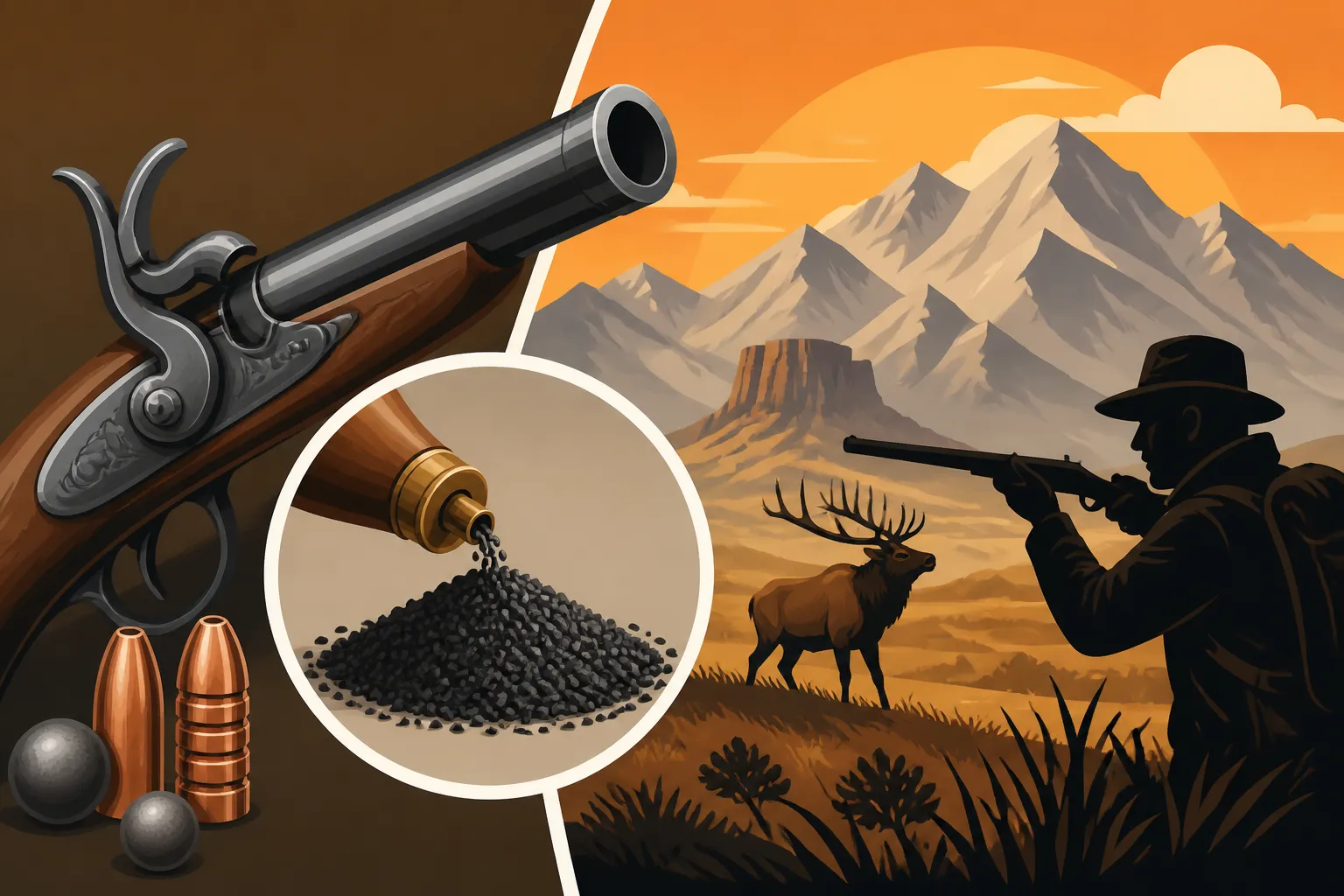
Muzzleloader Caliber and Powder Charge Minimums
There's nothing quite like the feeling of anticipating a Wyoming muzzleloader hunt. The crack of the cap, the puff of smoke, and the inherent challenge of getting closer to game with a single-shot "primitive" weapon really speak to a certain kind of hunter. But let's be honest, navigating the specific regulations can feel like trying to hit a target through a cloud of black powder smoke sometimes, especially when it comes to the nitty-gritty details of legal caliber and powder charge. This guide is here to cut through the confusion and give you a clear, comprehensive understanding of Wyoming's muzzleloader minimums so you can hunt confidently and legally.
Why Muzzleloader Rules Can Feel Like a Mystery
If you've hunted with a muzzleloader in other states, you've likely encountered a patchwork of rules that seem to change the moment you cross a state line. It's frustrating when you think you have your setup dialed in, only to find out it's not legal somewhere else. Wyoming, like every state, has its own reasons and philosophies behind its regulations, and understanding that can help make sense of the specifics.
The Historical Context of Muzzleloader Regulations
Each state's game and fish department works to balance tradition, ethics, and opportunity when setting muzzleloader regulations. Many of these rules are rooted in the idea of preserving a "primitive weapon" season, often allowing hunters to pursue game before or after general rifle seasons, or in specific units. This means rules might dictate everything from the ignition type (flintlock, percussion) to whether modern optics are allowed, and yes, even the minimum caliber and powder charge. What's legal in Colorado might not fly in Utah, and what's common in Pennsylvania often isn't even on the radar out West. Wyoming's regulations are designed with the specific challenges and ethical considerations of hunting its diverse big game animals in mind, reflecting a blend of traditional values and the need for effective, humane harvesting. This can feel like an extra hurdle for hunters, but it’s all aimed at ensuring fair chase and responsible hunting practices.
The Goal Behind Specific Caliber and Charge Minimums
These aren't arbitrary numbers dreamed up by bureaucrats. The specific minimums for caliber and powder charge are in place for a very important reason: to ensure enough kinetic energy and penetration for a quick, ethical, and humane kill. No one wants to wound an animal and have it suffer or get away. A larger caliber bullet, often heavier, tends to retain more energy downrange and create a larger wound channel, increasing the likelihood of a clean kill. Similarly, a sufficient powder charge is necessary to propel that projectile with enough velocity to achieve the required energy for deep penetration through hide, muscle, and bone. These rules are particularly critical in a state like Wyoming, where animals like elk and moose are robust and can absorb a lot of impact, and even deer and antelope can cover significant ground if not hit effectively. The regulations are a practical measure to encourage responsible hunting and minimize suffering, reflecting a deep respect for the animals we pursue.
Decoding Wyoming's Muzzleloader Caliber Requirements
When it comes to muzzleloaders in Wyoming, the absolute first thing you need to know is the minimum caliber. This is a non-negotiable rule that applies to all big game species, from antelope to elk. Get this wrong, and you're out of compliance before you even load a bullet.
The All-Important .40 Caliber Minimum
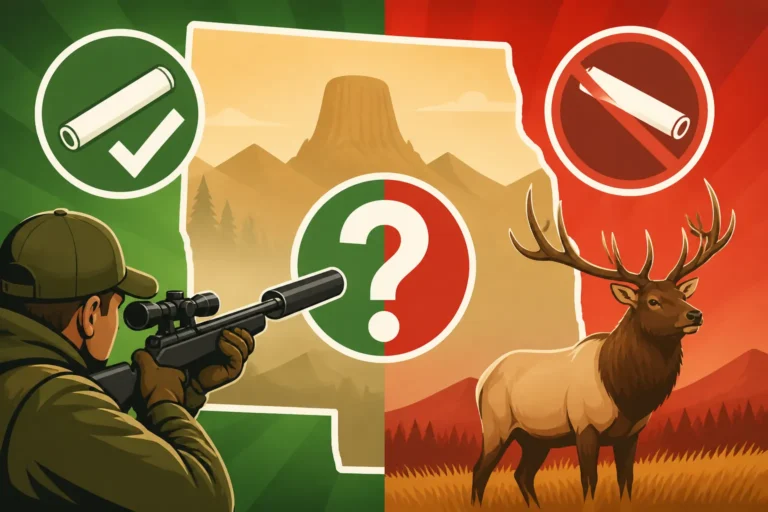
For anyone planning to hunt big game with a muzzleloader in Wyoming, the law is clear: your firearm must be .40 caliber or larger. This means if you've got a trusty .32 or .36 caliber squirrel rifle, it's fantastic for small game, but it's not going to cut it for a deer, antelope, or elk tag in the Cowboy State. This isn't a suggestion; it's a strict requirement. Most modern inline muzzleloaders are already .50 caliber, which handily meets and exceeds this minimum, so many hunters won't even think twice. Brands like CVA, Traditions, and Thompson/Center all offer popular .50 caliber models that are perfectly legal. However, if you're leaning towards a more traditional rifle, perhaps a .45 caliber hawken or a .54 caliber Pennsylvania rifle, you're still well within the legal limits. The key takeaway here is to double-check your firearm's actual bore size. There's no wiggle room. For a deeper dive into this, you might find more clarity in the guide about Minimum Muzzleloader Caliber for Wyoming Big Game.
What "Minimum" Truly Means for Hunters
While the .40 caliber is the legal floor, many experienced Wyoming muzzleloader hunters will tell you that for larger big game, particularly elk or moose, they prefer to go bigger. Stepping up to a .50 caliber or even a .54 caliber muzzleloader gives you a significant advantage in terms of kinetic energy and knockdown power. Think about it this way: a .50 caliber projectile typically weighs more and has a larger frontal area than a .40 caliber one. This means when it hits an animal, it's delivering a more substantial blow and creating a wider wound channel, increasing the probability of hitting vital organs and initiating a quicker bleed-out.
This isn't just about adhering to regulations; it's about being an ethical hunter. For example, a heavy .50 caliber conical bullet, like those offered by Hornady or Barnes, launched with a stout powder charge, provides a much greater margin of error and efficacy on a tough elk than a lighter, smaller .40 caliber projectile. While a .40 caliber can kill an elk, the extra punch of a .50 or .54 caliber often means a shorter tracking job and a more humane outcome. It's about choosing the right tool for the job, and in Wyoming's vast, rugged terrain, you want every advantage you can get to recover your animal quickly.
Understanding Wyoming's Powder Charge Minimums
Just having the right caliber isn't enough; you also need to make sure you're pushing that projectile with enough oomph. Wyoming has specific rules for the minimum powder charge, whether you're using traditional black powder or its modern substitutes. This is another area where hunters coming from other states might encounter different requirements.
The 50 Grains of Black Powder or Equivalent Rule
Wyoming mandates a minimum charge of 50 grains of black powder or its volumetric equivalent for hunting big game with a muzzleloader. This rule is just as critical as the caliber minimum and ensures that your projectile carries sufficient energy to ethically harvest an animal. For those who still shoot traditional loose black powder, measuring out 50 grains (by volume, usually with a powder measure, not by weight on a scale) is straightforward.
However, the vast majority of modern muzzleloader hunters use black powder substitutes, which brings us to the "volumetric equivalent" part of the rule. Products like Hodgdon Triple Seven, Pyrodex, or IMR White Hots are designed to mimic black powder's performance but are often cleaner-burning and less corrosive. These substitutes are not measured by weight like smokeless powder; they are specifically formulated to be measured by volume to match black powder's energy. So, a 50-grain volumetric charge of Triple Seven pellets, for instance, is considered equivalent to 50 grains of black powder. It's vital to respect this minimum for all big game species. For a full breakdown of this requirement, check out The Powder Charge a Legal Muzzleloader Needs.
Navigating Modern Propellants and Volumetric Equivalents
This is where things can get a little tricky and where careful attention to detail really pays off. When using black powder substitutes, you must measure them by volume, not by weight. A common mistake hunters make, especially those new to muzzleloading or transitioning from centerfire rifles, is trying to weigh substitute powders. This is a big no-no because the density of substitutes is different from true black powder, and the manufacturer's "grain equivalent" is almost always based on volume.
Many modern inline muzzleloaders are designed to shoot pellets, which simplify the process considerably. For example, you might find 50-grain equivalent pellets from brands like Hodgdon or Western Powders (Blackhorn 209, though always check its specific legality and measurement guidelines as it behaves differently than traditional pellets and often requires specific breech plugs). If you load two 50-grain equivalent pellets, you've met the 50-grain minimum and then some, typically reaching 100 grains or more for a powerful load. If you're using loose substitute powder, you'll need a volumetric measure to ensure you're at or above the 50-grain minimum. Always read the manufacturer's instructions on the packaging for their specific recommendations on volumetric measurement and "equivalent" ratings. Confused about how to properly measure? You're not alone! This is why a closer look at Measuring Blackpowder Substitutes by Volume, Not Weight can be incredibly helpful. Getting this right is not just about legal compliance; it's about ensuring your shot has the power it needs to be effective.
The Intersection of Caliber, Charge, and Ethical Hunting
Wyoming's minimums are a baseline, not necessarily the optimal setup for every hunting scenario. A truly ethical hunter understands that merely meeting the legal requirements isn't always enough. You need to consider the specific game you're after, the terrain, and your own shooting abilities to choose a load that maximizes effectiveness and ensures a humane harvest.
Matching Your Load to Your Quarry
While a .40 caliber muzzleloader with 50 grains of powder might technically be legal for an elk, many seasoned hunters would consider that a marginal load for such a large, resilient animal. For species like elk or moose, which can weigh upwards of 700-1,000 pounds and have incredibly tough hides and dense bone structure, the general consensus leans towards heavier projectiles and more robust powder charges. For these larger animals, a .50 caliber muzzleloader pushing 100-120 grains (volumetric equivalent) of Triple Seven or Pyrodex, often with a premium bullet like a Barnes Spit-Fire T-EZ or a Hornady SST, provides a significant advantage. These loads deliver more kinetic energy, better penetration, and a greater hydrostatic shock, increasing the likelihood of a quick, clean kill.
For smaller big game like deer or antelope, the minimums are more forgiving, but still, a slightly heavier load can offer a wider margin for error, especially if you encounter a quartering shot or need to break a shoulder. The choice of projectile itself is also critical; modern bullets are designed to expand reliably and retain weight, maximizing tissue damage. When planning your hunt, consider what you expect your shots to look like. Will you be in dense timber with closer shots, or across wide-open sagebrush where longer distances might be possible? Researching your unit, perhaps using resources like GoHunt's detailed unit breakdowns, can help you anticipate shot distances and fine-tune your load choice. For specific advice on elk, you might want to read up on The Effective Range of a Muzzleloader on Elk.
Practice, Accuracy, and Shot Placement
Having a legal and powerful muzzleloader setup is only half the battle; the other half is putting that projectile exactly where it needs to go. Accuracy is paramount in ethical hunting, and with muzzleloaders, it often takes more dedicated practice to achieve consistent results. Unlike a modern centerfire rifle, muzzleloaders can be finicky. Different bullet and sabot combinations, powder charges, and even changes in humidity can drastically affect accuracy.
Regular range time is non-negotiable. Practice shooting from various field positions – off sticks, prone, kneeling, even from a pack – to simulate real hunting scenarios. Understand your muzzleloader's effective range and, just as importantly, your own personal effective range. A common mistake is to push shots too far, relying on the "power" of the gun rather than the precision of the shooter. Knowing your limitations ensures that when an animal presents itself, you can confidently make an ethical shot or pass if the shot isn't ideal. Experiment with different projectiles – conical bullets tend to be heavier and excel at penetration, while saboted pistol bullets can offer better ballistics at longer ranges. Good sights, whether traditional open sights, fiber optics, or scope-legal setups (check specific season regulations as scopes are sometimes restricted), will also greatly aid accuracy. Your goal isn't just to be legal, it's to be lethal.
Common Muzzleloader Misconceptions and Clarifications
Muzzleloader hunting is steeped in tradition, but also prone to modern misinterpretations, especially when comparing rules across states or even within different seasons. Let's clear up some of the most common points of confusion specific to Wyoming.
Is a .30 Caliber Muzzleloader Ever Legal?
Let's be unequivocally clear on this: No, a .30 caliber muzzleloader is never legal for hunting big game in Wyoming. The state's minimum caliber requirement for all big game, as we've discussed, is .40 caliber. This rule is absolute. If you're accustomed to hunting small game with a .30 or .32 caliber muzzleloader, that's perfectly fine, but for deer, elk, antelope, moose, or any other big game species, it simply does not meet the legal threshold.
This is a point that sometimes trips up hunters who might have encountered more lenient regulations in other regions for certain species or during specific "primitive weapons" seasons. However, Wyoming maintains a consistent minimum caliber across the board for big game, ensuring adequate projectile size for effective harvesting. There are no exceptions for specific animals or hunting units that would allow a .30 caliber muzzleloader for big game. Always remember, when in doubt, default to the .40 caliber minimum.
Understanding Black Powder vs. Smokeless Powder
This is another critical distinction that often confuses new muzzleloader hunters or those transitioning from modern firearms. In Wyoming, for muzzleloader hunting seasons, only black powder or approved black powder substitutes are legal. Smokeless powder is strictly prohibited. This is not just a regulatory nuance; it's a fundamental safety and legal principle.
Traditional muzzleloaders and even most modern inline muzzleloaders are not designed or proofed to handle the pressures generated by smokeless powder. Using smokeless powder in a firearm designed for black powder can lead to catastrophic failure, serious injury, or even death. Furthermore, the intent of many muzzleloader seasons is to maintain a "primitive weapon" experience, and smokeless powder simply doesn't fit that definition. So, while you might use smokeless powder in your centerfire rifle for general season, it has no place in your muzzleloader during a Wyoming muzzleloader season. Always verify that the propellant you are using is explicitly labeled as black powder or an approved black powder substitute like Pyrodex, Triple Seven, or Blackhorn 209 (again, ensuring specific compliance for Blackhorn 209 regarding volumetric measurement and ignition system). For a broader understanding of what firearms are permissible, you can consult What Wyoming Counts as a Legal Firearm for Big Game.
The Role of Sabots and Projectile Weight
Sabots are a clever invention that allows hunters to use smaller-diameter, often more aerodynamically efficient bullets in a larger-bore muzzleloader. For instance, a common setup is a .45 caliber bullet loaded in a plastic sabot, which then fits snugly into a .50 caliber muzzleloader barrel. This is perfectly legal in Wyoming, provided the actual bore diameter of the muzzleloader itself is at least .40 caliber. The .45 caliber bullet inside the sabot is effectively fired from a .50 caliber barrel.
The main benefit of using sabots is access to a wider variety of bullet designs, many of which are modern, high-performance projectiles originally designed for handguns or rifles. These bullets often offer better ballistic coefficients, increased accuracy, and superior terminal performance (expansion, weight retention) compared to traditional lead conicals. When considering projectile weight, it's important to remember that a heavier bullet, especially one that retains its weight well upon impact, will generally penetrate deeper and deliver more energy. This is particularly crucial for larger game animals. While the minimum powder charge is 50 grains, increasing the powder charge (within safe limits for your rifle) with a heavier sabot-projectile combination can dramatically enhance performance. Always ensure that the combination of your muzzleloader's bore, the sabot, and the bullet forms a tight, consistent seal for optimal accuracy and pressure. The ultimate goal is sufficient weight and velocity for a clean pass-through and a quick, ethical harvest, which is exactly why Wyoming Muzzleloaders Need .40 Caliber and 50 Grains as a baseline.
Preparing for Your Wyoming Muzzleloader Hunt
The success of any hunting trip, especially a muzzleloader hunt in Wyoming, hinges on thorough preparation. Beyond understanding the legal minimums, you need to ensure you're squared away on all regulatory fronts and physically ready for the challenges.
Double-Checking Regulations Each Year
As a seasoned hunter, I can't stress this enough: regulations change! What was true last year might be slightly different this season. Wildlife management is dynamic, with adjustments made based on herd health, population objectives, winter severity, and even public input. It's easy to assume things stay the same, but that assumption can land you in hot water. Before every hunting season, make it an absolute priority to download and thoroughly read the current year's Wyoming Game and Fish Department hunting regulations. Pay close attention to the specific sections regarding muzzleloader season dates, legal equipment, and any unit-specific restrictions.
These regulations are usually available online well in advance of the season openers. Don't just skim them; read them carefully, perhaps even highlighting key sections. Many hunters find it useful to cross-reference with digital tools. Utilizing resources like GoHunt can be incredibly helpful for staying current on regulations, checking draw odds, and identifying any specific nuances for your chosen hunt area. These platforms often aggregate the latest information, helping you quickly identify changes that might impact your hunt plan. It’s better to spend an hour reading a PDF at your kitchen table than to face a game warden with an illegal setup in the field.
Field Care and Cleaning on a Muzzleloader Hunt
Muzzleloaders, particularly those shooting traditional black powder or some substitutes, require a different level of field care than your typical centerfire rifle. Black powder fouling is corrosive, hygroscopic (attracts moisture), and can quickly build up, impacting accuracy and even preventing subsequent shots if not managed. Imagine having that trophy elk in your sights after a long stalk, only to have your second shot misfire because of a fouled breech!
To avoid such scenarios, proper field cleaning is essential. Carry a small cleaning kit that includes patches, a bore brush, a cleaning jag, and a non-petroleum-based solvent (many black powder cleaners are water-based or specifically designed for corrosive fouling). Some hunters even carry a small bottle of Windex or rubbing alcohol for quick swabbing. After a few shots at the range, or definitely after a shot at an animal, a quick swab down the bore can prevent excessive fouling and maintain accuracy. If you're out for multiple days, consider a more thorough clean at camp each evening. Modern inline muzzleloaders, especially those designed for Blackhorn 209, are often much cleaner, but even they benefit from regular attention. Protecting your investment and ensuring reliable performance means being diligent about cleaning.
Unit Specific Considerations and Muzzleloader Seasons
Wyoming is a vast and varied state, and its hunting regulations often reflect that diversity. What's allowed or practical in one hunt area might not be in another, especially when it comes to muzzleloader seasons. Many units have dedicated muzzleloader-only seasons, often preceding the general rifle season, offering a unique opportunity to hunt before the pressure ramps up. However, these special seasons often come with specific equipment restrictions (e.g., no scopes allowed in some archery/muzzleloader seasons, even if scopes are typically legal for general muzzleloader use in others).
It’s crucial to delve into the regulations for your specific hunt area. Some units might be predominantly private land, making public access difficult for a DIY muzzleloader hunt, while others might offer vast tracts of public land. The type of terrain also influences your muzzleloader choice; a lighter, more compact model might be better for steep mountain climbs, while a heavier, more stable rifle might be preferred for open-country shots. This is where tools like GoHunt become invaluable. Their detailed breakdowns of hunt units, along with harvest statistics and success rates, can help you not only pick the right unit but also understand the specific challenges and regulations you'll face. Remember that Wyoming Elk Season Dates Are Set Hunt Area by Hunt Area, so even if you've hunted elk in one unit, another might have totally different dates or rules for muzzleloader hunting. Taking the time to do your homework and Scouting a Wyoming Unit From Your Kitchen Table can make all the difference between a frustrating trip and a successful, memorable hunt.
| Muzzleloader Requirement | Minimum Specification | Notes |
|---|---|---|
| Caliber (for Big Game) | .40 Caliber | This is a strict minimum. Many hunters opt for .50 or .54 caliber for increased knockdown power, especially for elk and moose. |
| Powder Charge | 50 Grains | For black powder or its volumetric equivalent. Always measure substitutes by volume, not weight, and follow manufacturer guidelines precisely. |
| Propellant Type | Black Powder or Approved Substitutes Only | Smokeless powder is not legal for muzzleloaders in Wyoming. Ensure your chosen powder is an approved black powder substitute to avoid legal issues. |
| Projectile | Must be a single projectile | Saboted bullets are allowed, effectively letting a smaller diameter bullet be fired from a larger bore, as long as the base caliber meets the .40 minimum. |
Disclaimer
The information provided in this guide is for general informational purposes only and is not intended as legal advice. Hunting regulations in Wyoming are subject to change. It is the hunter's sole responsibility to consult the most current official Wyoming Game and Fish Department regulations prior to hunting and to ensure full compliance with all applicable laws and regulations.