Wyoming’s Wilderness Guide Law for Nonresidents
Planning a hunting adventure in Wyoming, especially if you're a nonresident eyeing those truly wild, remote areas, can feel like navigating a legal minefield. One of the biggest questions that often pops up, and rightly so, is about the guide requirement. Many hunters discover, sometimes late in their planning, that specific regulations dictate whether you must hire a professional guide or if a resident friend can take you into certain landscapes. This guide will meticulously break down Wyoming's wilderness guide law for nonresidents, helping you understand the nuances, prepare properly, and avoid any unwanted surprises in the field.
Understanding Wyoming's Guide Requirement
For many nonresident hunters dreaming of a Wyoming big game hunt, the idea of heading into vast, untouched wilderness is the ultimate draw. However, the dream can quickly run into reality when you learn about the state's specific guide requirements for certain areas. This isn't just a suggestion; it's a legal mandate that can significantly impact your hunt planning, logistics, and budget. Ignorance of this law isn't a valid excuse, and you certainly don't want to find yourself in a sticky situation with game wardens deep in the backcountry.
Why the Wilderness Guide Law Exists
The core of Wyoming's wilderness guide law stems from a combination of factors, including public safety, wildlife management, and the economic support of the guiding industry. Imagine thousands of unguided, inexperienced hunters flooding fragile wilderness ecosystems; it could lead to increased search and rescue operations, potential conflicts, and undue pressure on wildlife resources. The law aims to ensure that hunters in these challenging environments have a certain level of experienced oversight. It also helps to preserve the quality of the wilderness experience for everyone, minimizing impacts and fostering responsible hunting practices. It’s a way for the state to manage access and impact in areas that are both biologically sensitive and logistically demanding.
For nonresidents, it's often seen as a way to ensure they have the best possible chance of a safe and ethical hunt in unfamiliar and often harsh terrain. The rationale is that a professional guide or an experienced resident will have intimate knowledge of the area, local wildlife patterns, and essential backcountry skills, all of which contribute to a safer, more successful, and less impactful hunt. It's a system designed to protect both the hunter and the resource.
Who the Law Applies To
The Wyoming wilderness guide law specifically targets nonresident hunters. If you're a Wyoming resident, you are generally exempt from this particular guide requirement, though you still need to be properly licensed and adhere to all other hunting regulations. But if you're coming from out of state, this law is absolutely something you need to be aware of. It's not a blanket rule for all of Wyoming, but rather applies to specific big game species when hunted within designated "wilderness areas." This distinction is crucial, as many hunters mistakenly believe it applies to any public land. It does not. It is narrowly focused on the most remote and federally protected landscapes.
The implication here is significant: if you're a nonresident and you plan to pursue elk, deer, or other species within one of Wyoming's federally designated wilderness areas, you will need a guide. This guide can either be a licensed professional outfitter and guide, or it can be a qualified Wyoming resident who meets specific criteria and files the necessary affidavit. Understanding this distinction early in your planning can save a lot of headaches and potential legal trouble down the line.
Defining "Wilderness Area" in Wyoming
When the law talks about "wilderness areas," it's not just a general term for any wild, remote country. In Wyoming, this refers specifically to federally designated Wilderness Areas, managed by agencies like the U.S. Forest Service or Bureau of Land Management. These are lands that have received special protection under the Wilderness Act of 1964, meaning they are undeveloped, roadless, and managed to preserve their natural character. They are places where motorized vehicles, bicycles, and even mechanized equipment are strictly prohibited. The designation itself signals a higher level of protection and, consequently, stricter rules for human activity, including hunting.
Federally Designated Wilderness Lands
Wyoming boasts an impressive array of federally designated wilderness areas, each offering incredible hunting opportunities but also coming with its own set of challenges and regulations. These are the places where the guide law for nonresidents primarily kicks in. Think about vast, rugged landscapes where the only sounds are wind and wildlife, and where travel is primarily by foot or horseback. These areas are truly wild and demand respect and preparedness.
Some of the notable wilderness areas in Wyoming that nonresident hunters might consider (and thus need to be mindful of the guide law) include:
- Bridger-Teton Wilderness: Part of the Bridger-Teton National Forest, known for elk, moose, and bighorn sheep.
- Gros Ventre Wilderness: Also within the Bridger-Teton, offering rugged terrain and diverse big game.
- Teton Wilderness: Adjoining Yellowstone National Park, famous for its remote elk hunting.
- Popo Agie Wilderness: In the Shoshone National Forest, offering high-alpine hunting for elk and sheep.
- Cloud Peak Wilderness: A jewel of the Bighorn Mountains, popular for elk and deer.
- Absaroka-Beartooth Wilderness: Straddling the Montana border, a vast and challenging area.
- Fitzpatrick Wilderness: Known for its high peaks and sheep hunting.
These are just a few examples, but the key takeaway is that these are named, specific wilderness areas. You can't just be "in the wilderness" and trigger the rule; you must be within the legal boundaries of one of these federally protected zones. It's vital to consult detailed maps and land management agency resources (like those available through GoHunt's mapping tools) to confirm the exact boundaries of these areas before planning your hunt. Wyoming's National Forests: Bridger-Teton, Shoshone, Bighorn, Medicine Bow provides more context on these vast public lands.
How to Identify Wilderness Area Boundaries
Identifying the precise boundaries of a wilderness area is absolutely critical for any nonresident hunter planning to go without a professional outfitter. These boundaries are not always clearly marked on the ground, especially in remote sections, and a simple mistake can lead to serious legal consequences. You can't just assume; you need to know for sure. Relying on digital mapping tools is often the most effective method, especially those that overlay public land data with wilderness designations.
Your best resources will be:
- Official Forest Service or BLM Maps: These paper maps often have wilderness boundaries clearly delineated. While old-school, they are often the most reliable for legal purposes.
- Digital Mapping Applications: Tools like onX Hunt or others that provide detailed land ownership and management overlays are invaluable. They can show you in real-time if you are within a wilderness boundary. However, always remember that GPS can sometimes have a slight margin of error, so don't hunt right on the edge.
- Wyoming Game and Fish Department (WGFD) Resources: The WGFD regulations often include maps or references to these areas, and their website or offices can provide clarification.
Always err on the side of caution. If there's any doubt about whether you're stepping into a wilderness area, assume you are and plan accordingly, or simply choose an area explicitly outside of wilderness boundaries. Misinterpreting a boundary could lead to your hunt being cut short, fines, or even confiscation of game and equipment. It's not a risk worth taking when the consequences are so severe.
Species Covered by the Wilderness Guide Law
It's not every single animal you can hunt in Wyoming that falls under this guide requirement. The law is quite specific, focusing on "big game" species, but not all of them. This is an important distinction because it means you might be able to hunt certain species as a nonresident without a guide in a wilderness area, while for others, it's a non-starter. Knowing which species are in play is essential for your license applications and hunt planning.
Big Game That Triggers the Requirement
For nonresidents hunting in federally designated wilderness areas in Wyoming, the guide requirement applies to elk, deer (mule deer and whitetail), moose, bighorn sheep, and mountain goat. These are the major big game species that Wyoming considers significant enough to warrant a guided experience in these sensitive ecosystems.
Consider the difficulty and dangers associated with pursuing these animals in truly wild, rugged terrain. Elk and moose often inhabit dense timber or high-elevation basins. Bighorn sheep and mountain goats live in steep, unforgiving alpine environments. Mule deer can be found in a variety of wilderness habitats. The state’s reasoning ties back to hunter safety and success rates in these challenging conditions. A professional guide ensures not only compliance with regulations but also helps mitigate risks like getting lost, encountering dangerous wildlife (like grizzly bears), or dealing with extreme weather. The stakes are simply higher for these iconic species in these remote settings. This is why Does the Guide Rule Cover Bighorn Sheep? and Moose Hunts Inside Designated Wilderness Areas are critical reads for planning such an adventure.
Species Exempt from the Guide Law
Fortunately for nonresidents looking for a taste of wilderness hunting without the guide expense, some species are not included under this particular law. While you still need the proper licenses and adherence to all other regulations, you could potentially hunt these species unguided in wilderness areas. This offers some flexibility for those on a tighter budget or who prefer a completely DIY experience in the backcountry.
Species that typically do not require a nonresident guide in wilderness areas include:
- Black Bear: While hunting black bear in the backcountry can be challenging and requires extensive knowledge, the guide law does not specifically cover them in wilderness areas.
- Mountain Lion: Similar to black bears, mountain lions are often hunted with hounds, which brings its own set of dynamics and equipment, but the general guide law doesn't apply to them in wilderness.
- Wolf: In Wyoming's designated Trophy Game Management Area, wolves can be hunted, and the guide law doesn't typically apply to them specifically.
- Small Game and Upland Birds: Species like grouse, rabbits, or coyotes are generally exempt from this rule, allowing nonresidents to explore wilderness areas for these opportunities without a guide.
This distinction allows for different types of wilderness experiences. A nonresident might opt for a truly self-sufficient small game hunt or predator hunt in the wilderness, getting a feel for the landscape and backcountry travel, before perhaps investing in a guided big game hunt down the line. It's crucial to always double-check the latest Wyoming Game and Fish regulations, as laws can change.
Exceptions to the Nonresident Guide Rule
While the general rule is clear – nonresidents need a guide for certain big game in wilderness areas – there are a couple of specific exceptions that allow a nonresident to hunt these areas without a paid professional outfitter. These exceptions are designed to accommodate resident hosts or family members, fostering a sense of community and allowing experienced locals to share their knowledge without professional commercialization. However, these aren't loopholes; they come with their own strict requirements and limitations.
Hunting with a Wyoming Resident Friend or Family Member
This is perhaps the most common and sought-after exception. If you have a friend or family member who is a bona fide Wyoming resident, they can act as your guide. This opens up incredible opportunities for nonresidents to experience wilderness hunting with someone they know and trust, often at a significantly reduced cost compared to a professional outfitter. The resident is essentially vouching for the nonresident's safety and responsible conduct in the wilderness.
However, there are critical caveats:
- No Compensation: The resident guide absolutely cannot accept any form of payment or compensation for their services. This means no money, no gifts of equivalent value, no bartering. It must be a truly non-commercial arrangement. This is explicitly laid out in Can a Resident Guide Accept Payment?.
- Affidavit Requirement: The resident must file a "Resident Guide Affidavit" with the Wyoming Game and Fish Department before the hunt. This affidavit attests to their residency, their intent to guide, and that they will not accept compensation. Failure to file this document makes the arrangement illegal.
- Direct Supervision: The resident guide must be in "direct supervision" of the nonresident hunter. This means they must be within sight and voice contact at all times while hunting in the wilderness area. You can't just drop off your nonresident friend and pick them up later. This critical detail is explained further in What Direct Supervision Means in the Field.
- One-to-One Ratio (Generally): A single resident guide can typically only guide one nonresident hunter at a time in a wilderness area. There can be exceptions, so always confirm the most current rules. How Many Nonresidents One Resident Guide May Take clarifies this further.
This option truly embodies the spirit of shared outdoor experiences. It allows friends and family to bond over a challenging hunt in some of the most beautiful country on earth, but the state ensures it's not simply a way to circumvent the professional guiding industry.
The Landowner Exemption
Another, less common, exemption applies to landowners. If a nonresident is hunting on private land that they own, or on private land where they have written permission from the owner, and that private land happens to be within or borders a wilderness area, they may sometimes be exempt from the guide requirement while on that private land. This is a very specific and often complex scenario, and it's vital to have all your paperwork in order.
The key points for this exemption:
- Private Land Only: This exemption applies only when the hunting activity is conducted on the private land itself. The moment the hunter steps onto federal wilderness land, the general guide rule kicks back in.
- Valid License and Permission: The nonresident must have all appropriate licenses and explicit, written permission from the landowner to hunt.
- Bordering Public Land: The exemption does not automatically grant access to adjacent public wilderness lands without a guide, even if it's convenient from the private property.
This exemption is often more relevant for residents who own land adjacent to wilderness, but it's important for nonresidents to be aware of if they happen to own property in such unique locations. Always clarify these intricate details with the WGFD well in advance, as the boundaries and rules can be highly nuanced where private and public wilderness lands meet. The Landowner Exemption From Wyoming's Guide Rule offers more detail on this specific situation.
The Role of a Resident Guide
So, you've got a great Wyoming resident friend or family member who's eager to take you into the wilderness for your hunt. That's fantastic! This is a cherished tradition for many, but it's important to understand that your resident friend isn't just a hunting buddy in the eyes of the law; they are legally acting as a "resident guide." This role comes with specific responsibilities, limitations, and requirements that must be met to ensure everything is above board. It's not just a casual trip with a pal; it's a regulated activity.
Becoming a Legitimate Resident Guide
Your resident friend doesn't need to go through the extensive licensing process of a professional outfitter or guide, but they do have to meet certain straightforward criteria and complete a crucial piece of paperwork. The state wants to ensure that the "guide" knows what they're doing and understands the implications.
Here's what your resident friend needs to do:
- Be a Wyoming Resident: This seems obvious, but they must be a bona fide resident, not just someone with a mailing address in the state. They typically need to have resided in Wyoming for at least one full year immediately prior to the application.
- Be at Least 18 Years Old: This is a standard legal requirement, ensuring a certain level of maturity and responsibility.
- File an Affidavit: This is the most critical step. Your resident friend must complete and submit a Resident Guide Affidavit to the Wyoming Game and Fish Department. This form declares their intent to guide a specific nonresident hunter (or hunters, if allowed by the ratio rules) in a specified wilderness area for a particular species during a certain season. It also requires them to affirm that they will not accept any compensation. This affidavit must be submitted before the hunt begins and must be in their possession (or readily available) during the hunt. What the Resident Guide Affidavit Must Name details the specific information required on this document.
- No Financial Gain: As mentioned, the resident guide cannot receive payment or any form of monetary equivalent. This strict rule prevents the circumvention of professional outfitter regulations and protects the integrity of the guiding industry.
It’s important that your resident guide understands these responsibilities fully. They are legally accountable for adhering to these rules, and any infraction could lead to penalties for both them and you, the nonresident hunter.
Responsibilities and Limitations of a Resident Guide
Once the affidavit is filed and the hunt begins, the resident guide takes on several key responsibilities. These aren't just good manners for a hunting trip; they are legal obligations that safeguard both the hunters and the wilderness environment.
- Direct Supervision: This is paramount. The resident guide must maintain direct sight and voice contact with the nonresident hunter(s) at all times while hunting in the wilderness area. This isn't just about safety; it's about ensuring compliance and accountability. If your friend needs to scout ahead or track a wounded animal, the nonresident hunter cannot continue to hunt independently.
- Knowledge of Regulations: The resident guide is expected to know all applicable Wyoming hunting regulations for the species and hunt area, including bag limits, season dates, legal shooting hours, and weapon restrictions. They are also responsible for knowing the specific rules governing wilderness areas, such as prohibitions on motorized vehicles or permanent camps.
- Safety and Ethics: Beyond legal compliance, a good resident guide prioritizes safety and ethical hunting practices. This includes knowing basic first aid, understanding weather patterns, practicing bear safety in grizzly country, and ensuring humane taking of game.
- No Commercial Services: Crucially, a resident guide cannot advertise their services, charge fees, or provide services that would typically be offered by a commercial outfitter. This keeps the spirit of the exception intact, ensuring it remains a non-commercial arrangement between friends or family.
Understanding these roles and limitations is vital for a smooth and legal hunt. It transforms a casual hunting trip into a shared responsibility, ensuring that the nonresident hunter gets to experience Wyoming's wilderness safely and lawfully, all thanks to the generosity and experience of their resident companion.
Working with Licensed Outfitters and Guides
If you're a nonresident and don't have a resident friend or family member who can accompany you into Wyoming's wilderness areas, your path is clear: you'll need to hire a licensed professional outfitter and guide. This is the most common route for nonresidents, and for good reason. Professional outfitters provide a comprehensive service, handling everything from logistics to safety, allowing you to focus on the hunt itself. They are businesses, regulated by the state, and come with a level of professionalism and accountability that a casual arrangement might lack.
What a Professional Outfitter Provides
A professional outfitter in Wyoming is a business entity that provides hunting services for compensation. They hold specific licenses issued by the Wyoming Board of Outfitters and Professional Guides. When you book with an outfitter, you're not just hiring a guide; you're often buying a package that includes a wide range of services designed to maximize your chances of success and ensure a safe, comfortable trip.
Here's what you can typically expect from a professional outfitter:
- Licensed Guides: The outfitter employs licensed professional guides who are highly experienced in the specific hunt area and species. These guides are often locals with intimate knowledge of the terrain, animal behavior, and tracking skills. Every Wyoming Guide Works Under a Licensed Outfitter provides more detail on this hierarchy.
- Permits and Access: Outfitters operating on public land (like wilderness areas) hold Special Use Permits from the managing agencies (Forest Service, BLM). This means they have legal authorization to conduct commercial operations in these areas, including setting up camps and using specific travel routes.
- Logistics: This is where outfitters truly shine. They handle pack animals (horses, mules) for transportation into and out of remote camps, provide tents, cooking equipment, and often food. They take care of game retrieval and often assist with initial field dressing. This frees you from the immense logistical burden of a deep wilderness hunt.
- Safety and Experience: Outfitters are responsible for your safety. They have emergency communication systems, wilderness first aid training, and protocols for dealing with adverse weather, dangerous wildlife, or accidents. Their experience in navigating challenging terrain and unpredictable conditions is invaluable.
- Professionalism: A reputable outfitter operates under a code of ethics and is accountable to the Wyoming Board of Outfitters. They should have insurance and bonding, providing a layer of protection for their clients.
Booking with a professional outfitter is an investment, but for many nonresidents, it's the only practical way to experience hunting in Wyoming's majestic wilderness. What a Guided Wyoming Elk Hunt Costs highlights the financial commitment involved.
Verifying an Outfitter's Credentials
Before you send a deposit or sign a contract, it is absolutely essential to thoroughly vet any outfitter you're considering. The vast majority of outfitters are reputable and ethical, but as with any industry, there can be bad apples. A little due diligence upfront can save you a lot of heartache (and money) later. This is where resources like BookYourHunt or GoHunt can be invaluable for initial research and finding potential outfitters, but the verification process goes beyond that.
Here's how to verify an outfitter's credentials:
- Check with the Wyoming Board of Outfitters and Professional Guides: This is your primary resource. The Board maintains a public record of all licensed outfitters and guides, and you can verify their license status, check for any past complaints, and ensure they are in good standing. This step is non-negotiable. You can often look up an outfitter by name or license number on their website.
- Ask for References: A reputable outfitter will be happy to provide a list of past clients, ideally from the previous two or three hunting seasons. Contact these references and ask specific questions about the outfitter's professionalism, the quality of the hunt, the accommodations, the guides, and their overall satisfaction.
- Review Contracts Carefully: Read the outfitter's contract in its entirety before signing. Pay close attention to terms regarding deposits, payment schedules, cancellation policies (especially if you don't draw a tag!), what is and isn't included in the price, and liability waivers. Don't hesitate to ask questions about anything you don't understand.
- Confirm Permits for Public Land: If your hunt is planned for a wilderness area on Forest Service or BLM land, ask the outfitter to confirm they hold the necessary Special Use Permits for that specific area. This ensures they are legally allowed to operate where they claim.
- Online Research: While not definitive, looking at online reviews on hunting forums, social media, or dedicated booking sites (like BookYourHunt) can provide additional perspectives. Just be aware that online reviews can sometimes be biased, so use them as one piece of the puzzle, not the whole picture.
Taking these steps will help you confidently choose a professional outfitter who can provide a safe, ethical, and memorable wilderness hunting experience in Wyoming. Vetting a Wyoming Outfitter Before You Send a Deposit delves deeper into this critical process.
Planning Your Guided Wilderness Hunt
Once you've wrapped your head around Wyoming's wilderness guide law and decided on the right path—whether a resident guide or a professional outfitter—the real planning begins. A wilderness hunt is a serious undertaking, demanding meticulous organization, physical preparation, and an understanding of the draw system. This isn't a last-minute road trip; it's an expedition that often requires months, if not a year or more, of advance work.
Timing Your Application and Booking
Wyoming's draw system is competitive, especially for quality big game tags in popular units. This means you can't just decide to hunt next fall and expect to get a tag. You need to align your application strategy with your guide plans. Many outfitters operate on a booking schedule that extends years into the future, and they will want you to book before you even apply for a tag.
Here's a typical timeline to consider:
- Early Research (1-2+ Years Out): Start researching potential hunt areas, species, and outfitters well in advance. Consider draw odds using tools like GoHunt and decide on your preference point strategy.
- Outfitter Selection and Booking (1+ Year Out): Once you have a target unit and species, begin contacting outfitters. Many outfitters require a deposit and a signed contract long before the draw results are known. This commitment is crucial because if you draw the tag, they need to have availability. Conversely, if you don't draw, many outfitters have clauses in their contract regarding refunds or deferrals of deposits. Book Your Wyoming Hunt Before the Draw Runs emphasizes this point.
- Application Deadlines: Pay close attention to Wyoming's application deadlines for elk (early February), deer and antelope (early June), and other species (April). These dates are firm, and missing them means waiting another year. Wyoming's Four Application Deadlines, February Through June is a vital resource.
- Draw Results: Draw results are typically posted in May for elk, and June for deer and antelope. This is when you'll know if your hunt is a go.
- Final Payments and Logistics: Once you have your tag, you'll coordinate final payments with your outfitter and begin sorting out travel, gear, and physical preparation.
This advance planning ensures you don't miss application windows and that you secure a reputable outfitter before their schedule is full.
Essential Gear and Physical Conditioning
Hunting in a Wyoming wilderness area is not for the faint of heart. It often involves high altitudes, extreme weather swings, rugged terrain, and significant physical exertion. Your gear needs to be top-notch, and your body needs to be ready for the challenge. Don't underestimate either of these aspects.
Gear Considerations:
- Layered Clothing: Mountain weather is unpredictable. You need a system of layers to adapt to freezing mornings, warm afternoons, rain, snow, and wind. High-quality waterproof and windproof outer layers are non-negotiable.
- Reliable Footwear: Sturdy, broken-in hunting boots with good ankle support are crucial for navigating uneven terrain and potential stream crossings. Consider gaiters to keep snow and debris out.
- Backpack: Whether it's a day pack or a multi-day pack, it needs to be comfortable, durable, and capable of carrying your essentials, plus potentially meat.
- Optics: High-quality binoculars and a spotting scope are essential for glassing vast wilderness landscapes. Optics Power for Wyoming's Long Sightlines can help you choose.
- Navigation Tools: Even with a guide, carry your own GPS device (and know how to use it), a compass, and paper maps. Batteries fail; paper maps don't.
- Safety Essentials: Bear spray (if in grizzly country), a reliable headlamp with extra batteries, fire starter, a first-aid kit, and an emergency shelter are all critical. Satellite communication devices like an inReach or Garmin Messenger can be life-savers in areas without cell service.
Physical Conditioning:
- Cardiovascular Fitness: You'll be walking miles, often uphill, at high altitudes. Incorporate activities like hiking with a weighted pack, running, and stair climbing into your routine.
- Strength Training: Focus on leg and core strength to handle steep climbs, pack heavy loads, and maintain balance.
- Altitude Acclimation: If you live at sea level, arrive a few days early if possible to let your body adjust to the higher elevation. Even mild altitude sickness can severely impact your hunt.
Your outfitter will likely provide a detailed gear list, and it's wise to follow it closely. Training in advance is not just about success; it's about safety and enjoying the experience rather than enduring it.
Vetting Outfitters and Avoiding Pitfalls
Even with all the regulations and licensing, choosing the right outfitter can still feel like a leap of faith. It's a significant investment, both financially and emotionally, and you want to ensure you're putting your trust in a legitimate, ethical, and competent operation. While the Wyoming Board of Outfitters provides a foundational layer of security, smart hunters take additional steps to ensure their chosen outfitter is a good fit and will deliver on their promises.
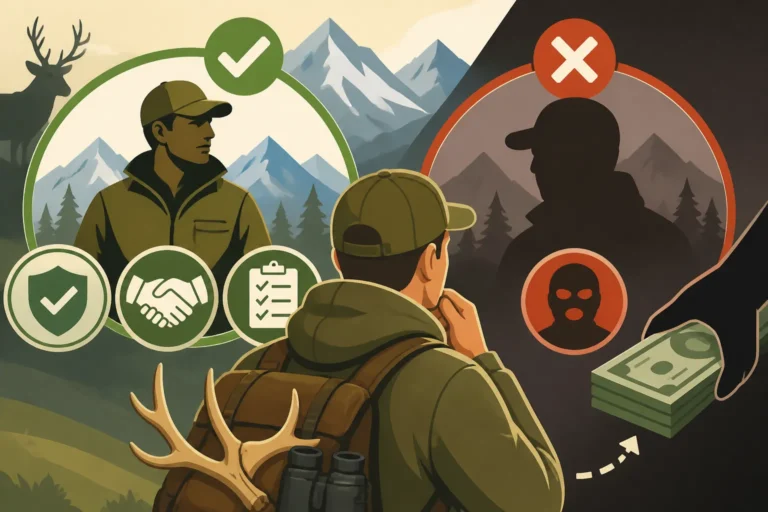
Red Flags to Watch For
In your research and communication with potential outfitters, keep an eye out for certain red flags that might indicate a less-than-reputable operation or a potentially problematic hunt. It's better to walk away from a deal that feels off than to regret it later.
Here are some warning signs:
- Unlicensed Operations: This is the biggest red flag. If an "outfitter" can't provide a valid Wyoming Outfitter License number that you can verify with the state board, run the other way. This is not just a warning; it's illegal.
- Guarantees of Success: Reputable outfitters will never guarantee a harvest. They might talk about high success rates based on past performance, but hunting is inherently unpredictable. If someone guarantees you'll kill an elk, they're either lying or cutting corners.
- Unusual Payment Demands: Be wary of requests for full payment far in advance, cash-only deals without proper receipts, or pressure to send money quickly without a formal contract. A standard deposit and a clear payment schedule are normal.
- Lack of Clear Communication: An outfitter who is slow to respond to emails, avoids direct phone calls, or gives vague answers to specific questions about their license, permits, or hunt details is a concern. Good communication is key to a successful client relationship.
- Inconsistent References or Poor Reviews: While not all negative reviews are fair, a consistent pattern of complaints about safety, ethics, animal treatment, or unfulfilled promises should make you extremely cautious. If an outfitter refuses to provide references, that's also a major red flag.
- Cutting Corners on Rules: If an outfitter suggests bending any rules, no matter how small, to gain an advantage (e.g., hinting at motorized vehicle use in wilderness, pushing shooting hours, ignoring bag limits), immediately disengage. This compromises your integrity and could lead to serious legal issues.
Trust your gut. If something feels off, it probably is. There are plenty of excellent outfitters in Wyoming, so don't settle for one that raises any of these concerns.
Questions to Ask Before Booking
Beyond simply verifying credentials, engage in a detailed conversation with any prospective outfitter. This is your chance to understand their operation, set expectations, and ensure their style aligns with your hunting preferences. Write down your questions beforehand and take notes on their answers.
Here's a comprehensive list of questions to consider:
- License and Permits: "Can you confirm your Wyoming Outfitter License number? Do you hold the necessary Special Use Permits for the specific wilderness area and hunt dates we're discussing?"
- Hunt Details: "What is the typical guide-to-hunter ratio on your wilderness hunts? What does a typical hunting day look like? What are the physical demands of this particular hunt? How do you handle game retrieval and meat care in the backcountry?"
- Success Rates and Expectations: "What have your success rates been for this species and area in recent years? What factors contribute to client success? What is your philosophy on fair chase?"
- Camp and Logistics: "What type of camp will we be staying in (e.g., wall tents, spike camp)? How many days will the hunt be? How do we get into and out of the wilderness camp? What kind of food should I expect?"
- Safety Protocols: "What are your emergency communication and evacuation plans? What kind of first aid capabilities do your guides have? What are your bear safety protocols?"
- Costs and Fees: "What exactly is included in the base price (e.g., food, lodging, guide, transportation during the hunt, field dressing)? Are there any additional costs I should anticipate (e.g., trophy fees, meat processing, taxidermy, gratuities, licenses, conservation stamps)?" What Outfitter Prices Leave Out is a good reference here.
- Cancellation and Refund Policy: "What happens if I don't draw my tag? What is your policy if I need to cancel for other reasons?"
- References: "Can you provide me with a list of references from hunters who have hunted with you in the last 2-3 years, ideally for a similar hunt?"
Asking these questions thoroughly will not only help you choose the right outfitter but also build a solid foundation of understanding and trust, ensuring a more positive experience when you finally get to hunt Wyoming's incredible wilderness. This detailed inquiry process is part of Questions to Ask a Wyoming Outfitter.
Disclaimer
This article is for general informational purposes only and does not constitute professional advice. Laws, prices and regulations vary by location and change over time. Consult a qualified professional for guidance on your specific situation.