The Pheasant Bag Limit Explained
Navigating the specifics of hunting regulations can sometimes feel like trying to solve a complex puzzle, especially when you're just trying to enjoy a day chasing pheasants. One of the most common questions that pops up, and rightly so, revolves around the pheasant bag limit in Wyoming. It’s not just about how many birds you can shoot, but understanding why those numbers exist and how they apply to your hunt, whether you're a seasoned local or planning a trip to the Cowboy State. This guide will meticulously break down Wyoming's pheasant bag limits, offering clarity on the daily and possession rules, and helping you ensure a legal and ethical hunt.
Understanding Wyoming's Pheasant Hunting Structure
Wyoming might be famous for its big game, but the excitement of a flushing pheasant in a cattail draw is an experience all its own. The state's Game and Fish Department carefully manages these populations, and that management is reflected directly in the bag limits. It's not arbitrary; it's a science-backed effort to ensure there are plenty of pheasants for future seasons and to maintain healthy ecosystems.
Why Bag Limits Exist
Imagine if every hunter could take as many pheasants as they wanted, every single day. It wouldn't take long before those vibrant bird populations dwindled, leading to fewer hunting opportunities for everyone. Bag limits are a cornerstone of wildlife conservation. They act as a critical tool for managing game populations by regulating the number of individual animals that hunters can legally harvest within specific timeframes. For pheasants, these limits are set to allow for a sustainable harvest, meaning enough birds are left behind to reproduce and replenish the population for the next year.
The Wyoming Game and Fish Department considers several factors when establishing these limits. They look at population surveys, habitat conditions, nesting success, and even winter severity. A harsh winter can significantly impact bird survival, for instance, which might lead to more conservative limits in subsequent years. Conversely, a mild winter followed by a banner nesting season could allow for slightly more liberal limits. It’s a dynamic process, and the limits are a direct reflection of the health of the pheasant resource. As hunters, respecting these limits isn't just about following the law; it's about being an active participant in conservation and ensuring the longevity of our hunting heritage.
Key Regulatory Factors
The regulatory factors that determine pheasant bag limits are far-reaching and involve continuous monitoring by wildlife biologists. It's not a set-it-and-forget-it kind of deal. First and foremost are population trends. Biologists conduct surveys, often relying on call counts, flush counts, and hunter harvest reports, to estimate the number of pheasants in a given area. They’re looking for signs of increasing, stable, or declining populations.
Habitat quality and quantity also play a huge role. Pheasants thrive in areas with diverse cover, including dense grass for nesting, brushy areas for escape cover, and agricultural fields for food. If habitat is declining due to development or changes in land use, pheasant numbers can drop, and limits might be adjusted. Weather patterns, as mentioned, are another critical factor. A cold, wet spring can devastate young chicks, while a severe winter with deep snow and prolonged cold can take a heavy toll on adult birds. Finally, stocking programs, particularly on publicly accessible lands, can influence harvest potential. Wyoming does engage in efforts to supplement pheasant populations in certain areas, which can lead to localized hunting opportunities. You can often find information on Where Wyoming Releases Pheasants Each Fall in the annual regulations. All this data feeds into the decision-making process, ensuring that the limits are responsive to the actual conditions pheasants are facing on the ground. Hunters planning their trips can utilize resources like GoHunt to research these factors and understand the best opportunities available.
The Standard Pheasant Daily and Possession Limits
When you head out pheasant hunting in Wyoming, you'll encounter two main types of limits: the daily bag limit and the possession limit. While they might sound similar, they serve different purposes and are applied distinctively. Understanding both is crucial for staying within the law and ensuring a successful, worry-free hunt.
Decoding the Daily Limit
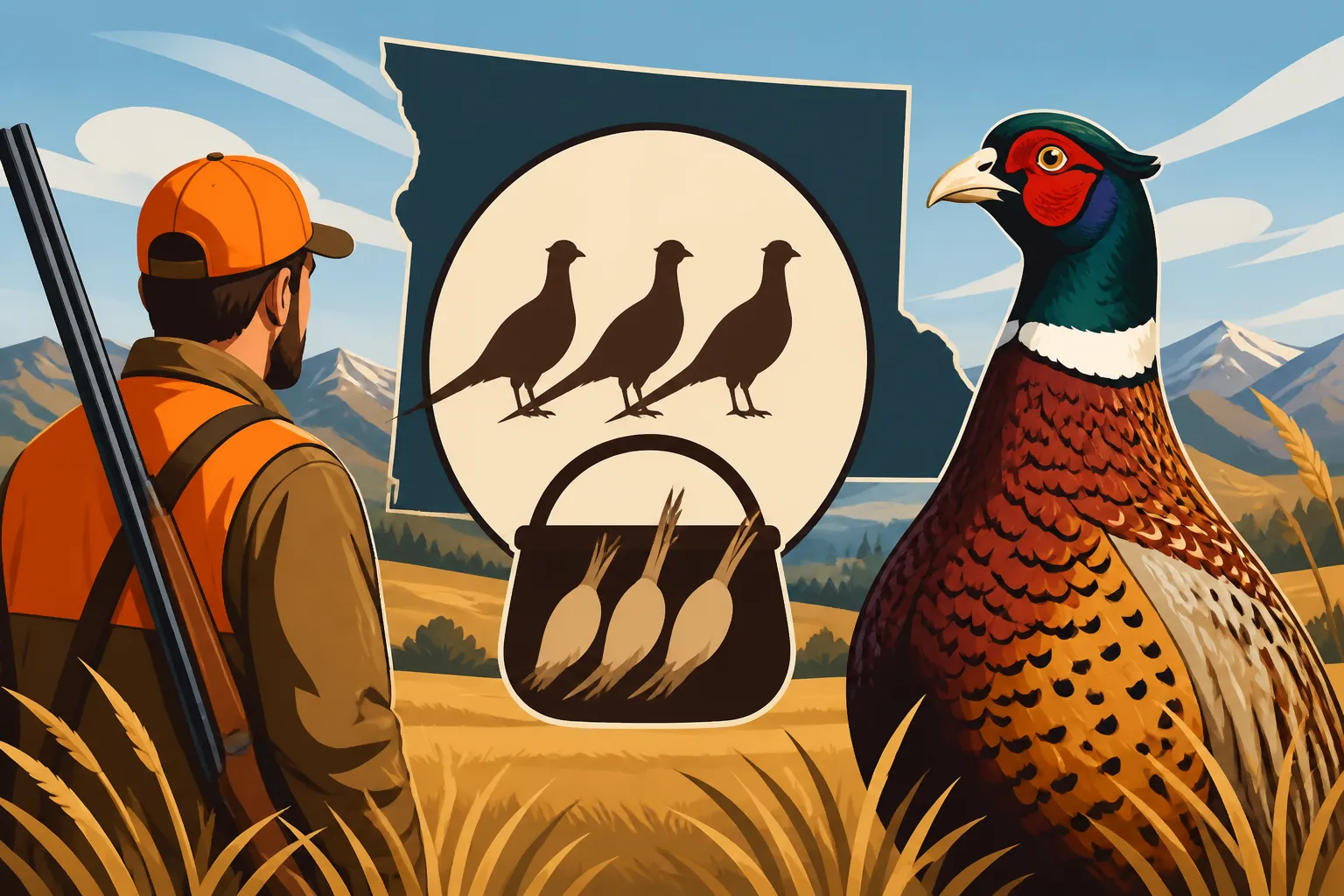
The daily bag limit is perhaps the most straightforward. It refers to the maximum number of pheasants an individual hunter can legally harvest in a single day, from sunrise to sunset. In Wyoming, the standard daily bag limit for pheasants is three (3) roosters. Yes, you read that right – only roosters. This distinction is vital because hens are typically protected to ensure a robust breeding population. Identifying a rooster pheasant in flight is usually quite easy with their iridescent plumage, long tail feathers, and distinct cackle.
Let's walk through an example. If you and your hunting buddy head out for the day, each of you, assuming you both have valid licenses, can legally shoot up to three roosters. Once you've each bagged your three birds, your daily limit is met, and you must stop hunting pheasants for that day. It doesn't matter if you see more birds; your legal harvest is complete. You cannot, for example, shoot two in the morning, go home, drop them off, and then go out in the afternoon to shoot another three. The limit is for the entire calendar day, per hunter. This rule is designed to spread out the harvest pressure and give more hunters an opportunity throughout the season. Keep an eye on the Wyoming Small Game Seasons at a Glance regulations to confirm specific opening and closing dates for pheasant season.
Grasping the Possession Limit
The possession limit, on the other hand, refers to the maximum number of pheasants an individual hunter can have in their possession at any given time, whether that's in the field, in your cooler, at your camp, in your vehicle, or stored at home. For pheasants in Wyoming, the possession limit is typically nine (9) birds. This is usually three times the daily bag limit, reflecting the idea that a hunter might spend multiple days hunting and accumulate birds.
Here's where it gets interesting and where hunters often get confused. While you can only shoot three pheasants in a single day, you can possess up to nine birds if you've hunted over multiple days. For instance, if you hunt on Saturday and get your three roosters, you can return to hunt on Sunday, bag another three, and then on Monday, get your final three. At that point, you would have nine pheasants in your possession (3+3+3), and you would have reached your possession limit. To hunt again, you would need to consume or give away some of those birds until your possession count falls below nine. The key is that the possession limit is an accumulative total, not a daily shooting allowance. This rule allows hunters who travel a distance to accumulate a reasonable amount of game meat over a multi-day trip without violating conservation principles. When transporting your birds, especially across state lines, ensure they are properly cleaned and clearly identifiable. Using a mapping app like GoHunt can help you understand the boundaries of hunting areas and avoid accidental trespass, ensuring you're only harvesting birds in legal zones.
Special Considerations for Wyoming Pheasant Hunters
Pheasant hunting in Wyoming, while generally straightforward, does have a few nuances that are worth understanding. These considerations can impact your hunt planning, your experience in the field, and how you interact with specific management areas or hunting partners.
Managed Bird Farms and Stocked Areas
While the general statewide regulations provide a baseline, some areas in Wyoming offer unique pheasant hunting opportunities, particularly those that are actively managed or stocked. The Wyoming Game and Fish Department operates several programs, often in cooperation with private landowners, to release pheasants in publicly accessible areas. These are often referred to as "Hunter Management Areas" (HMAs) or "Walk-In Areas" (WIAs) that receive supplemental stockings. You can find information about these specific locations and Where Wyoming Releases Pheasants Each Fall in the annual regulations.
The important thing to note is that while the general daily and possession limits usually apply in these stocked areas, the sheer density of birds can make for a more action-packed hunt. However, some private bird farms or commercial hunting preserves, which are not under the direct management of the Wyoming Game and Fish for wild populations, may operate under different, more relaxed bag limits for released birds. If you're hunting on such a private operation, always confirm their specific rules with the operator before your hunt, as state regulations for wild birds would not apply to their pen-raised and released birds. Most public land opportunities will adhere strictly to the published state limits. When using resources like GoHunt, you can often identify these public access areas and cross-reference them with Game and Fish stocking reports.
Youth and Mentor Hunting
Wyoming encourages youth participation in hunting, and there are specific provisions that help introduce younger generations to the sport. Generally, if a youth hunter has successfully completed their hunter education requirements and possesses a valid hunting license, they are treated as an individual hunter under the law. This means they are entitled to their own daily and possession bag limits, just like an adult. So, if you're hunting with your child who is licensed, your party could theoretically take twice the daily limit (e.g., 3 for you + 3 for them = 6 total for the day).
For very young hunters, or those who haven't yet completed their hunter education, Wyoming offers a mentored hunting program. This allows an uncertified hunter to hunt under the direct supervision of a certified adult mentor. While the mentor is responsible for ensuring safety and compliance, the uncertified hunter may still be able to participate in the harvest, contributing to the party's overall bag. It's crucial that the mentor understands their responsibilities, including maintaining Direct Supervision Means Sight and Voice Contact with their mentee at all times. Always consult the most current regulations regarding Youth Hunter Education Requirements Before Age Twelve and the specifics of the mentored hunting program to ensure full compliance. The general principle remains that each licensed hunter can fill their own bag limit.
Transporting Birds Home
Once the hunt is over and you've filled your limits, the next step is often getting your pheasants home. Wyoming has common-sense rules for transporting game, primarily to ensure that law enforcement can verify compliance with bag limits if needed. For pheasants, the main requirement is that you must be able to prove the species and quantity of birds in your possession.
Generally, this means keeping at least one wing or the head naturally attached to the bird until it reaches your final place of storage (your home, a taxidermist, or a processor). This helps wildlife officers identify the bird as a pheasant (and often confirm it's a rooster, though for pheasants, a full head or wing is usually enough). Removing all identifying features in the field can lead to questions or even citations. It's also smart practice to field dress your birds promptly to ensure the meat quality. Keep them cool, ideally on ice, especially on warmer days. If you're traveling across state lines, be aware that other states might have their own specific regulations regarding the transport of game birds. Always check the rules of any state you plan to travel through to avoid unexpected issues. A quick review of the Wyoming Small Game Seasons at a Glance regulations will often include general transport guidelines as well.
Why Understanding These Limits Matters
It might seem like a lot of rules just for a few pheasants, but these limits are in place for incredibly important reasons. Beyond simply following the law, grasping the intricacies of bag and possession limits plays a crucial role in maintaining ethical hunting standards and ensuring the long-term health of Wyoming's pheasant populations. Ignoring these details can lead to undesirable consequences, both for the individual hunter and for the broader hunting community.
Avoiding Legal Troubles
Let's be blunt: nobody wants to end a great day of hunting with a citation or a trip to court. Exceeding bag limits, whether daily or possession, is a serious violation of wildlife law. The consequences can range from hefty fines, confiscation of your harvested game, and potential loss of hunting privileges, not just in Wyoming but across other states that participate in interstate wildlife compacts. Imagine losing your hunting license for a year or more, all because you miscounted birds or didn't understand the difference between a daily and possession limit. It's a frustrating, expensive, and completely avoidable situation.
Wildlife officers are out in the field specifically to ensure fair chase and compliance with regulations. They're trained to observe, investigate, and act. Ignorance of the law is rarely an acceptable defense. That's why taking a few moments to review the current year's Wyoming Game and Fish Department regulations, readily available online or at license vendors, is absolutely essential before you even leave home. Websites like GoHunt often compile state regulations and provide summaries, but always double-check with the official G&F publication for the most current and authoritative information. Just as you'd ensure you have Proving Your Hunter Education Out in the Field documentation, make sure you're clear on the limits.
Ethical Hunting and Conservation
Beyond the legal ramifications, respecting bag limits is a fundamental aspect of ethical hunting and a commitment to conservation. As hunters, we are stewards of the land and its wildlife. Our privileges are granted with the understanding that we will act responsibly and help ensure sustainable populations for future generations. Taking more than the legal limit, even if you feel no one is watching, undermines the entire system of wildlife management. It can put undue pressure on local populations, especially in popular hunting areas.
Every pheasant taken over the limit is one less bird that could have reproduced, one less bird for another hunter to pursue, and one less bird contributing to the ecological balance. Ethical hunting is about more than just a successful harvest; it's about appreciating the resource, respecting the rules designed to protect it, and leaving the land and its wildlife better than you found it. By adhering to the pheasant bag limits, we demonstrate our commitment to these principles, upholding the integrity of hunting and ensuring that the thrill of a flushing pheasant remains a cherished part of Wyoming's outdoor heritage for years to come.
Here's a quick reference table for Wyoming's general pheasant bag limits:
| Limit Type | Standard Bag Limit (Roosters) | Applies To | Important Note |
|---|---|---|---|
| Daily Limit | 3 Roosters | Per licensed hunter, per day | Max birds harvested within one calendar day. |
| Possession Limit | 9 Roosters | Per licensed hunter, total | Max birds in custody at any time (field, vehicle, home). |
Remember, these are general guidelines, and regulations can change annually. Always consult the official Wyoming Game and Fish Department regulations booklet for the most current information before heading afield.
Disclaimer
This article is for general informational purposes only and does not constitute professional advice. Laws, prices and regulations vary by location and change over time. Consult a qualified professional for guidance on your specific situation.