The Ram Curl Requirement Explained
Dreaming of a Wyoming bighorn sheep hunt? It's the pinnacle for many hunters, a true once-in-a-lifetime tag that often takes decades to draw. But with such an incredible opportunity comes immense responsibility, and few rules cause more anxiety and confusion than the ram curl requirement. It's a make-or-break moment in the field, and a mistake can be devastating. This guide will meticulously break down Wyoming's ram curl regulations, arming you with the knowledge to confidently and ethically judge a legal ram.
Understanding the Basics of Ram Curl in Wyoming
When you finally have a bighorn ram in your spotting scope after years of applying, the last thing you want is uncertainty about its legality. The ram curl requirement isn't just a quirky rule; it's a cornerstone of responsible wildlife management, ensuring the long-term health and vitality of these majestic herds. Understanding the spirit behind the law can help you better grasp its letter.
Why the Curl Rule Matters for Conservation
Imagine a bighorn ram, its massive horns spiraling back and around, a testament to years of battling the elements and other rams. These old, mature rams are the backbone of a healthy herd, carrying the strongest genetics and contributing significantly to the population. The curl requirement is primarily designed to protect younger rams, allowing them to reach full maturity and breed before they are harvested. By ensuring only older, fully developed rams are taken, wildlife managers help maintain a robust age structure within the herd, preventing overharvesting of younger animals that still have significant reproductive potential. It's about sustaining that incredible experience for generations to come, ensuring that the legacy of Wyoming's bighorns endures.
Without such rules, there would be a tendency for hunters to take the largest-horned rams they could find, regardless of age, potentially depleting the herd's mature breeding stock. This measured approach means that when you finally do pull that coveted tag, the rams you encounter are truly magnificent specimens, ready to be a trophy in every sense of the word. It's a commitment to the animal first, and the hunter's experience second, ensuring both are honored. This conservation-first approach is why a tag for Why Sheep Is a Once-in-a-Lifetime License in Wyoming is so incredibly valued and protected.
The Visual Cues of a Legal Ram
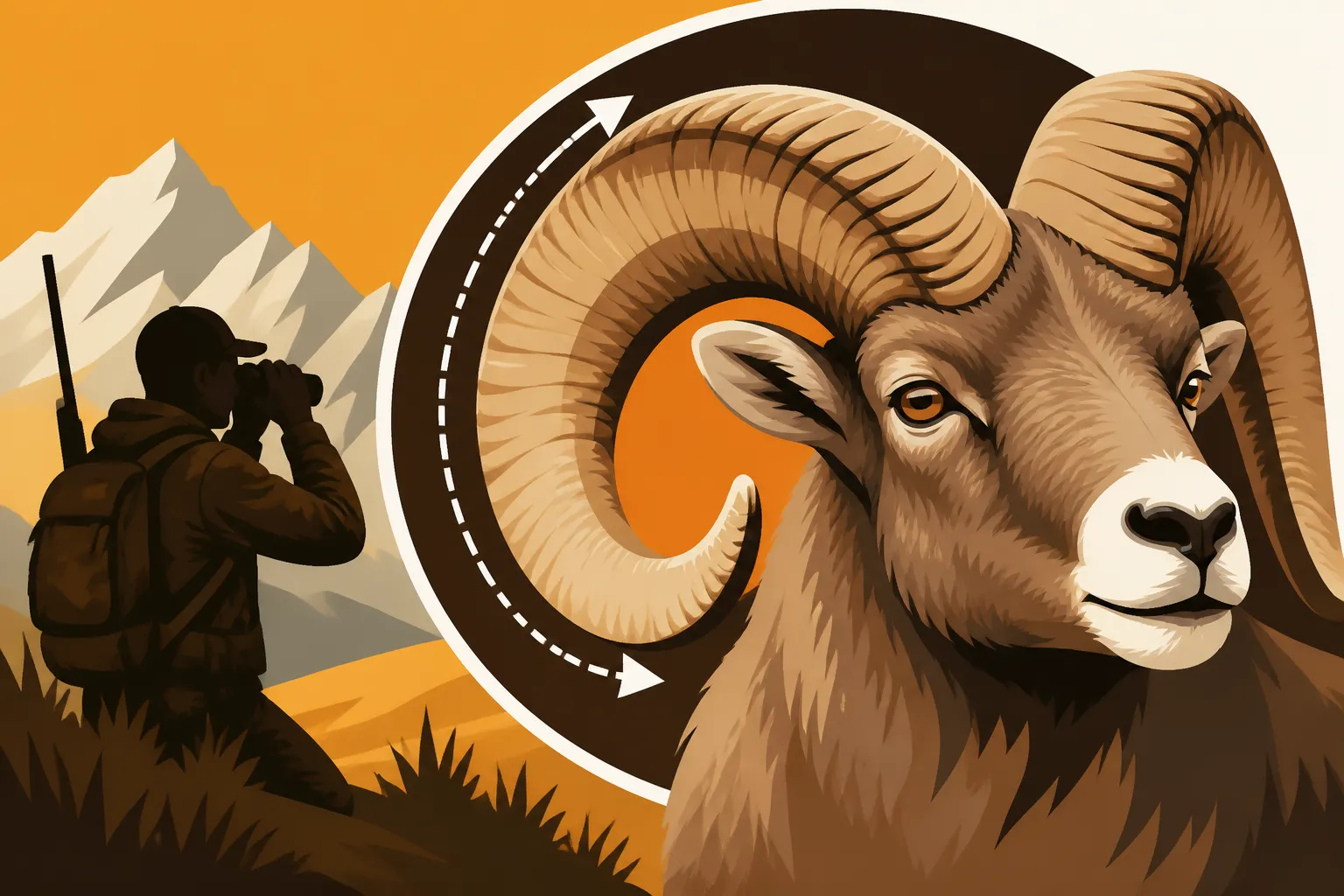
So, what does a "full curl" actually look like in practice? The most common visual cue involves the tip of the horn extending past the bridge of the nose or, more accurately for Wyoming, the anterior base of the eye. Picture a ram's horn, growing in a majestic curve from its head. For a legal ram, that horn tip must curl far enough back and down that if you were to draw an imaginary line from the anterior base of its eye, the tip would be clearly visible extending beyond that line.
This isn't always as straightforward as it sounds, especially when you factor in broken tips, unique horn growth patterns, or even the ram's head position. Sometimes, the horn might look legal from one angle, but not another. It's a puzzle of perspective, and you need to be prepared to solve it under pressure. Factors like the curvature of the horn, its mass, and any damage can all play tricks on your eyes. It requires meticulous observation and a deep understanding of the regulation to make an accurate judgment call in the field.
Wyoming's Specific Ram Curl Requirements
While "full curl" is a widely used term, Wyoming's regulations are quite specific about what constitutes a legal ram. It's not just about the horn visually completing a circle; it’s about the exact relationship of the horn tip to the ram’s head. Getting this right is paramount, and it means knowing the literal wording of the law.
The "Tip Beyond Anterior Base of the Eye" Standard
Wyoming's regulation states that a legal ram is one with a horn or horns where the tip "extends beyond the anterior base of the eye." This is the primary standard you need to internalize. Imagine a ram facing you. Now, draw an imaginary vertical line straight up from the front edge of its eye socket. For the ram to be legal, the very tip of its horn must curl far enough back that it visibly crosses and extends beyond this imaginary line.
This can be incredibly challenging to judge, especially with the ram at a distance, perhaps standing on a ridge against a busy backdrop. Optics become your absolute best friend here. A high-quality spotting scope is indispensable for picking apart these details. You need to watch the ram, not just glance at it. Observe how the horn tips relate to its eye as it moves its head, feeds, or stands still. Small changes in head angle can dramatically alter your perception of legality. Take your time, breathe, and confirm, then confirm again. Optics Power for Wyoming's Long Sightlines is not just about seeing the animal, but seeing the details of the animal.
The Broken Horn Exception
What happens if you find a ram with a magnificent curl, but one of its horn tips is broken? This is a common occurrence in the harsh, rocky terrain bighorns inhabit. The good news is that Wyoming's regulations account for this, ensuring a ram isn't automatically illegal just because of a battle scar. The rule for a broken-tipped ram is that it is still considered legal if "the horn or horns which have broken off the tip, so that the horn, if unbroken, would extend beyond the anterior base of the eye."
This means you still have to apply the same imaginary line test to the presumed original length of the horn. You're essentially judging what would have been a legal curl, even if the tip is now missing. This requires an even keener eye and a good understanding of how bighorn horns typically grow. You’ll need to estimate where that horn tip would have curled to. It adds another layer of complexity to an already challenging field judgment, but it ensures that truly mature rams aren't passed over simply because they've seen a few too many scrapes in their lifetime.
Other Considerations for Judging Legality
While the "tip beyond the anterior base of the eye" and the broken horn exception cover the vast majority of scenarios, it's always wise to remember that horn growth is unique to each animal. Some rams might have incredibly thick bases but shorter curls, while others might have a more open curl that looks long but doesn't quite meet the mark. The key is to avoid relying on general impressions like "that looks like a big ram" or "that looks like a full curl" and instead focus on the specific anatomical reference point.
Furthermore, hunt districts might have specific nuances or quotas for bighorn sheep, and sometimes, depending on the management objectives, there might be subtle differences in how rules are interpreted or emphasized. Always consult the current year's hunting regulations booklet for your specific hunt area. You can often find detailed information and maps through resources like The Wyoming Hunt Planner. Being prepared means doing your homework long before you ever step foot in the mountains.
Field Judging: Challenges and Strategies
Now that we've covered the rules, let's talk about the real-world application. Field judging a bighorn ram isn't like looking at a picture in a magazine; it's a dynamic, high-stakes skill that takes practice and patience. The challenges are numerous, but with the right approach and tools, you can build confidence.
The Difficulty of Judging in the Field
Anyone who's spent time pursuing mountain game knows the inherent difficulties. Rams are rarely cooperative. They're often spotted at immense distances, sometimes a mile or more away, clinging to steep, broken terrain. The light can be flat or harsh, creating shadows and washing out detail. They might be bedded, only showing a portion of their head, or constantly moving, making a steady assessment nearly impossible. Add to this the excitement and adrenaline of a potential shot opportunity, and your ability to make a clear, rational judgment can be severely hampered.
It’s easy for "ram fever" to set in. You've hiked for miles, maybe days, endured brutal weather, and finally, there it is—a bighorn ram. Your heart pounds, and suddenly every ram looks legal. This is where pre-hunt preparation and a disciplined approach pay off. Recognize that judging is hard, validate that frustration, but don't let it override your ethical obligation. Optical illusions are rampant; a ram looking uphill will often appear to have a shorter curl than one looking downhill, or a ram quartering away might obscure the critical horn tip. You need to be aware of these tricks of the eye.
Tools and Techniques for Accurate Assessment
To give yourself the best chance at a confident judgment, you need the right gear and a solid strategy. This isn't a game for cheap optics or a hurried approach.
First and foremost, invest in top-tier optics. We're talking about a powerful spotting scope (20-60x or even 27-80x) paired with a stable tripod. Your binoculars are great for finding the ram, but the spotting scope is what you'll use to pick apart the details of its horns. Take the time to get rock-solid behind your glass. Glassing Wyoming Basins Before You Take a Step is a great skill that translates directly to bighorn hunting, as patient glassing is essential.
When you spot a ram, resist the urge to immediately raise your rifle. Instead, set up your spotting scope and study the animal. Observe it from multiple angles if possible. Does it stand up? Does it move to a different ridge? How does its head position change the appearance of the curl? Use fixed points of reference on the ram's head: its eye, its ear, the base of its horn. Mentally trace that imaginary line from the anterior base of its eye.
Having hunting partners is also a huge advantage. Four eyes are always better than two, and a calm, objective second opinion can be invaluable when adrenaline is high. Discuss what you're seeing. Describe your visual assessment and listen to theirs. Don't rush each other.
For planning and detailed map work, platforms like GoHunt can be a game-changer. You can use their mapping features to scout potential terrain from your home, identifying escape routes, bedding areas, and potential glassing knobs. This helps you anticipate where rams might be and how you'll approach a judging scenario once you're in the field. Understanding the topography ahead of time gives you an edge in finding the best vantage points for observation, which is critical for making that confident call on a ram's legality.
Here's a simple breakdown of common scenarios:
| Scenario | Visual Description | Wyoming Legality (General Interpretation) |
|---|---|---|
| Legal Full Curl | Horn tip clearly curls past the anterior base of the eye. | Legal |
| Broken Tip (Legal) | Horn is broken, but the unbroken portion would clearly extend past the anterior base of the eye. | Legal |
| Illegal Short Curl | Horn tip stops well short of the anterior base of the eye, or just barely reaches it. | Illegal |
| Broken Tip (Illegal) | Horn is broken, and even if unbroken, would not extend past the anterior base of the eye. | Illegal |
| Young Ram / Half Curl | Small horns, clearly not approaching the anterior base of the eye. | Illegal |
| Misleading Angle | Ram’s head angle makes a short curl appear longer, or vice-versa. | Requires multiple angles/patient observation |
What to Do If You're Unsure
The moment of truth arrives, and despite all your preparation and high-tech gear, you still have a flicker of doubt. This is perhaps the most critical moment of your hunt, and how you act will define your integrity as a hunter.
When in Doubt, Don't Shoot
This is the golden rule, the cardinal principle for ethical hunting, especially when it comes to highly coveted species like bighorn sheep. If you have any doubt whatsoever about whether a ram meets the legal requirements, you must pass on the shot. It's a tough decision, one that can feel heartbreaking after all the effort, but it's the right one. The consequences of taking an illegal ram are severe: heavy fines, loss of hunting privileges, confiscation of the animal, and potential legal charges. Beyond the legal ramifications, there's the personal burden of knowing you acted unethically and jeopardized a precious resource.
Remember, a tag for a bighorn ram is often a once-in-a-lifetime opportunity. Don't let a moment of impatience or doubt tarnish that experience. There's immense pride in walking away from a questionable shot, knowing you honored the animal and the regulations. The mountain will still be there, and perhaps another, undoubtedly legal ram, will present itself another day.
Using Resources and Your Hunting Partners
To minimize doubt, leverage every resource at your disposal. If you’re hunting with partners, ensure everyone understands the rules and collaborates on field judging. Multiple sets of experienced eyes can often catch details one person might miss or confirm an observation. Discuss the ram, articulate your concerns, and collectively decide. It’s a team effort, and solidarity in ethical decision-making is key.
Before your hunt, you should study the specific regulations for your Wyoming Bighorn Sheep Hunt Districts. Online resources like GoHunt can also provide valuable information by allowing you to delve into forums and articles where experienced sheep hunters discuss judging techniques and share insights on specific hunt areas. While these aren't official rules, they can inform your understanding and preparation. When you're out in the field, carrying a copy of the official regulations – either printed or digitally on your phone (if service allows) – can be a lifesaver for a quick reference.
Ultimately, the responsibility falls to you, the hunter. Be prepared, be patient, and when in doubt, choose conservation and ethics above all else. That’s what it truly means to be a bighorn sheep hunter in Wyoming.
Disclaimer
This article is for general informational purposes only and does not constitute professional advice. Laws, prices and regulations vary by location and change over time. Consult a qualified professional for guidance on your specific situation.