When Wyoming’s Turkey Season Opens
There's nothing quite like the anticipation of a spring morning, listening for that first booming gobble to shatter the silence, or the quiet patience of a fall hunt, hoping to intercept a flock of turkeys. But before you can even think about calling in a Merriam's, you've got to nail down the most fundamental question: When does Wyoming's turkey season actually open? It's a question that can send even experienced hunters scrambling through regulation booklets, and for good reason – the dates aren't always a simple, statewide declaration. This guide is here to unravel the complexities, providing you with a clear roadmap to understanding Wyoming's turkey seasons, from those thrilling spring openers to the more relaxed fall hunts.
Understanding Wyoming's Turkey Season Structure
Wyoming offers hunters the exciting opportunity to pursue wild turkeys not just once, but twice a year, with distinct spring and fall seasons. Each season comes with its own set of rules, targets different bird behaviors, and offers a unique hunting experience. Knowing the general framework is the first step to planning your successful hunt.
Spring Turkey Season Details
For many, spring turkey season is the quintessential hunt. It's all about the gobbler, the strut, and the electrifying back-and-forth of calling. In Wyoming, the spring season is typically focused on harvesting bearded turkeys, aiming for those mature gobblers responding to breeding calls.
Generally speaking, Wyoming's spring turkey season kicks off around April 20th each year and typically runs through May 31st. This window is timed perfectly to coincide with the peak of the breeding season when toms are most vocal and susceptible to calling. While this is a common framework, it's absolutely crucial to remember that specific opening and closing dates can, and often do, vary by individual hunt area. You might find some units opening a few days earlier or later, or closing earlier, depending on local population objectives and hunter pressure. The thrill of a spring hunt often involves early mornings, trying to roost birds the evening before, and then setting up in a strategic location to call a lovesick gobbler into range. The primary goal is usually a mature tom, adding to the challenge and reward. To truly get a handle on what you're allowed to harvest, it's wise to review the specifics of The Turkey Season Bag Limit Explained.
Fall Turkey Season Overview
While spring hunts often get all the glory, the fall turkey season in Wyoming offers a fantastic, and often different, experience. Instead of strictly chasing gobblers, fall hunts generally allow for the harvest of any turkey, whether it's a tom, hen, or jake. This makes it a great opportunity to fill the freezer and enjoy some time afield without the intense calling pressure of spring.
Wyoming's fall turkey season usually opens around September 1st and can extend all the way through December 31st in many areas. This extended season provides ample opportunity, whether you prefer to hunt in the crisp air of early autumn or brave the colder, snowy conditions later in the year. The tactics shift in the fall; instead of solely focusing on enticing gobblers with breeding calls, hunters often focus on locating flocks, breaking them up, and then calling individual birds back together. It's a more social hunt, with birds often moving in larger groups. This flexibility in target birds and a longer season make it appealing to many. If you're looking for broader hunting opportunities beyond just turkeys, you might also be interested in Wyoming Small Game Seasons at a Glance.
Navigating Wyoming's Turkey Hunt Areas and Regulations
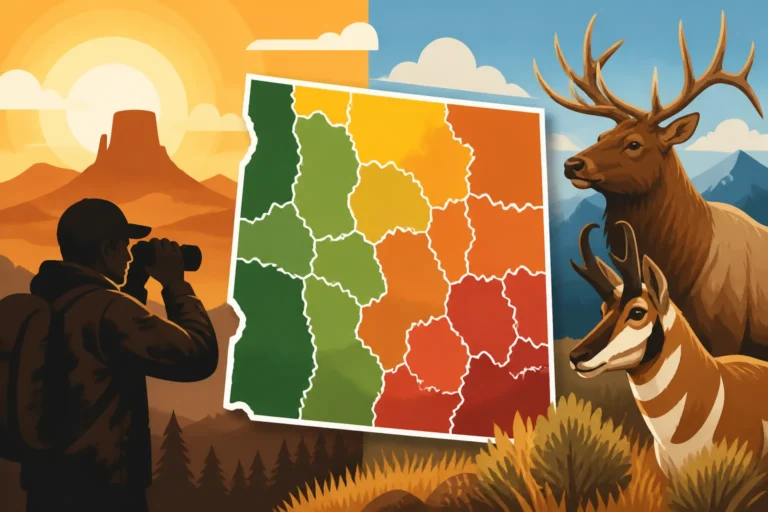
The Wyoming Game and Fish Department manages turkey populations through a system of specific hunt areas. These aren't always neat little boxes on a map, and their boundaries often follow geographic features or county lines. Understanding these units is paramount, as the regulations, including opening dates and bag limits, are tied directly to them.
How Hunt Areas Impact Opening Dates
Unlike some states with blanket statewide seasons for turkeys, Wyoming implements distinct hunt areas, and your opening date will hinge entirely on which one you're targeting. For instance, the general spring season might start April 20th, but within that, Hunt Area 1 might open on the 18th, while Hunt Area 3 might hold off until the 25th. These variations are designed to manage local turkey populations effectively, account for differing weather patterns, and spread out hunter pressure.
For example, areas like the Black Hills (often encompassing portions of Crook and Weston counties) might have slightly different dates or regulations compared to areas in the Bighorn Mountains or the Laramie Range. This level of detail means that simply knowing "Wyoming's turkey season opens in April" isn't enough. You must identify your chosen hunt area and consult its specific regulations. To pinpoint these zones, a valuable resource is the Wyoming Game and Fish Department website, where you can find detailed maps and current regulations. Planning your trip means spending time with these maps, perhaps using a tool like GoHunt's mapping features to overlay hunt unit boundaries with public land ownership. This foresight will save you headaches and ensure you're hunting legally. For a broader understanding of how these units are defined, you can look into The Turkey Hunting Units Explained.
Here's a simplified look at how some typical spring and fall turkey seasons might shake out, but remember, always verify with the current year's regulations:
| Hunt Area Type (Example) | Spring Opening Date (Approx.) | Spring Closing Date (Approx.) | Fall Opening Date (Approx.) | Fall Closing Date (Approx.) | Bag Limit (Spring) | Bag Limit (Fall) |
|---|---|---|---|---|---|---|
| General Western Area | April 20 | May 20 | September 1 | December 31 | 1 Bearded Turkey | 1 Turkey (any) |
| General Eastern Area | April 15 | May 25 | September 15 | December 15 | 1 Bearded Turkey | 1 Turkey (any) |
| Black Hills Region | April 1 | May 31 | September 1 | December 31 | 1 Bearded Turkey | 1 Turkey (any) |
Note: Dates are illustrative and must be confirmed with current year's official Wyoming Game & Fish regulations.
Key Regulatory Considerations
Beyond the opening and closing dates, several other regulations are critical for a legal and ethical turkey hunt in Wyoming. Missteps here can lead to citations, so attention to detail is paramount.
First and foremost, you need the right licenses. For turkey, you'll typically need a valid Wyoming hunting license and a specific turkey license or stamp, which is often purchased through a draw or over-the-counter depending on the area and specific license type (limited quota vs. general). Always confirm this well in advance of the season.
Bag limits, as mentioned, are usually one bearded turkey in the spring and one turkey of either sex in the fall, but these can also vary by hunt area. It's not uncommon for some areas to have more restrictive limits or even offer multiple tags in certain situations. Details on these limits can be found within The Turkey Season Bag Limit Explained.
Legal shooting hours are another crucial aspect. For most small game and birds in Wyoming, including turkeys, hunting hours typically run from one-half hour before sunrise to one-half hour after sunset. However, it's always best to check the specific regulations for any nuances, as these can be updated. Understanding Wyoming Legal Shooting Hours for Big Game can give you a general idea, but remember to verify for small game and birds.
Lastly, weapon restrictions. For spring turkey, shotguns (with specific shot size restrictions), archery equipment, and sometimes .22 rimfire rifles are common. In the fall, depending on the unit, rifles and handguns may also be permitted in addition to shotguns and bows. Always check the regulations for the specific hunt area you plan to pursue. While What Wyoming Counts as a Legal Firearm for Big Game provides an overview for larger animals, it's important to cross-reference for turkey-specific rules.
To ensure you have the most up-to-date and accurate information, your first stop should always be the official Wyoming Game and Fish Department website. They publish the complete hunting regulations annually. Many hunters also rely on digital platforms like GoHunt for their detailed hunt unit information and regulation summaries, though these should always be cross-referenced with the official G&F booklet. For a full dive into where to find these crucial details, refer to Where the Current Wyoming Regulations Are Posted. You can also get familiar with general application processes through A Walkthrough of the Wyoming Hunt Planner.
Planning Your Wyoming Turkey Hunt
Once you've wrapped your head around the dates and regulations, it's time to get down to the nitty-gritty of planning your actual hunt. Success often hinges on good preparation, from virtual scouting to knowing what gear you'll need and how to use it.
E-Scouting and Pre-Season Prep
In today's digital age, effective e-scouting can make a huge difference in your turkey hunting success. Before you even set foot in the field, you can do a tremendous amount of research from your living room. Online mapping tools, including those offered by GoHunt, are invaluable for this. You can identify potential turkey habitat, such as timbered river bottoms, pockets of ponderosa pine, or areas with good food and water sources. Look for public land access points, road systems, and terrain features that might concentrate birds or provide good ambush points.
Turkeys in Wyoming, especially the Merriam's subspecies, are often found in mountainous timbered areas and foothills, but they also thrive along riparian corridors. Using satellite imagery to identify these distinct habitat types is a great starting point. Pinpointing water sources, as discussed in Finding Water Sources in Dry Hunting Country, can also be key, especially in drier years, as birds will gravitate towards them. Pay attention to areas with a mix of cover and open ground for strutting and feeding.
If you plan to hunt private land, the "pre-season prep" involves respectfully reaching out to landowners months in advance to secure permission. Never assume access, even if a gate is open. A friendly conversation and a clear request are always the best approach. Mastering these virtual scouting techniques can greatly improve your odds, as highlighted in articles like E-Scouting a Unit Before the Season Opens.
Essential Gear and Tactics
Turkey hunting, whether spring or fall, requires specific gear and a solid understanding of turkey behavior.
For spring hunts, calling is paramount. You'll want a variety of calls – slate, box, diaphragm – to mimic hens and, sometimes, jakes to pique a tom's interest. Decoys, typically a hen or a jake/strutter combo, can be incredibly effective at drawing in a gobbler that hangs up just out of range. Full camouflage is essential; turkeys have incredibly sharp eyesight. Shotguns are the most common weapon, typically loaded with heavy shot like #4 or #5. Archery equipment offers an exciting challenge, often requiring ground blinds for concealment.
Fall hunts often involve different tactics. While calls can still be used, breaking up a flock and calling individual birds back together is a classic and highly effective strategy. Some hunters use dog breeds specialized in turkey hunting to scatter flocks. Camouflage remains important, but less emphasis might be placed on aggressive calling. If hunting with a rifle in areas where it's permitted, ethical shot placement becomes even more critical. Keep in mind that for turkeys, even electronic calls are typically legal in Wyoming, unlike for big game. You can learn more about this in Electronic Calls for Predators and Varmint Hunting.
Regardless of the season, comfortable boots, binoculars to scan for birds, and a good backpack for carrying calls, water, and eventually, your bird, are standard. Don't forget bug spray for spring hunts!
Accessing Turkey Hotspots in Wyoming
Wyoming boasts a significant amount of public land, offering fantastic opportunities for turkey hunters. However, knowing where to find those public access points and the prime turkey habitat within them is crucial.
Public Land Opportunities
A large portion of Wyoming's best turkey hunting occurs on public lands managed by various agencies. The National Forests are particularly excellent, as turkeys thrive in the mixed conifer and ponderosa pine forests they offer. Good examples include the Black Hills National Forest in the eastern part of the state, which is renowned for its Merriam's turkey populations. Areas within the Bighorn National Forest, Medicine Bow-Routt National Forest, and even portions of the Shoshone National Forest can also hold birds. For those considering hunting in the Black Hills, understanding Hunting the Black Hills National Forest in Wyoming will be a great resource.
Bureau of Land Management (BLM) lands also offer extensive turkey habitat, especially in the foothills and riparian zones. While often more open than dense forests, these areas can be surprisingly productive, particularly along creek bottoms where turkeys roost and feed.
State Trust Lands can also provide hunting access, though they often come with specific rules regarding access and use. Always check the Wyoming Game and Fish Department website or signs posted at these locations for current regulations.
Finally, Wyoming's Access Yes program is a game-changer for public hunters. This program works with private landowners to open up access to private land, or to public land that would otherwise be landlocked by private holdings. These "Walk-in Areas" and "Hunter Management Areas" are clearly marked and listed on the WGFD website, often providing new opportunities annually. Many hunters find success utilizing these areas for turkeys. For details on how this program works, check out Access Yes Opens Private Wyoming Ground to Public Hunters.
Private Land Considerations
While public land opportunities are abundant, a significant portion of Wyoming is private land. Some of the most productive turkey habitat, particularly along river bottoms and agricultural fringes, can be on private holdings. Successfully hunting these areas almost always requires securing permission from the landowner well in advance of the season.
Building relationships with landowners is key. A respectful phone call, a polite letter, or a knock on the door (at a reasonable hour) can go a long way. Always arrive prepared to clearly state your intentions, show proof of your hunting license, and offer to share some game if you're successful. Respecting their land, leaving no trace, and promptly reporting your harvest are all crucial for maintaining these valuable relationships for future hunts. Remember, access to private land is a privilege, not a right.
Ultimately, whether you're chasing that first gobble of spring or aiming for a fall flock, Wyoming's turkey season offers a rich and rewarding hunting experience. Just remember to do your homework, understand the specific regulations for your chosen hunt area, and prepare for an unforgettable adventure.
Disclaimer
Please note that hunting regulations, season dates, and license requirements are subject to change. This guide is intended to provide general information and should not be considered a substitute for the official regulations published by the Wyoming Game and Fish Department. Always consult the most current official Wyoming hunting regulations prior to planning or embarking on any hunting trip.