Finding Water Sources in Dry Hunting Country
Hunting in Wyoming's vast, arid landscapes can be an incredibly rewarding experience, but it also presents unique challenges, perhaps none more pressing than the quest for water. It's easy to picture rushing rivers and mountain streams, but the reality for much of the state, especially during dry seasons or in specific habitat types, is a stark thirstland where finding a reliable water source for both yourself and the game you pursue becomes paramount. This guide will walk you through proven strategies, essential gear, and a deeper understanding of Wyoming's dry country to help you locate those life-sustaining oases.
Understanding Wyoming's Arid Landscape and Water Challenges
Wyoming's reputation for wide-open spaces and breathtaking mountains is well-deserved, but beneath that grand image lies a reality of diverse ecosystems, many of which are inherently dry. From the sagebrush flats of the Red Desert to the high plains bordering Nebraska, water can be a fleeting resource. Understanding this fundamental truth is the first step toward successful hunting in these challenging conditions.
The Reality of Dry Seasons and Droughts
Anyone who has spent time in Wyoming knows that the weather here is a fickle beast. We can swing from abundant snowfall and wet springs to scorching, dry summers with very little warning. These periods of drought aren't just an inconvenience; they drastically alter the landscape, drying up seasonal ponds, slowing streams to a trickle, and forcing game animals to concentrate around the few remaining reliable water sources. I've seen areas that were lush and green in July turn to dust bowls by August, making any previous scouting almost irrelevant when it came to finding water. This unpredictability means you can't just assume what you saw last year will hold true this year. You've got to be prepared for the worst and adapt on the fly, keeping a keen eye out for new water sources or the depletion of old ones. This is where diligent pre-season planning, combined with on-the-ground observation, becomes incredibly important.
How Big Game Animals Adapt to Scarcity
Big game animals in Wyoming are incredibly resilient and have developed remarkable adaptations to cope with periods of water scarcity. Mule deer, for instance, are masters of conserving moisture, often deriving much of their hydration from the plants they eat, like forbs and browse. Elk, while needing more water than deer, are known to travel considerable distances from bedding areas to feed and then to water, sometimes making multiple trips in a day during hot weather. Pronghorn, the true denizens of the open prairie, can go extended periods without direct water, relying heavily on succulent vegetation and morning dew, but they will still seek out water when available, especially during hot, dry stretches.
Understanding these adaptations helps you anticipate their movements. If water is scarce, game will be drawn to the most dependable sources, even if it means altering their normal routines. This might mean concentrating in specific drainages, congregating around a small spring, or even moving into areas with different forage that offers more moisture. Conversely, in truly desperate times, you might find animals spread out, conserving energy and moisture wherever they can find it, making them harder to pattern. The key is to think like the animal: where would you go if you were incredibly thirsty in this parched landscape?
Key Strategies for Locating Water Sources
Finding water in dry hunting country isn't about luck; it's about preparation, observation, and understanding the subtle clues the landscape provides. It's a skill that improves with every hour spent in the field and every map studied.
Topographical Maps and Satellite Imagery for Pre-Scouting
Before you ever set foot in the field, your best friend for finding water is your map. Detailed topographical maps are invaluable for identifying perennial streams (represented by solid blue lines), rivers, and even intermittent streams (dashed blue lines) that might hold water early in the season or after recent rain. Look for areas where contour lines pinch together, indicating canyons or draws that could hold snowmelt longer or funnel subsurface water to the surface, creating a seep or spring. Pay close attention to shaded north-facing slopes, especially at higher elevations, as these areas retain moisture longer.
Satellite imagery, particularly high-resolution options available through tools like GoHunt, takes this a step further. You can often spot darker green vegetation patterns that stand out against the surrounding dry landscape, a strong indicator of moisture. Look for distinct changes in vegetation type, even if the blue line on the map is dashed. A line of cottonwood trees or willows in a seemingly dry wash is a dead giveaway that there's water, at least subsurface, and possibly a surface seep. I always spend hours pouring over these maps during my E-Scouting a Unit Before the Season Opens routine, marking potential water points long before I leave home. This isn't just about finding water for the animals; it's about planning your own hydration strategy and potential refill points.
Reading the Landscape for Obvious and Hidden Signs
Once you're actually in the hunting area, become a detective of the landscape. Obvious signs include lush, green vegetation in otherwise parched surroundings, especially species like willows, sedges, rushes, or even just taller, greener grass. Cottonwood trees are another classic indicator of water, often growing along river bottoms or where the water table is high. These aren't always gushing rivers; sometimes it's just a narrow band of green along a dry wash.
More hidden signs require a sharper eye. Look for game trails that converge and lead downhill into a particular drainage or canyon. Animals are creatures of habit, and their trails often lead to the easiest access points for water. Pay attention to changes in soil moisture or even small depressions in rock formations that could hold rainwater for a few days after a storm. Rocky outcroppings with green staining, or a slight sheen on the rock face, can indicate a seep that's slowly dripping. Even the presence of certain insects, like dragonflies or mosquitos (as annoying as they are), can signal nearby standing water. Don't forget to look for damp earth under boulders or in shaded crevices, which can be enough for small game and sometimes even bigger animals to paw at.
The Role of Wildlife Trails and Game Sign
Wildlife trails are like highways for game, and many of them lead directly to crucial resources, especially water. If you find a heavily used trail that seems to be headed purposefully in one direction, follow it. Chances are, it's taking animals to a feeding ground, a bedding area, or, most importantly in dry country, a water source. As you follow these trails, keep an eye out for fresh track and scat. Fresh tracks in damp soil are an obvious sign of recent activity around a water source. Look for impressions of hooves in mud, or even just subtle dampness.
Beyond tracks, look for Reading Fresh Elk Sign in Dark Timber or other indicators that animals are consistently using a particular area. Rubs, droppings, and even partially eaten vegetation can tell you what animals are in the vicinity and how recently they were there. If you find multiple signs converging on a specific low point or depression, it's highly likely a water source is nearby, even if it's just a small, muddy wallow. During particularly dry periods, game animals might not even drink every day, but they will still visit water sources periodically, especially during the cooler hours of dawn and dusk. This makes waterholes excellent places to set up if you're patient and the wind is right.
| Water Source Type | Description | Reliability | Best Time to Find | Animal Preference | Notes |
|---|---|---|---|---|---|
| Perennial Streams/Rivers | Flow continuously year-round, fed by snowmelt or groundwater. | High | Anytime | All big game | Often have heavy cover, but can be pressured. Check flow rates. |
| Springs/Seeps | Water emerging from the ground, often small and localized. | Moderate to High | Anytime | All big game | Can be hidden, look for lush vegetation, damp soil. Vulnerable to drying. |
| Wallows | Muddy depressions created by animals (esp. elk) to cool off and deter bugs. | Low to Moderate | Hot months, early season | Elk, Moose, Bear | Often near springs or seeps; may not be potable for humans. |
| Ephemeral Ponds | Form after rain/snowmelt, dry up quickly. | Low | Spring, after heavy rain | Deer, Antelope, small game | Unreliable, but can be a temporary lifeline. |
| Stock Tanks/Guzzlers | Man-made water sources for livestock or wildlife, often in arid areas. | Moderate to High | Anytime | All big game, Antelope particularly | Excellent spots for pronghorn. Check private land access. |
| Snow Patches | Residual snow from previous winter. | Low (seasonal) | Early Season, High Elevation | Elk, Sheep, Deer | Animals will eat snow directly for hydration. Only at high altitudes. |
Essential Gear and Best Practices for Water Management
Beyond knowing where to look, having the right gear and adopting smart practices for water management are critical for safety and success in Wyoming's dry country. Your personal hydration is just as important as finding water for the animals.
Water Filtration and Purification for Safe Consumption
Never, ever assume that a natural water source in the backcountry is safe to drink without treating it. Giardia, cryptosporidium, and other nasty pathogens are common, especially in areas with heavy livestock or wildlife use. Carrying a reliable water filter or purification system is not an option; it's an absolute necessity. Modern portable filters, like those from Sawyer or Katadyn, are lightweight, effective, and relatively fast. They remove bacteria and protozoa, making most surface water safe to drink.
For extra peace of mind, or if the water is particularly murky, consider a chemical treatment like iodine tablets or a SteriPEN UV purifier as a backup. Boiling water is also highly effective but impractical for large quantities or on the go. Plan to treat any water you find, even from seemingly pristine mountain springs, because you never know what's upstream. This preparation means you can confidently refill your water bottles when you find a promising source, rather than rationing water and risking dehydration.
Carrying Sufficient Water and Planning for Refills
The old adage "ounces equal pounds" is true, and water is heavy. However, carrying enough water is non-negotiable for hunting in dry country. Start your day with a full hydration bladder and water bottles, aiming for at least 3-4 liters, possibly more depending on the temperature and your exertion levels. High-elevation, strenuous hunting, or hot, sunny days will demand significantly more. Dehydration quickly saps energy, impairs judgment, and can turn a hunt into a dangerous situation.
The key is to proactively plan for refills using the water sources you identified during your e-scouting and on-the-ground reconnaissance. Don't wait until you're running low; if you come across a reliable spring or stream, top off your containers. If you're relying on a known stock tank or guzzler, plan your route to pass by it when you anticipate needing water. Remember, some areas of Wyoming, like parts of the Red Desert or vast sagebrush expanses, can have zero water for miles and miles, so overpacking water initially is always better than underpacking. Think ahead and know your limits, especially when covering large distances or stalking Pronghorn Eyesight and the Stalking Distance It Forces across open plains.
Ethical Waterhole Hunting and Minimal Impact
Hunting waterholes or springs can be an incredibly effective strategy in dry conditions, as animals are drawn to these locations like magnets. However, it requires a thoughtful and ethical approach to minimize your impact and respect both the animals and other hunters. First and foremost, check the local regulations. Some hunt areas might have specific rules regarding proximity to water sources or methods of hunting around them. Also, understand that animals are most vulnerable at water. It's not about an easy kill, but about understanding their natural behaviors.
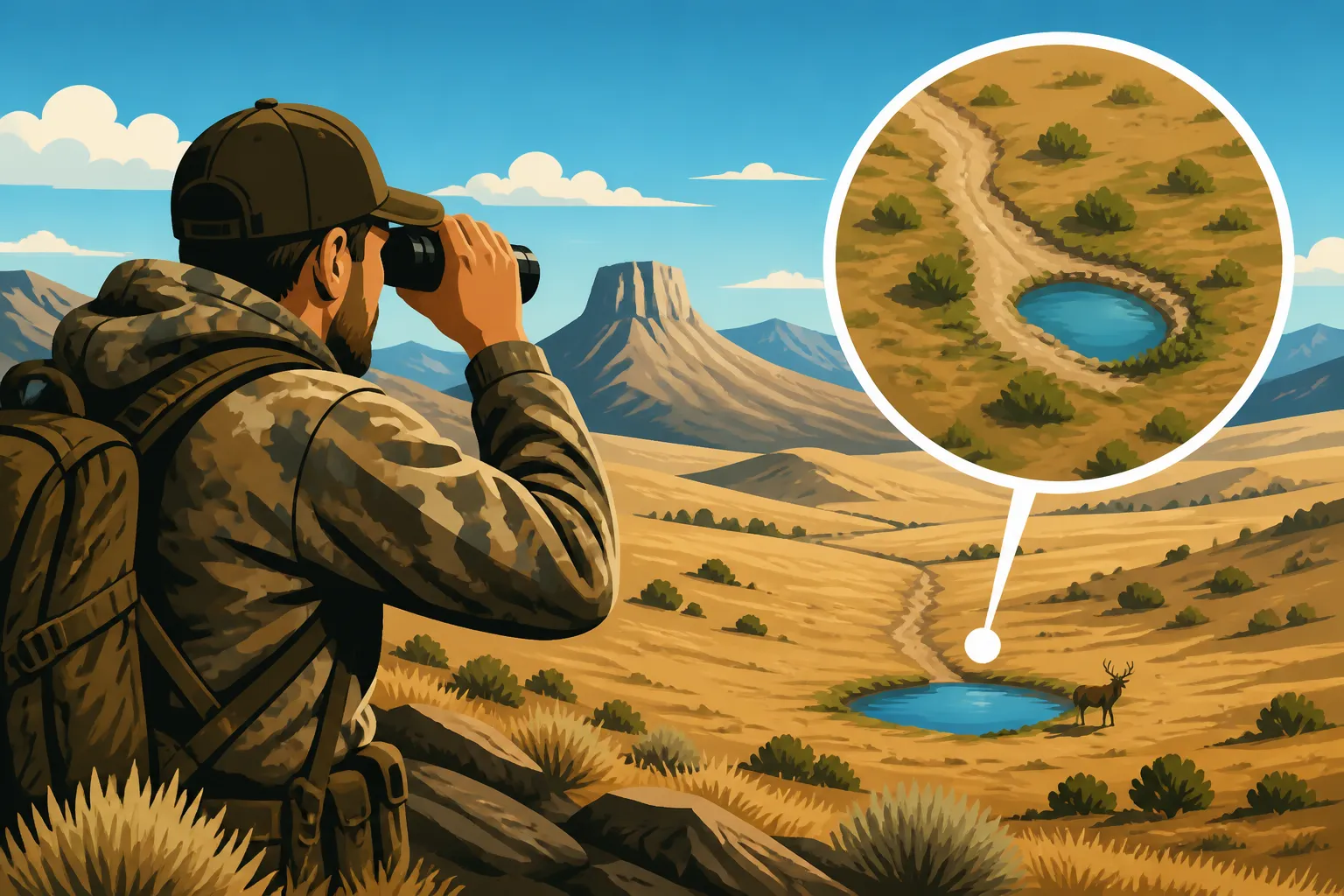
When you find a water source, observe it from a distance before moving in. Use your binoculars and spotting scope to Spotting Scope Power for Open Country Glassing the area thoroughly. Look for prevailing wind directions that might carry your scent to the water, and plan your approach accordingly. A good strategy is to find an elevated position downwind that offers a clear shot while remaining concealed. Be mindful of setting up blinds too close or disturbing the area unnecessarily, which can spook animals for days. When you leave, pack out everything you pack in, leaving no trace. This responsible behavior ensures that these vital water sources remain viable and undisturbed for both wildlife and future generations of hunters.
Specific Water Sources You Might Encounter
Knowing the general strategies is one thing, but recognizing the specific types of water sources you're likely to find in Wyoming is another. Each comes with its own set of characteristics and challenges.
Perennial Streams and Rivers
These are the most obvious and often the most reliable water sources you'll encounter. Think of the Snake River, Green River, or the North Platte. While impressive, not all perennial streams are massive waterways. Many are smaller creeks flowing steadily through mountain valleys or deep canyons. They often offer cover along their banks, and game animals will frequent them for both water and the abundant forage that typically grows there.
However, even perennial streams can fluctuate dramatically in flow, especially in late summer or during drought years. A "stream" on a map might be reduced to a series of isolated pools during a dry spell. Always pay attention to the width of the stream bed compared to the actual water flow. A wide, dry gravel bed with only a narrow ribbon of water tells you it's been a tough year. When you're utilizing tools like Using onX Public Land Layers in Wyoming or traditional paper maps, these are the solid blue lines you're looking for, often flanked by vibrant green areas on satellite imagery. Remember that access to larger rivers can sometimes be limited by private land, so always verify your entry points.
Springs, Seeps, and Wallos
These are the unsung heroes of dry country hunting and can often be the most productive spots. A spring is where groundwater naturally emerges from the earth, often creating a small pool or a slow trickle. They can be found in a variety of terrain, from the bottom of a canyon to a rocky hillside. Seeps are even more subtle, often just a damp spot on a hillside or under a rock overhang where water slowly oozes out, barely forming a visible stream. Look for small patches of brighter green vegetation in an otherwise brown landscape, or a slight sheen on rocks. They might not be enough for you to fill a bottle quickly, but they're gold for game animals.
Wallows are muddy depressions, often created by elk, moose, or even deer, where they roll in the mud to cool off and deter insects. While wallows might not offer potable water for humans, they are clear indicators of a nearby water source, whether it's a spring, a seep, or simply a collection of rainwater. Hunting an Elk Wallow in September can be an incredibly productive strategy, as bulls often visit them daily during the rut. Identifying these smaller, often hidden sources requires patience and a good eye for detail when doing your The Grid Glassing Method, Step by Step. Sometimes, it's just a small damp spot under a cluster of aspens on a northern slope that holds just enough moisture to attract game.
Ephemeral Ponds, Stock Tanks, and Man-Made Features
Ephemeral ponds are temporary water bodies that form after rain or snowmelt and quickly dry up. They are unreliable but can be a temporary boon for wildlife in otherwise waterless areas, particularly for species like pronghorn and mule deer that can move quickly to exploit them. Don't plan your whole hunt around them, but if there's been recent precipitation, these spots can be hot for a few days.
More reliably, you'll find stock tanks and guzzlers. Stock tanks are man-made reservoirs, usually fed by wells or pipelines, designed to provide water for livestock on ranchland. While often on private property, many are accessible if you're hunting adjacent public land, or if you've secured permission from the landowner. Guzzlers are artificial water collectors, specifically designed by wildlife agencies to capture rainwater and dew, storing it in underground tanks accessible to wildlife. These are typically placed in extremely arid areas specifically for wildlife benefit. Both stock tanks and guzzlers are magnets for all big game, especially antelope, in areas where natural water is scarce. Always be respectful around these vital resources and never tamper with them. These can often be found on mapping apps like GoHunt, sometimes labeled as "wildlife water."
Disclaimer
The information provided in this guide is for general informational purposes only and does not constitute legal advice. Hunting regulations, seasons, and access rules in Wyoming can change frequently. It is the responsibility of every hunter to consult the most current Wyoming Game and Fish Department regulations and obtain all necessary licenses and permits before engaging in any hunting activities. Always prioritize safety and ethical hunting practices.