Where Wyoming’s Bison Hunt Areas Are
If you're a hunter who dreams of pursuing a truly iconic North American big game animal, the bison in Wyoming likely sits at the top of your list. The challenge, however, isn't just the hunt itself, but the incredibly tough process of even securing a tag. This guide will help you understand where these rare opportunities exist in Wyoming, detailing the specific hunt areas and shedding light on the unique path to potentially draw one of these coveted licenses.
The Rarity of a Wyoming Bison Tag: A True Trophy Pursuit
For many years, the American bison, that magnificent symbol of the old West, was largely absent from the big game hunting landscape outside of a few specific tribal lands or private ranches. But in Wyoming, a very limited, carefully managed hunt for free-ranging bison exists, offering an experience steeped in history and demanding respect for one of North America's largest land mammals. Drawing a Wyoming bison tag is often considered a once-in-a-lifetime achievement, and for good reason: the number of available licenses is incredibly low, and demand is astronomically high. This isn't just another tag; it's an opportunity that can take decades of consistent applications to achieve, making it one of the most sought-after big game licenses in the entire West.
Understanding Wyoming's Approach to Bison Management
Wyoming's bison population is primarily managed as part of the Jackson Hole herd, which spends its winters on the National Elk Refuge and then migrates into the surrounding areas, including parts of Grand Teton National Park and the Bridger-Teton National Forest. The state's management philosophy centers on maintaining a healthy, free-ranging herd while addressing ecological concerns like disease transmission to livestock and habitat impacts. Unlike deer or elk, where hundreds or even thousands of tags might be issued for a particular unit, bison tags are often counted in the single digits, sometimes not even that many, depending on the year and specific management objectives. This extreme limitation directly impacts the drawing odds, placing the bison hunt in a league of its own when it comes to rarity. You can learn more about how the state approaches these limited opportunities by exploring articles like How Wyoming Allocates Its Bison Licenses.
The Limited Nature of Bison Hunting Opportunities
When we talk about limited opportunities, we’re not exaggerating. Wyoming classifies bison as a "once-in-a-lifetime" species, similar to bighorn sheep and mountain goat, meaning that if you are fortunate enough to draw and harvest a bison, you generally cannot draw another tag for that species in Wyoming. This policy further underscores the significance of each tag and the state's commitment to spreading these rare opportunities among as many hunters as possible over time. The available licenses are broken down into specific license types and often have very specific stipulations regarding sex, age, and even harvest location. The entire system is designed to provide highly controlled, biologically sound harvest opportunities, which inherently means very few tags. This is a far cry from the general licenses you might find for other species; every bison tag is a special, limited quota license.
Delving into Wyoming's Designated Bison Hunt Areas
Wyoming's bison hunting opportunities are almost exclusively tied to one primary herd and its migratory patterns. While the notion of hunting bison might evoke images of vast, open plains, the reality in Wyoming is much more specific, focusing on particular geographical areas where these majestic animals roam. Understanding these areas is critical for any aspiring bison hunter, not just for the hunt itself, but for the complex application process.
The Jackson Hole Herd Unit: Primary Opportunity
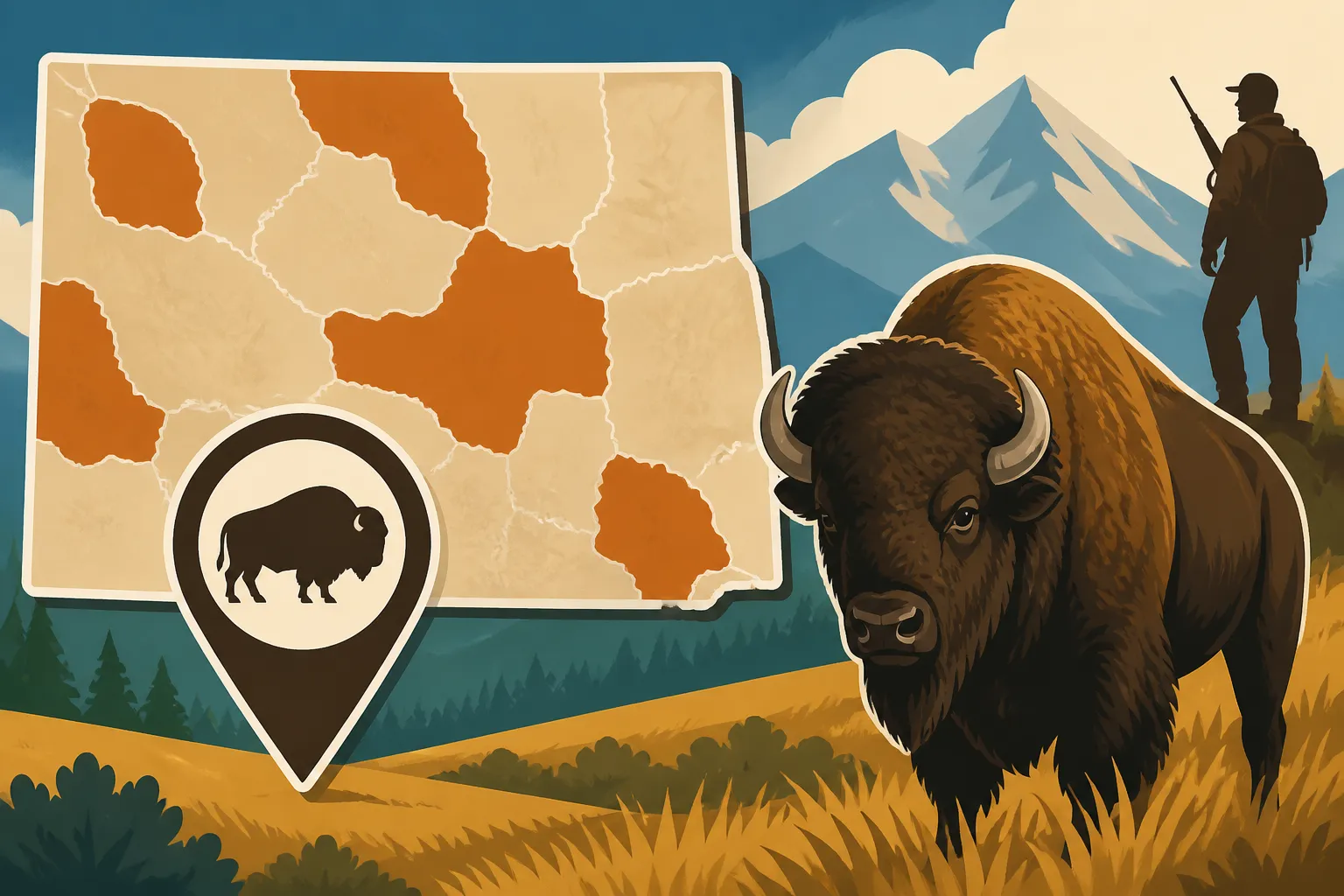
The overwhelming majority of Wyoming's public land bison hunting opportunities are concentrated within the Jackson Hole Bison Hunt Area. This area encompasses the National Elk Refuge and adjacent lands, including portions of Grand Teton National Park (where hunting is generally restricted to specific zones under special federal and state management agreements), and the Bridger-Teton National Forest. The bison in this herd migrate between their wintering grounds on the National Elk Refuge and summer ranges in the high country, following natural food sources. The hunt boundary maps provided by the Wyoming Game and Fish Department are incredibly precise and must be studied with extreme care. Hunters need to pay close attention to the specific hunt areas and subdivisions within the Jackson Hole region, as legal hunting often occurs in designated areas outside the National Elk Refuge or within very specific federal lands under special permits. For many, studying this area on platforms like GoHunt is essential for understanding the terrain, identifying public land access, and beginning to scout virtually.
For example, within the Jackson Hole area, you might encounter different hunt types:
- National Elk Refuge (NER) Hunts: These are highly controlled hunts often involving an initial drawing through the state, followed by a federal special use permit from the U.S. Fish and Wildlife Service. These hunts have very specific dates, access rules, and often involve a lottery for specific hunt periods.
- Outside NER Hunts: These opportunities exist on adjacent state and federal lands, primarily in the Bridger-Teton National Forest. These areas can be rugged, high-elevation terrain, requiring significant physical exertion and backcountry savvy. These hunts are generally managed directly by the state's Game and Fish Department.
- Grand Teton National Park (GTNP) Hunts: In certain years, and under very specific management plans, limited bison hunting may occur within designated portions of Grand Teton National Park. These are often conservation-based hunts aimed at population control and disease management, operating under strict guidelines and federal oversight. This is a unique situation compared to most national parks where hunting is prohibited.
It's crucial to consult the most current Wyoming Big Game Regulations, as these specific hunt areas and rules can change annually based on herd objectives, disease management, and federal agreements.
Special Public Land Bison Hunts
While the Jackson Hole herd is the main event, occasionally, very rare and geographically distinct bison hunting opportunities can arise elsewhere in the state. These are typically extraordinary circumstances, such as when bison from another herd might disperse into a new area, or if a small, isolated group needs to be managed. These are not annual occurrences and are usually announced by the Wyoming Game and Fish Department as unique, limited quota offerings. Hunters interested in every possible chance to draw a tag should monitor the annual regulations closely for any mention of these "one-off" opportunities, though they are incredibly few and far between. These special hunts are so infrequent they don't form a consistent "hunt area" on the map, but rather represent a highly situational management response.
Private Land Bison Hunting: An Alternative Path
For those who are either unwilling to endure the decades-long draw odds for a public land tag or are looking for a more immediate bison hunting experience, private land opportunities exist. Some private ranches in Wyoming maintain their own bison herds, often for agricultural purposes or for offering guided hunts. These hunts typically do not fall under the Wyoming Game and Fish draw system and are arranged directly with the landowner or a hunting outfitter.
- Cost Considerations: Private land bison hunts are generally considerably more expensive than a public land tag, often running into the thousands or tens of thousands of dollars, depending on the ranch, the size of the animal, and what's included in the package. However, they offer a guaranteed opportunity without having to navigate the complex draw system.
- Flexibility: Private land hunts can often be scheduled to fit a hunter's availability, offering more flexibility than the strict season dates of public land draws.
- Accessibility: These hunts can also be more accessible for hunters with physical limitations, as they often involve less strenuous terrain and logistical challenges compared to a backcountry public land hunt.
While this article primarily focuses on the state's public land opportunities, it's worth noting that the private land option provides a legitimate alternative for experiencing a Wyoming bison hunt.
Here's a simplified overview of the primary public land bison hunt area:
| Hunt Area Name | Primary Location | Typical Hunt Type | Notes |
|---|---|---|---|
| Jackson Hole Bison | National Elk Refuge, Grand Teton NP, Bridger-Teton NF | Controlled Public Draw | Main opportunity; very limited tags; specific federal permits often required. |
| Special Opportunites | Varies (Rare & Situational) | Controlled Public Draw (If Any) | Infrequent, highly specific management hunts outside Jackson. |
Navigating the Application Process and Increasing Your Odds
Successfully hunting bison in Wyoming starts long before you ever set foot in the field; it begins with the application. The rarity of these tags means you need a solid strategy and a deep understanding of the drawing system. This isn't a casual application; it's a long-term commitment.
Key Deadlines and Application Strategies
Wyoming's application deadlines are spread throughout the spring and early summer, and bison applications typically fall into the earlier windows, often aligning with species like elk. You'll need to keep a close eye on the official Wyoming Game and Fish Department calendar for the exact dates. Missing a deadline for a species as difficult to draw as bison effectively means waiting another entire year for the next chance.
- Understanding the Draw System: Wyoming uses a preference point system for many species, but bison often operate under a different mechanism, sometimes more of a pure lottery or a high-point lottery with very few tags. It's vital to research the specific draw mechanics for bison. Many hunters use tools like GoHunt's Insider platform to analyze How Many Points It Takes to Draw Wyoming Elk and other species, and while bison are unique, understanding point creep and general draw trends is helpful.
- Financial Commitment: Applying for a big game license in Wyoming requires an application fee and often a temporary hold on the full license fee if successful in the draw. Ensure your finances are in order before applying. You can find general cost information in articles like Wyoming Nonresident Tags Run $326 to $1,965.
- Applying Consistently: For a once-in-a-lifetime tag like bison, consistency is key. Even if your odds seem infinitesimally small, applying every year gives you a chance and, in some cases, can build bonus points or increase your standing in a draw over many years.
Researching Draw Odds and Unit Specifics
Before you even fill out the application, rigorous research is non-negotiable. This involves diving deep into past draw odds, understanding the specific regulations for the Jackson Hole Hunt Area, and researching success rates.
- Official Draw Odds: The Wyoming Game and Fish Department publishes draw odds from previous years. These are your most valuable resource for understanding the probability of drawing a tag. Be prepared for numbers that show 0% odds for many applicants, especially for non-residents.
- Unit Research: Each bison tag will be tied to a specific hunt area or subdivision within the Jackson Hole unit. These areas have different characteristics, access points, and often varying season dates. Use tools like The Wyoming Hunt Planner and detailed mapping software (like GoHunt) to virtually scout these areas. Look at terrain, public land boundaries (including BLM Holds 27,860 Square Miles of Wyoming and Forest Service land), and potential access routes.
- Conservation Initiatives: Bison management is often closely tied to conservation efforts and disease management. Understanding the biological rationale behind a particular year's tag allocation can give you insights into potential harvest strategies or areas of focus if you are lucky enough to draw.
The Super Tag Raffle: A Longshot Opportunity
Beyond the traditional draw, Wyoming offers an extraordinary opportunity through its Super Tag raffle. This program allows hunters to purchase raffle tickets for a chance to win one of several coveted tags, including one for bison. The Super Tag is unique because it allows you to hunt any open area for that species, often bypassing the specific unit restrictions of a drawn license.
- No Preference Points Needed: The beauty of the Super Tag is that it's a pure lottery; preference points don't factor in. Anyone can win, regardless of their application history.
- Multiple Entries: You can purchase multiple tickets to increase your chances, though the odds still remain incredibly long given the statewide participation. Information on What a Wyoming Super Tag Raffle Ticket Costs is readily available.
- The Ultimate Tag: A Super Tag for bison would be the ultimate prize, granting unparalleled flexibility to pursue an animal that is otherwise nearly impossible to draw. While the odds are akin to winning the lottery, it's a tangible chance that bypasses the long wait times of the regular draw system.
Preparing for Your Wyoming Bison Hunt: Unique Challenges
Let's say you beat the odds, the stars aligned, and you drew a Wyoming bison tag. Congratulations! Now the real work begins. Hunting bison is not like hunting other big game species. Their sheer size, habitat, and unique behaviors present challenges that demand specific preparation.
Gear and Physical Demands
Bison are massive animals, and their habitat in Wyoming, particularly in the Jackson Hole area, can be rugged. This means your gear and physical conditioning need to be top-notch.
- Heavy-Duty Gear: Forget your deer rifle; you'll want a powerful cartridge suitable for large, thick-boned animals. Think calibers designed for dangerous game, with heavy, well-constructed bullets. Your pack needs to be robust, capable of hauling significant weight, and your boots need to handle steep, uneven terrain.
- Physical Conditioning: While some bison hunts might occur in more accessible areas, many will involve significant hiking, often at high altitudes. Being in excellent physical condition is paramount, especially if you're pursuing an animal in the Bridger-Teton National Forest or other mountainous regions around Jackson Hole. Consider Preparing for Altitude on a Wyoming Hunt well in advance.
- Optics: High-quality binoculars and a spotting scope are essential for locating bison across expansive landscapes, especially in areas with broken timber or vast sagebrush flats.
Understanding Bison Behavior and Habitat
Bison are herd animals, but they can be surprisingly elusive despite their size. Understanding their behavior is key to a successful hunt.
- Herd Dynamics: Bison typically live in herds, though older bulls may be solitary. Learning to identify herd movements, bedding areas, and feeding patterns will be crucial. They are often found in open grasslands, meadows, and sometimes in timbered areas, depending on the season and forage.
- Defensive Nature: Do not mistake their generally docile appearance for tameness. Bison are wild animals and can be incredibly dangerous, especially cows with calves or a rutting bull. Always maintain a safe distance and be aware of your surroundings.
- Habitat Navigation: The Jackson Hole area offers diverse terrain, from open river bottoms to dense forest and steep mountain slopes. Being proficient in navigating varied terrain, including potential snow or mud depending on the season, is vital. Using mapping tools to identify potential travel corridors, water sources, and escape routes (for the bison, and for you!) is crucial.
Meat Care and Logistics in the Field
Harvesting a bison is only half the battle. Due to their immense size, the logistical challenge of field dressing, processing, and packing out a bison is a significant undertaking. This is where many hunters are truly tested.
- Field Dressing: A bison can weigh over 2,000 pounds. Field dressing one requires multiple people, heavy-duty knives, saws, and a clear plan. You simply cannot do it alone. Expect to quarter the animal in the field. This is a non-negotiable aspect of the hunt that requires preparation, knowledge, and often, extra hands. The state has strict The Meat Salvage Requirements for Big Game rules you must adhere to.
- Packing Out: Whether you plan to use horses, ATVs (where legal), or sheer manpower, moving hundreds of pounds of meat from the kill site to a vehicle is a monumental task. Have a detailed plan for extraction, including enough personnel or adequate pack stock. This might involve multiple trips over several days, requiring excellent game care to prevent spoilage.
- Carcass Tags and Transport: Understand all the rules for tagging your animal immediately after harvest and transporting the meat. Ensuring you have the necessary documentation and meeting all legal requirements for evidence of sex and proper tagging is critical for avoiding violations. This is covered in articles like Wyoming Carcass Coupon and Tagging Rules.
A Wyoming bison hunt is a truly extraordinary endeavor, from the almost impossible draw to the immense physical challenge of the hunt itself. But for those who succeed, it's an experience that connects them to the wild heritage of the West like few others can.
Disclaimer
This article is for general informational purposes only and does not constitute professional advice. Laws, prices and regulations vary by location and change over time. Consult a qualified professional for guidance on your specific situation.