The Meat Salvage Requirements for Big Game
The adrenaline surge, the overwhelming relief, and the deep satisfaction of a successful hunt are powerful emotions. But in the moments after the shot, many hunters can get caught up in the excitement, potentially overlooking one of the most critical legal and ethical obligations: properly salvaging the meat. Wyoming takes its meat salvage requirements for big game very seriously, and understanding these rules isn't just about avoiding a hefty fine; it's about honoring the animal and upholding the integrity of our hunting heritage. This guide will walk you through Wyoming's specific mandates, explain the spirit behind them, and offer practical advice to ensure you fulfill your responsibility as a hunter.
Understanding Wyoming's Meat Salvage Ethic
Hunting in Wyoming is more than just a pastime; it's a deep-rooted tradition built on respect for wildlife and the land. The rules around meat salvage are a cornerstone of this ethic, designed to ensure that the life taken provides sustenance, not just a trophy or an experience.
Beyond Legal: The Moral Imperative to Utilize
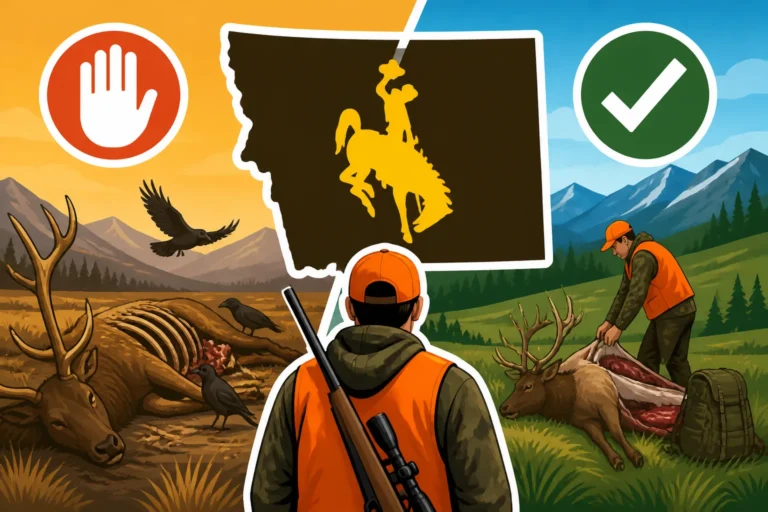
When you pull the trigger or release an arrow on a big game animal in Wyoming, you're not just participating in a sport; you're entering into an ancient covenant with nature. This covenant carries a profound responsibility: to utilize the animal to its fullest extent. For generations, hunters have been stewards of the land and its creatures, and central to this role is the moral imperative to ensure that edible meat from a harvested animal is not wasted. It's a fundamental principle that predates written laws, a respect ingrained in the very act of hunting. To leave usable meat in the field, spoiled or abandoned, is seen by many as a betrayal of this trust and a disservice to the animal that gave its life.
This ethical stance is not merely sentimental; it's a practical recognition of the resource. Every deer, elk, moose, or antelope harvested represents a vital part of the ecosystem. The hunting community often prides itself on being the original conservationists, and part of that identity comes from demonstrating a deep appreciation for wildlife, which includes making every effort to recover and consume the meat. It means preparing for the challenges of the retrieve before the shot is even taken, knowing that the journey isn't over until the meat is safely packed out.
Why These Rules Exist
Wyoming's stringent meat salvage requirements, also known as wanton waste laws, didn't just appear out of nowhere. They are rooted in a combination of wildlife management principles, public perception, and the practical realities of hunting big game in often remote and rugged country. Firstly, these rules protect the resource itself. The Wyoming Game and Fish Department (WGFD) manages wildlife for sustainable populations, and ensuring full utilization of harvested animals reinforces the value of each individual. It prevents a scenario where animals are taken solely for antlers or a fleeting moment, with the valuable protein left to rot.
Secondly, public perception of hunting plays a huge role. In an increasingly urbanized society, not all members of the public understand or agree with hunting. Instances of "wanton waste" – the intentional or negligent abandonment of edible game meat – generate negative publicity that can harm the reputation of all hunters and jeopardize hunting privileges for future generations. These laws serve as a clear directive that hunting is not frivolous but a means of food acquisition and wildlife management. Game and Fish officials take these violations seriously because they know the broader impact they have on public support for hunting.
Lastly, the harsh realities of the Western environment make proper meat handling critical. A deer or elk left in direct sun, even for a few hours on a warm day, can quickly spoil. These rules implicitly encourage hunters to be prepared for the demanding work of field dressing, quartering, and packing out an animal, no matter the conditions or distance. It's a call to foresight and preparation, ensuring that hunters anticipate the effort required long before they ever head into the field. This preparation is paramount and should be considered part of the overall hunt planning.
Specific Requirements for Big Game Species
Understanding what needs to be salvaged is just as important as knowing why. Wyoming's regulations are clear that hunters must remove all "edible portions" of big game. This isn't a vague suggestion; it's a legal mandate with specific interpretations that every hunter must internalize.
Elk, Deer, Moose, and Pronghorn
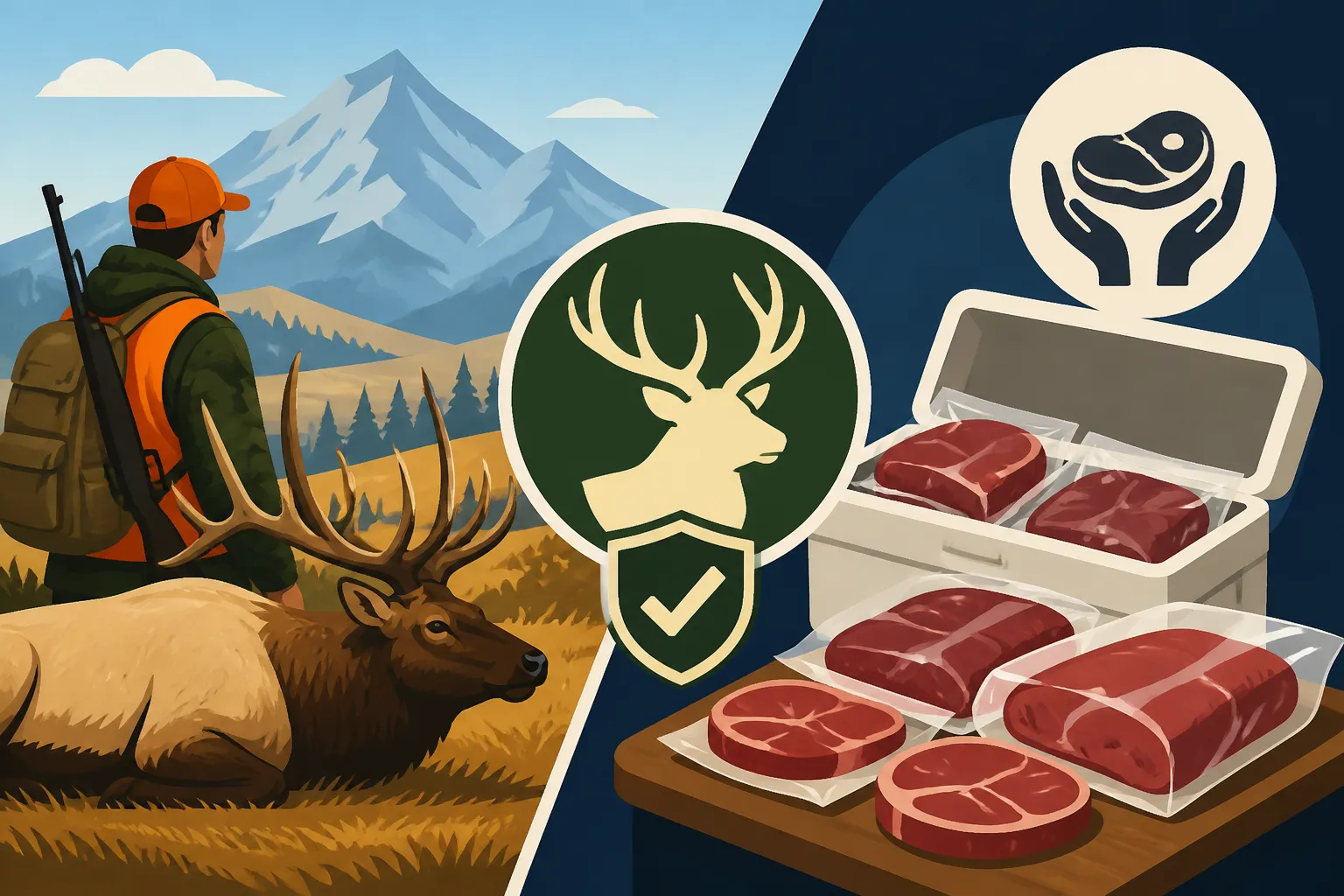
For all big game species in Wyoming, including elk, deer (both mule and whitetail), moose, and pronghorn, the law requires the removal of all edible portions of meat from the field. This generally means the quarters (front and hind legs), the backstraps, and the tenderloins. Depending on the size of the animal and your dedication, this can also extend to significant neck meat and sometimes even rib meat, especially on larger animals like elk and moose. The emphasis is on all edible portions, which means leaving a substantial amount of good meat behind is not an option.
The logistical challenge of meeting this requirement varies dramatically with the size of the animal. A pronghorn or a smaller deer might be field-dressed and dragged out whole, or easily quartered into game bags. However, a mature bull elk or a large moose can weigh over a thousand pounds. Getting all edible meat from such an animal off a remote mountainside before it spoils is a monumental task. This is where meticulous planning comes into play. You need to consider the distance to the nearest road, the terrain, and whether you'll need assistance or pack animals. Tools like GoHunt can be invaluable in scouting areas for ease of access and planning your pack-out strategy. Furthermore, knowing How Soon You Must Tag a Downed Animal and getting to work immediately can make all the difference in preserving the meat.
Even with smaller animals, conditions can turn against you. An unexpected warm spell can make meat spoil quickly. This is why having a clear plan for processing and packing out your animal is paramount, regardless of species or location. The rules don't make exceptions for inconvenience or lack of preparation. For a thorough guide on initial processing, you might want to review Field Dressing and Carcass Transport Rules Explained.
What Constitutes "Edible" Meat
Wyoming's definition of "edible meat" is generally consistent across its big game species. It explicitly refers to the flesh of the animal suitable for human consumption. This includes the major muscle groups: the meat from the hindquarters, the front shoulders, the backstraps (loins that run along the spine), and the tenderloins (inner muscles along the spine). While regulations typically exclude organs like the liver, heart, and kidneys, many ethical hunters choose to salvage these too, as they are indeed edible and nutritious. Head and neck meat, often overlooked, is also considered edible and must be salvaged where practical and substantial.
It's important to clarify what is not typically considered edible meat under the law. This includes the internal organs (unless a hunter chooses to take them), bones, stomach and intestinal contents, hooves, and portions of meat extensively damaged by the shot, soiled by dirt or gut contents, or spoiled due to improper handling. The key here is "substantially spoiled." A small amount of dirt can be rinsed off, but meat that has turned green, smells putrid, or is ridden with maggots due to neglect is not considered edible. However, the onus is on the hunter to prevent spoilage through prompt and proper care.
The standard for "edible" is often a common-sense approach, but one that demands a high level of responsibility from the hunter. You won't be expected to meticulously scrape every last sliver of meat from the bones, but leaving entire muscle groups, especially from the quarters, will certainly put you in violation. Time is of the essence after a kill. Immediately after applying your tag – a crucial step covered in Carcass Coupon and Tagging Rules – you should begin the process of field dressing and cooling the animal to prevent spoilage. This swift action is your best defense against inadvertently creating spoiled, and therefore "inedible," meat. If you have concerns about potential diseases in game meat, especially after recent wildlife health alerts, you may want to learn more about Is Elk Meat Safe If the Animal Had CWD? and Where to Get an Elk Tested for CWD.
Consequences of Wanton Waste
Violating Wyoming's meat salvage requirements is not a minor infraction. It falls under the umbrella of "wanton waste," a serious offense that carries significant penalties. This isn't just a slap on the wrist; it can have lasting repercussions on your hunting privileges and your reputation as an ethical hunter.
Penalties and Legal Ramifications
Wanton waste is classified as a misdemeanor in Wyoming, but don't let the term fool you; the penalties can be severe. Hunters found guilty of wanton waste face substantial fines that can range from hundreds to thousands of dollars, depending on the species and the extent of the waste. Beyond the financial hit, a conviction almost certainly results in the suspension or revocation of hunting privileges in Wyoming for a period of several years. This loss of privilege can be a devastating blow for passionate hunters, effectively barring them from participating in their cherished tradition.
Furthermore, Wyoming is part of the Interstate Wildlife Violator Compact. This means that if your hunting privileges are suspended in Wyoming, those suspensions will be recognized and enforced by the wildlife agencies in most other states across the country. So, a violation here could impact your ability to hunt in Colorado, Montana, Idaho, or virtually anywhere else you might typically pursue game. Imagine losing your ability to hunt across the entire West due to one instance of neglect. Game wardens in Wyoming are highly trained and experienced; they can piece together evidence, track vehicles, and interview witnesses to build a case. Ignorance of the law or claiming "it was too much work" is rarely, if ever, accepted as a valid defense against a charge of wanton waste. This highlights the importance of understanding all Wanton Waste Rules Every Wyoming Hunter Should Know.
The legal system views wanton waste as a serious affront to conservation, equating it to poaching in its severity because it devalues the resource and undermines the ethical foundations of hunting. This severity underscores the absolute necessity of preparation, knowing your physical limits, and having a realistic plan for retrieval before you ever squeeze the trigger.
Reporting Violations and Ethical Responsibilities
Every ethical hunter has a profound responsibility not only to abide by the law but also to help enforce it. If you witness an instance of wanton waste in the field, you have an ethical obligation to report it to the Wyoming Game and Fish Department. Allowing such behavior to go unchecked erodes the public trust in hunting and ultimately threatens the future of our sport. It's an unfortunate truth that a few irresponsible individuals can cast a long shadow over the entire hunting community.
Reporting a violation is straightforward but requires as much detail as possible to be effective. You should note the exact location, time and date, species involved, description of the individuals and their vehicles (make, model, color, license plate numbers if possible), and the nature of the waste (e.g., entire animal left, specific parts abandoned). The WGFD has a Stop Poaching hotline (1-877-WGFD-TIP or 1-877-943-3847) that allows you to report anonymously. You can also contact your local game warden directly or use online reporting tools.
By reporting these violations, you are actively participating in the preservation of hunting. You are demonstrating that hunters hold themselves and each other to a high standard of ethics and responsibility. This self-policing aspect is vital for maintaining the social license to hunt. It reinforces the idea that hunting is not about heedless killing, but about respectful harvest and responsible stewardship. Platforms like GoHunt, which foster a community of informed hunters, often host discussions around these critical ethical considerations, emphasizing the collective responsibility to uphold legal and moral standards in the field.
Practical Tips for Proper Meat Salvage in the Field
The moment of truth arrives, and you've successfully harvested your big game animal. Now, the real work begins. Proper meat salvage is physically demanding and time-sensitive, but with the right preparation and techniques, it's an achievable and rewarding part of the hunt.
Essential Gear for Field Processing
Being prepared for field processing is non-negotiable, particularly when hunting in Wyoming's expansive and often remote landscapes. You simply cannot expect to get the job done efficiently and cleanly without the right tools. First and foremost, a sharp, high-quality knife is paramount. Many experienced hunters carry multiple knives or a sharpening tool to maintain an edge throughout the arduous process of breaking down an animal. A gut hook can also be handy for opening the cavity without puncturing intestines. A small, lightweight bone saw can be incredibly useful for quartering larger animals like elk and moose, making the process much faster and cleaner than trying to separate joints with a knife alone.
Secondly, and perhaps most critically for Western hunting, is a good set of game bags. Forget the cheap mesh bags; invest in breathable, durable game bags that will protect your meat from dirt, flies, and debris while allowing it to cool. Brands like Kuiu, Argali, or even specialized synthetic pillowcases are far superior to cotton bags, which can absorb moisture and promote bacterial growth. You'll need enough bags for all the edible portions, keeping in mind that the quarters, backstraps, and tenderloins should each have their own bag. A lightweight tarp or ground cloth is also invaluable for keeping meat clean as you work, preventing direct contact with dirt or leaves. Finally, a good headlamp with fresh batteries is a must, especially if your hunt extends close to Wyoming Legal Shooting Hours for Big Game or if you anticipate packing out in the dark. Planning for these eventualities is a mark of a prepared hunter.
Thinking ahead about your gear can make a huge difference in the success of your meat salvage. Consider the terrain and potential for long pack-outs, which might necessitate a pack frame capable of carrying heavy loads comfortably. A reliable communication device, such as a satellite messenger, isn't directly for processing meat but is vital for safety, allowing you to call for assistance if you run into trouble or need extra hands for a particularly large animal.
Cooling and Transporting Your Harvest
Speed and cleanliness are your two best friends when it comes to cooling and transporting your big game harvest. The clock starts ticking the moment the animal is down. Your immediate priority, after applying your tag, should be to field dress the animal to remove the internal organs, which are a major source of heat and bacteria. For larger animals, quartering the carcass is the next crucial step. This allows the meat to cool much faster than leaving the animal whole, and it makes packing out much more manageable, especially if you're alone or in steep country.
Once quartered, get the hide off the meat as quickly as possible. The hide acts as an insulator, trapping heat. Place the individual quarters and other salvaged meat into your game bags immediately. This protects the meat from flies, dirt, and scavengers while allowing air to circulate. The goal is to get the core temperature of the meat down as fast as you can. If you can hang the meat in a shady, airy spot, that's ideal. If not, lay it on logs or rocks off the ground to promote airflow around all sides. Never pile meat directly on the ground or on top of itself, as this prevents cooling and can lead to spoilage. For larger animals like elk, you might even consider splitting the rib cage to allow more air into the chest cavity. This is where good Physical Conditioning for a Mountain Hunt becomes absolutely critical, as moving and processing large animals in challenging terrain is no easy feat.
For transport, whether it's a short drag to the truck or a multi-day pack out, keeping the meat cool and clean remains paramount. If you're near a vehicle, having coolers with ice ready is the best option. For longer pack-outs, especially in warmer weather, you might consider pre-cooling the meat overnight by hanging it in game bags, then packing it out early the next morning before temperatures rise. Always ensure that any required "evidence of sex" (e.g., a portion of the hindquarter with the testicle or udder attached for some species) remains with a main portion of the meat until it's processed and stored at home, as per Wyoming regulations. Planning your approach with mapping tools like GoHunt to identify potential shady spots for cooling or the most efficient routes for extraction can significantly increase your success in meat preservation.
| Species | Edible Portions Generally Include | Key Considerations |
|---|---|---|
| Elk | Hindquarters, front shoulders, backstraps, tenderloins, substantial neck/rib meat | High volume and mass, requires rapid quartering, aggressive cooling, and robust game bags; consider assistance/pack animals. |
| Mule Deer | Hindquarters, front shoulders, backstraps, tenderloins, neck/rib meat | Manageable size for one person but still needs immediate attention; excellent for practicing field processing skills. |
| Whitetail Deer | Hindquarters, front shoulders, backstraps, tenderloins, neck/rib meat | Similar to mule deer; often in river bottom or agricultural areas, but heat can still be a significant spoilage factor. |
| Pronghorn | Hindquarters (often entire legs), backstraps, tenderloins, neck meat | Smaller animal, meat can be delicate; cools quickly but can spoil rapidly if not kept clean and cool. |
| Moose | Hindquarters, front shoulders, backstraps, tenderloins, substantial neck/rib meat | Largest big game animal, extreme physical effort for retrieval; usually requires multiple trips or dedicated pack animals. |
Disclaimer
The information provided in this guide is for informational purposes only and is not a substitute for reviewing the official Wyoming Game and Fish Department regulations. Hunting laws can change, and it is the responsibility of every hunter to be familiar with the most current regulations before heading into the field.