What Makes Elk Unit E9 Different From Its Neighbors
Navigating Wyoming's vast hunting landscape can feel like trying to solve a complex puzzle, especially when you're digging into specific elk units. Many hunters, particularly nonresidents, find themselves scratching their heads, wondering what truly sets one seemingly similar unit apart from its neighbors. This guide aims to pull back the curtain on Wyoming's Elk Unit E9, exploring the unique characteristics that distinguish it and offering insights into what a hunter can expect when pursuing elk within its boundaries.
Understanding Wyoming Elk Units: More Than Just a Number
When you first look at a Wyoming hunt areas map, the sheer number of units can be daunting. Each one has a numerical designation, and for the uninitiated, they can all blend together. But those numbers aren't just arbitrary tags; they represent distinct management areas with their own unique challenges and opportunities. Understanding these fundamental differences is crucial for planning any successful hunt.
The General Concept of Hunt Areas and Herd Units
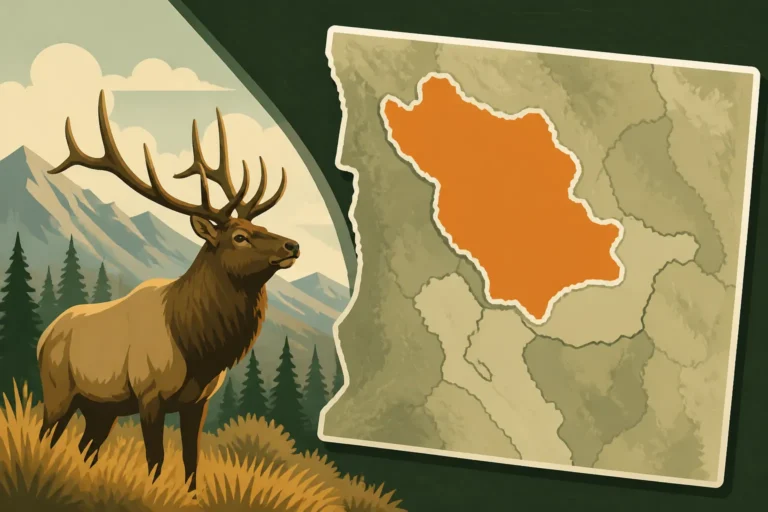
In Wyoming, "hunt areas" are the geographical zones where specific licenses are valid, and seasons are set. These areas are often, but not always, aligned with "herd units," which are biological designations used to manage specific elk populations. The Wyoming Game and Fish Department meticulously tracks herd health, population objectives, and harvest rates within these units to ensure sustainable hunting. So, when you see "Elk Unit E9," you're looking at an area that has its own set of rules, its own elk population dynamics, and its own unique character shaped by geography and management goals.
Unlike some "general" license areas that might cover vast swaths of land and allow more flexible hunting, many units like E9 are "limited quota" areas. This means a finite number of tags are issued each year, typically through a drawing process. The limited quota system is a powerful tool to manage hunter pressure and maintain herd objectives, making every tag in these units a coveted prize. The competition for these tags often reflects the quality of hunting experience and potential for success the unit is perceived to offer. It's not just about drawing a tag; it's about drawing the right tag for the right unit.
How Unit E9 Fits into the Greater Picture (Region F)
Elk Unit E9 typically falls within what the Wyoming Game and Fish Department might broadly categorize as Region F, or at least a region with similar ecological characteristics to what you'd find in the foothills and mountains of the state's central or eastern sectors. While the exact regional boundaries can vary or overlap, the key takeaway is that E9 isn't an island. It’s part of a larger ecosystem, influenced by adjacent units, and contributes to the overall health of elk herds in that part of Wyoming.
However, even within a larger region, E9 often possesses specific nuances that set it apart. Perhaps it's a critical migration corridor that runs through its heart, unlike a neighboring unit that might be primarily summer range. Maybe it has a unique mix of timber and private agricultural land that dictates elk movement in a way that differs from areas dominated by vast public forests or sprawling sagebrush. These distinctions, though subtle on a map, have profound impacts on elk behavior and, consequently, on hunting strategies. For example, a unit heavily influenced by public lands adjacent to a wilderness area will hunt very differently from one that’s a patchwork of private ranch land and small public sections.
Distinctive Geographical Features and Terrain of E9
The landscape itself is arguably the biggest differentiator for any elk unit. The mountains, valleys, water sources, and vegetation all play a critical role in where elk live, how they move, and how a hunter can effectively pursue them. Unit E9's terrain dictates much of its unique hunting character.
Unique Topography and Habitat Diversity
Typically, an elk unit like E9 would feature a compelling blend of habitats that cater to different aspects of an elk's life cycle. You might find high, rugged peaks cloaked in dense conifer forests, offering crucial thermal and hiding cover for mature bulls. These higher elevations might transition into aspen groves and mountain meadows, which are prime feeding areas during summer and early fall. Further down, you could encounter significant stretches of rolling sagebrush foothills interspersed with draws and riparian corridors, providing important transitional habitat or even wintering grounds depending on the severity of the weather.
What makes E9 distinct could be the particular proportion or arrangement of these features. For example, unlike a neighboring unit that might be almost entirely high mountain wilderness, E9 might possess more accessible lower-elevation timber pockets that hold elk earlier in the season. Or, conversely, it could have particularly steep, broken country that limits vehicular access but creates incredible remote sanctuaries for elk, demanding a more physically taxing hunt. The presence of specific rock formations, deep canyon systems, or expansive, unroaded basins can all shape how elk utilize the landscape and how hunters must adapt their approach.
Access Challenges and Opportunities
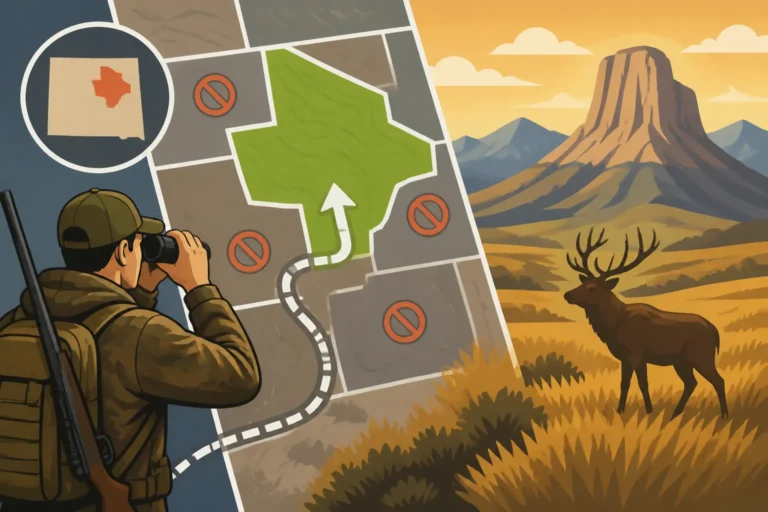
Access is always a primary concern for hunters, and Unit E9's unique geographical makeup directly impacts it. Wyoming has a reputation for having significant blocks of public land, but these are not always easily reached. Unit E9 might be a mix of various land ownerships, presenting a checkerboard pattern of public (like BLM or National Forest) and private ground. This type of pattern can be incredibly frustrating for hunters trying to navigate.
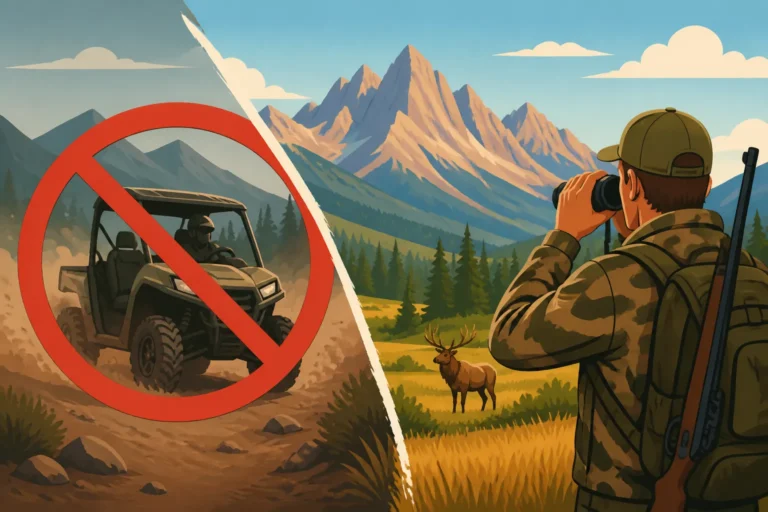
Perhaps E9 is defined by a major drainage or river system, offering natural travel corridors for elk but also concentrating them in predictable areas, especially where public access along the river exists. However, these river bottoms are often flanked by private ranches, creating a complex puzzle of access. Hunters might rely heavily on tools like onX Hunt to identify legal access points, public land boundaries, and potential walk-in areas. Unlike some units that might have extensive road systems, E9 might require significant foot travel, horse packing, or even floating a river to reach its best elk country. Conversely, it might contain a few strategic roads that provide the only viable access into vast, roadless public tracts, making those roads highly trafficked on opening weekend. Understanding where these choke points are, and how to get past them, is key. Hunters often find themselves using the Grid Glassing a Basin Without Missing Bucks technique, but applied to elk, to locate animals in these mixed landscapes before committing to a stalk.
Elk Management Strategies and Herd Dynamics in E9
Every elk unit has a story told through its management data. The Wyoming Game and Fish Department doesn't just draw lines on a map; they actively manage these areas based on biological objectives, hunter demand, and local considerations.
Specific Population Objectives and License Types
What truly sets E9 apart from its neighbors might be its specific herd objective. Is the department trying to grow the elk population in E9, maintain it at current levels, or even reduce it due to concerns like chronic wasting disease (CWD) or damage to private lands? These objectives directly influence the number and type of licenses issued. For instance, if E9 is trying to reduce its herd, you might see more antlerless (cow/calf) licenses available, or even "Type 6, 7 and 8 Doe-Fawn Licenses in Wyoming" if deer are also managed this way, but for elk, it would mean more cow tags. If the goal is to grow the herd or increase the number of mature bulls, limited bull tags might be extremely difficult to draw, and success rates would reflect the effort required.
The specific license types offered in E9 can also differ. Some units might be "any elk" units for the duration of the season, while others might start as "any elk" and transition to "antlerless only" later in the season. E9 might have unique "archery-only" periods or specific weapon restrictions that adjacent units do not. These details are critical for planning and often explain why draw odds for E9 might be significantly different from a unit right next door. Hunters often check resources like GoHunt or the Wyoming Game and Fish website to understand the draw odds for specific licenses in E9 and compare them to others. Understanding these subtleties is paramount to determining if a particular unit aligns with your hunting goals.
Migration Patterns and Seasonal Movements
Elk are creatures of habit and necessity, constantly moving in response to feed, weather, and pressure. E9's uniqueness might stem from its role in a larger migration corridor. Unlike a unit that serves primarily as summer range, E9 might be a crucial transitional area where elk spend a significant portion of the fall, moving from high country summer pastures to lower elevation wintering grounds. This makes timing your hunt absolutely critical.
Imagine elk pouring out of higher wilderness areas as the first heavy snows hit, funneling through a series of canyons and timbered benches within E9. This would create opportunities that simply don't exist in units that are either solely summer or winter range. Conversely, if E9 contains significant winter range, early season hunts might find elk widely dispersed, whereas late season hunts might see them congregated in more predictable, but often less accessible, areas. Reading Fresh Elk Sign in Dark Timber becomes especially important in units that host migratory elk, as their movements can be subtle yet telltale. The presence of specific feedgrounds near E9, or lack thereof, could also influence these patterns, as elk learn to utilize available resources.
Hunting Pressure, Success Rates, and Strategic Considerations in E9
The confluence of geography, management, and herd dynamics ultimately shapes the hunting experience in any unit. For E9, these factors create a specific set of challenges and opportunities that hunters must consider.
Nonresident vs. Resident Hunter Dynamics
Wyoming's hunting regulations often differentiate between resident and nonresident hunters, and this distinction can be particularly felt in units like E9. While specific numbers change annually, there are statutory allocations that ensure residents have a higher chance of drawing tags. Furthermore, if E9 contains designated wilderness areas, nonresidents might face the "Wyoming's Wilderness Guide Law for Nonresidents" which could require them to hire a licensed outfitter or be accompanied by a resident guide who has completed an affidavit. This requirement alone can significantly alter the hunting pressure and accessibility for nonresidents compared to an adjacent unit that has no wilderness component.
The competition for tags in E9, especially for quality bull tags, can be fierce for both groups, but for different reasons. Residents might be more familiar with the terrain and have more time to scout, potentially giving them an edge. Nonresidents, often having accumulated How Wyoming Preference Points Accumulate Year to Year, might be holding out for a premier unit like E9, but face the additional hurdle of securing a guide or finding a resident friend willing and able to accompany them. This dynamic means that even if E9 holds a good number of elk, the hunt can feel pressured due to the limited space and the number of hunters vying for the same animals.
Tactics Best Suited for E9's Characteristics
Given E9's probable mix of terrain, access, and migratory elk, a versatile hunting strategy is often required. Unlike a wide-open prairie unit where long-range glassing dominates, or a dense timber unit where still-hunting is king, E9 likely demands a combination of approaches.
For example, early season hunts might involve locating elk in higher elevation timber and meadows, requiring extensive hiking and Bugle and Cow Call Timing Through the Rut to locate and entice bulls. As the season progresses and elk begin their migration, hunters might shift to watching key pinch points, saddles, and water sources within the mixed public/private lands. Using mapping applications like onX Hunt to identify these bottlenecks and understand land ownership can be critical for planning effective ambushes or strategic stalks. For hunters looking to physically get into remote areas, packing in with horses might be a common strategy, as mentioned in Pack String Outfitters Working in Wyoming, to access areas far from roads that hold less pressured elk. Understanding How Close a Bowhunter Really Needs to Get is also vital here, as the varied terrain might offer both incredibly close encounters and frustratingly distant glimpses. A flexible approach, adapting to elk movement and pressure, is the hallmark of a successful hunt in a complex unit like E9.
| Feature | Elk Unit E9 (Example) | Neighboring Unit X (Example) |
|---|---|---|
| Dominant Terrain | Mix of timbered mountains, aspen groves, sagebrush foothills, and riparian corridors. | Primarily high alpine wilderness with expansive open basins. |
| Access Profile | Significant checkerboard public/private land; limited road access, key walk-in areas. | Large blocks of contiguous public land; some wilderness access, many trailheads. |
| Primary Elk Movement | Critical transitional migration corridor, with distinct seasonal movements. | Mostly summer range; elk disperse to lower units in harsh weather. |
| Typical License Types | Limited quota bull and cow tags; often specific archery-only periods. | General season opportunities (sometimes OTC for residents); limited cow tags. |
| Nonresident Guide Rule | Likely applies due to presence of wilderness areas or significant roadless tracts. | Less likely, unless it borders wilderness; more self-guided opportunity. |
| Hunter Density | Moderate to high, concentrated around access points and migration corridors. | High in accessible areas; very low in remote wilderness zones. |
| Recommended Tactics | Versatile: calling, spot-and-stalk, still-hunting in timber, watching migration routes. | Long-range glassing, backpack hunting, focusing on high country during summer. |
| Draw Difficulty (Bull Tag) | Often higher due to specific habitat features and established herd quality. | Varies widely; can be easier for general tags, harder for specific limited quota. |
Disclaimer
This article is for general informational purposes only and does not constitute professional advice. Laws, prices and regulations vary by location and change over time. Consult a qualified professional for guidance on your specific situation.