Whitetail Harvest Numbers by Region
For hunters who dream of wide-open spaces and towering mule deer or massive bull elk, the whitetail deer can sometimes feel like an afterthought in Wyoming. But for those of us who appreciate the challenge and cunning of a whitetail, it can be frustrating trying to pinpoint exactly where these elusive deer thrive and what the actual harvest numbers look like across this vast state. This guide is here to shed some light on Wyoming's whitetail harvest numbers by region, helping you understand where to focus your efforts for a successful whitetail hunt.
Understanding Wyoming's Whitetail Landscape
Wyoming is predominantly known for its mule deer, antelope, and elk populations, drawing hunters from all corners of the country. However, tucked away in specific habitats, a robust and often overlooked whitetail population thrives, presenting a different kind of hunting opportunity.
Where Whitetails Call Home in Wyoming
Unlike the ubiquitous mule deer that can be found from the sagebrush flats to the highest mountain peaks, whitetails in Wyoming are habitat specialists. They prefer the dense cover offered by river bottoms, riparian corridors, and areas adjacent to agricultural lands, particularly in the eastern part of the state. Think cottonwood groves along meandering rivers, brushy draws cutting through farm fields, and the broken country where timber meets prairie.
You’ll find their stronghold in the eastern counties, specifically areas like the Black Hills, the Powder River Basin, and along the North Platte River drainage. These regions provide the essential elements whitetails need: ample food sources, thick cover for bedding and escape, and consistent water. While you might spot a whitetail in a surprising place out west, the vast majority of huntable populations are concentrated in these eastern and north-central riverine habitats. If you’re trying to visualize their domain, imagine a stripe of green following the water sources across the drier plains. For a deeper dive, check out our piece on Whitetail Range in Eastern Wyoming.
Why Whitetail Data Can Be Different
When you look at Wyoming's overall deer harvest reports, mule deer numbers usually dominate the statistics. This isn't just because there are more mule deer; it's also because many hunters specifically target mule deer, and their expansive habitat makes them a more frequent encounter for general deer tags. Whitetail data, while collected, can sometimes feel a bit less granular or generalized, especially when trying to break it down into very specific regional harvest numbers.
The Wyoming Game and Fish Department collects harvest data through various methods, including hunter surveys and check stations. However, because whitetails are often localized to specific habitat pockets within larger hunt areas that are also home to mule deer, the numbers might be presented in broader categories. This can make it challenging to isolate exact whitetail harvest figures for a tiny creek bottom versus an entire county. Hunters often need to dig into the nuances of habitat within a given hunt area to truly understand the whitetail potential. It’s also worth noting how crucial it is to properly identify your target, as knowing Telling Whitetail From Mule Deer in Wyoming can significantly impact your hunt strategy and reporting accuracy.
Deciphering Wyoming's Harvest Reports for Whitetails
While specific, hyper-detailed harvest numbers for every single creek drainage aren't usually published, we can certainly glean valuable insights into the general trends and regions where whitetails are successfully harvested. It's about looking for patterns and understanding the habitat.
The General Trends in Eastern Wyoming
Without a doubt, the eastern portion of Wyoming is your best bet for whitetail hunting, and consequently, where you'll see the highest harvest numbers. Counties such as Crook, Weston, Niobrara, and Goshen consistently show strong whitetail populations and corresponding harvest success. These areas are characterized by significant river systems like the Belle Fourche and Cheyenne Rivers, extensive timber patches, and abundant agricultural fields that provide excellent forage.
Hunters in these regions often report good success rates, especially when targeting areas with dense cover near water and food sources. For example, a hunter focusing on public land along a river system in Crook County, utilizing thickets of cottonwoods and river bends, is much more likely to encounter and harvest a whitetail than someone hunting a general deer tag in the high desert mountains further west. The habitat directly dictates the species, and eastern Wyoming offers that prime whitetail environment. We've got a fantastic resource on Hunting the Whitetail River Bottoms of Eastern Wyoming that illustrates this perfectly.
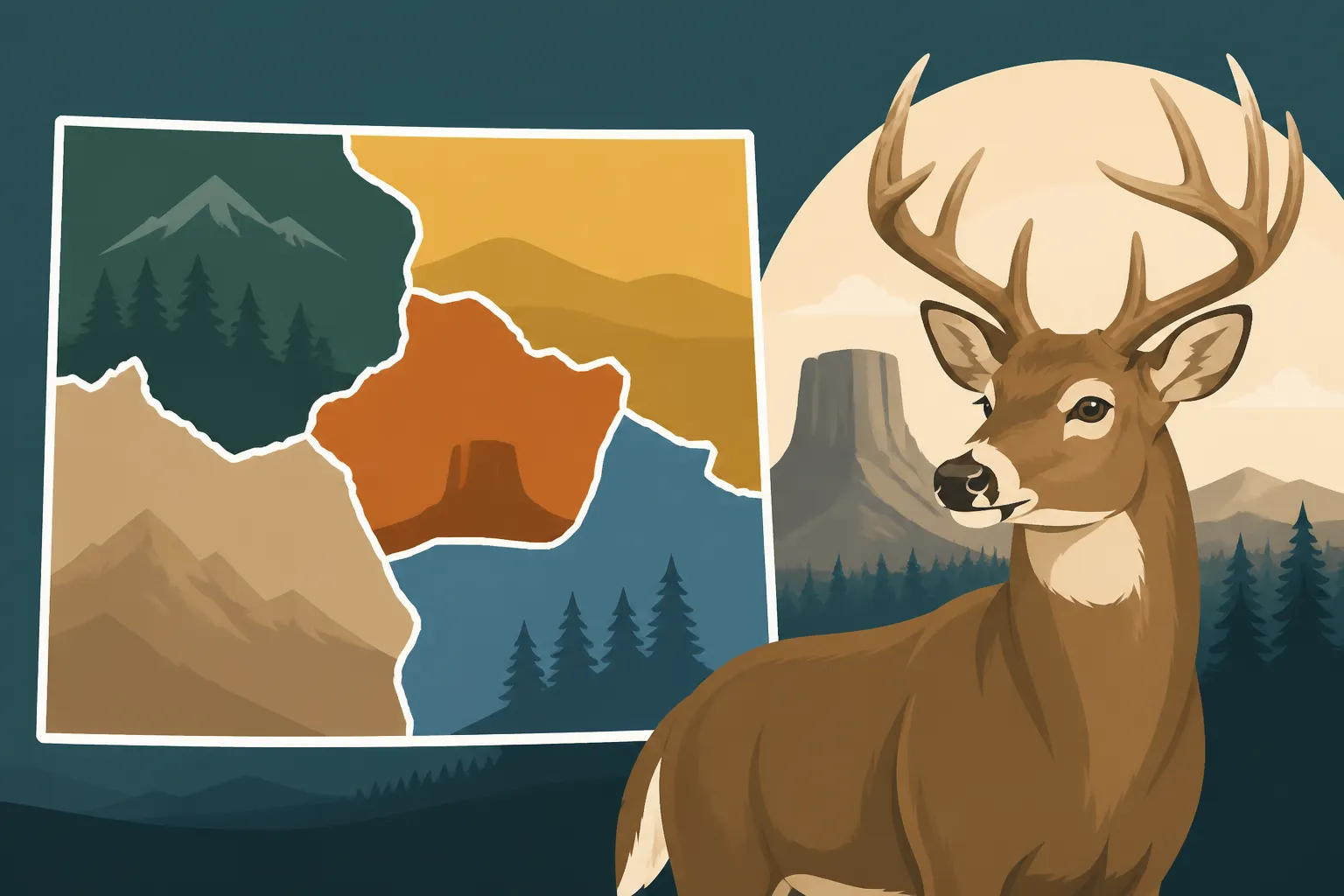
Here's a generalized overview of regional whitetail harvest potential in Wyoming:
| Region | Primary Counties | Typical Whitetail Habitat | Expected Harvest Success | Key Considerations |
|---|---|---|---|---|
| Eastern Plains | Crook, Weston, Niobrara, Goshen, Platte | River bottoms, ag fields, Black Hills timber | Moderate to High | Strong populations, good cover, often near private land |
| North Central | Sheridan, Johnson, Campbell | Major river drainages (Powder, Tongue), irrigated areas | Low to Moderate | Localized pockets, good genetics in prime areas |
| Central/South | Natrona, Converse, Albany, Laramie | North Platte River, Laramie Range foothills | Low | Scattered populations, primarily opportunistic |
| Western Mountains | Lincoln, Sublette, Park, Teton | Isolated riparian areas, low elevation river corridors | Very Low | Highly localized, not a primary whitetail region |
Please note: This table uses descriptive terms for harvest success as specific, real-time numbers are not available and can fluctuate annually. Always consult the current Wyoming Game and Fish Department regulations and harvest reports for the most up-to-date information.
Smaller Pockets and Isolated Whitetail Harvests
While the eastern half of the state is the whitetail hotspot, you can find smaller, more isolated pockets of whitetails in central and northern river corridors, even away from the Black Hills. Rivers like the Powder and Tongue in the north-central part of the state, or sections of the North Platte further south, can hold decent whitetail numbers in their immediate riparian zones. However, these populations are generally smaller and less widespread than those found in the truly whitetail-rich eastern counties.
Harvest numbers in these localized areas will naturally be lower and more sporadic. A hunter might successfully harvest a whitetail in a particular bend of the North Platte River in Natrona County, but that doesn't mean the entire county is teeming with them. These are typically opportunistic hunts, where a hunter might encounter a whitetail while primarily targeting mule deer or other game. It requires a more intimate knowledge of very specific local habitats. For instance, understanding the nuances of a smaller deer area like Where Deer Hunt Area 1 Covers could reveal whitetail potential in an otherwise mule deer-dominated landscape.
Practical Implications for Whitetail Hunters
Understanding these regional harvest trends is more than just trivia; it’s crucial for planning a successful whitetail hunt in Wyoming. It helps you set realistic expectations and focus your valuable time and resources.
Focusing Your Efforts for Whitetails
If harvesting a whitetail is your primary goal in Wyoming, your strategy should undeniably lead you to the eastern counties. Areas like Crook, Weston, and Goshen counties, with their mix of private agricultural land and public access along river corridors, offer the best opportunities. When scouting, look for hunt areas that have significant water features – rivers, creeks, and even larger reservoirs – surrounded by dense cover and agricultural fields. These are the whitetail magnets.
It's not just about broad regional selection; it's about drilling down into the specific habitat within those regions. Utilizing digital mapping tools to identify river systems, timber blocks, and private land boundaries will be invaluable. Public access within these whitetail strongholds, such as Bureau of Land Management (BLM) lands or state trust lands that border private agriculture, can be exceptionally productive. Don't underestimate the value of seeking permission on private lands either, as many of these prime whitetail havens are privately owned. You might find some excellent deer hunting opportunity across Deer Hunting Opportunity Across Crook County. Similarly, learning about access points into areas like Access Points Into the Bearlodge Deer Area or even around Hunting the Deer Country Around Keyhole Reservoir can provide great starting points.
Maximizing Your Chances: Tags and Timing
When it comes to tags, many hunters in whitetail country will use a general deer tag, which is valid for either mule deer or whitetails in most areas. However, some hunt areas may have specific whitetail-only tags, or more commonly, antlerless tags that can be specifically for whitetail does and fawns, providing additional opportunities. Always verify the specific license types and restrictions for your chosen hunt area in the current regulations. Remember, understanding The Wyoming General Deer License Explained is key.
Timing is also critical. While early archery seasons can be productive, many whitetail hunters eagerly anticipate the rifle seasons that coincide with the rut. The whitetail rut on the plains typically falls from late October through November, offering a fantastic window of opportunity when bucks are more active and less cautious during daylight hours. This can be an incredibly exciting time to be in the field, as bucks are far more mobile than during the early season. Understanding When Whitetail Rut Dates Fall on the Plains is paramount for planning. For those interested in extended opportunities, Late Season Whitetail Hunting on the Prairie can also be very productive, especially with specialized tags like Whitetail Only Doe and Fawn Licenses Explained.
By understanding the distinct regional distribution of whitetails in Wyoming and how to interpret harvest trends, you can go into your hunt with a much clearer picture of what to expect and where to focus your efforts for a rewarding experience with these wily deer.
Disclaimer
This article is for general informational purposes only and does not constitute professional advice. Laws, prices and regulations vary by location and change over time. Consult a qualified professional for guidance on your specific situation.