Why Families Get an Exception to the Mentee Limit
It’s a common scenario for many hunting families: you’ve got a couple of kids eager to learn the ropes, maybe a younger cousin who wants to tag along, and you, the experienced hunter, are ready to share your passion. But then you run into the rules about mentored hunting, and suddenly, the dream of a multi-kid outing feels like it’s hitting a bureaucratic wall. Wyoming, like many states, has specific regulations designed to ensure safety and ethical hunting, and a big part of that involves limits on how many novice hunters one experienced mentor can supervise. However, recognizing the unique dynamics and immense value of hunting as a family tradition, Wyoming’s Game and Fish Department has carved out a crucial exception for families. This guide will delve deep into Wyoming's mentored hunting program, particularly focusing on this important family exception, how it works, and what it means for bringing up the next generation of hunters in the Cowboy State.
Understanding Wyoming's Mentored Hunting Program
Wyoming's mentored hunting program is a fantastic initiative designed to allow new, often younger, hunters to get hands-on experience in the field before they've completed their full hunter education certification. It's a bridge, if you will, between curiosity and competence, letting aspiring hunters dip their toes in the water under the watchful eye of a seasoned expert. The core idea is to provide practical learning and instill a strong ethical foundation from the very beginning.
The Standard Mentee Limit Rule
Under Wyoming law, the standard rule is pretty clear-cut: a single mentor can only supervise one mentee at a time. This rule is in place for very good reasons, primarily safety. When you're out in the field, whether stalking elk in the Bighorns or waiting for antelope in the Red Desert, situations can change in an instant. Having one-on-one supervision ensures that the mentor can dedicate their full attention to the mentee, teaching them firearm safety, shot placement, tracking, and all the nuanced decisions that go into a successful and ethical hunt. It reduces the risk of accidents and ensures proper guidance, which is especially critical when dealing with firearms or bows. Imagine trying to keep track of multiple young hunters, each with a potentially loaded weapon, while also navigating challenging terrain or trying to make a call on a game animal. It's simply too much for one person to manage effectively and safely.
This limit applies to anyone who hasn't completed their hunter education requirement. So, if you're over the age of 12 and haven't taken the course, or if you're younger but still participating under the mentored program, you fall under this single-mentee rule. It’s a stringent guideline, but one that underscores the serious responsibilities of hunting. For many families, this one-to-one rule can feel quite restrictive, especially if you have several children or younger relatives eager to participate simultaneously. It can mean tough choices about who gets to go out, or splitting up hunting parties, which can detract from the family experience.
Who Qualifies as a Mentor
Becoming a mentor in Wyoming isn't just about having a hunting license and some experience. The state has specific criteria to ensure that mentors are truly qualified to guide and instruct. First and foremost, a mentor must be at least 18 years old. This age requirement ensures a certain level of maturity and responsibility, recognizing the serious nature of teaching someone to hunt. It's not a job for someone still figuring things out themselves. Beyond age, the mentor must also be fully certified in hunter education. This means they've taken and passed the course, demonstrating their knowledge of firearms safety, wildlife identification, hunting regulations, and ethical practices. This isn't just a paper requirement; it means the mentor has a foundational understanding of what they're teaching. You can find more details about what it takes by checking out topics like Mentor Requirements: Eighteen, Certified and Licensed.
Perhaps most critically, a mentor must hold a valid Wyoming hunting license for the species being hunted. This might seem obvious, but it reinforces that the mentor isn't just a chaperone, but an active participant who understands the legal framework of the hunt. They are responsible for ensuring all rules are followed, from tagging to shooting hours. The legal definition of "direct supervision" is also key here: the mentor must be in direct sight and voice contact with the mentee at all times. This isn't about setting up a kid with a rifle 100 yards away and periodically yelling instructions. It means constant, immediate oversight, ready to intervene, advise, or ensure safety at any moment. This level of engagement is crucial for effective teaching and for maintaining safety in dynamic outdoor environments.
The Rationale Behind Mentored Hunting
Wyoming’s mentored hunting program isn't just a set of rules; it's a thoughtfully constructed framework rooted in broader conservation and cultural goals. The state recognizes the critical role hunting plays in wildlife management and the importance of passing this heritage down through generations. But it also understands the need to do so responsibly.
Fostering Hunter Recruitment and Retention
One of the primary drivers behind the mentored hunting program is to foster hunter recruitment and retention, particularly among youth. In an increasingly urbanized society, opportunities for young people to connect with the outdoors and learn traditional skills like hunting are becoming scarcer. The mentored program removes a significant barrier by allowing individuals who haven't yet completed hunter education to participate, giving them a taste of the experience and hopefully sparking a lifelong interest. By getting into the field with a trusted adult, they can experience the thrill of the chase, learn about wildlife, and understand the role hunters play in conservation, all before committing to the full hunter education course.
This early exposure is vital. Research consistently shows that individuals who are introduced to hunting at a young age, especially through family or close mentors, are far more likely to continue hunting throughout their lives. It's about building a positive, formative experience that sticks with them. Without programs like this, many potential hunters might never get past the initial interest stage, leading to a decline in hunter numbers. Since hunter license sales are a major funding source for wildlife conservation efforts, maintaining a healthy hunter base is crucial for the financial health of Wyoming Game and Fish and the habitats they manage. It's a win-win: new hunters get to learn, and wildlife gets sustained funding.
Ensuring Safety and Ethical Practices
Beyond recruitment, the mentored hunting program is fundamentally about ensuring safety and embedding ethical practices from the ground up. Hunting, particularly with firearms, carries inherent risks. Improper handling of weapons, lack of awareness of surroundings, or poor judgment can lead to serious accidents. The requirement for direct supervision means that an experienced, certified individual is constantly monitoring the mentee, correcting mistakes in real-time, and preventing dangerous situations before they escalate. This immediate feedback loop is invaluable for learning firearm safety, shot angles, target identification, and understanding the terrain.
Moreover, the program emphasizes ethical hunting, which goes beyond just following the law. It’s about respect for wildlife, fair chase principles, proper field dressing, and minimizing waste. A good mentor instills these values in their mentee, teaching them that hunting is not just about pulling a trigger but about being a responsible steward of the land and its creatures. This hands-on, immersive ethical education is far more effective than simply reading about it in a textbook. By having a mentor literally by their side, young hunters learn to read the wind, approach an animal cautiously, make a clean shot, and appreciate the entire experience, fostering a deep respect for the animals they pursue. It really highlights why proper guidance is critical, especially given the rules around Direct Supervision Means Sight and Voice Contact.
Delving into the Family Exception
Now, let's get to the heart of the matter – that crucial family exception that often brings a sigh of relief to parents and guardians across Wyoming. While the one-mentor-to-one-mentee rule is a bedrock principle for safety, the state recognizes that family dynamics deserve a special consideration, allowing multiple young family members to share the learning experience together.
Defining "Family" Under Wyoming Game and Fish Rules
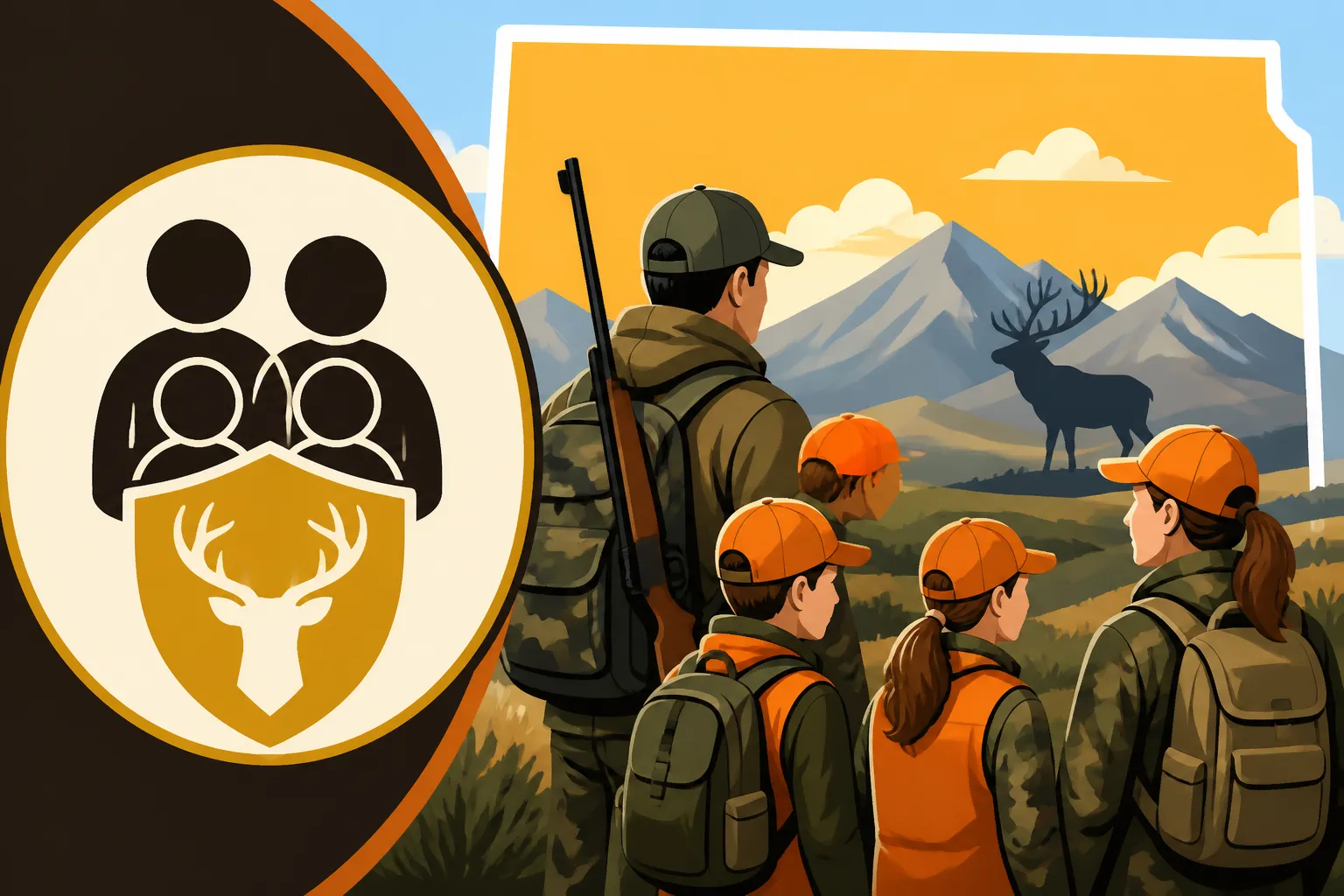
This is where the distinction becomes important. When we talk about "family" in the context of this exception, Wyoming isn't just talking about anyone you call family. The regulations are quite specific to prevent abuse of the system while still being inclusive enough to genuinely support traditional family hunting units. Under Wyoming Game and Fish rules, the family exception generally applies to a mentor supervising their own children, stepchildren, grandchildren, or legal wards. This means a grandparent can mentor multiple grandchildren, a parent can mentor several children, and a legal guardian can take out their wards. The intent is to facilitate the direct transmission of hunting knowledge and values within immediate family units, not to allow an unlimited number of unrelated individuals to be mentored by one person.
The emphasis is on the direct familial relationship and the inherent trust and responsibility that comes with it. This definition excludes, for example, a general friend or distant relative who doesn't fall into these specific categories. The state trusts that family members have a deeper vested interest in the safety and well-being of their kin, fostering an environment where a mentor might be able to manage more than one mentee effectively. It's a pragmatic approach that balances the need for safety with the desire to encourage family participation in a meaningful way.
Practical Application of the Exception
So, how does this family exception actually play out in the field? Essentially, if you meet the mentor qualifications (18+, hunter education certified, valid license) and your mentees are your direct family members as defined above, you can supervise more than one. This means a father could take his two sons, aged 10 and 13, out hunting for deer, even if neither has completed hunter education yet. Or a grandmother could bring her granddaughter and grandson along for an antelope hunt. The key remains that the mentor must maintain "direct supervision" over all mentees simultaneously. This isn't a free pass to split up or lose track of anyone. The mentor still needs to be within sight and voice contact of every single mentee.
For families, this exception is invaluable. It means siblings can learn together, share the excitement, and experience the outdoors as a unit. It avoids the awkward situation of having to choose which child gets to go on a particular hunt or requiring multiple adults to serve as mentors. This unified experience can strengthen family bonds and create lasting memories that might not be possible under a strict one-to-one rule. It fosters a sense of shared adventure and mutual support among the young hunters. For a more detailed look at the legal framework, be sure to read about The Family Exception to the Mentee Limit.
Benefits and Challenges of Family-Based Mentoring
While the family exception offers significant advantages for promoting hunting within immediate households, it's not without its unique set of considerations. Understanding both the benefits and potential challenges can help mentors make the most of this opportunity.
Strengthening Family Bonds Through Hunting
One of the most profound benefits of the family exception is the unparalleled opportunity it provides to strengthen family bonds. Hunting is more than just harvesting an animal; it's about spending uninterrupted time outdoors, teaching patience, resilience, and appreciation for nature. When multiple family members participate, these shared experiences become even richer. Imagine a crisp autumn morning, glassing a distant ridge with your children or grandchildren, all quietly absorbed in the landscape. These moments foster communication, teamwork, and a deep sense of connection that's hard to replicate in other activities. Sharing the anticipation, the challenges, and ultimately, the success (or lessons learned from a missed opportunity) creates powerful, shared narratives that families will recount for years. This is where truly enduring traditions are forged.
Furthermore, it allows for a more natural, fluid learning environment. Kids observe and learn from each other as well as from the mentor. Younger siblings might be inspired by the progress of older ones, creating a positive feedback loop. The pressure might feel lighter than a formal instructional setting, allowing for more organic discovery and learning. For example, a parent could teach their eldest how to track, and the younger one, watching intently, picks up valuable clues without direct instruction, reinforcing the skills for both. This collective learning enhances the overall educational value and makes the experience more engaging for everyone involved.
Managing Logistics with Multiple Mentees
Despite the benefits, having multiple mentees under one mentor brings its own set of logistical challenges that require careful planning and execution. The primary concern remains safety. While you can legally supervise more than one family member, your ability to maintain direct supervision, especially in dynamic hunting situations, is paramount. This means you might need to adjust your hunting style or choice of terrain. Stalking a wary mule deer across open sagebrush with three young, inexperienced hunters requires a different approach than going solo or with a single, focused mentee. You have more eyes to watch, more questions to answer, and more opportunities for distractions.
Weapon management is another key area. Ensuring each mentee understands and practices safe firearm handling at all times, especially when multiple guns are present, is a constant responsibility. This might mean starting with unloaded weapons, practicing dry-firing, and reiterating safety rules continuously. Mentors must be prepared for increased noise, movement, and potential for confusion. It's often helpful to establish clear roles or expectations for each mentee based on their age and experience. For instance, one child might focus on spotting, another on carrying the pack, while the mentor primarily handles firearm instruction. Utilizing tools like GoHunt could help with pre-hunt scouting, allowing you to identify safer, less demanding terrain for initial outings with multiple young hunters, ensuring easier visual and voice contact. This careful preparation is crucial for a safe and enjoyable family hunt.
Navigating the Mentored Hunting Process
Getting started with mentored hunting, especially with the family exception in mind, involves more than just heading into the woods. There are specific administrative steps and critical considerations every mentor must address to ensure legality and safety.
Obtaining the Special Authorization Certificate
Before you even step foot in the field with a mentee who hasn't completed hunter education, you need to acquire a Special Authorization Certificate. This isn't just a formality; it's a critical legal document issued by the Wyoming Game and Fish Department. This certificate formally acknowledges your role as a mentor and the specific mentees you are authorized to supervise. It acts as the mentee's temporary proof of eligibility to hunt under your direct guidance. You can't just show up with a mentee and assume the family exception applies without this piece of paper. The certificate ensures that the state has a record of who is participating in the mentored program and under whose supervision, adding an important layer of accountability.
The process for obtaining this certificate is usually straightforward, involving an application through the Wyoming Game and Fish Department. You'll need to provide information about yourself as the mentor, including your hunter education certification number and hunting license details. For each mentee, you'll likely need to provide their name, age, and relationship to you, affirming they fall under the family exception if you plan to supervise more than one. It’s imperative to carry this certificate with you at all times while hunting with a mentee, just as you would your own license and tags. This allows game wardens to verify compliance with the mentored hunting regulations quickly and efficiently. Make sure you understand the specifics of The Special Authorization Certificate for Mentored Hunts to avoid any last-minute issues.
Essential Considerations for Family Mentors
Beyond the certificate, there are several essential considerations for anyone taking on the responsibility of a family mentor. First, understand the legal limits regarding the minimum age for hunting big game. Even with a mentor, there are still age restrictions that apply, which you can read about in Minimum Age to Hunt Big Game in Wyoming. While the mentored program is great for introducing youth, it doesn't override these specific age minimums for certain species. Second, your preparation needs to be amplified. With multiple mentees, you’re not just planning for yourself. You need to consider appropriate gear for everyone, ensuring proper clothing for the weather, sufficient food and water, and first aid supplies. It’s also wise to have a detailed plan, including alternative activities if the hunting proves too challenging or slow for younger participants. Keeping kids engaged is crucial for a positive experience.
Third, and perhaps most important, is to prioritize education over harvest. The goal of mentored hunting, especially for families, should be to instill a love for the outdoors, teach safety, and impart ethical values, not necessarily to bag a trophy. Celebrate small victories, like successfully identifying tracks, making a good call, or demonstrating safe gun handling. Be patient, answer every question, and make every moment a teaching opportunity. Remember, you're building future conservationists and responsible hunters, and that foundation is laid through positive experiences, not just successful kills. Reviewing requirements like Carrying Proof of Certification in the Field is also a good reminder to always be prepared.
Comparison: Family Mentoring vs. Standard Mentoring
To truly appreciate the family exception, it helps to see it in contrast to the standard mentored hunting program. While both are designed to introduce new hunters to the field, the nuances in application can significantly impact the experience for both mentor and mentee.
Key Differences in Supervision
The most glaring difference, as we've established, lies in the number of mentees a single mentor can supervise. Under standard rules, it's a strict one-to-one ratio. This ensures hyper-focused attention from the mentor, which can be ideal for individuals who might need intensive instruction or who are learning in more challenging environments. It allows for personalized feedback and minimal distractions, making it very effective for rapidly developing core hunting skills and safety habits.
With the family exception, the ratio shifts, allowing for multiple related mentees. This changes the dynamics significantly. The mentor's attention is necessarily divided, meaning they must be exceptionally skilled at managing group dynamics and ensuring everyone's safety without compromising the learning experience. While the supervision is still direct (sight and voice contact), the intensity of individual supervision may naturally be less than in a one-on-one scenario. This isn't a flaw, but a different approach, one that leans into the collective learning and shared experience of a family unit. For example, a parent guiding two children might use one child to spot, and the other to practice calling, dividing tasks and ensuring both are engaged and learning.
Educational Focus and Experience
The educational focus can also differ between the two scenarios. In a standard one-on-one mentored hunt, the education might be highly targeted at individual skill development—perfecting a shot, mastering tracking, or understanding specific regulations. The pace can be tailored precisely to that single mentee's learning speed and interest.
The family exception, however, often broadens the educational focus to encompass more holistic life lessons. It’s not just about hunting mechanics; it’s about family tradition, teamwork, patience, and the joys of shared outdoor experiences. While technical skills are still taught, the emphasis often shifts to the collective journey and fostering a shared appreciation for nature. The experience becomes less about individual performance and more about the collective memory and bond being formed. This isn't to say one is better than the other, but rather that they serve slightly different purposes. The family exception is a powerful tool for preserving hunting heritage within families, ensuring that the skills and values are passed down in a way that truly resonates with the family unit. GoHunt, with its detailed maps and scouting tools, can be incredibly useful for planning family hunts, allowing mentors to pre-select locations that are suitable for multiple, potentially less experienced, hunters.
To help visualize these differences, here's a quick comparison:
| Feature | Standard Mentored Hunting | Family Exception Mentored Hunting |
|---|---|---|
| Mentor-to-Mentee Ratio | 1 mentor to 1 mentee | 1 mentor to multiple family mentees |
| Mentee Eligibility | Any individual without Hunter Ed | Own children, stepchildren, grandchildren, legal wards without Hunter Ed |
| Supervision Level | Highly focused, individual attention | Direct, but attention divided among group |
| Primary Goal | Skill acquisition, safety, legal compliance | Skill acquisition, safety, legal compliance, plus family bonding & tradition |
| Flexibility | High flexibility for individual's pace | Requires more structured group management |
| Logistical Complexity | Simpler, less gear/people to manage | More complex, requires robust planning for multiple individuals |
Conclusion
Wyoming's commitment to both hunter safety and the perpetuation of hunting heritage is clearly demonstrated through its mentored hunting program. While the general rule wisely limits supervision to a one-to-one ratio for safety, the thoughtful inclusion of a family exception provides an invaluable pathway for households to introduce multiple young family members to the joys and responsibilities of hunting simultaneously. This exception not only fosters skill development and adherence to ethical practices but also profoundly strengthens family bonds, creating cherished memories in the vast, beautiful landscapes of Wyoming. By understanding the definitions, requirements, and practical applications, family mentors can confidently navigate the process, ensuring a safe, educational, and deeply meaningful experience for the next generation of hunters.
Disclaimer
Please remember that hunting regulations, seasons, and requirements can change. Always consult the official Wyoming Game and Fish Department regulations for the most current and accurate information before planning any hunting trip. This guide is for informational purposes only and should not be considered legal advice.