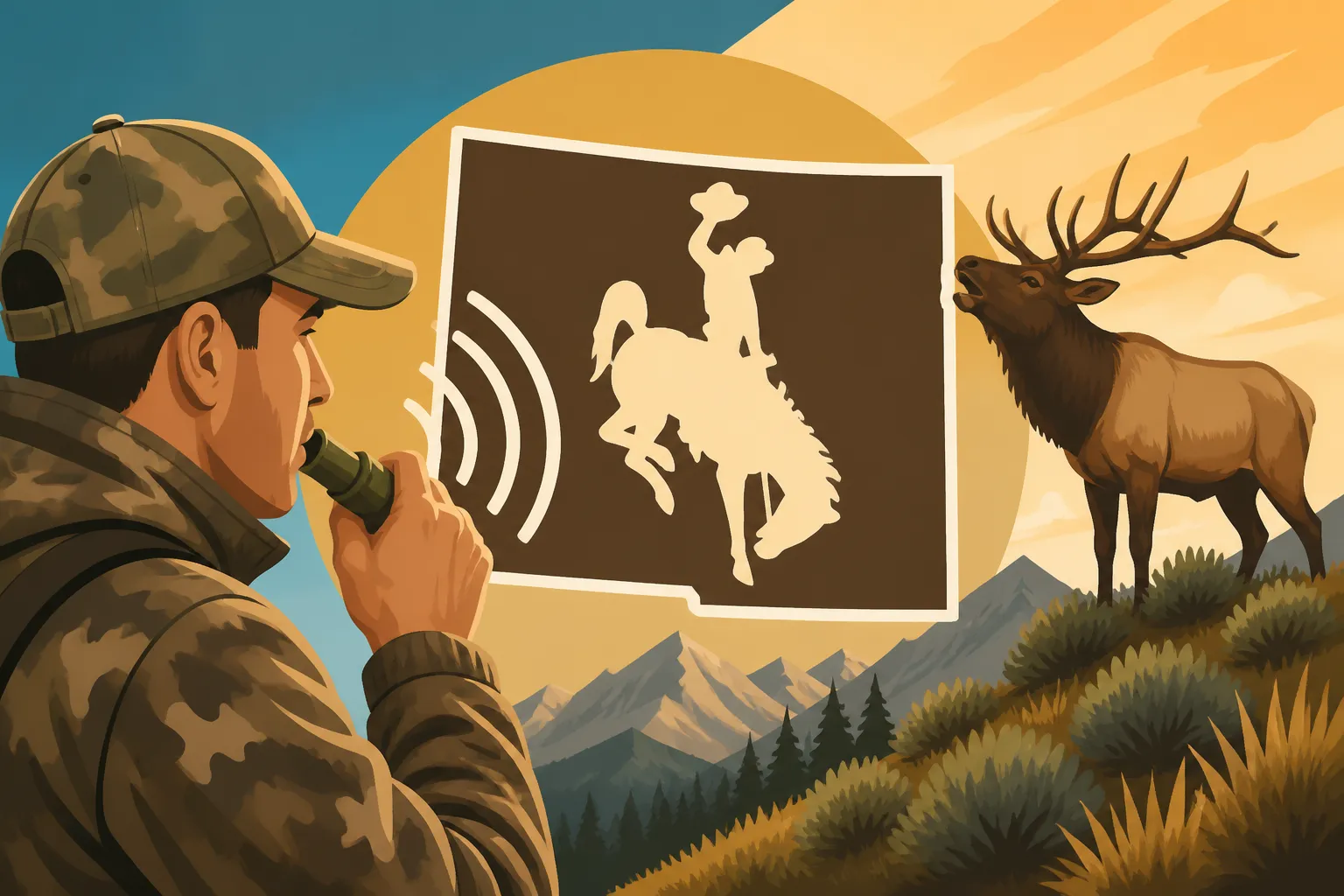
Electronic Calls and What Wyoming Allows
For hunters eager to get out into Wyoming's vast landscapes, understanding the seemingly endless rules and regulations can feel like trying to hit a moving target in a crosswind. One area that causes a lot of head-scratching is the legality of electronic calls. You see all sorts of fancy devices and apps advertised, but what’s legal in the Cowboy State often differs from what’s allowed elsewhere, leaving many wondering if their high-tech gear will land them in hot water. This comprehensive guide will clear up the confusion, explicitly detailing where electronic calls are permitted and, more importantly, where they are strictly prohibited when hunting in Wyoming.
Unpacking Wyoming's General Stance on Electronic Calling Devices
Wyoming takes a firm stance on what it considers fair chase, especially when it comes to big game. This philosophy heavily influences the rules around electronic calls. It's not just about what technology is available, but about preserving the challenge and tradition of hunting, ensuring that the animals you pursue have a reasonable chance against your skills.
The Statewide Prohibition for Big Game
Let's get straight to the most important point for most big game hunters: electronic calls are a definite no-go for species like elk, deer (both mule deer and whitetail), antelope, moose, bighorn sheep, mountain goat, and bison. This isn't a gray area; it's a hard and fast rule across the entire state, regardless of the specific hunt area or season. The Wyoming Game and Fish Department (WGFD) is very clear that using any electronic device that emits recorded or amplified animal sounds to attract these species for hunting purposes is illegal. This means leaving that high-tech elk bugle or deer grunt caller at home if it's running on batteries and mimicking the real thing.
The rationale behind this blanket prohibition is rooted in the concept of fair chase. The state wants to ensure that hunters rely on their woodsmanship, their ability to read terrain, their skill with traditional calls, and their patience, rather than relying on technology that could significantly tip the scales too far in the hunter's favor. It's about respecting the animals and the tradition. For instance, when you're trying to call in a bull during the rut, knowing How to Bugle a Wyoming Bull Into Bow Range using only your voice and a diaphragm call is a much more rewarding, and legal, experience.
Defining "Electronic Call" Under Wyoming Law
So, what exactly constitutes an "electronic call" in the eyes of Wyoming law? It's broader than you might think. Generally, any device that uses electronic means to produce or amplify animal sounds is considered an electronic call. This includes, but isn't limited to, commercially produced game calls with pre-recorded sounds, digital sound files played on a smartphone or other portable device and amplified, or even traditional mouth calls that have been electronically amplified. The key is the "electronic" and "amplified" aspect.
This definition aims to prevent hunters from circumventing the spirit of the law by using novel devices. It ensures that the playing field remains level, irrespective of how sophisticated the technology becomes. Therefore, if you're holding a device that requires batteries to mimic a deer bleat or an elk bugle, it's safer to assume it falls under the prohibited category for big game. It's always best to err on the side of caution and rely on your own calling prowess or choose non-electronic options.
The Intent Behind Wyoming's Strict Regulations
It's natural to feel a bit frustrated when you've invested in a cutting-edge piece of gear only to find it's illegal to use in your favorite hunting grounds. However, understanding the intent behind these regulations can help. Wyoming's hunting heritage is deeply tied to fair chase ethics. The state recognizes that modern technology, while impressive, can sometimes diminish the challenge inherent in hunting and create an imbalance between hunter and hunted.
The goal isn't to make hunting harder just for the sake of it, but to ensure the experience remains genuine and challenging. These rules also contribute to wildlife management efforts, preventing over-harvest by limiting the efficiency of certain hunting methods. This careful balance helps maintain healthy animal populations and ensures sustainable hunting opportunities for future generations. It’s a reflection of the state's deep commitment to its wildlife resources and the outdoor lifestyle that defines Wyoming.
Prohibited Use: Species Where Electronic Calls Are Strictly Out of Bounds
The clarity on electronic calls for big game isn't just a suggestion; it's a strict prohibition. Misunderstanding these rules can lead to serious penalties, including fines, license revocation, and the forfeiture of equipment. No hunter wants to have a successful hunt tarnished by a regulatory violation, so let's be absolutely clear on where these devices cannot be used.
All Big Game Animals Are Off-Limits
As mentioned, every single species categorized as big game in Wyoming is off-limits for electronic calls. This includes the majestic elk, the cunning mule deer, the speedy pronghorn antelope, the elusive moose, the sure-footed bighorn sheep, the rare mountain goat, and the iconic bison. There are no exceptions for youth hunters, hunters with disabilities, or specific weapon types. Whether you're hunting with a rifle, a muzzleloader, or a bow with a Wyoming Minimum Draw Weight for Deer Hunting, the rule remains the same: no electronic calls.
Imagine you're out in the sagebrush, trying to lure in a mature antelope buck. While a digital bleat call might seem like an easy button, it's illegal. Instead, hunters focus on mastering traditional methods like stalking (perhaps Stalking Pronghorn Across Wyoming's Open Sagebrush) or using decoys to draw them in. The same applies to elk in the timber; rather than an electronic bugle, hunters rely on their own calling skills or careful observation, like Glassing Wyoming Basins Before You Take a Step, to locate and approach animals. The spirit of the hunt relies on a more direct engagement with the animal, without electronic intermediaries.
Trophy Game Animals Have Specific Restrictions
Trophy game in Wyoming includes grizzly bears, black bears, mountain lions, and wolves (within designated trophy game management areas). For these species, the rules regarding electronic calls are generally aligned with big game prohibitions. Specifically, electronic calls are not permitted for hunting black bear, grizzly bear (where hunting is allowed, which is currently limited/non-existent for grizzlies in Wyoming), or mountain lion.
Wolves are a unique case in Wyoming because their management status changes depending on where you are in the state. Within the Wyoming's Gray Wolf Trophy Game Area, they are managed as trophy game, and electronic calls are generally prohibited. Outside this designated area, in the "predator zone," wolves can be hunted as predators, and different rules apply, which we'll discuss shortly. This distinction is crucial and often a source of confusion for hunters. It's similar to how Baiting Black Bear Against Baiting Big Game in Wyoming has different rules based on species, showing that even within the "predator" category, regulations vary wildly.
Other Game Species and Misconceptions
Beyond big game and trophy game, there are other species for which electronic calls are prohibited. For instance, turkey hunting in Wyoming does not allow the use of electronic calls. This is a common rule in many states, intended to preserve the challenge of calling in these wary birds with mouth or slate calls. Migratory game birds, such as ducks and geese, are also off-limits for electronic calls under federal regulations, which Wyoming adheres to.
It's easy to assume that if an animal isn't a "deer" or an "elk," then perhaps an electronic call is fine. This is a dangerous assumption. For example, some hunters might mistakenly think a mountain lion, being a predator, could be called in with an e-caller. However, as trophy game, the prohibition stands. Always refer to the specific species regulations in the current year's Wyoming Game and Fish hunting regulations pamphlet or use a reliable resource like GoHunt for specific hunt area information to avoid costly mistakes.
Where Electronic Calls Find a Legal Place in Wyoming Hunting
While the list of prohibitions is extensive, there are indeed legal and effective applications for electronic calls in Wyoming hunting. These primarily fall into the categories of small game, certain predators, and furbearers, where the management objectives and fair chase principles are applied differently.
Small Game, Predators, and Furbearers: The Green Light
This is where your electronic callers can truly shine! For most small game, furbearers, and predators not classified as trophy game, electronic calls are perfectly legal in Wyoming. This means if you're targeting:
- Coyotes: These notoriously intelligent canids respond incredibly well to distress calls (like rabbit in distress) or pup-in-distress sounds played through an electronic device.
- Foxes (Red and Swift): Similar to coyotes, foxes are often lured in by distress calls.
- Bobcats (in the predator zone): While bobcats can be furbearers, be mindful of specific hunt area regulations and seasons. Outside trophy game areas, e-calls can be used.
- Prairie Dogs and other varmints: For these abundant critters, electronic calls are a popular and effective tool for both control and sport.
- Rabbits and Hares: While less common, electronic calls can be used to attract these small game animals.
Many hunters dedicate entire trips to predator calling, utilizing devices from companies like Foxpro or Primos to broadcast realistic prey sounds across the landscape. The ability to control volume, cycle through various sounds, and place the call away from your position gives a distinct advantage when trying to entice these wary animals. This is where you can freely explore advanced calling techniques. You can find more detailed rules on this specific area in resources like Electronic Calls for Predators and Varmint Hunting.
Limited Use for Crows and Other Exceptions
When it comes to birds, the rules can be a bit tricky. While migratory game birds (ducks, geese, doves) are federally protected from electronic calls, there are sometimes exceptions for certain species. Crows, for example, are often considered unprotected or nuisance birds, and in many states, electronic calls are legal for hunting them. Wyoming typically allows electronic calls for crow hunting. However, always double-check the current regulations because rules can change and interpretations vary.
It's vital to differentiate between species. If you're pondering whether an e-call is okay for upland birds like pheasants, chukar, or grouse, the answer is generally no. The emphasis for these species, much like big game, is on traditional hunting methods. The intention is to avoid methods that significantly reduce the sporting challenge.
Electronic Calls for Scouting and Practice (Without a Weapon)
There's a distinction between hunting with an electronic call and using one for scouting or practice. If you're purely out to observe wildlife, learn their vocalizations, or practice your calling setup without a weapon in your possession and without the intent to harvest, then using an electronic device to mimic animal sounds could be permissible. For instance, playing elk sounds to see how local elk respond to various calls can be a valuable scouting tool, helping you understand their patterns before the season opens.
However, this is a very gray area and requires extreme caution. The moment a weapon is introduced, or the activity shifts toward actual hunting, the regulations kick in. It's always best to be overly cautious and ensure there's no ambiguity about your intentions. Many hunters find that thoroughly E-Scouting a Unit Before the Season Opens using satellite imagery and topography maps offers a safer, more legal way to gain an advantage without pushing the boundaries of calling regulations. When in doubt, leave the electronic call at home and rely on your own learned vocalizations or just careful observation.
Navigating the Nuances: Area-Specific and Season-Specific Regulations
Wyoming's hunting landscape is diverse, and so are its regulations. While statewide prohibitions for big game and general allowances for predators are key, there are often subtle nuances that require a closer look, especially concerning specific areas or species.
Trophy Game vs. Predator Zones for Wolves
The wolf situation in Wyoming is a prime example of how regulations can shift based on geographical zones. Within the legally defined Wyoming's Gray Wolf Trophy Game Area, wolves are managed as trophy game, meaning they are subject to strict regulations, including the prohibition of electronic calls. This area generally encompasses the northwestern part of the state, bordering Yellowstone National Park and Grand Teton National Park, where wolves are protected under federal law, and state management aims to balance conservation with limited hunting.
However, outside of this designated trophy game area, wolves are classified as predators. In these "predator zones," which cover the majority of the state, the rules for hunting wolves are much less restrictive, and electronic calls are generally permitted. This dual classification requires hunters to be intimately familiar with the boundaries and current regulations, which can change. Hunters often consult detailed maps, like those available through services such as GoHunt, to ensure they are always aware of which zone they are in. It's a prime example of how crucial it is to know How Wyoming Numbers Its Hunt Areas and how those numbers correspond to specific regulations.
Special Regulations and Hunt Area Specifics
It's not uncommon for the WGFD to implement special regulations for specific hunt areas or during certain seasons. These could be temporary measures in response to wildlife population dynamics, habitat conditions, or other management considerations. While electronic calls for big game are broadly prohibited, there might be, hypothetically, a very rare and specific research-based permit that could include unique calling allowances (though this is extremely unlikely for general public hunting). Conversely, an area usually open to predator calling might have temporary restrictions due to sensitive wildlife populations or land closures.
This is why "always check current regulations" isn't just a suggestion, but a golden rule for hunting in Wyoming. The general season dates for species like elk can vary wildly, as seen in Wyoming Elk Season Dates Are Set Hunt Area by Hunt Area, and likewise, specific methods might have local caveats. A regulation pamphlet from last year might already be outdated. Relying on anecdotes or old information can lead to unintentional violations.
The Role of the Wyoming Game and Fish Department
The Wyoming Game and Fish Department is the authoritative source for all hunting regulations in the state. They are responsible for conducting wildlife research, setting quotas, managing seasons, and enforcing hunting laws. Their annual hunting regulations booklets, available online and at local vendors, are the single most important document for any hunter in Wyoming. These booklets detail everything from license requirements and season dates to weapon restrictions and, of course, call usage.
Beyond the printed regulations, the WGFD website offers a wealth of information, including public land maps, harvest statistics, and updates on emergency closures or rule changes. If you ever have a doubt about the legality of an electronic call in a specific scenario, the WGFD is the agency to contact. They are there to help hunters understand and abide by the rules, ensuring that hunting remains a sustainable and ethical pursuit for everyone. It's important to know Where the Current Wyoming Regulations Are Posted and to check them diligently before every season.
The Foundation: Why These Regulations Exist
Understanding the "why" behind hunting regulations can sometimes make them less frustrating to navigate. Wyoming's rules on electronic calls are not arbitrary; they are deeply rooted in long-standing principles of wildlife management, ethical hunting, and public perception.
Maintaining Fair Chase Principles
At the heart of Wyoming's hunting regulations, especially regarding big game, is the concept of fair chase. Fair chase isn't just a catchy phrase; it's a foundational ethical standard that dictates how hunters engage with wildlife. It means giving the hunted animal a reasonable chance to escape and ensuring that the hunter’s methods do not provide an unsporting advantage. For many, part of the challenge and reward of hunting is successfully outsmarting an animal using traditional skills and knowledge, not through technological shortcuts.
Electronic calls for big game are often seen as undermining this principle. The ability to perfectly replicate animal sounds at a sustained volume and from a hidden position can be considered too effective, reducing the animal's natural defenses and the hunter's need for practiced skill. This ethical stance is why you'll find similar prohibitions in many states and among various hunting organizations. It’s about preserving the integrity of the hunt and honoring the animals we pursue.
Wildlife Management and Conservation Objectives
Beyond ethics, these regulations serve practical wildlife management and conservation goals. Allowing highly efficient hunting methods, such as electronic calls for big game, could potentially lead to increased harvest rates that might be unsustainable for certain populations. By limiting the tools available to hunters, the WGFD can better manage wildlife populations, ensuring they remain robust and healthy for the long term.
For example, strict regulations on elk hunting, including the ban on electronic calls, help manage the herd without over-pressuring specific groups of animals. This is particularly important for species that are sensitive to disturbance or have specific population goals, such as those that require The 50-Pound Bows Elk and Moose Require to harvest. The rules are a tool to balance recreational opportunity with the biological needs of the wildlife.
Public Perception and the Hunter's Image
The hunting community is under constant scrutiny from the non-hunting public, and the methods used by hunters can significantly influence public perception. Using highly technological devices that are perceived as giving an "unfair" advantage can sometimes cast hunting in a negative light, leading to misconceptions about the sport's ethics and impact on wildlife.
Hunters, therefore, have a vested interest in upholding high ethical standards. By adhering to fair chase principles and regulations like the ban on electronic calls for big game, the hunting community demonstrates its respect for wildlife and its commitment to responsible practices. This helps maintain broad public support for hunting as a legitimate and vital tool for wildlife conservation. It's part of a larger picture that includes things like respecting Legal Shooting Hours and Vehicle Rules in Wyoming and generally conducting oneself ethically in the field.
Practical Advice for Hunters Using or Avoiding Electronic Calls
Navigating the world of electronic calls in Wyoming doesn't have to be a headache. With a clear understanding of the rules and some common sense, you can ensure your hunting activities are both legal and ethical.
Always Check the Most Current Regulations
This cannot be emphasized enough: regulations change. What was legal last year might not be this year, and what applies in one hunt area might not in another. Before every hunting season, and especially if you're venturing into a new area or targeting a new species, take the time to review the official Wyoming Game and Fish Department regulations pamphlet. These are readily available online through the WGFD website, and many sporting goods stores or license vendors will have physical copies.
Organizations like GoHunt often compile and interpret these regulations, providing valuable insights and updates that can make your research easier. However, always cross-reference with the official WGFD document. It's your responsibility as a hunter to know and abide by the law, and ignorance is rarely an acceptable defense. Knowing Where the Current Wyoming Regulations Are Posted should be every hunter's first step.
Ethical Considerations Beyond Legality
Just because something is legal doesn't always make it the most ethical choice, or the most fulfilling. For many hunters, the challenge of using traditional calls—whether it's learning to bugle like a bull elk with a mouth diaphragm or mastering a fawn distress call by hand for coyotes—is a deeply rewarding part of the experience. The satisfaction of calling in an animal through sheer skill is immense.
Consider the spirit of the hunt you're after. Do you want the easiest path to success, or do you want to hone your skills and embrace the challenge? The choice is personal, but being aware of these ethical dimensions can enrich your hunting journey, making it about more than just filling a tag. Embracing traditional skills, like those detailed in How to Bugle a Wyoming Bull Into Bow Range, can connect you more deeply to the hunting heritage.
Embracing Traditional Calling Techniques
For those big game species where electronic calls are forbidden, the good news is that traditional calling techniques are incredibly effective and rewarding. Learning to use mouth calls, diaphragm calls, slate calls, and other non-electronic devices for elk, deer, and turkey is a skill that takes practice but yields incredible results. There's a vast amount of educational material available, from online videos to in-person seminars, that can help you master these sounds.
Think of it as adding another tool to your hunter's toolkit. The ability to mimic animal vocalizations convincingly with your own breath and hands creates an intimate connection to the hunt. It requires you to truly listen, observe, and understand animal behavior, making you a more skilled and knowledgeable hunter overall.
Leveraging Modern Scouting Tools for Legal Advantage
Instead of relying on electronic calls for big game, channel that high-tech energy into other legal and highly effective scouting tools. Modern GPS units, smartphone apps like onX Hunt, and online resources provide unparalleled access to land ownership maps, topographical data, and aerial imagery. Using these tools for E-Scouting a Unit Before the Season Opens can give you a significant advantage in locating game, identifying travel corridors, and planning your hunt.
High-quality optics, such as binoculars and spotting scopes, are also invaluable. They allow you to effectively cover vast expanses of Wyoming terrain, helping you locate animals from a distance without disturbing them. Coupled with careful observation and understanding animal behavior, these tools offer a fair and legal way to enhance your hunting success without crossing any regulatory lines.
Disclaimer
The information provided in this guide is intended for informational purposes only and is not a substitute for the official regulations published by the Wyoming Game and Fish Department. Hunting regulations can change annually and may include specific nuances not covered here. Always consult the current year's official Wyoming Game and Fish Department hunting regulations booklet before engaging in any hunting activities.