Wyoming’s Two-Hunters-Per-Guide Limit
It can be a real headache when you’re trying to plan that dream Wyoming hunting trip, especially when you start digging into the regulations around guides. You’ve got your buddies lined up, maybe a family member or two, and then you hit the rulebook and realize there’s a specific limitation on how many nonresidents one guide can actually take. This guide is going to walk you through exactly what Wyoming's "two-hunters-per-guide" limit means, why it exists, and how it impacts your nonresident hunting plans, so you can navigate the rules without a hitch.
Understanding Wyoming's Guide-to-Hunter Ratio
Wyoming has some incredibly wild country, and with that wilderness comes specific rules designed to manage both the experience and the safety of hunters, particularly nonresidents. One of the most talked-about regulations for those planning a guided trip is the strict guide-to-hunter ratio. It's a key piece of information that can make or break your group's plans.
The Core Rule: One Guide for Every Two Nonresidents
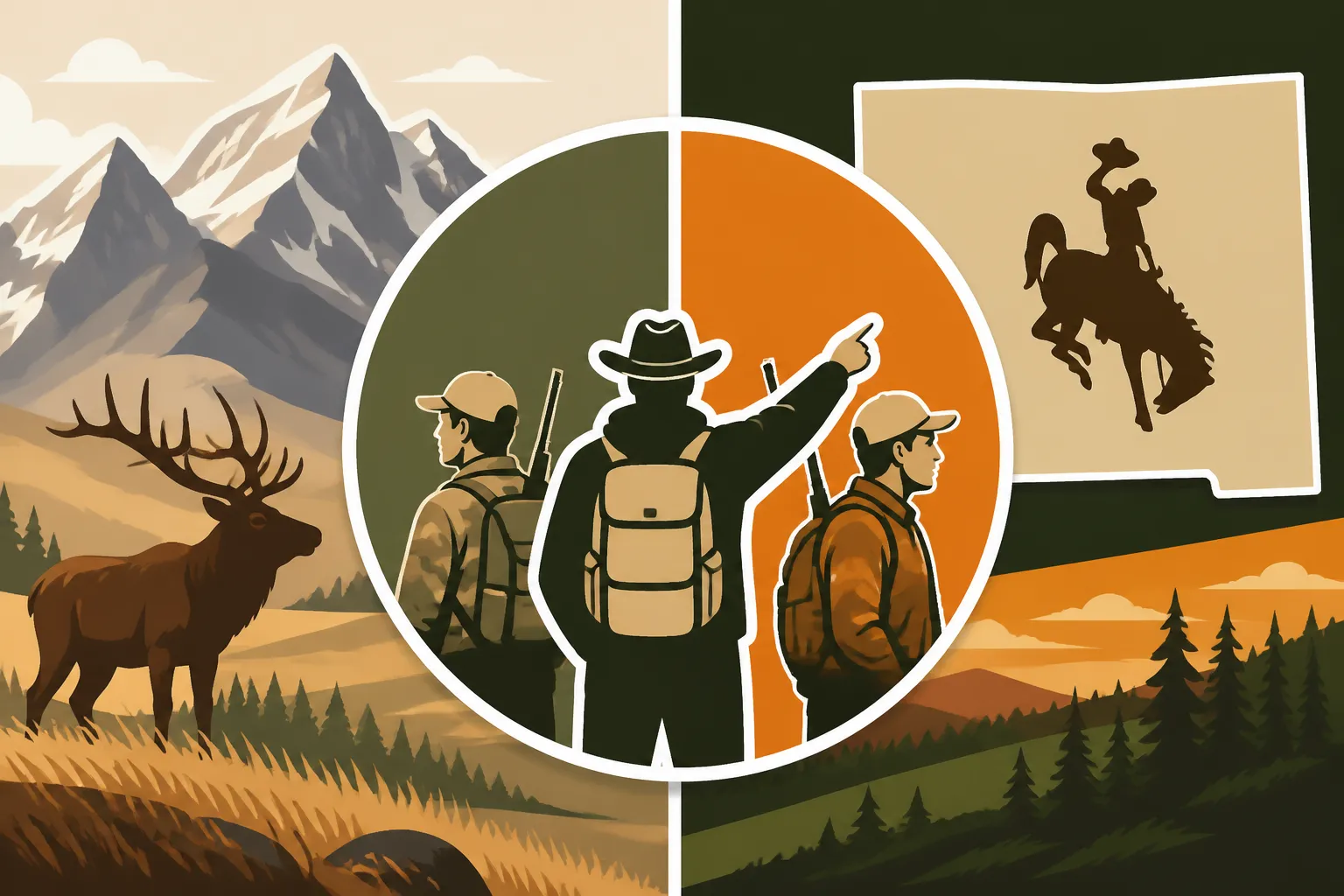
At its heart, the rule is pretty straightforward: in designated wilderness areas, a licensed outfitter or guide can only accompany a maximum of two nonresident hunters at any given time. This isn't just a suggestion; it's a hard and fast regulation that outfitters must adhere to. So, if your hunting party consists of three nonresident hunters, you’re going to need two guides. If you have four, you'll need two guides. If you have five, you'll need three, and so on. The math is simple, but the implications for your trip can be significant.
This specific number isn't arbitrary. It’s rooted in a combination of safety considerations, responsible game management, and a desire to provide a high-quality, immersive wilderness experience. The terrain in Wyoming's backcountry can be rugged and unforgiving. Having a smaller guide-to-hunter ratio allows for closer supervision, quicker response times in an emergency, and a more intimate connection to the environment. It ensures that the guide can truly focus on the needs and safety of each individual hunter, rather than being spread too thin across a larger group.
Where and When This Ratio Applies
It's crucial to understand that this guide-to-hunter ratio doesn't apply to every single hunt across the entire state. The key differentiator here is "designated wilderness areas." Wyoming is home to incredible expanses of federal wilderness, places like the Bridger-Teton, Shoshone, Teton, and Wind River Wilderness Areas, where motorized travel is largely prohibited and the environment remains pristine and challenging. These are the areas where the rule primarily comes into play for nonresidents hunting big game.
The species most commonly affected by this rule within these wilderness settings include the highly sought-after elk, bighorn sheep, moose, and mountain goat. While you might engage an outfitter for a deer or antelope hunt outside of a wilderness area, the specific 1:2 nonresident guide ratio likely wouldn't apply in those circumstances. This distinction is vital for planning, as an unguided or self-guided hunt for certain species in non-wilderness areas wouldn't require a guide at all, let alone adhere to a specific ratio. You can find more specific details on this in Wyoming's Wilderness Guide Law for Nonresidents.
The Rationale Behind the Two-Hunter Limit
When you first encounter a rule like "one guide for every two nonresident hunters," you might wonder why such a specific limitation exists. Is it just to make things harder, or is there a deeper purpose? The truth is, these regulations are carefully considered, aimed at preserving both the safety of the hunters and the integrity of the hunting experience in Wyoming’s unique wilderness.
Ensuring Safety in Remote Wilderness
Wyoming's designated wilderness areas are, by definition, remote and rugged. Think vast mountain ranges, dense timber, steep canyons, and unpredictable weather that can shift from sunshine to blizzard in a matter of hours. Navigating this kind of country, especially while pursuing big game, presents inherent risks. A slip on loose rock, a sudden run-in with a grizzly bear, or the onset of severe weather can quickly turn a hunting adventure into a life-threatening situation.
The two-hunter limit directly addresses these safety concerns. With only two hunters to oversee, a guide can maintain much closer contact and supervision. They can better monitor each hunter's physical condition, provide immediate assistance in an emergency, and make quick decisions about changing conditions or animal encounters. Imagine trying to manage four or five people, all with varying experience levels and physical capabilities, in a genuinely remote setting. It becomes exponentially more difficult to ensure everyone's safety, and the ability to react to unforeseen circumstances is severely compromised. This ratio gives the guide the bandwidth to truly lead and protect their clients in challenging environments.
Enhancing the Hunting Experience and Success
Beyond just safety, the guide-to-hunter ratio is also designed to elevate the overall hunting experience and, often, the success rate. Hunting in wilderness areas, particularly for species like elk or bighorn sheep, requires intense focus, quiet movement, and precise communication. A smaller group size inherently means less noise, less visual disturbance, and a more cohesive unit moving through the landscape. This intimacy allows for more effective stalking, better communication between guide and hunter, and a more immersive experience with nature.
A guide working with only two hunters can offer more personalized attention, coaching them through difficult shots, teaching them the nuances of reading wind, or identifying subtle animal signs. This focused approach can significantly improve a hunter's chances of success, but more importantly, it enriches the quality of the hunt itself. It transforms the experience from a mere pursuit of an animal into a deeply personal journey into the wild, with the guide acting as a mentor and companion. When you're paying for a guided hunt, you want that individual attention, and this ratio helps ensure you get it.
Practical Implications for Nonresident Hunters
Understanding the guide-to-hunter ratio is one thing, but figuring out how it actually impacts your hunting plans, particularly if you're coming from out of state, is another. This rule has direct consequences for everything from your group size to your budget and how far in advance you need to book your trip.
Planning Your Group Size and Composition
This is where the math really hits home. If you're a single hunter, you'll still be paired with a guide, likely in a 1:1 or 1:2 scenario if another single hunter is available. If you're a group of two, you'll perfectly fit the 1:2 ratio with one guide. But what if your group is three, five, or even seven nonresident hunters? Suddenly, you'll need multiple guides.
For a group of three, for example, an outfitter might arrange for two guides. One guide would take two hunters, and the other guide would take the remaining single hunter, effectively creating a 1:2 and a 1:1 scenario. If you have five hunters, you’d need three guides (two pairs, and one single with a guide). This means your group might be split up during the day, or even for the duration of the hunt, which is something to discuss with your outfitter beforehand. It also means you need to factor in the availability of additional guides when booking. It might not always be possible for an outfitter to field an extra guide on short notice, especially during peak season. Families or close friends planning to hunt together often find this a primary consideration, and it's best to sort out who will be with which guide well in advance to manage expectations.
The Financial Impact of the Ratio
Let's be realistic: more guides mean higher costs. Outfitters operate businesses, and staffing additional guides for a larger group directly translates to increased expenses for them, which are then passed on to the clients. You're paying for their expertise, their safety net, their equipment, and their time. A hunt that requires two guides instead of one will invariably be more expensive overall.
When you're comparing potential outfitters or packages, always clarify the guide-to-hunter ratio offered and how it affects the price. Some outfitters might quote a per-hunter price based on a 1:2 ratio, assuming you're part of a pair. If you come as a single hunter but need a dedicated 1:1 experience, or if you're an odd-numbered group, expect the per-person cost to increase or the overall group cost to reflect the need for an additional guide. It's a significant factor in What a Guided Wyoming Elk Hunt Costs or any other guided big game hunt in wilderness areas. Don't be afraid to ask for a breakdown of costs based on different group sizes and guide ratios.
Booking Logistics with Outfitters
Because of this guide-to-hunter ratio, booking your hunt isn't just about finding an open date; it's also about finding an outfitter who can accommodate your group size with the appropriate number of guides. Outfitters have a finite number of experienced guides on staff, and their schedules fill up quickly, sometimes years in advance.
If you have a larger group that requires multiple guides, you absolutely need to book much further out. Waiting until the last minute drastically reduces your options. When you contact an outfitter, be upfront about your group size and your desire to hunt in a wilderness area. They'll be able to tell you their availability and how they can best accommodate your party under the guide ratio rule. Platforms like BookYourHunt can be useful for initial research, as they often list outfitters and sometimes even specify their typical guide-to-hunter ratios or group size preferences. Always confirm the details directly with the outfitter before committing to a deposit.
| Group Size (Nonresident Hunters) | Minimum Guides Required | Example Scenarios & Cost Impact |
|---|---|---|
| 1 | 1 | Often paired with another single hunter, or a higher "single supplement" fee for 1:1 attention. |
| 2 | 1 | Ideal, fits the 1:2 ratio perfectly. Standard pricing. |
| 3 | 2 | Requires an additional guide. Increased overall cost. Group may split for hunting. |
| 4 | 2 | Two guides, each taking two hunters. Increased overall cost. |
| 5 | 3 | Requires three guides. Significantly increased overall cost. Group splits. |
Navigating Exceptions and Alternatives
While the two-hunters-per-guide rule is firm for nonresidents in wilderness areas, Wyoming does offer a few exceptions and alternative scenarios that can impact how you plan your hunt. Knowing these nuances can open up different possibilities, especially if you have resident connections or are looking for a less structured experience.
The Role of a Resident Guide and the Affidavit
One of the most common ways nonresidents can navigate the guide requirement without hiring a professional outfitter is by utilizing a Wyoming resident friend or family member as a guide. This is a fantastic option for many, fostering camaraderie and making the hunt more accessible. However, there are very specific rules that must be followed.
First and foremost, the resident guide cannot accept any payment or remuneration for their services. This is not a loophole for a paid guiding service; it’s strictly for friends or family helping out. Secondly, the resident must be at least 18 years old, possess a valid Wyoming hunting license for the species being hunted, and be certified in hunter education if born after January 1, 1965. They must also accompany no more than two nonresident hunters. Most importantly, before the hunt begins, the resident must file an Affidavit a Wyoming Resident Guide Must File with the Wyoming Game and Fish Department, declaring their intent to guide non-paying friends or family. This document is crucial and must be carried during the hunt. This avenue effectively means A Wyoming Resident Guide License Costs Nothing, and Pays Nothing, but it comes with strict limitations on the relationship and financial compensation.
Landowner Exemption and Private Land Hunts
Another significant exception applies to landowners guiding hunters on their own deeded property. If you're fortunate enough to gain access to private land for your hunt, the landowner (or a full-time employee of the landowner acting on their behalf) may guide you without being a licensed outfitter, and the strict 1:2 nonresident ratio typically doesn't apply. This offers more flexibility in group size when hunting on private ground.
This exemption recognizes the property rights of landowners and their ability to manage hunting on their own land. Many outfitters also work in partnership with private landowners, offering guided hunts on deeded ground. In these scenarios, while the outfitter themselves must be licensed, the specific wilderness area guide-to-hunter ratio might not be the primary concern if the hunting takes place entirely on the private ranch. This is particularly relevant if you're exploring Wyoming Landowner Tags and Getting on Private Ground, as many of those opportunities are directly linked to private land access. Always confirm with the landowner or outfitter operating on private ground what specific rules apply regarding guide ratios.
Drop Camps and Semi-Guided Options
For nonresident hunters seeking a more independent experience in the backcountry without the full cost of a guided trip, drop camps and semi-guided services present interesting alternatives.
A "drop camp" essentially means an outfitter packs you and your gear into a remote location, often by horse or mule, sets up a camp for you, and then leaves you to hunt on your own. They then return at a pre-arranged time to pack you and any harvested game back out. In this scenario, because the outfitter or guide is not actively guiding you during the hunt itself, the nonresident guide ratio typically does not apply. You are considered to be on a self-guided hunt once the outfitter leaves. This can be a more budget-friendly way to experience deep wilderness hunting, as highlighted in Wyoming Drop Camp Hunts Explained. However, it requires a high level of self-sufficiency, wilderness skills, and navigation prowess from the hunters.
Semi-guided options vary widely. Some might involve an outfitter providing scouting information, camp logistics, and possibly game retrieval, but again, without the guide being with you during the actual hunt. Other semi-guided services might have a guide in camp, but not actively hunting with clients every day. It's crucial to get a very clear understanding of what "semi-guided" entails from any outfitter, as the line between guided and unguided can become blurry, and you want to ensure you're in compliance with all regulations. If a guide is ever accompanying you in a wilderness area, the 1:2 rule is likely in effect.
Preparing for Your Guided Hunt Under the Ratio
Once you understand the nuances of Wyoming's guide-to-hunter ratio, the next step is to ensure your preparation aligns with these realities. A guided hunt in Wyoming, especially in wilderness areas, is a significant investment of time, money, and effort, and you want to maximize your chances for a successful and enjoyable experience.
Communication with Your Outfitter
This cannot be stressed enough: crystal-clear communication with your chosen outfitter is paramount. Before you ever send a deposit, confirm in writing what their standard guide-to-hunter ratio is, especially for your specific hunt area and species. Discuss your group size and how they plan to accommodate it within the legal limits. If your group is an odd number, clarify how they will structure the guiding — will one hunter get a 1:1 experience, or will there be adjustments?
Beyond the ratio itself, talk about their safety protocols, emergency plans, and what they expect from you as a client regarding adherence to their instructions and wilderness ethics. The more questions you ask upfront, the fewer surprises you’ll have in the field. A reputable outfitter will appreciate your thoroughness and provide all the details you need to feel confident in your booking.
Physical and Mental Preparation
Even with the best guide at your side, a Wyoming wilderness hunt is physically and mentally demanding. The guide-to-hunter ratio means your guide can give you more attention, but they can't carry you up a mountain or make the difficult decisions for you. You need to be prepared.
Start a fitness regimen well in advance. Focus on cardiovascular endurance, leg strength, and carrying a pack. You’ll be hiking at altitude, often over rugged, uneven terrain, and potentially packing out heavy game. Being physically ready not only increases your chances of success but also significantly improves your enjoyment of the hunt and reduces your risk of injury. Mentally, prepare for long days, unpredictable weather, and the possibility of not harvesting an animal. Patience and resilience are as important as physical strength. Consider exploring resources like Physical Conditioning for a Mountain Hunt or Preparing for Altitude on a Wyoming Hunt to help get you in prime shape.
Vetting Outfitters for Compliance and Quality
Choosing the right outfitter is one of the most critical decisions you'll make. It’s not just about finding someone who promises big animals; it’s about finding a professional who operates legally, ethically, and safely, particularly with regard to guide ratios and wilderness regulations.
Always verify that an outfitter is currently licensed by the Wyoming Board of Outfitters and Professional Guides. Ask for their license number and check it yourself. Don’t hesitate to ask for references from past clients, particularly those who hunted with a group similar to yours. Inquire about their experience in the specific hunt area you're targeting and their approach to wildlife management and client safety. Resources like GoHunt can provide valuable insights into hunt units and help you identify reputable outfitters operating in those areas. By doing your due diligence, you ensure that your investment is sound and that your wilderness adventure will be conducted legally and professionally.
Common Misconceptions and Clarifications
The world of hunting regulations can be dense, and specific rules like Wyoming's guide-to-hunter limit often come with their own set of misunderstandings. Clearing up these common misconceptions can help you avoid unintended violations and ensure a smoother hunting experience.
The Difference Between a "Guide" and a "Subguide"
When talking about outfitters and their staff, you might hear the terms "guide" and "subguide" used interchangeably, but in Wyoming, they refer to distinct roles with different licensing requirements. An "outfitter" is the licensed individual or entity that offers and provides hunting services. A "professional guide" (or simply "guide" in many contexts) is an individual who is directly employed or contracted by a licensed outfitter to guide clients in the field. They carry their own professional guide license.
A "subguide," on the other hand, is an individual who assists a professional guide or outfitter. They typically work under the direct supervision of a licensed guide or outfitter and have fewer responsibilities and less experience. While they are part of the team, the official guide-to-hunter ratio generally refers to the professional guides who are primarily responsible for the clients. It's important to understand that a subguide alone cannot fulfill the legal requirement of the 1:2 nonresident guide ratio in wilderness areas; a fully licensed professional guide must be present. You can delve deeper into the specific roles and requirements in The Subguide Rules Wyoming Applies.
What "Direct Supervision" Truly Means
The concept of "direct supervision" is crucial, not just in the context of subguides, but also for resident guides assisting nonresidents. It means more than just being in the same general area or within shouting distance. It implies that the supervisor (whether a professional guide or a resident friend) must be actively engaged in overseeing the hunters and be able to provide immediate assistance or direction.
In a practical hunting scenario, this often means being within visual and voice contact, particularly during critical moments like stalking, calling, or recovering game. It's about ensuring safety and compliance at all times. If a nonresident hunter is left alone in a wilderness area by a guide for an extended period to hunt independently, it could potentially be seen as a violation of the spirit, if not the letter, of the guide law. This strict interpretation is why the 1:2 ratio is so important; it ensures that true direct supervision is feasible and effective in challenging environments.
Evolving Regulations and Staying Informed
Hunting regulations are not static; they are dynamic and can change from year to year based on wildlife populations, environmental factors, legislative actions, and public input. What was true last season might have a subtle but significant change for the upcoming one.
Therefore, it is absolutely essential that you, as a hunter, take personal responsibility for checking the most current Wyoming Game and Fish Department regulations every single year before you plan your hunt. Do not rely solely on information from previous years, anecdotal stories, or outdated online forums. The official regulation booklets and the Game and Fish website are your authoritative sources. This includes specific details about the guide-to-hunter ratio, which hunt areas are considered wilderness, and any changes to species-specific requirements. Staying informed protects you from potential legal issues and ensures that your hunting trip is both ethical and lawful.
Disclaimer
This article is for general informational purposes only and does not constitute professional advice. Laws, prices and regulations vary by location and change over time. Consult a qualified professional for guidance on your specific situation.