Hunting the Deer Country Around Keyhole Reservoir
Hunting the deer country around Keyhole Reservoir presents a unique blend of opportunity and challenge, often leaving hunters wondering how to best approach an area that combines popular recreational use with prime wildlife habitat. This guide aims to peel back the layers of what makes Keyhole Reservoir a noteworthy destination for deer hunters in Wyoming, offering insights into its diverse terrain, specific species, and how to effectively navigate its landscape for a successful hunt.
Understanding Keyhole Reservoir's Deer Habitat and Species
Keyhole Reservoir, nestled in the northeastern corner of Wyoming within Crook County, is far from your stereotypical wide-open sagebrush basin. This area, part of the larger Black Hills region, offers a distinct blend of environments that attract and hold both mule deer and whitetail deer, creating a dynamic and often challenging hunting experience. Hunters often arrive expecting one or the other, only to find themselves needing to adapt to both.
The Mix of Mule Deer and Whitetail
One of the most fascinating aspects of deer hunting around Keyhole Reservoir is the presence of both mule deer and whitetail deer. This isn't always the case across Wyoming, where certain regions are clearly dominated by one species. Here, the landscape transitions between open, rolling hills more typical of mule deer country and the thicker riparian zones and timbered breaks that whitetails call home. You might find mule deer browsing on a sunny slope in the morning, then transition to still hunting a dense creek bottom later in the day and jump a whitetail. It’s a constant puzzle.
Mule deer around Keyhole tend to favor the more open, broken terrain further from the immediate reservoir shoreline, particularly in areas with scattered pines or rocky outcroppings that provide security and vantage points. They’re masters of using contours and subtle cover. Whitetail, on the other hand, are drawn to the denser cover that fringes the reservoir and its feeder creeks, as well as the numerous timbered pockets and drainages throughout the Black Hills National Forest lands nearby. These spots offer the escape cover and browse they prefer. Understanding these distinct habitat preferences is your first step to success. If you're struggling to differentiate between them in the field, remember that key physical traits can help; consider checking out Telling a Whitetail From a Mule Deer for a quick refresher on identification.
Public vs. Private Land Dynamics Around Keyhole
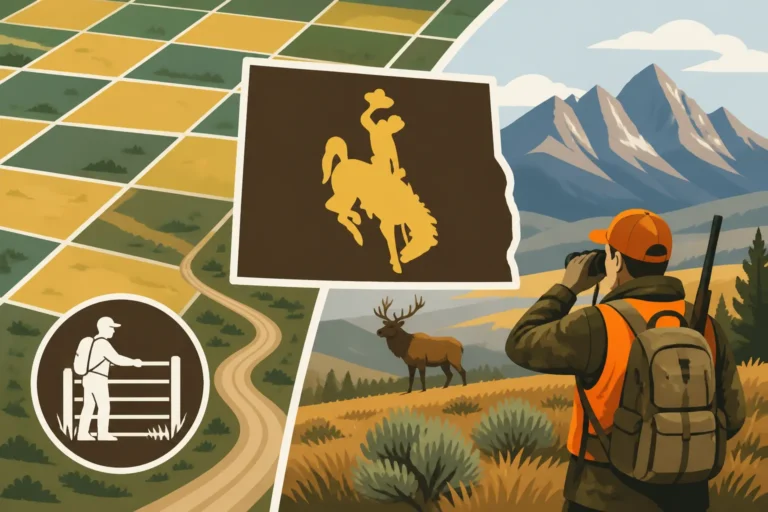
The land ownership around Keyhole Reservoir, much like other parts of eastern Wyoming, can be a complex mosaic of public and private ground. You'll find sections of Black Hills National Forest, Wyoming State Trust Land, and Bureau of Land Management (BLM) parcels, all interspersed with private ranchland. This creates a "checkerboard" pattern that can be both frustrating and advantageous. On one hand, it means you can't just wander freely; you need to be constantly aware of where you are. On the other hand, private land often serves as a refuge for deer, and savvy hunters can use public parcels that border or provide access to these private havens.
Successfully hunting here often hinges on your ability to interpret land ownership maps accurately. Relying solely on memory or older paper maps can lead to an unwelcome surprise. You might be walking along, thinking you're on public land, only to find yourself facing a private property sign. The trick is to identify those public fingers or isolated blocks that deer might use to travel between larger private tracts. This requires careful planning and often some strategic footwork to get away from easier access points. You'll find similar challenges in other parts of Crook County, such as when you are Hunting the Deer Country Around Inyan Kara.
Impact of Water and Timber on Deer Movement
Keyhole Reservoir itself, along with the surrounding timbered hillsides, plays a significant role in how deer utilize this landscape. The reservoir acts as a major water source, especially during drier periods, concentrating deer in its vicinity. However, direct access to the water's edge can often be private, or the shoreline might be heavily used by other recreationalists, pushing deer back into the cover.
The timbered areas, predominantly Ponderosa pine, provide crucial thermal cover, bedding areas, and security. Deer will often bed on north-facing slopes in the pines on warmer days or seek out sunny, south-facing slopes when the weather turns cold. These timber blocks also act as natural funnels and travel corridors, especially where they pinch down between open fields or connect to the reservoir. Learning to read these timber lines and understanding how deer move between feeding, bedding, and watering areas is essential. During hunting season, particularly as temperatures drop, deer will instinctively move to the cover provided by these timbered areas, making them prime spots for still hunting or setting up ambushes.
Navigating Access and Terrain Challenges in the Keyhole Area
Hunting around Keyhole Reservoir is less about vast, uninterrupted wilderness and more about precision navigation and smart use of available public access. It's a different kind of challenge, one that rewards detailed preparation and a willingness to explore.
Deciphering Unit Boundaries and Regulations
Before you even think about packing your hunting gear, you need to firmly grasp the specific deer hunt areas that encompass the Keyhole Reservoir region. Wyoming's game management unit system can sometimes feel a bit like a jigsaw puzzle, with boundaries that might follow roads, fence lines, or natural geographical features. Around Keyhole, you'll generally be looking at areas within Crook County that are part of the Black Hills Deer Management Area. These areas, like What Deer Hunt Area 1 Covers, will have specific regulations regarding season dates, weapon types, and antler point restrictions that can vary from year to year.
It's absolutely critical to consult the most current Wyoming Game and Fish Department regulations. Never assume that what was true last year will be true this year. These regulations are your bible; they dictate when and where you can hunt, and what type of deer you can pursue. Pay close attention to unit numbers and any sub-sections, as one side of a road might be open for antlered deer during rifle season, while the other side is restricted to archery-only or antlerless tags.
Essential Mapping Tools for Public Land Access
Given the checkerboard nature of land ownership, high-quality mapping tools are not just helpful; they're non-negotiable for hunting around Keyhole Reservoir. Forget about getting lost or inadvertently trespassing. A robust GPS mapping application like onX Hunt is arguably the most valuable piece of gear you can carry. It allows you to see real-time land ownership boundaries, often with different colors indicating public lands (BLM, National Forest, State Trust) versus private property.
Before your hunt, use onX Hunt or a similar tool to conduct thorough e-scouting from your kitchen table. Identify public access points, potential travel corridors through public lands, and isolated public parcels that might be overlooked by other hunters. You can pinpoint likely bedding areas in timber, feeding areas in open clearings, and water sources. Save these waypoints and routes to your device. In the field, onX Hunt acts as your personal guide, confirming your location and showing you exactly where you can legally step. This is especially true for navigating the numerous parcels of public land; understanding Using onX Public Land Layers in Wyoming can significantly enhance your planning.
Dealing with Hunting Pressure and Finding Seclusion
Because of its relative accessibility and reputation for deer hunting, the Keyhole Reservoir area, particularly the easily reached public lands, can experience significant hunting pressure. This is a reality of many good hunting spots, and Keyhole is no exception. If you stick to the roads and easily accessible trailheads, you're likely to encounter other hunters.
The key to finding seclusion and unpressured deer often lies in being willing to work harder than the next person. This means lacing up your boots and hiking deeper into public land, or exploring those less obvious access points you identified during your e-scouting. Look for public parcels that are difficult to reach, perhaps requiring a longer walk, or those bordered by tough terrain. Deer, especially mature bucks, are masters at finding refuge from pressure. They'll quickly learn where hunters typically go and adjust their movements and bedding areas accordingly. If you're willing to put in the miles, you significantly increase your chances of finding deer that haven't been pushed and harassed. This often means embracing a different strategy than what you might apply to more remote wilderness areas, but the reward can be well worth the effort. In areas with similar patterns of pressure, like Hunting the Whitetail River Bottoms of Eastern Wyoming, the same principles apply.
Hunting Strategies for Keyhole's Diverse Deer Population
Hunting the varied terrain around Keyhole Reservoir calls for a flexible approach, blending techniques to suit both the landscape and the deer species you're pursuing. It’s rarely a one-size-fits-all situation.
Still Hunting and Spot-and-Stalk Techniques
Both still hunting and spot-and-stalk can be highly effective around Keyhole, but knowing when and where to apply each is crucial.
- Still Hunting: This method shines in the timbered draws, pine ridges, and riparian areas favored by whitetail deer. The goal is to move slowly, almost imperceptibly, through the habitat, pausing frequently to glass ahead and listen for subtle signs of deer. Every step should be deliberate, every glance thorough. Pay close attention to wind direction, ensuring it’s in your favor so your scent doesn't carry ahead of you. Focus on areas with good cover and sign, such as rubs, scrapes, and fresh tracks. Remember that whitetails will often hold tight in thick cover, relying on their camouflage to remain unseen until you're nearly on top of them. This technique is as much about patience and observation as it is about movement.
- Spot-and-Stalk: For mule deer in the more open, rolling country or on the scattered timbered slopes, spot-and-stalk is often the preferred method. This involves finding a high vantage point to glass wide areas, patiently searching for deer feeding, bedding, or moving. Once a deer is spotted, the stalk begins. This is where your knowledge of the terrain becomes paramount. You need to use every fold, every draw, and every bit of cover to remain out of sight and downwind. Mule deer have incredible eyesight, so minimizing your profile and moving slowly are critical. Understanding Playing Wind Direction on an Open Sagebrush Stalk is a universal truth in Western hunting that applies directly here. This often means taking a long, circuitous route to approach from an advantageous position.
Utilizing Terrain Features for Advantage
The varied terrain around Keyhole is a hunter's best friend if you know how to use it. Deer are creatures of habit and efficiency, and they will consistently use natural features for travel, feeding, and bedding.
- Draws and Gulches: These low spots offer concealed travel routes, especially in more open areas. Deer will use them to move between feeding and bedding areas unseen. Hunting along the edges of these draws, or even still hunting directly through them, can be highly productive.
- Ridges and Points: High points offer deer (and hunters) commanding views. Deer often bed on the leeward side of ridges, where they can watch their backtrail and scan below. As a hunter, using a ridge line to glass into adjacent basins or coulees can reveal deer that are otherwise hidden.
- Timber Edges and Pockets: The transition zones where timber meets open sagebrush or grasslands are always hot spots. Deer will use the cover of the timber for security before emerging into the open to feed, especially at dawn and dusk. These edges are excellent places to set up for an ambush or to focus your still hunting efforts. You might find similar dynamics if you explore Terrain That Hides an Approach in other areas. The more you understand how deer interact with these features, the better you can predict their movements.
The Importance of Pre-Season Scouting (Both Remote and On-Foot)
You hear it all the time, but it bears repeating: pre-season scouting is not just a suggestion, it's a fundamental pillar of success, especially in an area like Keyhole.
- Remote Scouting: Before you even leave home, leverage digital tools. Besides land ownership maps, look at topographic maps and satellite imagery to identify potential funnels, bedding areas, water sources, and travel corridors. Platforms like
GoHuntor other robust hunt planning tools can provide valuable data on draw odds, past harvest reports, and general unit characteristics that can help you narrow down your focus. This remote intelligence is your foundation for planning successful trips, including figuring out where to apply for tags, similar to E-Scouting a Unit Before the Season Opens. - On-Foot Scouting: Nothing beats boots on the ground. If possible, visit the area a few weeks or months before the season opens. Look for fresh deer sign: tracks, droppings, rubs, and scrapes. Identify active game trails. Note where deer are crossing fences, entering and exiting timber, and what food sources they are utilizing. Pay attention to how deer use the terrain during different times of day. A pre-season scout allows you to fine-tune your hunting strategy, identify quiet pockets away from pressure, and discover those hidden gems that satellite imagery alone can't reveal.
Preparing for Your Keyhole Reservoir Deer Hunt
A successful hunt around Keyhole Reservoir involves more than just knowing where the deer are. It also requires careful preparation, from the gear you pack to your own physical and mental state.
Gear Considerations for Varied Terrain
The diverse environment of Keyhole Reservoir means you need gear that can handle a range of conditions, from open vistas to dense timber.
- Optics: Good binoculars are paramount for spot-and-stalk hunting and for dissecting timbered slopes while still hunting. A 10×42 or 12×50 binocular will serve you well for scanning open country, and potentially a spotting scope if you plan to cover vast distances from a single vantage point. Remember, Optics Power for Wyoming's Long Sightlines is crucial in a state known for its wide-open spaces. You'll be picking apart distant hillsides and looking for subtle movements in the pines.
- Footwear: Comfortable, broken-in hunting boots with good ankle support are a must. You'll be covering varied terrain, from rocky ground to soft soil in draws, and potentially navigating wet areas near the reservoir. Waterproofing is a definite plus.
- Layered Clothing: Wyoming weather, especially in the fall, can be unpredictable. Be prepared for everything from warm, sunny days to cold, windy conditions, and even snow. A layering system allows you to adapt to changing temperatures and activity levels, ensuring you stay comfortable and focused on the hunt. This includes a good base layer, insulating mid-layers, and a waterproof/windproof outer shell.
- Navigation Tools: As mentioned, a reliable GPS mapping app like
onX Huntis essential. Carry a portable charger for your phone or device, and consider a backup paper map and compass, just in case. - Backpack: A comfortable daypack is needed to carry water, snacks, extra layers, game processing tools, and anything you might need for the day. If you're successful, it will also be used to pack out meat.
Physical Fitness and Mental Preparedness
While Keyhole Reservoir might not demand the same alpine endurance as a high-country elk hunt, it still requires a decent level of physical fitness. You'll be doing a lot of walking, often over uneven terrain, and potentially carrying out a heavy load of venison.
- Physical Fitness: Start a walking regimen well before your hunt, incorporating hills or stairs if possible. The better shape you're in, the more ground you can cover comfortably, and the more energy you'll have for the critical moments of a stalk or recovery. Don't underestimate the impact of walking miles a day, especially when wearing hunting boots and carrying a pack.
- Mental Preparedness: Hunting, especially for deer that have seen pressure, can be mentally taxing. There will be long hours of glassing, failed stalks, and periods of seeing no game. Develop patience and persistence. Be prepared for the unexpected and maintain a positive attitude. The mental game is just as important as the physical one.
Understanding Local Regulations and Ethical Hunting
A responsible hunter is an informed and ethical hunter. Always carry a copy of the current year's Wyoming Game and Fish Department regulations for the area you're hunting.
- Regulation Review: Familiarize yourself with all rules, including specific season dates for your chosen unit, legal shooting hours, weapon restrictions, and tagging requirements. Knowing How Soon You Must Tag a Downed Animal is not just a rule, but a critical part of ethical hunting and proper game care.
- Ethical Shots: Always strive for a clean, ethical shot. Know your rifle's capabilities and your personal shooting limitations. Pass on shots that are too far, obscured, or offer a low percentage of success. A wounded animal is a tragic outcome for everyone.
- Respect for Landowners: If hunting near private property, always know where you are. If you suspect a deer might have crossed onto private land after a shot, do not pursue it without first obtaining permission from the landowner. A good relationship with private landowners benefits all hunters.
| Deer Species | Preferred Keyhole Habitat | Key Identifying Features (General) | Hunting Strategy Focus (Keyhole) |
|---|---|---|---|
| Mule Deer | Open, rolling hills; scattered pines; rocky outcroppings; sagebrush flats. | Large ears; rope-like tail with black tip; often bounds when spooked; lighter body. | Spot-and-stalk from vantage points; still hunt subtle draws and ridges. |
| Whitetail Deer | Dense timber; riparian zones; creek bottoms; brushy pockets; reservoir fringes. | Smaller ears; broad, flagging white tail; runs with tail up when spooked; reddish-brown body. | Still hunting thick cover; ambushing along timber edges and funnels. |
Disclaimer
This article is for general informational purposes only and does not constitute professional advice. Laws, prices and regulations vary by location and change over time. Consult a qualified professional for guidance on your specific situation.