What Bighorn Sheep District 1 Covers
It can feel like you need a special decoder ring just to figure out where one hunting unit ends and another begins, especially when you're dreaming of a coveted Wyoming bighorn sheep tag. Understanding the exact boundaries of a specific hunt district is the first, crucial step in planning any hunt, and today, we're diving deep into Bighorn Sheep District 1, unpacking exactly what ground it covers so you can start visualizing your adventure and avoid any frustrating surprises in the field.
Understanding Wyoming's Hunt Area System
Wyoming's system for delineating hunting areas can sometimes feel like a puzzle, especially when you're comparing maps for different species. It’s not just one blanket set of boundaries across the entire state. Instead, the Wyoming Game and Fish Department crafts specific hunt area boundaries unique to each species – be it elk, deer, antelope, or in our case, bighorn sheep. This tailored approach is designed to manage specific herds effectively, accounting for their unique migratory patterns, winter ranges, and population objectives.
How Hunt Areas are Designated
The numerical designation for each hunt area is incredibly important, as it directly corresponds to specific regulations and tag allocations. For bighorn sheep, these are referred to as "hunt districts," and each number represents a distinct geographical area where certain tags are valid. What might be Elk Hunt Area 7, for example, is entirely separate from Deer Hunt Area 7, and certainly from Bighorn Sheep District 7. This species-specific numbering helps biologists fine-tune management strategies, allowing for precise control over harvest in areas that can sustain it, and protecting herds in areas that need a break. Hunters often find this distinction challenging, particularly when they're used to a more generalized unit system in other states.
This meticulous designation means that a tag for Bighorn Sheep District 1 is only valid within the specific boundaries of that district. You can't just wander into District 2 or 3 and expect your tag to cover you. It’s a level of specificity that demands careful map reading and pre-hunt scouting, often best accomplished with modern mapping tools that overlay these boundaries directly onto topographic data. Understanding this foundational principle is key to a legal and successful hunt, saving you from the headache of accidentally crossing into the wrong territory.
The Difference Between Hunt Areas and Herd Units
While "hunt areas" (or "hunt districts" for sheep) define where your license is valid, "herd units" are a biological classification that describes the geographical range of a specific animal population. Herd units are primarily used by wildlife managers to monitor populations, assess health, and set management goals over a larger, ecological scale. They represent the full scope of a population's movement throughout the year – from summer range to winter range, including migration corridors.
Often, a single herd unit might encompass multiple hunt areas or districts, or conversely, a hunt area might overlap with portions of a few different herd units. For instance, a large bighorn sheep herd unit might be split into several hunt districts to allow for varied harvest quotas based on specific, localized conditions, or to offer different tag types (e.g., ram vs. ewe tags) within distinct portions of the herd's overall range. While hunters primarily focus on hunt area boundaries for regulatory compliance, understanding the underlying herd unit can provide valuable insight into animal movements and population dynamics when you're trying to locate sheep during your hunt. This distinction is crucial for both game management and informed hunting decisions, helping you understand not just where you can hunt, but why the boundaries are drawn as they are.
Pinpointing Bighorn Sheep District 1 Boundaries
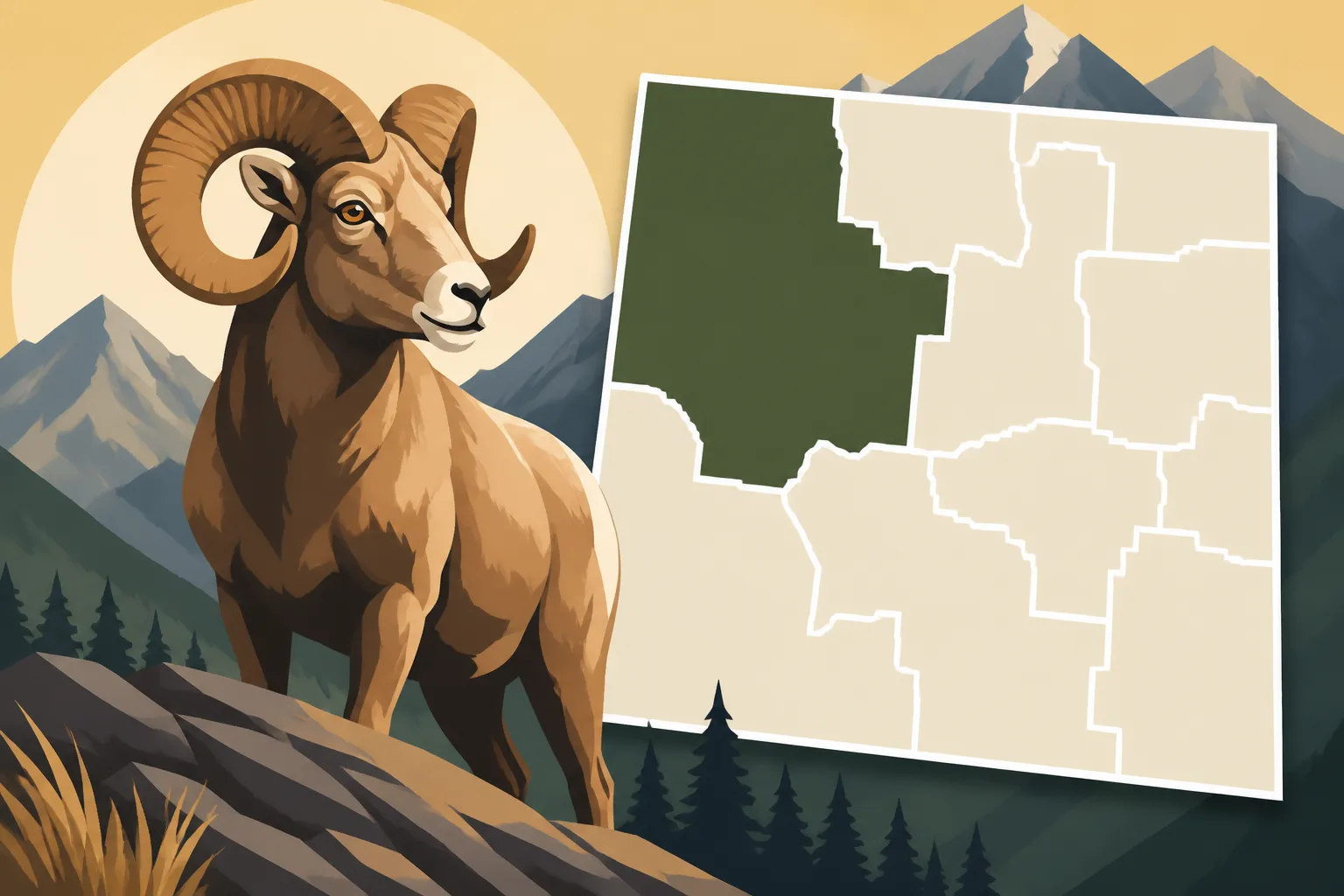
Bighorn Sheep District 1 in Wyoming is a legendary area, known for its rugged beauty and the challenge it presents to sheep hunters. When someone talks about District 1, they are almost universally referring to a significant portion of the Absaroka Mountains, a truly wild and high-elevation landscape. It's a place that demands respect and thorough preparation, and the first step in that preparation is knowing exactly where those lines on the map run.
Geographic Features Defining District 1
Bighorn Sheep District 1 is typically found in the northwestern part of Wyoming, west of Cody and north of Dubois, encompassing a large section of the Absaroka Mountains. Its boundaries are defined by a series of prominent geographic features and sometimes specific roads, making it crucial to consult the official Wyoming Game and Fish regulations map for the current year. Generally, you can expect District 1 to be bordered by features like the Yellowstone National Park boundary to the north, the Shoshone National Forest wilderness boundaries, and various river drainages that carve through this formidable landscape.
For instance, major rivers like the North Fork of the Shoshone River or the Greybull River and their various tributaries often play a role in defining these lines. Elevations can range dramatically, from lower river bottoms to towering peaks well over 10,000 or even 12,000 feet. This isn't flat country; it's a vertical world of rock, scree slopes, timbered basins, and alpine meadows. Hunters frequently use mapping apps like onX Hunt to precisely identify these boundaries, zooming in on specific ridges, creek beds, or forest service roads that act as the defining edge. Relying on an official Reading a Wyoming Sheep Hunt District Map is non-negotiable, as even a small deviation can put you in the wrong area, leading to severe consequences.
Major Towns and Landmarks Within or Near District 1
While Bighorn Sheep District 1 itself is largely remote and rugged wilderness, several notable towns and landmarks serve as essential staging points or reference points for hunters. The town of Cody, to the east, often serves as a primary access point and resupply hub for many hunters venturing into the Absarokas. It provides amenities, gear shops, and serves as a last stop for services before heading into the mountains. To the south, the community of Dubois can also be a significant gateway, especially for those accessing the southern portions of the Absarokas or the northern Wind River Range, which are adjacent to or occasionally overlap with certain sheep units.
Within or immediately adjacent to District 1, you'll find vast expanses of the Shoshone National Forest, home to several designated wilderness areas such as the North Absaroka Wilderness and the Washakie Wilderness. These wilderness designations impose specific rules on access and travel, which are critical for hunters to understand. Remote trailheads, often requiring significant drive times on primitive roads, lead into the heart of this sheep country. Landmarks like Sunlight Basin or the craggy peaks near Francs Peak might be found within or very near the general vicinity, offering clues to the terrain and character of the hunting experience in District 1. These reference points help hunters orient themselves and plan their expeditions into one of Wyoming's most challenging and rewarding hunting grounds.
Hunting Considerations for Bighorn Sheep District 1
Hunting Bighorn Sheep District 1 isn't just a physical challenge; it's a mental and logistical one, too. The type of terrain, the sheer remoteness, and the scarcity of tags all play a role in making this one of Wyoming's most coveted and demanding hunts. It’s an experience that truly tests a hunter's mettle, and understanding these considerations beforehand is paramount to success and safety.
Terrain and Habitat Challenges
The terrain within Bighorn Sheep District 1 is unequivocally harsh. We're talking about classic high-alpine bighorn country: steep, rocky slopes, precarious ledges, and deep, timbered canyons. Elevations commonly exceed 10,000 feet, and many areas you'll need to access will push you well above the timberline. This means you'll be dealing with thin air, unpredictable weather that can shift from sunshine to blizzard in a matter of hours, and extremely rugged footing. The habitat consists of a mosaic of sparse alpine tundra, rocky outcroppings, and stringers of spruce and fir in the drainages.
Sheep thrive in these areas because their incredible agility allows them to navigate terrain that predators—and most humans—struggle with. You'll need to be in exceptional physical condition, capable of sustained climbing with a heavy pack, and comfortable in exposed, high-angle environments. Water sources can be scarce at higher elevations, especially later in the season, requiring careful planning for hydration. The mental fortitude required to push through these conditions, often for days without seeing a ram, is as important as physical endurance. Many hunters use GPS devices with detailed topographic maps from services like GoHunt or onX Hunt to navigate the treacherous landscape and mark potential sheep strongholds.
Access Points and Public Land Considerations
Accessing Bighorn Sheep District 1 typically involves venturing deep into national forest lands, primarily within the Shoshone National Forest. This means you'll be dealing with a mix of legally accessible public lands, but the challenge lies in reaching them. Many primary access points are via primitive forest service roads that may require a high-clearance, four-wheel-drive vehicle, and some are only accessible seasonally due to snowpack. Once at a trailhead, your journey will likely continue on foot or horseback, often covering many miles into roadless backcountry.
A significant portion of District 1 falls within designated wilderness areas. If you're a nonresident hunter, this immediately brings Wyoming's Wilderness Guide Law for Nonresidents into play. This regulation often requires nonresidents to employ a licensed professional guide or be accompanied by a resident guide with a specific affidavit when hunting bighorn sheep (and other big game) in wilderness areas. This is a critical detail that can significantly impact the logistics and cost of your hunt. While the vast majority of the land is federal public land, always double-check land ownership using a reliable mapping application to avoid any accidental trespass. Understanding How Many Square Miles of BLM Wyoming Holds versus National Forest land, and how to navigate Wyoming's Federal Land Split: BLM and Forest Service is essential for any hunter venturing into these wild places.
Draw Odds and Tag Strategies
Drawing a bighorn sheep tag for District 1 is notoriously difficult, making it one of the most sought-after and elusive tags in the West. Wyoming sheep tags are typically considered "once-in-a-lifetime" draws for many hunters due to the extreme odds. This is certainly true for District 1, which often boasts excellent trophy potential and therefore attracts a massive number of applicants. The draw operates on a complex preference point system, but even with maximum points, success is never guaranteed, particularly for nonresidents. Many sources, including GoHunt, track historical draw odds and application statistics, which are invaluable for developing your strategy.
For nonresidents, Bighorn Sheep Random Draw Odds Explained illustrates just how challenging it is to secure one of these coveted tags. The number of tags available for District 1 can be very low, sometimes only one or two in a given year for nonresidents, making the process feel like winning the lottery. Therefore, many hunters commit to a long-term strategy of accumulating preference points, understanding that it might take many years, if not decades, of applying. Others might explore options for different tag types, such as ewe hunts, if those are offered in other districts, which typically have slightly better odds but still represent a significant challenge. Patience, persistence, and a realistic understanding of the odds are crucial for anyone dreaming of a District 1 sheep tag.
Specific Regulations and Special Considerations
Beyond the boundaries and the general challenges, bighorn sheep hunting in Wyoming, and specifically in District 1, comes with its own set of detailed regulations. These rules are designed to protect the bighorn populations, ensure fair chase, and manage the limited resource responsibly. Ignoring any of these specifics can easily turn a dream hunt into a legal nightmare.
Ram Curl Requirements
One of the most important regulations for bighorn sheep hunting in Wyoming is the "ram curl" requirement. Unlike deer or elk, where antler points often dictate legality, bighorns are judged by the extent of their horn curl. Generally, a legal ram in Wyoming is defined as having at least a three-quarter curl horn. This means the tip of the horn must extend at least three-quarters of the way around a full circle when viewed from the side, or be of a certain age as determined by horn annuli.
The Ram Curl Requirement Explained emphasizes the importance of accurate field judging, which can be incredibly difficult in steep, broken terrain, especially at a distance. Misjudging a ram can lead to a significant violation, so it's critical to be absolutely certain before you take a shot. Many experienced sheep hunters spend countless hours glassing, not just looking for sheep, but specifically scrutinizing the curl of any ram they encounter. Some districts might have even more specific regulations, so always check the current year's hunting regulations booklet for District 1 to ensure you understand every nuance.
Wilderness Area Rules
As mentioned, portions of Bighorn Sheep District 1 lie within federally designated wilderness areas, most notably within the Shoshone National Forest. Hunting in these areas comes with additional rules and restrictions, particularly for nonresidents. The most significant of these is Wyoming's wilderness guide law, which mandates that nonresidents hunting specific big game species (including bighorn sheep, elk, moose, and grizzly bear where applicable) in designated wilderness areas must be accompanied by a licensed Wyoming guide or a resident companion.
This is not a suggestion; it's a legal requirement designed to ensure safety and responsible use of these pristine areas. If you are a nonresident planning to hunt District 1, you must plan for this. You either need to secure the services of a professional licensed outfitter, or you must find a Wyoming resident who is willing to accompany you and file the necessary affidavit with the Game and Fish Department, affirming they will guide you without compensation. Understanding Who the Wyoming Random Draw Favors can also indirectly relate, as higher draw odds might bring more non-residents into consideration for these hunts, making the guide rule a more prominent factor. For more details on this, you can look into The Wilderness Guide Requirement for Wyoming Nonresidents.
Practical Considerations for a District 1 Hunt
Planning a bighorn sheep hunt in District 1 goes beyond just securing a tag. The remoteness demands a high level of self-sufficiency. You should anticipate needing sturdy backpacking gear, a robust shelter system capable of withstanding extreme weather, a reliable water filtration system, and enough freeze-dried food to sustain you for multiple days, possibly even weeks, in the backcountry. Navigation is critical, and while physical maps are a must, a digital mapping app on your phone or GPS device, like onX Hunt, loaded with satellite imagery and unit boundaries, can be a lifesaver.
Physical conditioning cannot be overstated. Months of intense training, focusing on uphill hiking with a heavy pack, is essential. Furthermore, consider the logistics of meat care. If you are fortunate enough to harvest a ram, you'll be miles from the nearest road, and packing out hundreds of pounds of meat and cape over rugged terrain is a monumental task. Many hunters rely on pack animals or a team of strong friends to assist with extraction. Researching E-Scouting a Unit Before the Season Opens can help you identify potential game corridors and glassing locations well in advance, giving you a crucial edge in this challenging landscape.
Bighorn Sheep District 1 Overview
To help you visualize the key aspects of Bighorn Sheep District 1, here’s a quick overview:
| Feature | Description |
|---|---|
| General Location | Northwestern Wyoming, primarily within the Absaroka Mountains. East of Yellowstone National Park, west of Cody, and north of Dubois. |
| Dominant Terrain | High-alpine, extremely rugged, steep rocky slopes, scree fields, deep canyons, some timbered drainages, and expansive alpine meadows. Elevations regularly exceed 10,000 feet. |
| Primary Land Type | Predominantly Shoshone National Forest, including significant portions of designated Wilderness Areas (e.g., North Absaroka, Washakie). |
| Access Difficulty | Very challenging. Requires high-clearance 4×4 vehicles for primitive roads to trailheads, followed by extensive foot or horseback travel into remote backcountry. Seasonal road closures due to snow are common. |
| Nonresident Guide Rule | Applicable. Nonresidents must employ a licensed professional guide or be accompanied by a Wyoming resident guide who has filed the appropriate affidavit, if hunting within designated wilderness areas (which much of District 1 is). |
| Ram Harvest Requirement | Typically a 3/4 curl or larger ram, or based on age. Precise field judging is critical. (Always verify current year's regulations). |
| Draw Odds | Extremely difficult, especially for nonresidents. One of the toughest tags to draw in Wyoming, often requiring many years of accumulated preference points and still relying heavily on the random draw. Consult resources like GoHunt for specific historical odds and strategize well in advance, keeping in mind Wyoming's Four Application Deadlines, February Through June for application periods. |
| Physical Demands | Extreme. Requires exceptional physical conditioning, endurance, and comfort in high-altitude, exposed, and strenuous environments. Backcountry experience is highly recommended. |
| Key Towns/References | Cody (east), Dubois (south). Shoshone National Forest Supervisor's Office (Cody) for current conditions and travel management maps. |
| Trophy Potential | Historically very good, but success rates are low due to difficulty of the hunt and the scarcity of tags. Hunters often look to this unit for a chance at a true trophy ram, especially given how Why Sheep Is a Once-in-a-Lifetime License in Wyoming dictates the rarity of such opportunities. |
Disclaimer
This article is for general informational purposes only and does not constitute professional advice. Laws, prices and regulations vary by location and change over time. Consult a qualified professional for guidance on your specific situation.