Is There a Buffer Around a Corner Post?
For any hunter who has spent hours staring at a land ownership map, the frustration of "checkerboard" public land is all too real. You see those beautiful, often untouched, squares of public access, tantalizingly close, yet surrounded by private ground. Then there's the corner, where four squares—two public, two private—meet, creating a dizzying puzzle. Many of us have heard the whispers and old wives' tales about "buffer zones" around these corners, designed to keep you from even getting close. This guide is going to cut through that noise and give you a clear, realistic understanding of what the law actually says about corner crossing in Wyoming, and why the idea of a buffer is simply not accurate.
The Corner Post Conundrum: Is There a Legal Buffer Zone?
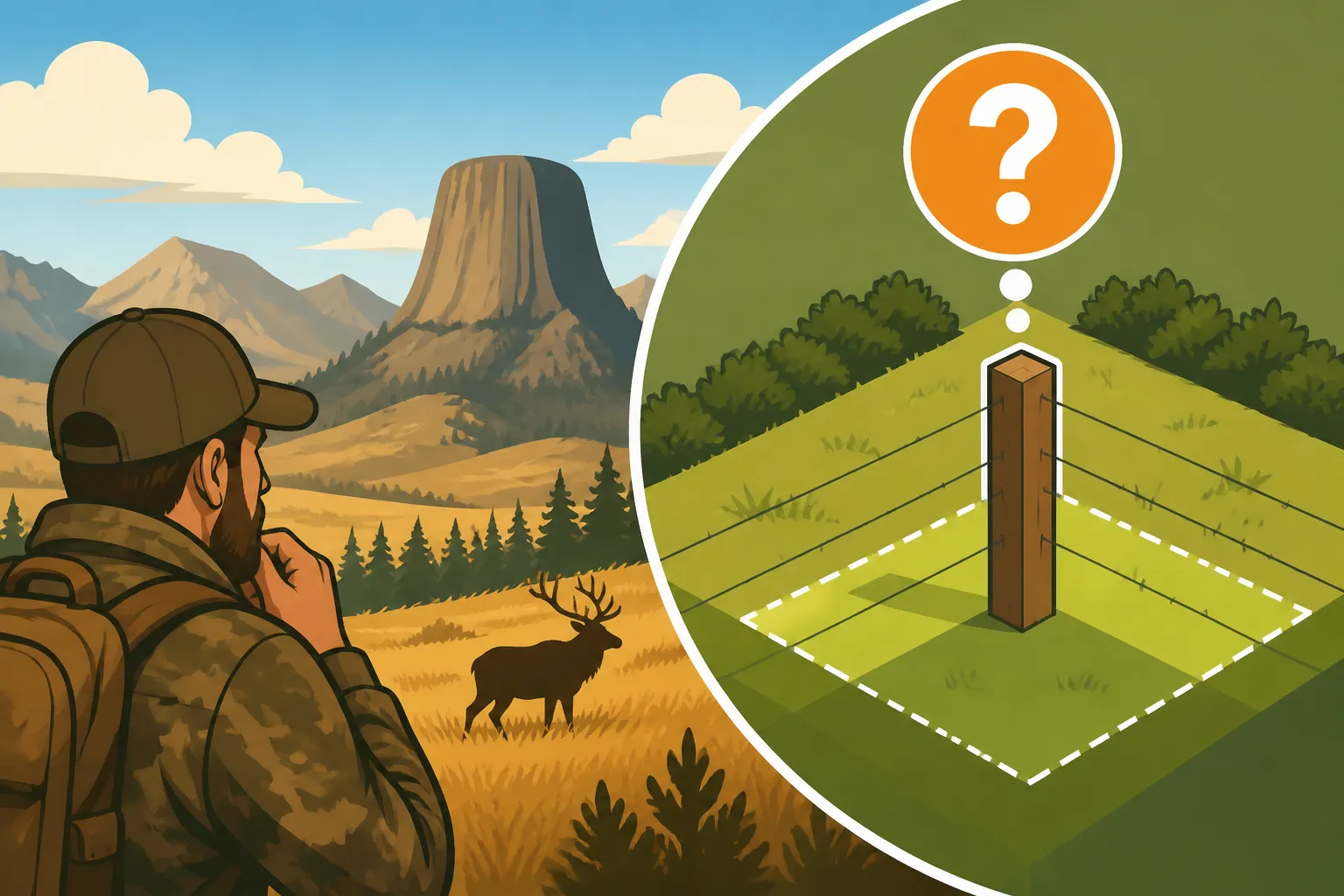
Let's get right to the heart of the matter because this is where a lot of well-meaning hunters get tripped up and scared away from perfectly legal access. The short answer to whether there's a legal buffer zone around a corner post in Wyoming is: no, there isn't. This might fly in the face of what you've been told at the local diner or seen discussed heatedly on online forums, but recent legal decisions have clarified this immensely.
Understanding the "Airspace" Ruling
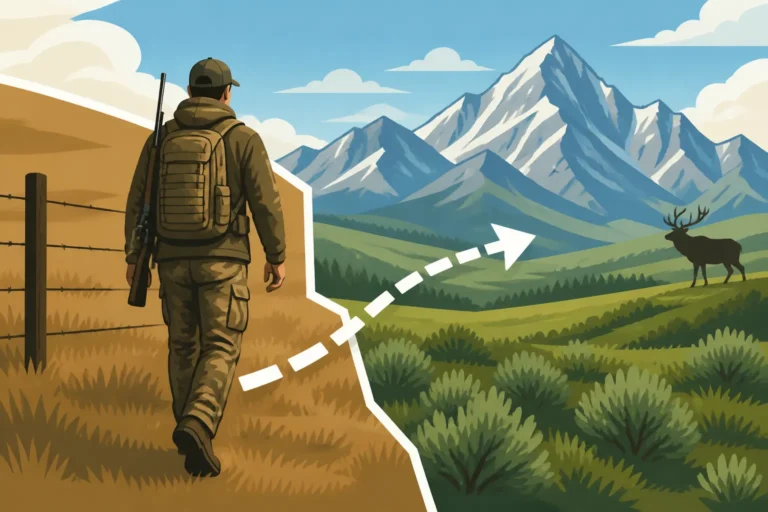
The monumental decision from the Tenth Circuit Court of Appeals concerning corner crossing essentially boiled down to this: you are permitted to cross from one piece of public land to another at a common corner, provided you do not enter or touch the private land. The key here is "airspace." Imagine an invisible, vertical plane extending straight up from the property lines. As long as your body, your gear, or anything you're carrying stays within the boundaries of the public land and doesn't cross into the private airspace or make contact with private ground, you are acting within your rights.
This ruling directly refutes the notion of a "buffer." A buffer implies an exclusionary zone, a no-man's-land around the corner that you must avoid. The court's decision, however, focused on the point of the corner itself. It confirmed that the air above the public land at that corner is indeed public. This means you don't need to levitate, but you do need to be incredibly precise. The frustration many hunters feel about navigating these areas is completely valid; it's a tightrope walk that requires diligence and careful attention to your exact position.
The Myth of the "No-Touch" Zone
One of the most persistent myths, and one that causes hunters a great deal of anxiety, is the idea of a "no-touch" zone, or that even brushing against a fence post or a blade of grass on the private side constitutes trespassing. While extreme caution is always advised, the legal precedent is about entering private land, not merely having a boot briefly in the air over it while physically standing on public land.
Think of it this way: if you're standing on public land, and you step over a fence that marks the corner, you're still on public land as long as your foot doesn't land on the private side. The challenge comes from the physical reality of the corner post itself, which often sits directly on the survey point where the four parcels meet. You must ensure that your movement at that precise point doesn't involve any physical contact with the private ground or improvements on it. It’s a nuanced but critical distinction. The ruling was about access, not about creating an impossible obstacle course for hunters. Hunters often ask, Is There a Buffer Around a Corner Post?, and the answer continues to emphasize careful, non-trespassing transit.
Practical Considerations for Corner Crossing
Knowing the law is one thing; executing it in the field is another. Corner crossing, while legal, requires a level of attention and precision that might feel unnatural, especially when you’re out in the vastness of Wyoming’s sagebrush country or timbered mountains.
Navigating the Corner Without Trespassing
Successfully navigating a corner without trespassing is all about careful movement and knowing exactly where you are. Imagine you're at a corner where public land meets public land, but two diagonal sections are private. Your goal is to pass from one public section to the other, crossing that corner.
- Visualize the Planes: Picture the property lines extending vertically into the sky. You need to stay within the public "column" of air as you pass from one public parcel to the next.
- Minimal Ground Contact: When crossing, if there's a fence, you're often stepping over it. The critical part is to ensure your feet, and any part of your body that touches the ground, remain firmly on the public side. Sometimes, a literal step over the corner post, without touching it or the private ground on either side, is the way to go. This isn't about levitation, but about extremely controlled, deliberate movements. For many, a small, collapsible step stool or even careful placement of hands and feet on the public side of a fence can facilitate this maneuver.
- No Property Damage: Naturally, any damage to private property, like cutting fences or breaking posts, is absolutely out of bounds and would be trespassing. The integrity of the boundary markers must be respected.
This approach acknowledges the legal right while still emphasizing respect for property lines. It's a testament to the dedication of hunters who are willing to go to such lengths for legal access.
The Role of Mapping Apps and GPS
In today's hunting world, mapping apps like onX Hunt and resources like GoHunt have become indispensable tools for public land hunters. They are particularly valuable when it comes to identifying and navigating corner-locked parcels.
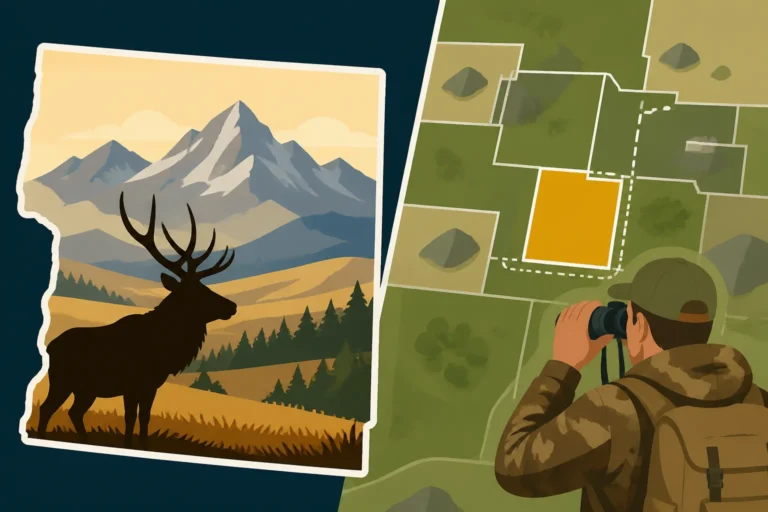
- Pinpoint Accuracy: Apps like onX Hunt allow you to see property lines with remarkable accuracy, often down to a few feet. You can clearly visualize where public and private lands meet, making it much easier to identify corner crossings. Before you even leave home, you can spend hours e-scouting, looking for these access points. You can even find public lands that are technically accessible by Walking In From Bordering Public Land.
- Real-time Tracking: In the field, your GPS-enabled device (phone or dedicated GPS unit) can show your exact position relative to those property lines. This is crucial when approaching a corner. You can see, in real-time, if you're drifting onto private ground. However, it's vital to remember that GPS has some inherent inaccuracies, especially in dense timber or canyon country. Always use your map app as a guide, but confirm with visual cues on the ground when possible.
- Layer Limitations: While incredibly helpful, these apps are not the final word on a boundary. Surveys can sometimes be off by a few feet, or physical markers might be missing. The phrase "trust, but verify" applies here. Always be acutely aware of your surroundings. Relying too heavily on a screen without understanding the physical landscape can lead to unintentional errors. You'll find great information on this by looking up Can You Rely on onX for a Boundary?.
What to Do if Property Owners Confront You
Despite the legality of corner crossing, some private landowners may not agree with the interpretation of the law or may simply prefer that hunters stay off what they consider their turf, even if it's public land they've historically used. This can lead to tense confrontations in the field, which no one wants.
- Stay Calm and Respectful: The golden rule. If confronted, remain calm, polite, and respectful, even if the other person is not. Aggression helps no one and can escalate a situation unnecessarily.
- Know Your Rights: Politely state that you are aware of the law regarding corner crossing and that you are on public land, carefully navigating the corner without touching private ground. Avoid getting into a heated debate about the intricacies of the Tenth Circuit ruling. Simply state your understanding of your legal right to access.
- De-escalate and Move On: If the conversation becomes unproductive or hostile, it's often best to simply state your intention to continue your hunt and politely disengage. You don't need to argue your case extensively. If you feel unsafe or unlawfully detained, you may choose to contact local law enforcement, but only as a last resort. Your priority should be personal safety and avoiding conflict. Having a clear understanding of the rules, like those governing Reaching Wyoming Public Land by Public Road or Navigable Water Access for Wyoming Hunters, can help you feel more confident in your position.
The Larger Context of Public Land Access in Wyoming
The discussion around corner crossing isn't just about a specific legal ruling; it's part of a much broader conversation about public land access that resonates deeply with hunters across Wyoming and the West. These seemingly small points of access can unlock vast tracts of otherwise inaccessible public ground.
The Stepladder Case That Started Corner Crossing
The entire modern conversation around corner crossing gained significant traction from a high-profile case involving hunters using a stepladder to cross corners. This specific incident, which led to charges and eventually the Tenth Circuit's clarifying decision, put a spotlight on a long-standing grey area of public land access. Before this, many hunters, and even some land managers, operated under the assumption that touching the ground at the corner, even momentarily, constituted trespass. The "stepladder case" ultimately affirmed that crossing the airspace at the common corner of public land, without making contact with the private parcels, is indeed legal. It was a landmark moment for public land advocates and hunters alike, opening up countless square miles of public access. For more context on this, you can look up The Stepladder Case That Started Corner Crossing.
How Wyoming's Checkerboard Land Pattern Came About
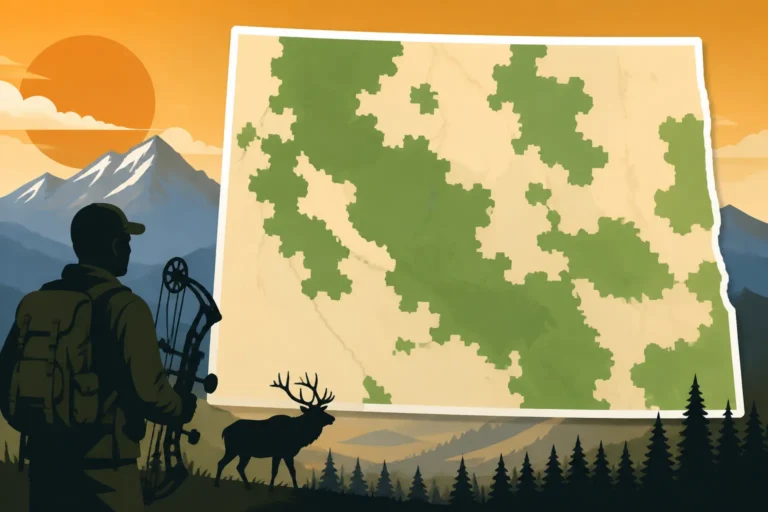
To fully appreciate the significance of corner crossing, it helps to understand why these checkerboard patterns exist in the first place. The answer lies deep in American history, particularly with the railroad grants of the 19th century. As railroads expanded westward, the federal government often granted them alternating sections of land (typically one square mile) along their proposed routes to help finance construction. This created a distinctive "checkerboard" pattern, where private railroad lands (many of which were later sold to ranchers and other private entities) were interspersed with public lands.
Today, these patterns mean that vast amounts of public land are "landlocked" – entirely surrounded by private property – with the only points of physical contact being at these checkerboard corners. Without the legal right to corner cross, much of this public land would remain inaccessible to the average hunter, effectively becoming private land in all but name. This historical context helps explain How Wyoming's Checkerboard Land Pattern Came About.
Access Yes Opens Private Wyoming Ground to Public Hunters
While corner crossing addresses one specific type of access issue, it's important to remember that it's not the only avenue for hunters to gain access to prime hunting grounds. Wyoming, like many Western states, has programs designed to work with private landowners to open up access to private or difficult-to-reach public lands.
The "Access Yes" program in Wyoming is a prime example. This initiative compensates private landowners who allow public hunting access on their property. It can take several forms, including:
- Walk-In Areas (WIAs): These are private lands where hunters can walk in and hunt without needing prior permission, following specific rules for that area.
- Hunter Management Areas (HMAs): These are larger areas, often a mix of private and public land, where hunters need to obtain a free permit from the Wyoming Game and Fish Department before hunting.
These programs offer a different, often less contentious, way to gain access to hunting opportunities. They represent a cooperative effort between the state, landowners, and hunters to enhance public access. While corner crossing fights for a legal right, programs like Access Yes foster goodwill and mutually beneficial relationships. You can learn more about how this program works by checking out How Wyoming's Access Yes Program Works. This also highlights why Hunter Management Areas Do Need One when it comes to permits.
Here's a quick comparison of common corner crossing myths versus the legal reality:
| Common Misconception | Legal Reality in Wyoming (Post-Tenth Circuit) |
|---|---|
| A "buffer zone" exists around the corner post. | No, there is no legally recognized "buffer zone." |
| You must never touch the ground at the corner. | You must not enter or touch private land/airspace at the corner. You can touch public ground. |
| Using a ladder to cross is always trespassing. | Using a ladder to cross without touching private land is legal. |
| Landowners can legally detain you for corner crossing. | Landowners cannot detain you if you are legally crossing public land. |
| GPS apps are 100% accurate for corner crossing. | GPS is a valuable tool, but always confirm with physical cues due to potential inaccuracies. |
In conclusion, the idea of a "buffer around a corner post" in Wyoming is a myth that has been decisively debunked by the courts. While the act of corner crossing requires meticulous attention to detail and respect for property boundaries, it is a legal means of accessing public land. Understanding these nuances empowers hunters to confidently and legally explore the vast opportunities that Wyoming's public lands offer.
Disclaimer
This article is for general informational purposes only and does not constitute professional advice. Laws, prices and regulations vary by location and change over time. Consult a qualified professional for guidance on your specific situation.