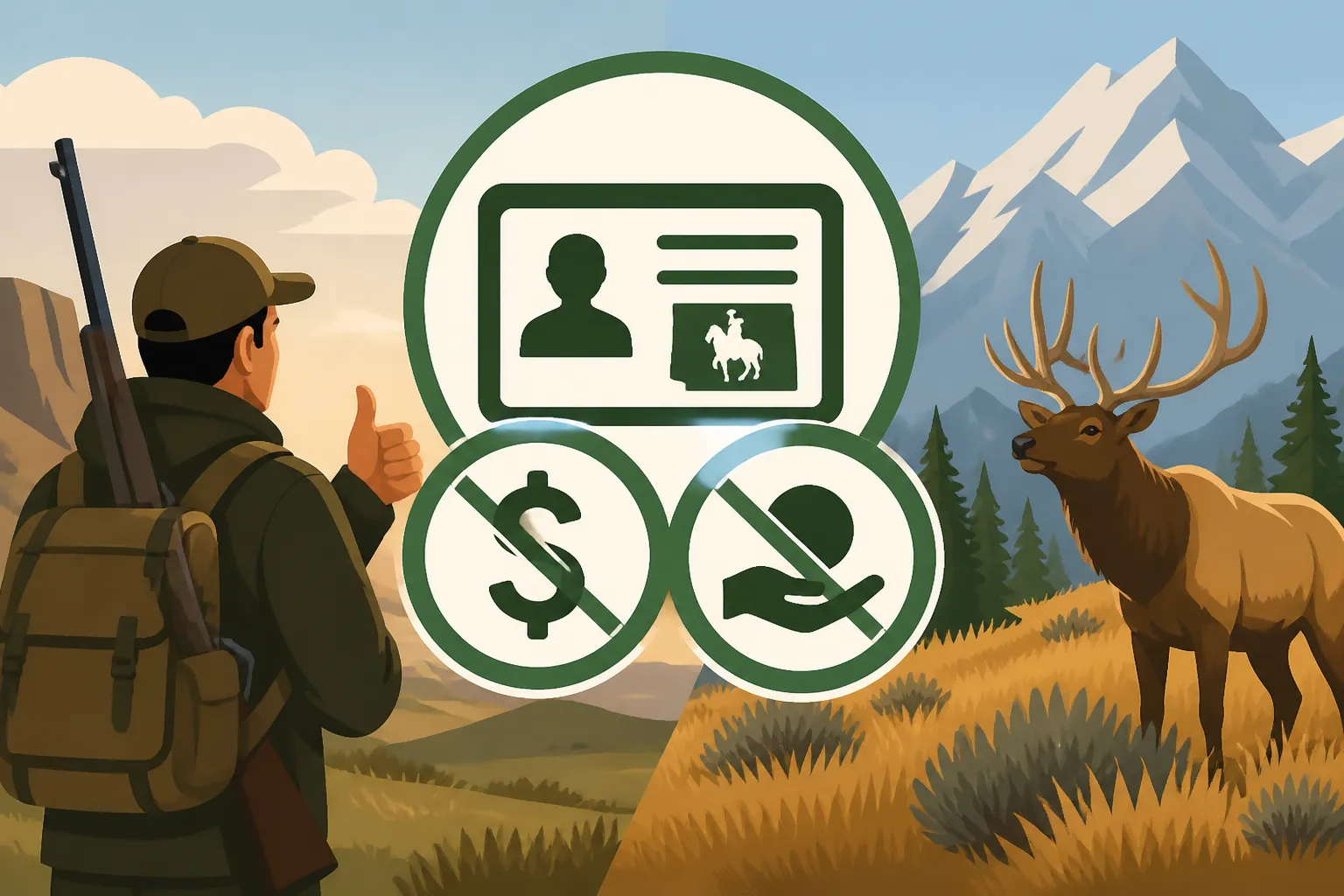
A Wyoming Resident Guide License Costs Nothing, and Pays Nothing
It’s a common scenario in Wyoming: you’ve got a nonresident friend, maybe family, who’s dreamt of hunting elk or deer here for years. They finally drew that coveted tag, and you, being a seasoned local hunter, naturally want to show them the ropes. You know the country, you know the animals, and you’re thrilled to help them experience the hunt of a lifetime. But then the question comes up: "Hey, can I pay you for your time, for gas, for guiding me?" This is where things get tricky, and many well-intentioned resident hunters find themselves navigating a complex web of regulations they never expected. This guide is here to untangle those rules, specifically focusing on the Wyoming resident guide license and its crucial, often misunderstood, limitations, particularly the absolute prohibition on payment.
Understanding the Wyoming Resident Guide Framework
When you hear the word "guide" in the context of hunting, most people instantly picture a professional, someone running a business, charging fees, and providing a full-service experience. And while that's certainly true for licensed outfitters and their professional guides, Wyoming law also carves out a very specific, limited role for resident hunters who want to help nonresident friends or family. This distinction is vital, because misunderstanding it can lead to serious legal consequences, not just for the "guide" but for the hunters they’re accompanying.
What Defines a "Guide" in Wyoming?
In Wyoming, a "guide" isn't just someone casually showing a buddy where to hunt. The law defines a guide as any person who supervises or accompanies any other person, and aids or assists such other person in the taking of any game animal, bird, or fish. This broad definition means that even if you're just pointing out a game trail, helping track an animal, or setting up a spotting scope, you could be considered "guiding" under state statutes. It's a much lower bar than many people realize, and it means that if you're with a nonresident hunter, especially in specific areas, you need to understand the rules. This isn't about discouraging helpfulness; it's about regulating activities that could be misconstrued as commercial, or that impact wildlife management.
The Legal Distinction: Resident vs. Professional Guides
The most critical difference you need to grasp is that a resident guide is fundamentally different from a professional guide. A professional guide works for a licensed outfitter, operates a commercial business, carries insurance, and holds specific permits for operating on public lands. They charge for their services, and rightfully so—it’s their livelihood. Their entire operation is built around providing a paid service, and they adhere to a stringent set of regulations overseen by the Wyoming Board of Outfitters and Professional Guides.
A resident guide, on the other hand, is a Wyoming resident who is not engaged in a commercial enterprise. They are simply helping a nonresident friend or family member on a non-compensated basis. This distinction is not just legal jargon; it's the core of why A Wyoming Resident Guide License Costs Nothing, and Pays Nothing. It’s a mechanism for residents to extend hospitality and expertise without entering the professional guiding market, which is strictly regulated for a reason.
Why Wyoming Has a Resident Guide Rule
You might wonder why such a specific rule exists. There are a few key reasons. First and foremost, it helps protect Wyoming's natural resources and ensures fair chase. By requiring some level of accountability, even for resident helpers, the state can better track activities and promote ethical hunting. Secondly, it safeguards the integrity of the professional outfitting industry. Wyoming's licensed outfitters invest heavily in their businesses, permits, and reputations. Allowing unregulated, compensated "guiding" by residents would create an unfair playing field and could lead to widespread abuses, blurring the lines between casual assistance and commercial operation.
Finally, it’s about public access and resource management. Wyoming has vast tracts of public land, but also a complex checkerboard of private land. Regulations like the resident guide rule help ensure that public access is managed responsibly and that the state maintains control over who is profiting from its wildlife resources. Without this framework, anyone could claim to be a "guide" for a fee, potentially overwhelming certain areas or circumventing regulations designed to protect game populations and habitats.
The Specifics of the Resident Guide Affidavit
Okay, so you understand the basic framework. Now, let’s get into the nitty-gritty of what it means to actually be a resident guide in Wyoming. It’s not just a handshake agreement; there's a formal process involved, centered around filing a specific document with the Wyoming Game and Fish Department: the Resident Guide Affidavit. This isn't a "license" in the traditional sense that you apply for and receive annually, but rather a sworn statement you file for each specific instance you intend to guide.
Who Can Be a Resident Guide?
Before you even think about filing an affidavit, you need to meet the basic criteria. First, and most obviously, you must be a bona fide resident of Wyoming. This isn't just about having a driver's license; it typically means maintaining a primary domicile here for a specified period and not claiming residency elsewhere. Secondly, you need to be at least 18 years old. This ensures a level of maturity and responsibility when accompanying other hunters, especially in potentially hazardous wilderness environments.
Beyond those foundational requirements, it's also important that you meet general hunting eligibility, including having completed hunter education if you fall under Wyoming's requirement (generally, anyone born after January 1, 1965). While you might not be actively hunting while resident guiding, possessing a basic understanding of safety and ethics is paramount. If you're wondering about those requirements, remember that Anyone Born After 1965 Needs Wyoming Hunter Education. It’s about ensuring that anyone taking on a guiding role understands the responsibilities that come with it.
The Application Process: Filing the Affidavit
The "application" isn't for a "license" to guide generally, but rather for a specific declaration for a particular hunt. You'll need to obtain the Resident Guide Affidavit form from the Wyoming Game and Fish Department (WGFD). This form is your official declaration that you meet the requirements and understand the limitations of being a resident guide. It's a crucial piece of paper that needs to be properly filled out and filed before the hunt begins. Don't wait until you're already in the field; that's just asking for trouble.
The process involves stating your intent to accompany specific nonresident hunters for a particular species in a defined hunt area during certain dates. It’s about transparency and accountability. The WGFD wants to know who is accompanying nonresidents, where, and when, to ensure compliance with the law. This formal step helps distinguish legitimate resident assistance from potentially illegal commercial operations. Remember to confirm the specific filing procedures, as these can sometimes have minor updates year to year, typically available on the WGFD website. For a more detailed look at the form itself, check out The Affidavit a Wyoming Resident Guide Must File.
What the Affidavit Requires You to Declare
The Resident Guide Affidavit is a legally binding document, and what you declare on it is extremely important. Here’s what you’ll typically need to attest to:
- No Payment: This is the absolute cornerstone. You must affirm, under penalty of law, that you will not accept any form of monetary compensation, gratuity, or exchange of services for your guiding activities. We'll delve deeper into this "no pay" rule shortly, but it’s critical to understand its prominence here.
- Specific Hunters: You must list the full names and license numbers of the nonresidents you will be accompanying. This isn't a blanket authorization; it's for specific individuals.
- Hunt Area and Dates: You'll specify the exact hunt area(s) and the dates you intend to be "guiding" within those areas. This helps the WGFD verify that your activities align with the nonresidents' valid licenses and the regulations for that area.
- Residency: You reaffirm your Wyoming residency.
- Understanding the Law: By signing, you confirm that you have read and understand the laws pertaining to resident guides. Ignorance of the law is never an excuse.
Filing this affidavit isn’t just a formality; it’s your commitment to operating within the legal boundaries established by the state. It signifies your agreement to uphold the spirit and letter of the law, ensuring that your generosity doesn’t inadvertently lead to legal complications.
The "Costs Nothing, Pays Nothing" Reality
This brings us to the core of the matter, and often, the biggest source of confusion and frustration for resident hunters who simply want to help. The title of this piece, "A Wyoming Resident Guide License Costs Nothing, and Pays Nothing," isn't just a catchy phrase; it's the fundamental legal principle governing resident guides. This isn't a side hustle; it’s a commitment to purely non-commercial assistance.
Why Payment Is Strictly Prohibited
Wyoming law is crystal clear: a resident guide cannot accept any compensation for their services. This isn't limited to cash payments. It extends to gratuities, gifts, or even a bartering of services. The intent is to prevent residents from essentially operating as unlicensed, unregulated outfitters. If payment were allowed, even in a limited sense, it would erode the entire system designed to manage commercial guiding, protect wildlife, and ensure fair competition for legitimate businesses.
Imagine if everyone could accept a few hundred dollars from a friend for "guiding." The market for professional outfitters would be undermined, and the state would lose its ability to regulate the quality of service, safety, and ethical standards that come with a licensed operation. Furthermore, it would create an incentive for people to "guide" without the proper permits, insurance, or knowledge of the specific rules that commercial operators must adhere to when utilizing public lands. For a deeper dive into this, you can check out Why a Resident Guide Cannot Be Paid. The system is designed to keep the playing field level and protect the integrity of hunting as a regulated activity.
The "Exchange of Services" Loophole
Now, a common question arises: "What about an exchange of services? If my buddy helps me with my ranch work for a week, and then I take him hunting, is that allowed?" This is where the lines can feel blurry, but Wyoming law is generally interpreted very strictly. An "exchange of services" is typically considered a form of compensation. The intent behind the resident guide rule is to ensure the service provided by the resident guide is gratuitous—meaning, freely given, without expectation of return or value.
If there's any perceived quid pro quo, any benefit flowing back to the resident guide that has a monetary value, it can be viewed as compensation. This could include anything from a significant gift, a future favor with clear monetary value, or indeed, direct labor in exchange for guiding. The spirit of the law is to differentiate between genuine friendship and a transaction. While sharing a camp, splitting gas, or buying each other meals is generally accepted as part of a shared hunting experience among friends, anything beyond that which has a clear economic benefit to the resident guide could raise red flags.
Potential Penalties for Violating the No-Pay Rule
The consequences for violating the no-pay rule can be severe. It’s not just a slap on the wrist. If you are found to be acting as a guide for compensation without the proper outfitter and professional guide licenses, you could face significant fines. These fines can quickly add up, easily reaching into the thousands of dollars. Beyond monetary penalties, you could also face imprisonment, especially for repeat offenses or if other violations (like wanton waste or poaching) are involved.
Perhaps even more devastating for a passionate hunter, you could lose your hunting and fishing privileges in Wyoming for a period of time, or even permanently. This means no more elk tags, no more deer season—the very activities you love could be taken away. Furthermore, if you’re caught acting as an unlicensed, compensated guide, your nonresident friends could also face legal repercussions, including fines and potential loss of their licenses, as they would be participating in an illegal activity. It's a risk simply not worth taking, and it underscores why understanding and adhering to the "costs nothing, pays nothing" principle is paramount.
When a Resident Guide is Required (and When Not)
So, under what specific circumstances does this resident guide affidavit even come into play? It's not every time a Wyoming resident accompanies a nonresident hunter. There are very distinct conditions, primarily tied to specific game species and particular types of land. This is the part that often catches people off guard, especially if they're used to hunting entirely on private land or for different species.
The Wilderness Guide Rule: The Primary Trigger
The most common and significant trigger for needing a resident guide (or a licensed professional outfitter) is what's often referred to as the "Wilderness Guide Rule." This rule mandates that any nonresident hunting bighorn sheep, mountain goat, or moose in any designated wilderness area, or any nonresident hunting elk in any designated wilderness area, must be accompanied by a licensed professional guide or a Wyoming resident guide who has filed the appropriate affidavit.
This rule exists for several reasons, including safety in remote, challenging terrain, minimizing environmental impact, and ensuring ethical hunting practices in sensitive ecosystems. Wilderness areas are vast, rugged, and require significant skill and preparation to navigate safely and responsibly. The state wants to ensure that nonresident hunters in these areas have knowledgeable assistance. If your nonresident friend has drawn one of those coveted Wyoming Moose Wait Times Under the 90/10 Split tags and plans to hunt within a wilderness boundary, you'll absolutely need to file that affidavit.
Species Covered by the Wilderness Rule
Let’s be precise about which species trigger the wilderness guide rule for nonresidents:
- Elk: If a nonresident holds an elk license and plans to hunt in a designated wilderness area, a guide is required. This applies to all types of elk licenses, whether it's a general tag or a highly sought-after limited quota bull tag.
- Bighorn Sheep: Any nonresident hunting bighorn sheep in a designated wilderness area must have a guide. These are rare and challenging hunts, and the state takes their management seriously.
- Mountain Goat: Similar to bighorn sheep, mountain goat hunts for nonresidents in wilderness areas require a guide. Mountain goats occupy some of the most extreme terrain, making guided assistance a safety as well as a regulatory concern.
- Moose: Nonresident moose hunters in designated wilderness areas are also subject to the guide requirement.
Notice what's not on this list: deer and antelope. This is a crucial distinction. While a resident can certainly accompany a nonresident deer or antelope hunter, the formal resident guide affidavit is not typically required unless they are specifically hunting one of the above species in a designated wilderness area.
Exemptions to the Guide Requirement
Even with the wilderness rule, there are a few important exceptions to be aware of:
- Resident Hunters: If you are a Wyoming resident and hunting with another Wyoming resident, the guide rule doesn't apply. This rule is specifically for nonresidents.
- Landowners: A nonresident hunter who is hunting on deeded land they own, or on deeded land owned by a lineal ancestor or descendant, or a sibling of the nonresident hunter, does not need a guide. This exemption acknowledges property rights and familial relationships.
- Hunting Outside Wilderness Areas: As mentioned, if the nonresident is hunting deer or antelope, or if they are hunting elk, sheep, goat, or moose outside of a designated wilderness area, the formal guide requirement does not apply. You can still go with them, of course, but you won't need to file the affidavit unless it's for one of the specific wilderness area hunts mentioned. This is a common point of confusion, so always check your hunt area map and the regulations closely. Knowing Wyoming's National Forests: Bridger-Teton, Shoshone, Bighorn, Medicine Bow will help you identify areas where wilderness boundaries may exist. For example, large portions of the Bridger-Teton contain designated wilderness.
It's absolutely essential to consult the current year's Wyoming hunting regulations booklet for the most up-to-date and precise information regarding guide requirements for specific hunt areas and species. Regulations can change, and what was true last year might have minor adjustments this year.
Limits and Responsibilities of a Resident Guide
So, you've filed the affidavit, and you're ready to hit the hills with your nonresident buddy. While you're not a paid professional, your role as a resident guide comes with significant responsibilities, both legal and ethical. Understanding these limitations and obligations is key to a successful, safe, and lawful hunt. You're not just a passive observer; you're actively facilitating a legal hunt for someone else, and that carries weight.
The One-to-Two Ratio: One Resident Guide for Two Nonresidents
One of the most important limitations, and one that's strictly enforced, is the guide-to-hunter ratio. As a resident guide, you can legally accompany a maximum of two nonresident hunters at any given time. This isn't just a suggestion; it's a hard limit. Wyoming Requires One Guide for Every Two Nonresident Hunters for good reason. It ensures that the resident guide can provide adequate supervision and assistance to the nonresidents, especially in challenging wilderness environments.
This ratio also prevents a single resident from essentially managing a large, unlicensed hunting camp, which would again circumvent the professional outfitting regulations. If you have three nonresident friends who want to hunt together in a wilderness area, you cannot legally act as the sole resident guide for all of them. You would either need another qualified resident guide to accompany the third hunter, or one of the hunters would need to make other arrangements, potentially hiring a licensed outfitter. Always keep this ratio in mind when planning your hunt; it's non-negotiable.
Direct Supervision: What It Actually Means in the Field
The concept of "direct supervision" is central to the resident guide's role. It means you, as the resident guide, must be close enough to the nonresident hunter(s) to be able to communicate with them and exercise immediate control or direction. This isn't just being in the same general area or sharing a camp miles apart. It means being in sight and voice contact, or at least close enough to immediately respond to a situation.
Think of it from a safety perspective: if a nonresident hunter gets into trouble, has an animal down, or is unsure about a legal shooting opportunity, you need to be there to assist, advise, and ensure compliance. This becomes especially critical in dense timber, rugged terrain, or when tracking a wounded animal. You're essentially responsible for ensuring their adherence to hunting regulations, ethical practices, and safety protocols while they are under your "guidance." Your role is to be an active participant in the hunt, guiding their actions and decisions within the legal and ethical framework.
Ethical Considerations and Best Practices
Beyond the letter of the law, a resident guide also carries significant ethical responsibilities. You are an ambassador for Wyoming's hunting heritage and its wildlife.
- Safety First: Always prioritize safety. This includes proper firearm handling, knowing the terrain, understanding weather conditions, and having emergency plans. Remember, you're responsible for the well-being of your companions.
- Wildlife Welfare: Ensure ethical shot placement, responsible tracking, and minimizing stress on game animals. You should exemplify fair chase principles and help the nonresident understand and adhere to them.
- Respect for Land: Whether on public or private land, instill respect for the environment. Pack out all trash, avoid disturbing sensitive areas, and leave no trace. This also extends to respecting other users of public land, such as hikers, campers, and other hunters.
- Knowledge of Regulations: Stay current on all hunting regulations, season dates, and specific rules for your chosen hunt area. The nonresident hunter is ultimately responsible for knowing the rules, but as their guide, you're expected to provide accurate information and ensure compliance. This is where resources like the Wyoming Hunt Planner become invaluable.
- Honesty and Transparency: If you’re unsure about something, admit it and seek clarification from the WGFD rather than guessing. It’s always better to be safe than sorry when dealing with wildlife and the law.
Being a resident guide is a privilege, a chance to share your passion and expertise. Approaching it with integrity and a deep sense of responsibility ensures a positive experience for everyone involved and upholds the reputation of Wyoming's hunting community.
Comparing Resident Guiding to Professional Outfitting
For a nonresident hunter, the decision of whether to hunt independently, utilize a resident guide, or hire a professional outfitter can be a complex one. Each option has its own set of advantages and disadvantages, deeply rooted in the legal and practical differences we've discussed. Understanding these distinctions is paramount for making an informed choice that aligns with a hunter's goals, experience, and budget.
The Role of a Licensed Outfitter
A licensed outfitter in Wyoming operates a commercial business, regulated by the Wyoming Board of Outfitters and Professional Guides. This means they:
- Charge for Services: Outfitters are in the business of selling hunting and fishing packages, and they charge significant fees for their expertise, equipment, and access.
- Are Bonded and Insured: Professional outfitters carry liability insurance and are often bonded, providing a level of financial protection and accountability for their clients.
- Hold Permits: They acquire necessary special use permits from land management agencies (like the BLM or Forest Service) to operate on public lands. These permits often dictate where and how they can operate.
- Provide Comprehensive Services: A typical fully guided hunt includes guides, horses or vehicles, camp accommodations, meals, scouting, game retrieval, and often assistance with caping and quartering. What a Guided Wyoming Elk Hunt Costs is typically a significant investment, but it covers a lot of ground.
- Professional Expertise: Outfitters and their guides often have decades of experience in specific hunt areas, intimately knowing the terrain, game movements, and effective hunting strategies.
Why You Might Still Consider a Professional Outfitter
Despite the "free" aspect of a resident guide, many nonresident hunters still opt for professional outfitters, and for good reason:
- Guaranteed Wilderness Access (for Nonresidents): If a nonresident must hunt bighorn sheep, mountain goat, moose, or elk in a designated wilderness area and doesn't have a resident friend willing and able to serve as a non-paid guide, a professional outfitter is the only legal option.
- Logistics and Equipment: Outfitters handle all the heavy lifting – horses, specialized vehicles, camp setup, cooking, and packing. This is invaluable for hunters who may not have their own mountain-ready gear or the logistical experience for a remote backcountry hunt.
- Expert Knowledge: Outfitters often have an unparalleled understanding of their permitted areas. They know where the game typically holds, migration patterns, and can adapt to changing conditions. This can significantly increase a hunter's chances of success.
- Reduced Stress: For many, a guided hunt is about enjoying the experience without the immense stress of planning, navigating, and executing all aspects of a challenging Western hunt.
- Physical Demands: Wyoming hunting can be physically demanding. Outfitters can tailor hunts to a client's physical capabilities and provide necessary support, such as horses for accessing steep terrain.
- Hunt Planning Services: Many reputable outfitters offer advice during the draw process, often directing clients to specific hunt areas where they have permits and good success rates. Platforms like GoHunt and BookYourHunt often feature outfitters, making it easier for hunters to explore these professional options and compare services before applying for a tag.
Navigating the Choices for Nonresidents
Here's a quick comparison to help summarize the decision-making process:
| Feature | DIY Hunter | Resident Guide | Professional Outfitter |
|---|---|---|---|
| Cost | Licenses, gear, travel, food, lodging | Licenses, gear, travel, food, lodging (resident guide cannot accept payment) | All-inclusive package price |
| Legality | Fully legal (if all rules followed) | Legal under specific conditions (wilderness, species, no payment, affidavit filed) | Fully legal (licensed, permitted, bonded) |
| Access | Public land, or private with permission | Public land (esp. wilderness), or private with permission | Permitted public land, often private leases |
| Support | Self-reliant, personal research | Non-paid assistance from resident friend/family | Comprehensive professional services |
| Convenience | High effort, all planning by hunter | Shared effort with resident friend/family | Low effort for client, all logistics handled |
| Draw Odds | Independent (often better for DIY types with points) | Independent (same as DIY) | Sometimes linked to landowner tags or specific units for client guidance |
| Risk/Reward | High risk, high reward (personal achievement) | Moderate risk, high reward (shared experience) | Lower risk (higher success rates), high cost |
Ultimately, the choice depends on the nonresident hunter's experience, budget, desire for independence, and the specific hunt they're pursuing. For those seeking camaraderie and a deeper understanding of the local hunting culture without commercial ties, a resident guide is a fantastic option, provided all legal requirements are strictly followed. For those who prioritize efficiency, logistics, and a higher probability of success, a professional outfitter, perhaps found through platforms like BookYourHunt, might be the better fit. When it comes to Vetting a Wyoming Outfitter Before You Send a Deposit, thorough research is always key, regardless of how you find them.
Planning Your Hunt with a Resident Guide
So, you've decided to proceed with the resident guide route. This is an exciting prospect, promising a deeply personal and rewarding hunting experience shared between friends or family. However, this isn't a casual endeavor. Successful and lawful resident-guided hunts in Wyoming require meticulous planning and preparation from both the resident guide and the nonresident hunter. Think of it as a joint venture where everyone carries responsibility.
Choosing the Right Hunt Area
The first critical step, once the nonresident has successfully drawn a tag, is to carefully choose and understand the hunt area. This decision often involves balancing opportunity with accessibility and the limitations of your resident guide status.
- Wilderness Boundaries: If the nonresident drew a tag for elk, bighorn sheep, mountain goat, or moose, and that hunt area includes designated wilderness, then the resident guide affidavit is required. You'll need to know exactly where those wilderness boundaries lie. For example, understanding the layout of areas within the Shoshone National Forest can be crucial if your tag allows hunting there.
- Game Density & Access: Research the game density and historic success rates for the chosen hunt area. Websites like GoHunt offer detailed data and draw odds which can be incredibly useful. Consider public access points, road systems, and any seasonal closures. Remember, as a resident guide, you're not allowed to trespass or infringe on private land to access public ground.
- Physical Demands: Evaluate the terrain and physical demands of the hunt area. Some areas are extremely rugged and require significant physical conditioning, especially for a multi-day backcountry hunt. Be realistic about your and your friend's physical capabilities.
- Regulations Specific to the Unit: Each hunt area can have slightly different regulations regarding season dates, weapon restrictions, and bag limits. Always consult the most current Wyoming Game and Fish regulations for the specific unit. For instance, Wyoming Elk Season Dates Are Set Hunt Area by Hunt Area, so even neighboring units can have different openings and closures.
Logistics and Preparation
Once the hunt area is selected, it's time to dive into the nitty-gritty of logistics. This is where your experience as a resident hunter really shines and where you can help your nonresident companion prepare effectively.
- Gear List: Develop a comprehensive gear list. This includes hunting clothing appropriate for potentially extreme Wyoming weather, sleeping systems, cooking gear, navigation tools (GPS, maps, compass), first-aid kits, and communication devices (satellite messenger or InReach, as cell service is often nonexistent in remote areas). Ensure the nonresident hunter understands the necessity of quality, reliable gear.
- Scouting: If possible, conduct pre-season scouting. This can be boots-on-the-ground recon or extensive e-scouting using tools like satellite imagery and topographical maps. Understanding game patterns, water sources, and potential ambush points significantly increases success rates. Even if you know the general area, recent changes in conditions or animal behavior can warrant fresh scouting.
- Physical Fitness: Emphasize the importance of physical conditioning. Hunting in Wyoming, especially in the mountains, can be incredibly demanding. Encourage your nonresident friend to start a rigorous fitness regimen well in advance. Hiking with a weighted pack, inclines, and practicing shooting positions are all beneficial. Preparing for altitude is also critical, especially if they are coming from a low-elevation area.
- Emergency Plan: Always have an emergency plan in place. Share it with someone not on the hunt. This includes knowing who to contact in an emergency, having a satellite communication device, and knowing basic wilderness first aid.
Ensuring All Paperwork is in Order
This step cannot be overstated. Incorrect or missing paperwork can quickly turn an exciting hunt into a legal nightmare.
- Resident Guide Affidavit: Ensure the Resident Guide Affidavit is filled out accurately and filed with the Wyoming Game and Fish Department before the hunt begins. Carry a copy with you in the field.
- Hunting Licenses and Tags: Verify that both you (if you're also hunting) and the nonresident hunter have all required licenses, tags, and conservation stamps. These must be physically on your person while hunting.
- Hunter Education Proof: Both you and the nonresident must carry proof of hunter education certification if required. Remember Carrying Proof of Certification in the Field is a regulation for all hunters.
- Weapon Legality: Double-check that the nonresident's chosen weapon (bow, rifle, muzzleloader) meets Wyoming's legal requirements for the species and season. For example, specific draw weight minimums apply for archery, and caliber requirements for firearms.
By meticulously planning and preparing, you can ensure that your resident-guided hunt is not only successful but also entirely compliant with Wyoming's laws, allowing everyone involved to focus on the incredible experience of hunting in this magnificent state.
Disclaimer
This article is for general informational purposes only and does not constitute professional advice. Laws, prices and regulations vary by location and change over time. Consult a qualified professional for guidance on your specific situation.