Becoming a Resident Guide in Wyoming
The dream of sharing Wyoming's vast, wild landscapes and incredible hunting opportunities with friends or family is a powerful one. For many residents, the idea of taking a nonresident loved one out into the sagebrush or the mountains, helping them navigate the challenges, and witnessing their success firsthand is incredibly appealing. However, the path to becoming a legal "resident guide" in Wyoming isn't always clear, and there are crucial distinctions between simply helping a buddy and formally guiding. This guide will walk you through everything you need to know about the requirements, limitations, and realities of becoming a resident guide in the Cowboy State, ensuring you stay on the right side of the law while fulfilling that desire to share the hunt.
Understanding the Resident Guide Landscape in Wyoming
When most people hear the word "guide," they often picture a grizzled veteran leading clients on expensive, fully outfitted trips. While that's certainly a part of Wyoming's hunting scene, the state also recognizes a specific role for residents who wish to help their nonresident friends or family hunt. This isn't about running a commercial operation, but rather facilitating a personal hunting experience within strict legal boundaries.
The Core Difference: Resident Guide vs. Professional Outfitter
It's absolutely critical to understand that becoming a resident guide is fundamentally different from becoming a licensed professional outfitter. A professional outfitter in Wyoming is someone who, for compensation, provides services to hunters, like lodging, transportation, equipment, or guide services. They run a business, are heavily regulated, licensed, bonded, and insured. They hire professional guides, who also need to be licensed.
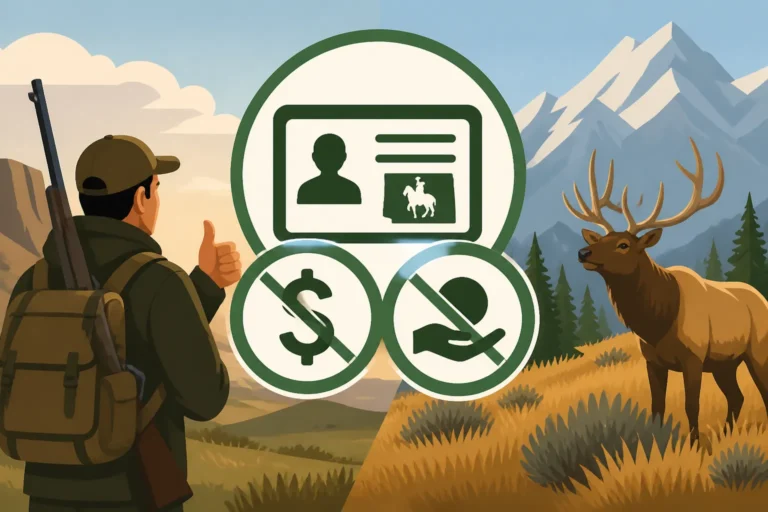
On the other hand, a resident guide, as defined by Wyoming law, is an individual resident of the state who, without receiving any monetary consideration or compensation, accompanies and assists a nonresident hunter. This distinction – no compensation – is the cornerstone of the resident guide statute. It's designed to allow residents to share their passion and knowledge with close connections without infringing on the commercial outfitting industry. For instance, if your cousin from Ohio wants to experience a Wyoming deer hunt, you, as a resident, could potentially guide them, provided you meet the requirements and, crucially, do not charge them a single penny for your time or services.
Why Wyoming Has a Separate Category
Wyoming's hunting heritage is deeply rooted in self-reliance and community. The resident guide provision acknowledges this by allowing local knowledge to be shared without turning every friendly gesture into a commercial transaction. The state recognizes that many nonresidents come to Wyoming specifically because they have friends or family here who can show them the ropes. This provision creates a legal framework for those interactions, especially given Wyoming's The Wilderness Guide Rule for Elk Hunters and other guide requirements for certain public lands.
The separate category also helps to maintain the integrity of the professional outfitting industry. By clearly defining who can guide for free and who must be licensed and paid, the state protects legitimate businesses while still allowing for personal, uncompensated assistance. It's a balance that aims to preserve both traditional hunting camaraderie and the economic viability of professional services. Thinking about what goes into a commercial operation might even lead a resident guide to appreciate just how much work a place like BookYourHunt does to organize and present different guided hunt packages.
The Legal Framework: Why Residency Matters
Wyoming's hunting laws are very clear about who can guide and under what circumstances. For a resident guide, your residency isn't just a label; it's the fundamental qualification that enables you to even consider this role. This framework is in place to protect the state's resources, manage hunting pressure, and ensure fair play for all hunters.
Defining "Resident" for Guiding Purposes
To be considered a "resident" for hunting and guiding purposes in Wyoming, you must meet specific criteria. Generally, this means you've been a bona fide resident of Wyoming for at least one full year immediately preceding the date of application for any license or permit. This isn't just about owning property or having a mailing address; it involves establishing your domicile here, showing intent to remain, and typically includes things like registering your vehicles, obtaining a Wyoming driver's license, and paying state taxes (though Wyoming has no state income tax, property taxes and sales taxes apply).
The purpose of this strict residency requirement is to ensure that the individual providing guiding services has a genuine connection to the state and its hunting traditions, and is likely familiar with local regulations, land access, and game populations. It prevents individuals from simply "renting" a residency for a season to bypass nonresident rules.
The Nonresident Guide Prohibition
It’s crucial to understand that a nonresident cannot, under any circumstances, act as a guide for another hunter in Wyoming, whether paid or unpaid. This is a common misconception, where someone from out of state might assume they can bring a friend and "guide" them as long as no money changes hands. That is absolutely not the case. The law specifies that only a resident can provide uncompensated guide services to a nonresident.
This rule is a significant part of Wyoming's overall game management strategy, especially concerning nonresidents who contribute substantially to the state's wildlife conservation through higher license fees. The system is designed to either encourage nonresidents to hunt independently, use an authorized resident guide (unpaid), or hire a licensed Wyoming outfitter and their guides. Do Nonresidents Need a Guide to Hunt Wyoming? is a question often tied directly to this very distinction.
Requirements for Your Resident Guide License
While it's often referred to colloquially as a "resident guide license," what you're actually obtaining is a "Resident Guide Affidavit" and fulfilling specific legal criteria. It's not a standalone license in the same way a commercial outfitter or professional guide has one. It's more of a declaration and certification of your intent to assist within legal limits.
Age and Hunter Education Certification
First and foremost, you must be at least eighteen years of age. This ensures that the individual responsible for accompanying and assisting hunters has reached legal adulthood and can be held accountable for adhering to regulations and making sound judgments in the field. Hunting, especially in Wyoming's vast and often rugged terrain, requires maturity and responsibility.
In addition to age, you must possess a valid hunter education certificate. This is a fundamental requirement for anyone born after a certain date (usually 1965 in Wyoming, though it's always best to check the current regulations). Even if you've been hunting your whole life, if you fall into this category, you need to prove you've completed a state-approved hunter education course. This ensures a baseline understanding of firearms safety, wildlife identification, hunting ethics, and conservation principles. If you've never taken one, look into Anyone Born After 1965 Needs Wyoming Hunter Education for details on how to get started.
Your Own Valid Hunting License
This might seem obvious, but to serve as a resident guide, you must possess a valid Wyoming hunting license for the species you intend to guide for during the current season. You cannot simply accompany someone else with your hunter education card and affidavit; you must be an active, licensed hunter yourself. This ensures that you are familiar with the current regulations for that species, have contributed to wildlife management through your license purchase, and are prepared to participate in the hunt responsibly.
It also means that if you are guiding a nonresident elk hunter, you must have an elk license for that specific hunt area and season. The same goes for deer, antelope, or any other big game species. Your license validates your presence in the field as a hunter, and your affidavit clarifies your role in assisting a nonresident.
The Affidavit: Your Key to Guiding Legally (and Unpaid)
The "Resident Guide Affidavit" is the central document that formalizes your role as an uncompensated resident guide. It’s not something you just verbally declare; it’s a specific form you must fill out and file with the Wyoming Game and Fish Department (WGFD). Understanding its purpose and limitations is absolutely vital.
What the Resident Guide Affidavit Must Contain
The affidavit is a legal document where you attest to specific facts and intentions. It typically requires you to state your full name, address, and residency qualifications. Crucially, you must name the nonresident hunter (or hunters, up to the legal limit) you intend to guide, providing their names and contact information. This transparency allows the WGFD to keep track of who is being guided and by whom. It ties you directly to their hunt. For a deeper dive into the specifics, checking out What the Resident Guide Affidavit Must Name is a good idea, as precise wording is often critical in legal documents.
Most importantly, you must explicitly state that you will not receive any monetary consideration or compensation for your services. This is not a casual promise; it's a legal declaration. Any violation of this, such as accepting cash, goods, or services in trade for guiding, can lead to severe penalties, including fines, loss of hunting privileges, and even criminal charges.
The "No Compensation" Rule and Its Nuances
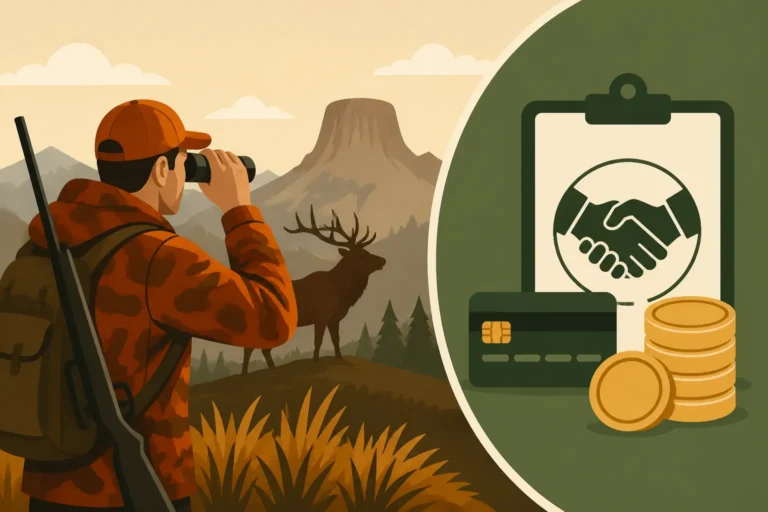
The "no compensation" rule is probably the most misunderstood aspect of resident guiding. It means exactly what it says: you cannot be paid, directly or indirectly, for your guiding services. This includes not just cash, but also gifts of significant value, reciprocal guiding services (e.g., "I'll guide you in Wyoming if you guide me in Colorado next year"), or any other exchange that could be construed as payment.
For example, if you take a nonresident friend hunting and they buy all the groceries for camp, that's generally fine. If they insist on filling your gas tank for the truck you're using, that's also typically viewed as a reasonable sharing of trip expenses, not compensation for your guiding. However, if they offer to pay for your next hunting license, buy you a new rifle, or "gift" you a thousand dollars for your "trouble," that crosses the line. The spirit of the law is that your motivation should be friendship and shared experience, not financial gain. Can a Resident Guide Accept Payment? further elaborates on this crucial legal boundary.
Client Limits and Direct Supervision
Wyoming law sets clear limits on how many nonresident hunters one resident guide can accompany. A single resident guide may not supervise more than two nonresident hunters at any one time. This "two hunters per guide" ratio is strictly enforced and is in place for safety, ethical hunting practices, and effective supervision in the field. It ensures that the resident guide can adequately monitor and assist all hunters under their charge, particularly if an animal is shot or if an emergency arises.
Furthermore, the law often implies "direct supervision," meaning the resident guide must be in the immediate vicinity and able to communicate with the hunters at all times, typically within sight and voice contact. This isn't about dropping someone off at a trailhead and picking them up days later; it's about active, continuous guidance throughout the hunt. Knowing How Many Nonresidents One Resident Guide May Take is crucial for planning your group dynamics.
| Feature | Resident Guide (Uncompensated) | Professional Outfitter/Guide (Compensated) |
|---|---|---|
| Compensation | Absolutely none allowed (monetary or in-kind) | Charges fees for services (lodging, guiding, transportation, etc.) |
| Residency Required | Must be a Wyoming resident for at least one year | Outfitter must be licensed in Wyoming; guides can be residents or nonresidents (with professional license) |
| Licensing/Permit | Files a "Resident Guide Affidavit" with WGFD | Outfitter holds a specific commercial outfitter license; guides hold professional guide licenses |
| Client Limit | Max. 2 nonresidents per resident guide | Varies by outfitter and type of service; typically 1:1 or 2:1 guide-to-hunter ratio |
| Scope of Services | Accompanies and assists; focuses on friendship/shared experience | Provides comprehensive services as advertised, including logistical support |
| Supervision | Direct supervision (sight/voice contact) required | Direct supervision required, often more formalized contractual obligations |
| Public Land Access | Limited to non-wilderness areas unless exempt | Can operate in wilderness areas with proper permits & non-resident clients |
| Liability/Insurance | Personal liability (no commercial insurance required) | Commercial insurance and bonding legally required |
Navigating the Reality of Resident Guiding
While the legal requirements are straightforward, the practical realities of being a resident guide involve more than just paperwork. You’re taking on a significant responsibility, and understanding the expectations and limitations is key to a successful, enjoyable, and lawful experience.
When a Resident Guide is Permitted: Public vs. Wilderness
Generally, a resident guide can accompany their nonresident friends or family on most public lands in Wyoming that are open to hunting. This includes Bureau of Land Management (BLM) lands and many National Forest System lands outside of designated wilderness areas. In these areas, your affidavit, coupled with your valid hunting license and the nonresident's valid license, is usually all you need. Many resident guides find great success in helping their friends on sprawling tracts of BLM ground or the vast national forests like the Bighorn National Forest Elk and Deer or the Medicine Bow Country in Southern Wyoming.
However, there’s a major caveat regarding wilderness areas. Wyoming has specific rules for nonresidents hunting in designated wilderness. Unless the nonresident has a specific waiver (which are rare and apply only to certain situations like hunting with a resident family member within a specific degree of kinship, usually limited to spouses, parents, children, or siblings), they must employ a licensed professional outfitter to hunt big game in wilderness areas. This is a critical distinction that often catches people off guard. Your resident guide affidavit does not circumvent the wilderness guide rule for most nonresidents. This is why it's so important to fully understand Wyoming Wilderness Areas and the Guide Rule before making any plans.
Exemptions and Special Circumstances
There are a few narrow exemptions to the general guiding rules, primarily related to family members. For instance, a resident parent, grandparent, or legal guardian can guide their own nonresident child, grandchild, or ward (who is under 14 years of age) for big game, without needing a full outfitter license, even in some cases where a guide might otherwise be required. However, even these exemptions come with specific requirements, such as requiring the nonresident minor to possess a Special Authorization Certificate.
It’s also important to remember that these rules are about big game hunting. Regulations for small game, fishing, or predator hunting may differ and generally don't carry the same guide requirements. Always consult the most current Wyoming Game and Fish Department regulations for the species and location you plan to hunt to ensure you are fully compliant.
Beyond the Paperwork: Skills and Ethics of Guiding
Having the right paperwork is just the start. Being a truly effective and responsible resident guide requires a blend of practical skills, a deep understanding of hunting ethics, and a commitment to safety and conservation.
Essential Skills for the Field
A good resident guide needs to be more than just a hunter; they need to be a field general, a navigator, and a problem-solver. Excellent map and compass skills (or proficiency with GPS/hunting apps like those often mentioned on GoHunt) are paramount, especially when navigating unfamiliar terrain with a nonresident. You'll need to know how to read the landscape, understand game behavior, and adapt to changing weather conditions. Being proficient in Reading Wind on an Open-Country Stalk or knowing Terrain That Hides an Approach are skills that come from experience and are invaluable when guiding.
Beyond scouting and tracking, practical skills like field dressing, basic first aid, and gear selection are crucial. You'll be the primary resource for your nonresident hunting partners, so being prepared for various scenarios—from a successful harvest to an unexpected injury—is essential. You’re not just showing them where to hunt; you’re ensuring their safety and maximizing their chances of a positive experience.
Upholding Ethical Hunting and Conservation
As a resident guide, you become an ambassador for Wyoming's hunting traditions and its wildlife. This means strictly adhering to all hunting regulations, including bag limits, season dates, and legal shooting hours. You should lead by example in terms of fair chase, respect for game animals, and minimizing your impact on the land. Teaching proper shot placement, ethical recovery of game, and avoiding Wanton Waste Rules Every Wyoming Hunter Should Know are fundamental responsibilities.
Beyond the regulations, a true ethical guide instills a sense of respect for the environment and the animals. This includes proper waste disposal, leaving no trace, and understanding the importance of wildlife management. You are not just guiding a hunt; you are passing on a legacy of responsible outdoor stewardship.
The Resident Guide as a Mentor
Think of your role less as a "guide" in the commercial sense and more as a "mentor." Many nonresidents, especially those new to Western hunting, can benefit immensely from the wisdom and experience of a resident. You can teach them about the unique challenges of hunting in Wyoming, such as the vast distances, the unpredictable weather, and the importance of physical conditioning for hunts in high-altitude areas like the Wind River Range. You can share insights into animal behavior that only years in the field can provide, helping them understand when Bugle and Cow Call Timing Through the Rut is most effective or why Glassing Wyoming Basins Before You Take a Step is so vital.
This mentorship extends beyond the hunt itself to understanding Wyoming's complex draw system, preference points, and general versus limited quota licenses. While you can't officially "advise" on applying for licenses in a commercial capacity, you can certainly share your personal experiences and knowledge to help them navigate the system for future hunts.
Planning and Preparation is Paramount
Being a resident guide means meticulous planning. This isn't a casual last-minute endeavor. You'll need to research hunt areas, understand access points—including Access Yes Opens Private Wyoming Ground to Public Hunters for private land opportunities—scout beforehand, and ensure all licenses and permits are in order well in advance. Communication with your nonresident companions about expectations, gear, and physical fitness is critical for a smooth trip.
From coordinating travel logistics to packing appropriate food and water for the field, every detail falls under your purview. Remember, their experience largely rests on your preparedness and ability to anticipate challenges. This extensive planning and preparation will not only make the hunt more enjoyable but also significantly increase the chances of a successful and memorable adventure for everyone involved.
Disclaimer
This article is for general informational purposes only and does not constitute professional advice. Laws, prices and regulations vary by location and change over time. Consult a qualified professional for guidance on your specific situation.