Direct Supervision Means Sight and Voice Contact
For new hunters and mentors alike, wading through Wyoming’s hunting regulations can feel like trying to track a grey ghost mule deer in a blizzard. One phrase that often causes a lot of head-scratching is "direct supervision," especially when it comes to mentored youth or those new to the field. This guide is here to untangle the specifics, clearly defining what "sight and voice contact" truly means and how you can ensure you’re meeting the state’s requirements for a safe and legal hunt.
Unpacking "Direct Supervision" in Wyoming's Hunting Regulations
The term "direct supervision" isn't just bureaucratic jargon; it's a critical component of Wyoming's mentored hunting program, designed to ensure safety and responsible learning. When you're out in the field with a mentee, understanding this concept isn't optional – it's paramount for both legal compliance and a successful, safe experience.
The Core Definition: Sight and Voice Contact
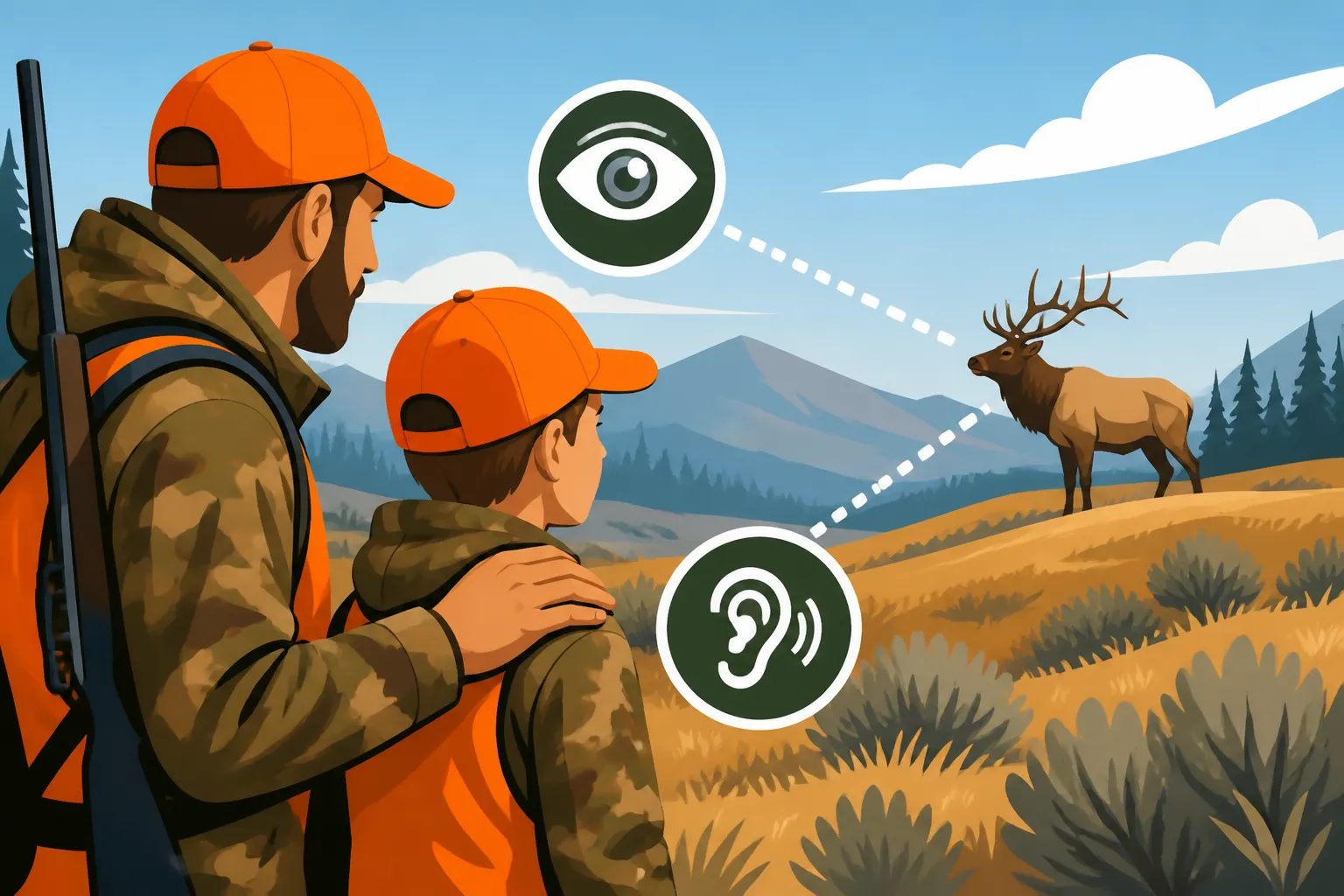
At its heart, "direct supervision" in Wyoming means the mentor must maintain both sight and voice contact with their mentee at all times while hunting. This isn't just about being in the same general area or occasionally spotting them with binoculars. It implies an active, immediate connection. You need to be able to see the mentee, clearly and consistently, and also be able to communicate with them verbally, without delay or ambiguity. Imagine trying to coach a basketball player from the stands – you can see them, but can they hear your immediate instructions over the crowd? Wyoming's rule requires you to be right there on the court, ready to step in.
This rule is designed to prevent situations where a mentee might make a dangerous decision, misidentify an animal, or become lost or injured without the mentor being able to intervene quickly. It places a significant responsibility on the mentor to be engaged and attentive throughout the entire hunting excursion. It means you're not just a passive observer; you're an active participant in their learning and safety.
Why This Rule Exists: Safety and Education
The primary drivers behind the direct supervision rule are undeniably safety and effective education. Hunting, particularly big game hunting in Wyoming's rugged terrain, involves inherent risks. A new hunter, especially a young one, may not yet have the judgment or experience to safely handle firearms, identify legal game, or navigate challenging conditions. The mentor acts as a crucial safety net, constantly ready to offer guidance, correct mistakes, and ensure safe firearm handling.
Beyond safety, this rule fosters a truly educational environment. It encourages mentors to actively teach their mentees about ethics, wildlife identification, shot placement, tracking, and all the nuances that come with responsible hunting. When you're close enough to maintain sight and voice contact, you're also close enough to point out fresh elk sign, explain how to read wind on an open-country stalk, or discuss why a certain shot isn't ethical. This hands-on, real-time instruction is invaluable and simply can't happen if the mentee is out of immediate reach. It's about passing on the heritage of hunting responsibly, not just letting someone tag along.
Common Misconceptions to Avoid
It’s easy to fall into traps regarding what constitutes "direct supervision," especially if you're used to hunting solo or with experienced partners. One major misconception is that merely being in the same general vicinity is enough. Many hunters assume if they can reach their mentee by calling on a walkie-talkie, or if they are just a ridge away, that counts. It does not. The "voice contact" part specifies audible communication, meaning your natural voice, not necessarily a radio. While a radio can be a supplemental tool, it doesn't replace the proximity required for true voice contact.
Another common misunderstanding revolves around visibility. Some believe that if they can see a hunter in the distance, that’s sufficient. However, it's about being able to positively identify your specific mentee and discern their actions. If they're a tiny speck in the sagebrush, you can't truly supervise them. Similarly, believing that merely having a phone or GPS tracking app on their person satisfies the rule is incorrect. These tools are fantastic for safety and coordination, but they do not replace the fundamental requirement of physical proximity for immediate sight and voice contact. These aren't just suggestions; they are explicit requirements, and failing to adhere to them can lead to serious consequences.
Practical Scenarios: What Sight and Voice Contact Really Looks Like
Understanding the written rule is one thing; applying it in the vast and varied landscapes of Wyoming is another. The reality of maintaining sight and voice contact shifts dramatically depending on whether you're stalking timber or crossing open prairie.
Close Quarters: Timber and Broken Terrain
Hunting in dense timber or deeply broken terrain presents the most significant challenges to maintaining direct supervision. In these environments, visual contact can be lost in seconds, and voice contact can be muffled by thick trees, elevation changes, or the sound of wind. For example, if you're still-hunting dark timber for elk, moving slowly through the trees, your mentee should be literally a few yards from you, not fifty. You should be able to whisper instructions and have them heard clearly, and a glance should confirm their position and actions.
When navigating thick brush or steep draws, one common mistake is to let the mentee go ahead or take a slightly different, easier path. Even if it feels like they’re just around the corner, that corner can completely break the required contact. In these situations, moving single file, with the mentor maintaining the lead or being immediately behind the mentee, is often the only way to comply. Before entering such terrain, a quick discussion with your mentee about staying within arm's reach or immediate visual contact is crucial. This is where terrain that hides an approach can work both for and against you, making careful planning even more critical.
Open Country: Keeping Them in View
While open country might seem simpler for maintaining visual contact, distance can quickly become deceptive. On Wyoming's vast sagebrush flats or rolling hills, you might be able to see your mentee from half a mile away with good optics, but can you yell instructions to them? Absolutely not. Even at a couple hundred yards, a whisper won't carry, and even a shout might be lost to the wind. The challenge here is closing that physical gap to ensure both elements – sight and voice – are met.
Consider a scenario where you're glassing for antelope, and you spot a buck across a wide basin. Your instinct might be to send your mentee on a long stalk while you watch from a distance, offering hand signals. While visually you might be "supervising," you've completely lost voice contact. For direct supervision, you would need to accompany them on that stalk, staying close enough to communicate verbally throughout the approach. This often means both the mentor and mentee need to be keenly aware of how close a bowhunter really needs to get or how far a rifle shot truly allows you to be from your mentee. Tools like GoHunt's mapping features can be incredibly useful for pre-planning these approaches, helping you identify contours and draws that allow for closer proximity during the stalk.
Communication is Key: Beyond Just Seeing Them
Beyond the physical proximity, effective communication forms the backbone of direct supervision. It's not just about being able to speak; it's about speaking clearly, concisely, and consistently. Before you even leave the truck, establish clear communication protocols. What are the agreed-upon hand signals if verbal communication is temporarily hampered by wind or a sudden rise in terrain? What are the safe directions of fire? How will you confirm positive identification of legal game?
This proactive approach prevents misunderstandings and ensures the mentee knows exactly what's expected of them. For instance, if you’re trying to position a mentee for a shot, clear verbal directions are essential. "Move 10 yards left, slow, watch for that juniper," is far more effective than just pointing. Remember, hunting involves critical, often split-second decisions, and unambiguous communication from the mentor is crucial. Always prioritize clear, audible commands over assumptions.
Who Needs Direct Supervision? Understanding the Mentored Hunt Program
Wyoming's mentored hunt program is a fantastic opportunity to introduce new hunters to the sport, but it comes with clear guidelines on who can be mentored and who can mentor them. It's not a free-for-all; there are specific age, certification, and licensing requirements for all parties involved.
Age and Certification Requirements for Mentees
Generally, individuals participating in Wyoming's mentored hunt program are either underage hunters who haven't yet completed their hunter education or adult hunters (of any age) who are exempt from hunter education requirements but still need supervision. Specifically, Wyoming allows hunters under the age of 14 to participate in mentored hunts without having completed a hunter education course. However, once a hunter turns 14, they typically need to have completed hunter education to hunt big game on their own.
It's important to note that anyone born after 1965 needs Wyoming Hunter Education to purchase a license unless they qualify for a specific exemption, such as the mentored hunt program. The point of the mentored program for these individuals isn't to skip hunter education entirely, but to provide an avenue for early exposure or for those who might be returning to hunting after a long hiatus and need a refresher. Always check the current year's regulations for the exact age cutoffs and specific species involved, as these can sometimes have subtle changes. Wyoming's minimum age for big game typically starts around 12, but younger hunters can participate in mentored small game opportunities.
Mentor Requirements: Eighteen, Certified and Licensed
The responsibility of a mentor is significant, and Wyoming ensures that those taking on this role are qualified. To serve as a mentor, an individual must be at least eighteen years of age. They also need to hold a valid Wyoming hunting license for the species being hunted and possess current hunter education certification themselves. This means they must have completed a hunter education course, proving their knowledge of firearm safety, wildlife identification, and ethical hunting practices. This is precisely why the rule states mentor requirements: eighteen, certified and licensed.
Crucially, the mentor is ultimately responsible for the mentee's adherence to all hunting regulations, including safe firearm handling and ethical decisions. They are the seasoned guide, the teacher, and the safety officer all rolled into one. This isn't a role to take lightly, as any infractions by the mentee under their supervision can reflect poorly on, or even result in penalties for, the mentor. It's a commitment to instilling good practices from the very beginning.
The Family Exception to the Mentee Limit
Under normal circumstances, a mentor can only supervise one mentee at a time to ensure they can effectively maintain direct sight and voice contact. However, Wyoming provides a thoughtful exception for families. This rule acknowledges that parents or guardians often want to introduce multiple children to hunting simultaneously, fostering a shared outdoor experience.
The specific family exception states that if the mentees are members of the mentor's immediate family (children, grandchildren, or legal wards), a mentor can supervise up to two mentees at once. This is a big deal for families who want to share the tradition, but it comes with an even greater emphasis on the mentor's vigilance. Supervising two young or new hunters while maintaining immediate sight and voice contact and ensuring safety is a challenging feat. It demands heightened situational awareness and excellent pre-hunt planning. For more details on this, you can look into the family exception to the mentee limit in the regulations.
Gear and Tactics to Maintain Direct Supervision
Maintaining direct supervision isn't just about sticking close; it's also about leveraging appropriate gear and employing smart tactics to overcome environmental challenges and ensure constant contact.
Communication Devices: Radios and Hand Signals
While radios don't replace the "voice contact" requirement of direct supervision, they are invaluable supplemental tools. Short-range, two-way radios can be a lifesaver in situations where brief lapses in verbal contact might occur due to terrain or wind. For instance, if you’re navigating a dense patch of timber and your mentee momentarily dips into a gully, a quick radio check can bridge that gap until visual and verbal contact is re-established. Brands like Midland and Motorola offer reliable FRS/GMRS radios that are perfect for this, providing clear communication within a reasonable range.
However, relying solely on radios is a rookie mistake. Hand signals, established beforehand, are equally crucial. A thumbs-up for "all clear," a fist for "stop," or a slow sweep of the arm for "move slowly" can be understood even when voices can't carry. Discussing these signals before the hunt in a calm environment ensures everyone is on the same page when adrenaline is pumping. Practice makes perfect here; don't wait until you're in a critical moment to try out a new set of signals.
Strategic Positioning: Guiding the Stalk or Setup
A mentor's positioning relative to their mentee is a critical tactical consideration for maintaining supervision. When stalking, it’s often best for the mentor to be either slightly ahead of the mentee or directly beside them, dictating the pace and direction. This allows the mentor to identify potential hazards, spot game, and make immediate adjustments to the stalk. For example, if you're approaching a bedded mule deer, you might take the lead to navigate a tricky patch of brush, constantly whispering instructions or making micro-adjustments to the mentee's movement.
During a stand or blind setup, ensure the mentee is positioned where you can easily see them and speak to them without raising your voice too much, which could spook game. Consider how to position yourselves to maintain safe shooting lanes and clear communication, even when movement needs to be minimal. Pre-scouting with mapping apps like GoHunt can help you identify optimal positions for both visibility and cover, ensuring you can maintain constant supervision while still having a good chance at success. Thinking about Wyoming legal shooting hours for big game also means planning these setups for optimal visibility during legal light.
Understanding Your Mentees' Capabilities
Ultimately, the level of direct supervision required is highly dependent on the individual mentee's skill, experience, and maturity. A very young child or a completely novice adult will require much closer, more hands-on supervision than an older teenager with some prior experience in firearms safety, even if they're new to hunting itself. It’s important for the mentor to honestly assess their mentee’s capabilities and tailor their approach accordingly.
If a mentee struggles with maintaining awareness of their surroundings, identifying game, or handling their weapon safely, the mentor needs to be practically glued to their side. If they're more capable, you might allow a few more yards of separation, provided you can still meet the sight and voice criteria. Never assume proficiency; always err on the side of closer supervision. This also extends to physical capabilities. If your mentee is struggling with the terrain, you need to be there to assist, not just observe from a distance.
Here's a quick reference for maintaining direct supervision:
| Scenario | Good Supervision Practice | Poor Supervision Practice |
|---|---|---|
| Dense Timber | Mentee 5-10 yards away, within whispering distance, in sight. | Mentee sent 50 yards ahead or on a parallel ridge. |
| Open Prairie Stalk | Mentor and mentee stalk together, 10-20 yards apart, whispering. | Mentor stays back with optics, directing mentee from 200 yards. |
| River Bottoms | Mentee always visible, hearing mentor over running water. | Mentee rounds a bend out of sight, mentor assumes they're safe. |
| Elevated Blind | Both mentor and mentee in the same blind/stand, conversing. | Mentee in one blind, mentor in another, communicating by radio. |
| Adverse Weather | Mentor and mentee stay closer, using hand signals when wind. | Mentee moves ahead in fog/snow, relying on "just listen." |
Consequences of Failing to Maintain Direct Supervision
Ignoring the direct supervision rule isn't just a minor oversight; it carries significant weight and potential repercussions for both the mentor and the integrity of Wyoming's hunting programs. It's a fundamental safety regulation designed to protect people and uphold ethical standards.
Legal Ramifications: Fines and License Issues
Failure to maintain direct supervision can lead to legal penalties. Wyoming Game and Fish Department wardens take these rules very seriously, and a violation can result in fines, ranging from a few hundred dollars for a first offense to potentially more severe penalties. More importantly, it can also lead to the revocation or suspension of hunting privileges for both the mentor and the mentee. Imagine putting in years to build up preference points, using services like GoHunt to plan your dream hunt, only to have your license jeopardized because you didn't properly supervise a new hunter. It's a sobering thought.
Beyond the immediate penalties, a violation could impact future hunting opportunities, especially if you're a nonresident relying on a good record. Repeated offenses could lead to being barred from participating in mentored programs entirely. It’s not just about getting caught; it’s about upholding the law that ensures safety and fair chase for everyone. This also extends to things like carrying proof of certification in the field; if you can't prove who should or shouldn't be supervised, you're already on shaky ground.
Ethical Considerations and Hunter Responsibility
Beyond the letter of the law, there's a deep ethical responsibility inherent in being a hunting mentor. You are entrusted with not only the safety of another individual but also with shaping their understanding of what it means to be a responsible hunter. Failing to maintain direct supervision can lead to dangerous situations, such as accidental discharge, shooting at an unidentified target, or harvesting an illegal animal. These are not just legal violations; they are profound ethical breaches that reflect poorly on the individual hunter and the entire hunting community.
Part of being a responsible hunter is adherence to regulations and ensuring the well-being of others. The direct supervision rule is a clear testament to this. It ensures that the mentee learns correct practices from day one, fostering a deep respect for wildlife, conservation, and safety. When you fail to supervise, you are essentially shirking that responsibility, potentially setting the mentee up for bad habits or, worse, a dangerous incident.
The Impact on Mentored Hunting Programs
The success and continued availability of mentored hunting programs rely heavily on adherence to their rules. If there are widespread violations of the direct supervision requirement, it could lead to stricter regulations, reduced opportunities, or even the eventual discontinuation of such programs. Wildlife agencies, including the Wyoming Game and Fish Department, work hard to create avenues for new hunters to get involved safely. When those programs are abused, it jeopardizes opportunities for everyone else.
It's a collective responsibility. Every mentor who carefully follows the rules helps demonstrate the value and safety of these programs, ensuring they remain a viable pathway for future generations to experience hunting in Wyoming. Conversely, every violation weakens the argument for their existence. So, when you choose to mentor, you're not just mentoring an individual; you're also serving as an ambassador for the entire hunting community.
Disclaimer
Please remember that hunting regulations can change. While this guide provides a comprehensive overview of Wyoming's direct supervision rules based on current information, it is always your responsibility to consult the most up-to-date Wyoming Game and Fish Department regulations prior to any hunting activity. This information is for educational purposes only and should not be considered legal advice.