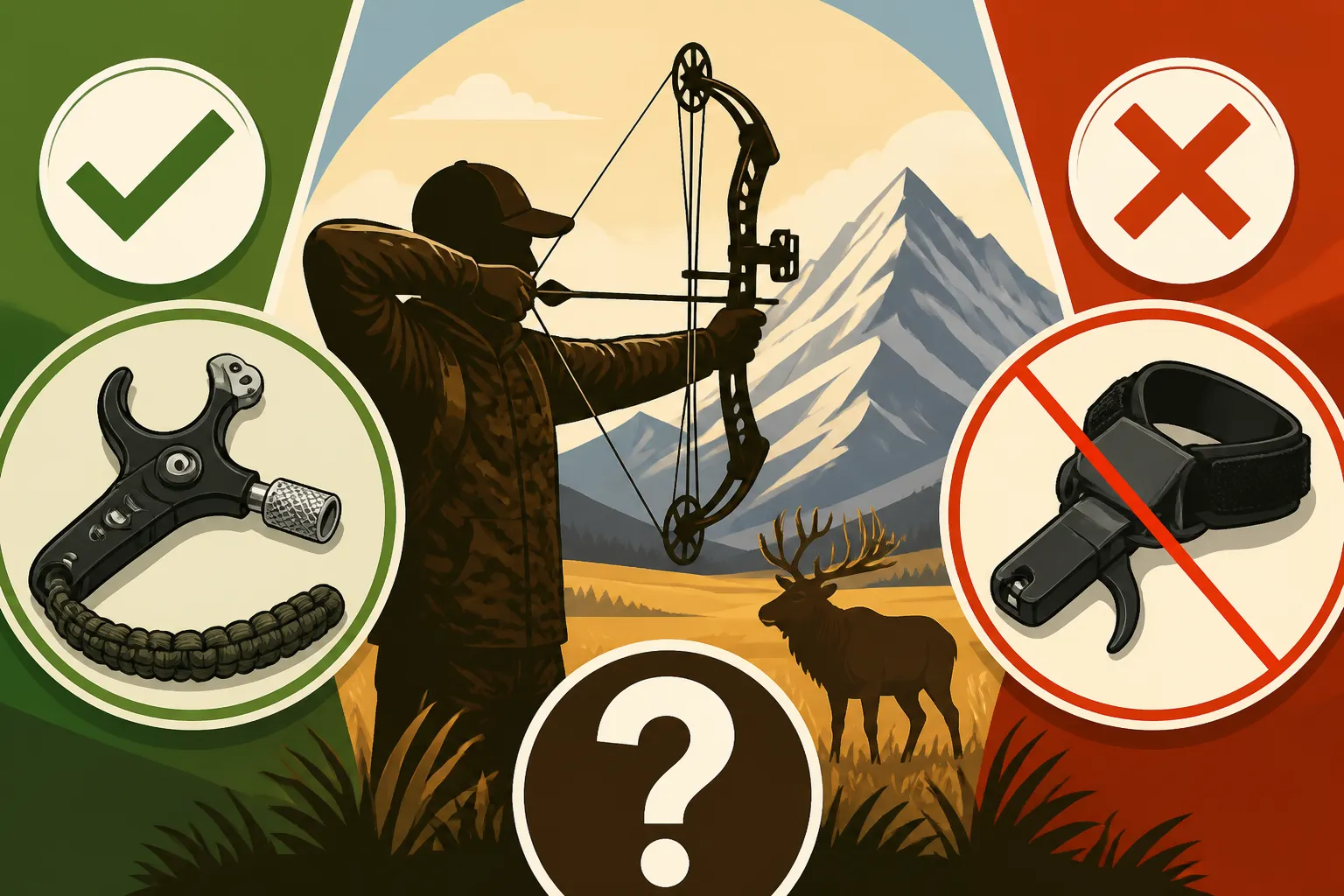
Are Release Aids Allowed for Archery Hunting?
One of the biggest anxieties for any bowhunter heading into Wyoming's vast public lands is making absolutely sure their gear is legal and ready for the challenge. You've spent countless hours practicing, scouting, and dreaming of that perfect shot, only to be hit with a nagging doubt about a seemingly simple piece of equipment: the archery release aid. It's a common, valid concern, and this guide is here to clear up any confusion and help you confidently prepare for your hunt.
Understanding Wyoming's Archery Equipment Regulations
When you're gearing up for a bowhunt in Wyoming, it can feel like you're navigating a labyrinth of rules and regulations. The Wyoming Game and Fish Department does an excellent job of outlining what's allowed and what's not, but sometimes the specific language can be a little intimidating, especially when it comes to modern archery equipment. The good news right upfront is that, yes, release aids are absolutely allowed for archery hunting in Wyoming. This isn't a state that tries to restrict equipment that aids in accuracy and ethical hunting; in fact, they embrace it.
The primary focus of Wyoming's archery regulations is on ensuring fair chase, humane kills, and maintaining the integrity of the archery season. This means most of the rules revolve around broadhead types, minimum draw weights, and the use of lighted nocks or electronic devices that might give an unfair advantage. Release aids, however, fall squarely into the category of tools that enhance a hunter's ability to make a clean, ethical shot, rather than detracting from the challenge or fair chase principles.
The Wyoming Game and Fish Department's regulations simply state what constitutes a legal bow and arrow. For instance, they define a legal bow as a longbow, recurve, or compound bow. They also specify things like the minimum draw weight—for deer, antelope, and sheep, the minimum draw weight is 40 pounds, while for elk and moose, it bumps up to 50 pounds. When you look at these core requirements, you'll notice there's no mention of disallowing devices that help you properly release the string. This silence, in this case, is golden for bowhunters.
Interpreting the Legal Language for Bowhunting
It’s completely understandable why you might pause and wonder about release aids. Many states have intricate rules about everything from arrow weight to sight pins, and some even have specific restrictions on mechanical or electronic components. However, Wyoming’s approach to archery equipment is generally straightforward and permits most common, commercially available archery gear that doesn't provide an unfair electronic advantage.
The key is often in what isn't explicitly prohibited. For example, while Whether Lighted Nocks Are Legal for Bowhunters is a common question, and generally they are permitted, the regulations are very specific about what is allowed. When it comes to release aids, they are considered a standard accessory that assists the archer in executing a shot. They are not an electronic device, nor do they attach to the animal or alter the bow's fundamental function in a way that violates fair chase principles. Instead, they provide a consistent, crisp release of the bowstring, which is crucial for accuracy.
Think of it this way: a release aid is a mechanical extension of your hand. It helps eliminate finger torque on the string and allows for a smooth, consistent draw cycle and release. This consistency is paramount, especially when you're facing a high-pressure situation with a big game animal in your sights. The state is more concerned with the power of your bow, like Wyoming's 40-Pound Minimum for Deer, Antelope and Sheep, and the lethality of your projectile, ensuring your Broadheads That Fail the 7/8-Inch Ring Test are up to snuff, rather than how you grip and release the string.
Distinguishing From Prohibited Devices
It's important to understand the difference between a legal release aid and other devices that might be prohibited. Wyoming, like most states, draws a clear line at electronic components that assist in aiming or tracking. This means range-finding sights, laser designators, or devices that project an aiming point onto the target are generally a no-go for traditional archery seasons.
A release aid, on the other hand, is a purely mechanical device. It has no battery, no wires, and provides no electronic advantage. It simply holds the bowstring or D-loop until you trigger its mechanism, allowing for a cleaner string departure. This mechanical function is what differentiates it from devices that would fall under prohibited electronic accessories. The goal of a release aid is to remove human error from the string release itself, not to remove the skill required to aim and judge distance. Many hunters, especially those using compound bows, find that a release aid is essential for achieving the precision needed for ethical hunting shots.
The Mechanics and Benefits of Archery Release Aids
Archery release aids have become an integral part of modern bowhunting for a very good reason: they dramatically enhance accuracy and consistency. If you've ever tried to shoot a high-poundage compound bow by simply pinching the string with your fingers, you know how quickly fatigue sets in and how much inconsistent finger pressure can affect your arrow's flight. Release aids solve this fundamental problem, making the entire shooting process more reliable.
At their core, release aids are designed to detach the bowstring from the archer's hand with minimal disturbance to the arrow's flight path. This smooth, clean release is critical for accuracy, especially when shooting at game where a few inches can mean the difference between a clean kill and a wounded animal. Whether you're chasing an elk in the high country or a pronghorn across the open plains, a consistent shot is your best friend.
How Release Aids Improve Shot Consistency and Accuracy
The primary benefit of a release aid is consistency. When you draw a bowstring with your fingers, even with finger tabs or gloves, there's always a slight amount of torque or sideways pressure applied to the string. This can cause the arrow to wobble or "fish-tail" as it leaves the bow, known as paradox. A good release aid minimizes this by providing a perfectly aligned, quick, and repeatable release of the string.
Imagine practicing for your Wyoming hunt, shooting dozens of arrows a day. Without a release aid, your fingers would get incredibly sore and fatigued, leading to inconsistent anchor points and poor releases. With a release aid, you can maintain your form longer, build muscle memory, and focus purely on your aim and follow-through. This translates directly to tighter groups on the target and, more importantly, a higher chance of making an ethical shot in the field. This consistency is just as vital as having a Bow Tuning Worth Doing Before a Mountain Hunt or practicing your Realistic Archery Practice Distance for Big Game. The goal is always to deliver the arrow precisely where you intend it to go.
Different Types of Release Aids
There's a whole world of release aids out there, each designed to suit different shooting styles and preferences. The two most common types for hunting are index-finger releases and thumb-button releases.
- Index-Finger Releases (Wrist Strap Releases): These are perhaps the most popular for bowhunting. They attach to your wrist with a strap, and the caliper-style jaw holds your D-loop. You activate the release by pressing a trigger with your index finger, much like a firearm. They're often favored for their ease of use, security (since they're attached to your wrist), and quick deployment in hunting situations. Brands like TruFire and Scott Archery make excellent index-finger releases that are widely used by hunters heading to places like Wyoming.
- Thumb-Button Releases: These releases are handheld and typically operated by pressing a button with your thumb. They offer a very clean, crisp break and are often preferred by target archers for their precision, but many hunters also swear by them. They require a bit more practice to master the "surprise" release, but can lead to very accurate shooting.
- Back-Tension Releases: Less common for pure hunting but gaining popularity for their accuracy benefits, back-tension releases are also handheld and fire when a certain rotational pressure is applied, usually by expanding your back muscles. They promote a very smooth, surprise shot, but require significant practice to use effectively under pressure.
Choosing the right type often comes down to personal preference and what feels most comfortable and consistent for you. Many hunters find it useful to try several types at their local pro shop to see what fits their hand and shooting style best.
| Release Aid Type | Pros | Cons | Best Use Case |
|---|---|---|---|
| Index-Finger/Wrist | Secure, easy to learn, quick acquisition | Can develop "punching" the trigger | Most common for hunting, good for quick shots |
| Thumb-Button | Very precise, clean break, less trigger "punch" | Can be dropped, requires more practice | Hunting, target archery, good for longer holds |
| Back-Tension | Ultimate accuracy, "surprise" release, no target panic | Steep learning curve, not ideal for quick shots | Target archery, advanced hunting, deliberate shots |
Choosing the Right Release Aid for Your Wyoming Hunt
Selecting the right release aid isn't just about what's legal (which, again, all common types are in Wyoming); it's about what maximizes your effectiveness and confidence in the field. A release aid is a personal piece of equipment, and what works perfectly for one hunter might feel awkward for another. Considerations like weather conditions, the type of game you're pursuing, and your overall hunting style should all play a role in your decision.
The vast landscapes of Wyoming mean you might be sitting in a blind, stalking through timber, or making a long-range shot across open sagebrush. Each scenario might subtly influence what kind of release feels most natural and reliable.
Ergonomics and Comfort in the Field
Comfort is king, especially when you're spending days, or even weeks, in the backcountry. An uncomfortable release aid can lead to hand fatigue, poor form, and ultimately, missed opportunities. For wrist-strap releases, ensure the strap fits snugly but comfortably around your wrist, allowing for good circulation. The trigger should fall naturally under your index finger without requiring an awkward grip. For handheld releases, ensure the body of the release fits well in your palm, giving you a secure, confident hold.
Consider the materials too. Some releases are heavier than others, and in cold Wyoming mornings, metal can feel incredibly unforgiving. Neoprene straps on wrist releases offer more warmth and comfort than bare leather or nylon. If you plan on wearing thick gloves in late-season hunts, make sure your chosen release can accommodate them without hindering your ability to activate the trigger smoothly.
It's also worth thinking about how quiet your release is. The last thing you want is a loud click or snap when you're drawing back on a wary mule deer. Test out the release at your archery shop to ensure its mechanism is quiet. Many modern releases are designed with silent mechanisms, but it's always good to double-check.
Durability and Reliability in Harsh Conditions
Wyoming weather is notoriously unpredictable. One day it might be sunny and warm, the next you could be facing snow, sleet, and biting winds. Your equipment needs to stand up to these conditions. Look for release aids made from durable materials like aircraft-grade aluminum or stainless steel, with sealed mechanisms that resist dust and moisture.
The last thing you want is for your release to fail in the field. A sticky trigger or a malfunctioning jaw can ruin a hunt and potentially lead to a dangerous situation. Read reviews, talk to other hunters, and consider brands known for their reliability. Some brands like Carter or B3 Archery are renowned for their robust construction. While an inexpensive release might seem appealing, investing in a high-quality, dependable model is a small price to pay for peace of mind when a trophy animal steps out. When you're using resources like GoHunt to scout prime units and plan your strategy, you don't want your gear to be the weak link.
Dispelling Common Myths and Misconceptions
There's a lot of chatter out there about what's "traditional" versus "modern" in bowhunting, and sometimes this leads to misconceptions about legal equipment. It's easy to get caught up in online debates or hear old wives' tales about certain gear being illegal. But when it comes to Wyoming, the rules are clear, and relying on official regulations is always your best bet.
One of the most persistent myths is that using a release aid somehow makes a hunt "less fair" or that it's akin to using a crossbow during an archery-only season. This couldn't be further from the truth in Wyoming.
Release Aids and Fair Chase Principles
The concept of fair chase is central to ethical hunting, and it's something Wyoming takes very seriously. Fair chase means giving the animal a reasonable chance to escape and ensuring the hunter's methods don't unduly diminish the challenge or provide an overwhelming advantage. A release aid fits perfectly within these principles because it doesn't automate the aiming process, increase the bow's power beyond legal limits, or track the animal. Instead, it simply refines the archer's ability to execute a shot they've earned through skill and practice.
Unlike a crossbow, which can be pre-cocked and held at full draw indefinitely, or a firearm that projects a bullet at vastly higher speeds, a compound or recurve bow, even with a release aid, still requires the hunter to draw the bow, hold it at full draw with muscle power (accounting for let-off), aim, and make a conscious decision to shoot. The release aid just ensures that when that decision is made, the execution is as clean as possible. It's an enhancement of human skill, not a replacement for it.
For specific rules on other equipment, you might want to check out resources on topics like Recurve, Longbow or Compound for Western Elk or even the regulations surrounding Wyoming Sets Bow Draw Weight at 40 Pounds, 50 for Elk. The common thread is always about ensuring ethical hunting practices.
Crossbows Versus Vertical Bows With Release Aids
This is where much of the confusion often arises. In many states, crossbows have different seasons or are restricted to hunters with disabilities. This is because crossbows operate on a fundamentally different principle than vertical bows (compound, recurve, longbow). A crossbow holds its string at full draw mechanically, allowing the hunter to aim and fire much like a rifle, without needing to hold the draw weight themselves.
In Wyoming, crossbows are legal for hunting big game, but generally only during the regular firearm seasons or if the hunter possesses a specific permit for a permanent physical disability. They are typically not permitted during the archery-only seasons for general hunters. This distinction is crucial. A vertical bow, whether a compound, recurve, or longbow, still requires the hunter to physically draw and hold the bow. The release aid is simply the mechanism for letting go of the string on that vertical bow. It doesn't transform a compound bow into a crossbow. The rules for Crossbow Rules That Differ From Vertical Bows are quite distinct.
So, rest assured, if you're hunting Wyoming's archery season with a vertical bow and using a mechanical release aid, you are well within the legal limits and adhering to the spirit of fair chase. Utilize tools like GoHunt's detailed maps and regulations to double-check any specific unit rules, but generally, your release aid is a welcome partner in your archery endeavors.
Disclaimer
Please remember that hunting regulations can change. While this guide is based on current Wyoming Game and Fish Department rules, it is your responsibility as a hunter to consult the most up-to-date official regulations before heading into the field. This information is for educational purposes only and should not be considered legal advice.