The Straight-Wall Cartridge Questions Hunters Keep Asking
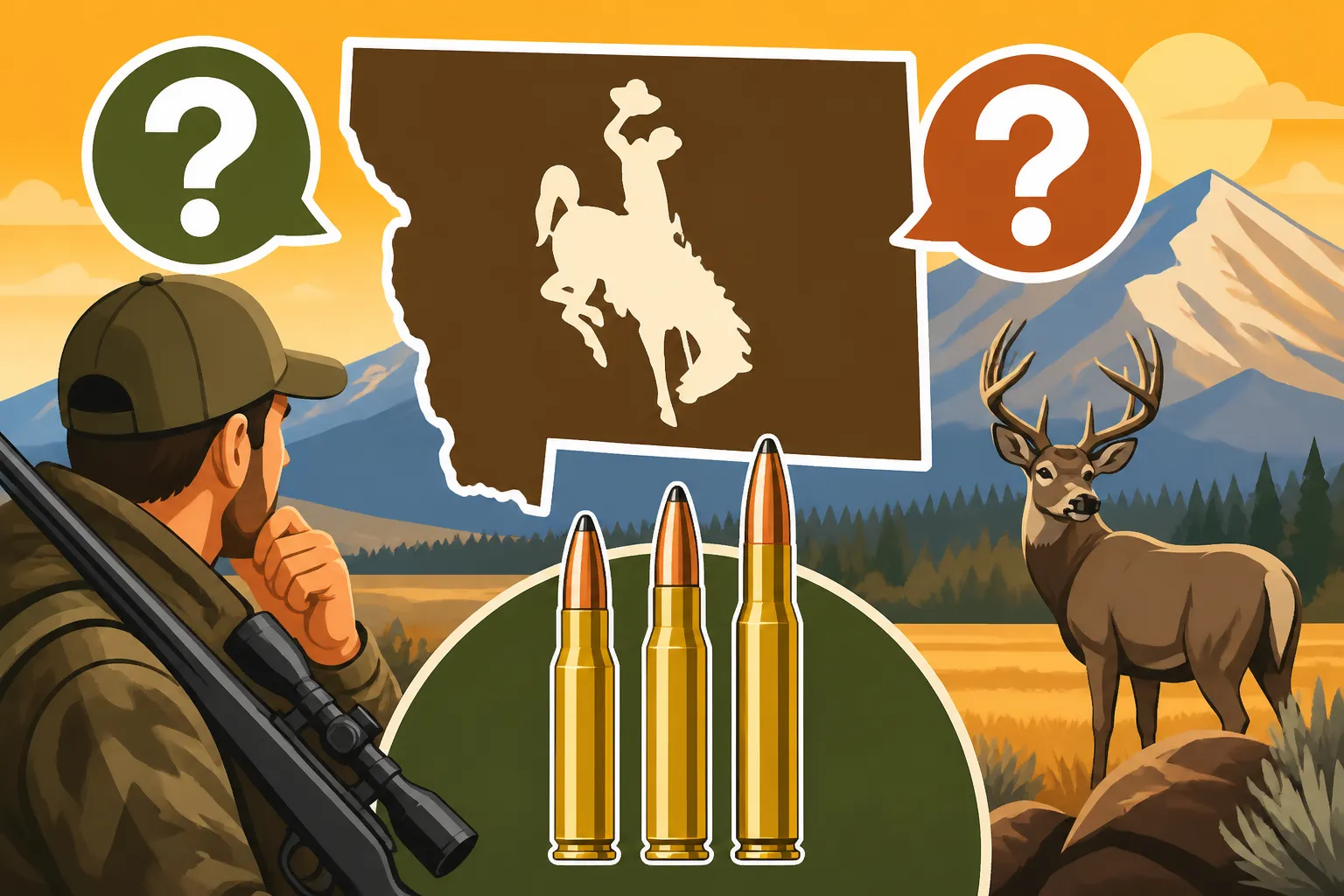
Navigating hunting regulations can sometimes feel like trying to untangle a knot of fishing line after a long day on the water – confusing, frustrating, and prone to snags. One question that keeps popping up, especially for hunters who might be coming from states with different rules, revolves around straight-wall cartridges. It's a valid concern, because what's legal and effective in one area might be misunderstood or even illegal elsewhere. This guide will cut through the confusion, explaining exactly where straight-wall cartridges fit into the Wyoming hunting landscape and offering practical advice for hunters considering them for big game.
Understanding Straight-Wall Cartridges in Hunting Regulations
When we talk about hunting cartridges, there's a lot of jargon floating around. Bullet weight, muzzle velocity, energy, caliber – it can make your head spin. But one term, "straight-wall cartridge," seems to cause more confusion than most, primarily because its legality and application vary so widely from state to state.
What Defines a Straight-Wall Cartridge?
At its most basic, a straight-wall cartridge is exactly what it sounds like: a cartridge whose casing walls are relatively straight from the rim to the mouth, without a pronounced shoulder that tapers down to a smaller neck. Think of cartridges like the classic .45-70 Government, the popular .350 Legend, or the hard-hitting .450 Bushmaster. These are prime examples. In contrast, most modern high-power rifle cartridges, such as the .30-06 Springfield or the 7mm Remington Magnum, are "bottlenecked," meaning their casing tapers down to hold a bullet of a smaller diameter than the main body of the case.
Historically, straight-wall cartridges were common in older lever-action rifles and revolvers. They are often perceived as having lower velocity and shorter effective ranges compared to bottlenecked rifle cartridges, although modern advancements in ammunition design are steadily pushing those boundaries. The distinction is crucial in certain hunting regulations because some states, aiming to reduce projectile travel distance in densely populated areas, specifically restrict hunting to firearms chambered in straight-wall cartridges. This has led many hunters to wonder if Wyoming shares similar restrictions.
Why the Confusion About Straight-Wall Cartridge Rules?
The real root of the confusion surrounding straight-wall cartridges often lies with hunters traveling from states in the Midwest or East, where these cartridges have gained significant popularity due to specific legislative mandates. States like Ohio, Michigan, Indiana, and even parts of Illinois have designated "shotgun zones" or areas where only straight-wall rifle cartridges or muzzleloaders are permitted for hunting big game like deer. The intent behind these rules is typically safety: a straight-wall bullet is generally believed to lose energy and drop faster than a bottlenecked rifle round, thus reducing the risk of over-penetration or long-distance ricochets in areas with higher human populations or flatter terrain.
When hunters accustomed to these specific rules look to hunt in Wyoming's vast, open country, they naturally wonder if similar restrictions apply. They might hear a buddy talk about the .45-70 or the .350 Legend, and immediately associate those cartridges with regulatory limitations rather than just another option in the broad spectrum of legal firearms. This mental leap is completely understandable, but it's important to remember that Wyoming’s approach to firearms for big game hunting is rooted in different priorities and geographical realities.
Wyoming's Stance on Straight-Wall Cartridges for Big Game
Wyoming's hunting regulations are designed to be clear and practical for the diverse landscapes and hunting opportunities across the state. Unlike some other areas, Wyoming doesn't have "straight-wall only" zones for rifle hunting big game. Instead, its focus for legal firearms is primarily on caliber size and minimum bullet energy, ensuring humane harvests while allowing hunters a wide range of choices.
Legalities and Specific Calibers
For hunting big game in Wyoming, the regulations specify minimum caliber requirements for centerfire rifles, not the shape of the cartridge case. For most big game species, like deer, antelope, and elk, a centerfire rifle using expanding bullets must be at least .24 caliber (6mm) and produce at least 1,000 foot-pounds of energy at 100 yards. For bigger game like elk or moose, many hunters opt for cartridges that significantly exceed this minimum, focusing on more powerful options to ensure clean kills in tough mountain conditions.
Straight-wall cartridges, provided they meet these minimum criteria, are absolutely legal for big game hunting in Wyoming. For instance, a .45-70 Government or a .350 Legend fired from a rifle would easily meet the caliber and energy requirements for deer and antelope. A powerful straight-wall like the .450 Bushmaster or a heavy-loaded .45-70 would also certainly be legal for elk and moose, as they generally surpass the energy requirements significantly. The key takeaway here is that Wyoming’s regulations do not discriminate based on whether a cartridge is straight-walled or bottlenecked; they focus on the projectile and its kinetic energy. This is a common point of confusion, but once understood, opens up a world of options. For those looking to understand the full scope of what's allowed, checking out what Wyoming counts as a legal firearm for big game is a great next step.
While this applies generally to rifles, there’s a slight nuance for handgun hunters. Wyoming does require a minimum .40 caliber for handguns used to take big game. Many popular handgun cartridges, such as the .44 Magnum, .45 Colt, or .50 AE, are inherently straight-walled. So, while not a "straight-wall only" rule, the .40 caliber minimum naturally funnels handgun hunters towards cartridges that fit the straight-wall profile. For more on this, check out the guide on handgun hunting under the .40 caliber rule.
Where Straight-Walls Shine in Wyoming
While not a regulatory necessity, straight-wall cartridges can still offer some compelling advantages for hunters in Wyoming, depending on their chosen hunting style, terrain, and personal preferences.
One area where straight-walls can really shine is in dense cover or timbered areas, though these are less common in Wyoming's vast open country than in, say, the thick forests of the Midwest. However, if you find yourself still-hunting creek bottoms or dense aspen groves for mule deer or in thick lodgepole pines for elk in areas like the Bighorns or the Bridger-Teton National Forest, a quick-handling rifle chambered in a straight-wall cartridge can be very effective. The typically shorter barrel lengths associated with some straight-wall rifles make them maneuverable in tight spaces, and while their effective range might be less than a magnum bottleneck cartridge, it's often more than sufficient for timbered shots.
Another consideration is recoil sensitivity. For hunters who are sensitive to the heavier recoil of some magnum bottleneck cartridges, particularly during extended practice sessions or for younger hunters, a well-chosen straight-wall like the .350 Legend can be a much more comfortable option while still delivering ample power for big game. Manufacturers like Hornady and Federal offer excellent ammunition options across various straight-wall calibers, providing hunters with reliable performance. It's a matter of finding a balance between power and shootability that works for you.
Furthermore, hunters who appreciate the versatility of a lever-action rifle might find particular appeal in straight-wall cartridges like the .45-70 Gov’t. These classic rifles are iconic for a reason, offering reliability and a unique hunting experience. In situations where shots might be shorter and opportunities quick, such as a close-range encounter with an elk in timber or still-hunting whitetails along eastern Wyoming's river bottoms, a well-placed shot from a .45-70 can be incredibly effective.
Practical Considerations for Wyoming Hunters
Choosing the right cartridge for your Wyoming hunt isn't just about legality; it's about matching your equipment to the environment, the game, and your own capabilities. Straight-wall cartridges, while legal, have specific performance characteristics that merit careful consideration for the often wide-open, long-range demands of Western hunting.
Ammunition Availability and Performance
One crucial factor for any hunter heading to Wyoming is ammunition availability. While common bottleneck cartridges like .30-06, .270 Win, and .308 Win are usually readily available in sporting goods stores across the state, the availability of specialized straight-wall ammunition can sometimes be a bit more spotty. You might find popular options like .45-70 or .350 Legend, especially around hunting seasons, but it’s always wise to purchase your ammunition well in advance and bring enough for sighting in, practice, and the hunt itself. Don't rely on finding a specific straight-wall load at a small-town store in Pinedale or Rawlins when you arrive.
When it comes to performance, straight-wall cartridges have made significant strides thanks to modern propellants and bullet designs. However, generally speaking, they tend to exhibit a more pronounced ballistic arc and less retained energy at extended ranges compared to their bottlenecked counterparts. For example, a .350 Legend might be a fantastic deer cartridge at 150-200 yards, but stretching it to 300+ yards on a Wyoming antelope requires a very precise understanding of its trajectory and excellent shooting skills. In the wide-open spaces where shots can often exceed 250 yards, this is an important consideration. When planning your hunt, resources like GoHunt can be invaluable for researching unit specifics and understanding the typical shot distances you might encounter.
It’s always essential to zero your rifle properly for the distances you anticipate shooting. For straight-wall cartridges, this might mean a closer zero than what you'd use for a flatter-shooting magnum. If you're planning to take longer shots, knowing your bullet's drop at various intervals is critical. Practicing out to your maximum ethical range is paramount. For a deeper dive into preparing for those longer shots, consider reviewing resources on rifle zero distance for open country shooting.
| Cartridge | Caliber | Typical Big Game | Effective Range (Yards) | Pros | Cons |
|---|---|---|---|---|---|
| .45-70 Government | .458 | Deer, Elk, Bear | 200-250 (modern loads) | Powerful, versatile, iconic lever-action round | Heavier recoil, significant bullet drop past 200 yds |
| .350 Legend | .357 | Deer, Hogs | 200-250 | Low recoil, good energy, popular in AR platforms | Limited heavy bullet options, less range than bottlenecks |
| .450 Bushmaster | .452 | Deer, Elk, Bear | 200-300 | Excellent stopping power, effective on larger game | Heavier recoil than .350 Legend, less common |
| .44 Magnum | .429 | Deer, Bear (handgun) | 75-125 (handgun) | Potent handgun round, classic | Very limited range for rifle, significant drop quickly |
| .30-30 Winchester | .308 | Deer, Bear | 150-200 | Classic deer round, mild recoil, common in lever-actions | Very limited range, significantly less powerful than modern rifle calibers |
Choosing the Right Straight-Wall for Your Hunt
Selecting the right straight-wall cartridge for your Wyoming hunt involves a blend of ethical considerations, personal comfort, and understanding the specific conditions of your hunt.
First, always prioritize the ethical harvest of game. While a .350 Legend is perfectly legal for deer, if you anticipate regularly taking shots at 300 yards in the wide-open Red Desert for antelope, it's probably not the optimal choice. For those kinds of distances, a flatter-shooting, higher-energy bottleneck cartridge might be a more responsible option. However, if your strategy involves close-quarters hunting, stalking dense cover, or hunting from a ground blind over a waterhole for pronghorn, a straight-wall can be a fantastic tool. Using tools from GoHunt can help you assess the typical terrain and shot distances within specific hunt areas, allowing you to tailor your cartridge choice to realistic expectations.
Consider the game animal itself. For mule deer and pronghorn, even moderate straight-wall cartridges like the .350 Legend or .30-30 Winchester are certainly capable at appropriate ranges. For elk and moose, you'll want something with more punch, like a heavily loaded .45-70 Government or a .450 Bushmaster, which deliver considerably more kinetic energy and penetration. The bigger the animal, the more critical that energy transfer becomes for a quick, humane harvest. Think about the guides that delve into specifics like the five types of 50-pound bows elk and moose require or Wyoming's 40-pound minimum for deer, antelope and sheep for archery; the same careful consideration for power applies to firearms.
Finally, don't underestimate personal comfort and proficiency. If you can shoot a particular straight-wall cartridge accurately and consistently under field conditions, it's a better choice than a high-powered magnum that makes you flinch or struggle with recoil. Practice, practice, practice! Get to know your chosen rifle and cartridge inside and out. Understand its trajectory, how it performs in different winds, and what its limitations are. A well-placed shot from a "less powerful" cartridge is always more effective than a poorly placed shot from a "more powerful" one. Many experienced hunters will tell you that the best all-around caliber for a western hunt is the one you shoot the best.
Disclaimer
Please remember that hunting regulations can and do change. Always consult the most current Wyoming Game and Fish Department regulations before planning any hunt. This guide is for informational purposes only and should not be considered a substitute for official legal documentation.