Trail Camera Rules on Wyoming Public Land
Navigating the world of hunting regulations can sometimes feel like trying to untangle a ball of barbed wire, especially when you're dealing with modern tools and traditional laws. For many hunters, trail cameras have become an indispensable part of their scouting routine, a way to gain invaluable insights into animal movement and behavior without constant physical presence. However, if you're planning a hunt in the Cowboy State, you're likely facing a specific and often frustrating question: what exactly are the rules for trail cameras on Wyoming's vast public lands? This guide is here to cut through the confusion and lay out precisely what you can and cannot do when it comes to electronic scouting devices.
Understanding Wyoming's Core Stance on Trail Cameras
Let's get straight to the point that often surprises hunters accustomed to different state regulations: Wyoming has a pretty definitive stance on trail cameras on public land when it comes to hunting. It's a critical regulation that impacts how many of us approach pre-season scouting and in-season strategies. The Wyoming Game and Fish Department (WGFD) has implemented rules that prioritize fair chase and traditional hunting methods, which means saying goodbye to automated scouting on shared resources.
The Legal Framework and Prohibitions on Public Land
The core of the matter is that Wyoming statute generally prohibits the use of any electronic device, including trail cameras, for the purpose of aiding in the taking of big game or trophy game animals on public land. This isn't just a suggestion; it's a firm legal boundary. The definition of "taking" here is much broader than just the moment of the shot. It encompasses scouting, locating, and patterning animals if the intent is to use that information to later harvest them.
Imagine you're trying to figure out if a certain creek bottom is a reliable travel corridor for mule deer bucks before the season opens. In many states, you might hang a few trail cameras, check them periodically, and gather a treasure trove of data: which bucks are using it, at what times, and in what patterns. In Wyoming, if that creek bottom is on Bureau of Land Management (BLM) land or a National Forest, that trail camera activity for hunting purposes is a no-go. The frustration for hunters is real, especially for those who rely on these tools to maximize their limited scouting time or to monitor distant, rugged terrain. You might be used to seeing cellular cameras with live feeds or traditional SD card cameras as staples in your home state, but Wyoming public land requires a different approach. The WGFD's intention is to ensure that hunters are actively engaging in the pursuit, using their knowledge, skills, and physical presence to locate game, rather than relying on technology to do a significant portion of the work.
Distinguishing Between Public and Private Land Use
It's absolutely crucial to understand that Wyoming's trail camera prohibition only applies to public lands. This distinction is vital for anyone planning a hunt, whether you're a resident or a nonresident. "Public land" in Wyoming is a vast and varied mosaic, including federal lands managed by the BLM, national forests like the Bridger-Teton or Bighorn National Forest, and even state trust lands, which often have specific access rules. If you're hunting on any of these areas, the no-camera rule is in full effect.
However, if you're fortunate enough to have access to private property in Wyoming—whether you own it, have permission from a landowner, or are hunting through an outfitter on private ground—then the rules regarding trail cameras are entirely different. On private land, the landowner's rules prevail, and generally, there are no state prohibitions on using trail cameras for hunting purposes. This means you can often deploy your cameras freely on private ranchland to scout for elk or deer. This dual standard can be perplexing, as a fence line might be the only thing separating legal camera use from an illegal act. Many hunters, especially those traveling from out of state, often consider working with outfitters or securing private land access precisely because it opens up these kinds of scouting opportunities. It's a stark contrast to the challenges of finding landlocked public parcels in Wyoming or navigating the intricacies of Wyoming State Trust Land Hunting where regulations are strictly adhered to. Always make sure you understand the specific land ownership where you plan to hunt and deploy any electronic devices.
Specifics of the Regulation: What's Banned and Why
The broad stroke of "no trail cameras on public land" needs a closer look to truly grasp its implications. It's not just about the physical device; it's about the kind of technology and the intent behind its use that the Wyoming Game and Fish Department is targeting. Understanding these specifics can help you avoid unintended violations and plan your hunts effectively within the legal framework.
Definition of a Prohibited Device
The regulation is quite comprehensive in what it considers a "device capable of recording images, video, or location data." This isn't just limited to your standard Moultrie or Browning trail camera. It covers a wide range of modern scouting tools. Think about the cellular cameras that can send real-time photos or videos to your phone, or sophisticated devices that track animal movements and patterns. All of these fall under the prohibited umbrella if deployed on public land to aid in a big game or trophy game hunt.
Furthermore, while drones have their own complex set of regulations for recreational and commercial use, using a drone to actively scout for game on public land would certainly fall under the spirit, if not the letter, of this trail camera rule, as it’s a device aiding in the taking of game. It’s also generally illegal to use aircraft (including drones) to harass game or spot game with the intent to hunt the same day. It's similar to the debate around Are Drones Legal for Scouting in Wyoming? where the lines blur between observation and aiding a hunt. The WGFD is keen on preventing any technology that gives a hunter an unfair advantage by performing the active scouting for them. The goal is to keep hunting rooted in the physical effort and skill of the individual.
| Category | On Public Land (for Big/Trophy Game) | On Private Land (for Big/Trophy Game) |
|---|---|---|
| Traditional Trail Camera | Prohibited | Generally Allowed |
| Cellular/Live-Feed Camera | Prohibited | Generally Allowed |
| GPS-Enabled Camera | Prohibited | Generally Allowed |
| Drones (Scouting) | Prohibited (due to "aiding in taking") | Generally Allowed (check local laws) |
| Handheld GPS Device | Allowed (for navigation) | Allowed (for navigation) |
| Spotting Scope (no recording) | Allowed | Allowed |
The "Taking" Clause and Intent
The pivotal phrase in Wyoming's trail camera regulation is "aiding in the taking of big or trophy game." This isn't just a casual term; it has a specific legal meaning that's designed to uphold fair chase principles. It means using these devices to gather information that contributes to the successful harvest of an animal. This includes, but isn't limited to:
- Patterning animal movements: Identifying when and where deer or elk are moving, feeding, or bedding.
- Locating specific animals: Pinpointing the exact whereabouts of a trophy bull or buck.
- Monitoring travel corridors or water sources: Determining the most active routes or vital resources.
The intent is key. If you set up a camera on public land, and that camera records images or video that you then use to plan your hunting approach or locate an animal, you are effectively "aiding in the taking" of that animal. It doesn't matter if you're not physically present when the camera triggers; the information it provides is directly contributing to your hunting efforts. This aspect can be a real headache for hunters, as proving "non-hunting intent" when a camera is placed in prime hunting habitat can be an incredibly difficult, if not impossible, task. The penalties for violating this rule can be significant, including substantial fines and potentially the loss of hunting privileges, which for passionate hunters, is a truly devastating consequence. It's just as serious as understanding Wyoming Legal Shooting Hours for Big Game or carrying proof of hunter education in the field, all rules designed to maintain order and ethics in the sport.
Exceptions, Scenarios, and Practical Implications
Given the strict nature of Wyoming's trail camera rules on public land, it's natural to wonder if there are any exceptions or alternative strategies. While the exceptions are few and far between for the average hunter, there are indeed legal and effective ways to scout and prepare for your Wyoming hunt without breaking the law.
Allowed Uses (Non-Hunting Related)
For most hunters, the simple answer is that if your use of a camera on public land has any connection to your big game or trophy game hunt, it's prohibited. However, there are very limited scenarios where these devices might be permitted, though they generally don't apply to the typical recreational hunter. For instance, wildlife biologists and researchers often use cameras for scientific studies, population counts, or disease monitoring. In these cases, they operate under specific permits and authorizations from the Wyoming Game and Fish Department or other land management agencies, and their intent is purely scientific, not related to personal hunting success.
It's paramount to understand that these exceptions are not loopholes for hunters. An individual can't simply claim they're "observing wildlife" if the camera is placed in an area they intend to hunt. The burden of proof to demonstrate a purely non-hunting, non-aiding intent would be extremely high, and the WGFD maintains a clear stance on enforcing the fair chase doctrine for big game and trophy game hunting on public lands. So, if you're thinking of a clever way around the rule, it's almost certainly not going to pass muster.
Scouting and Ethical Considerations Without Cameras
Since trail cameras are off the table for public land hunting in Wyoming, what's a dedicated hunter to do? It means leaning into traditional and modern ethical scouting methods that rely on boots on the ground, good optics, and smart planning. This is where your skills as a hunter really come into play, and it's what makes a Wyoming hunt truly rewarding.
- Boots-on-the-Ground Scouting: Nothing beats putting in the miles. Walking potential game trails, checking water sources, identifying bedding areas, and looking for fresh sign (tracks, scat, rubs, sheds) is the oldest and still most effective form of scouting. This direct observation helps you understand the terrain, animal movements, and pressure points in a way no camera ever could. This kind of intensive scouting is what builds confidence and understanding of a unit, much like learning how close a bowhunter really needs to get or figuring out reading wind on an open-country stalk.
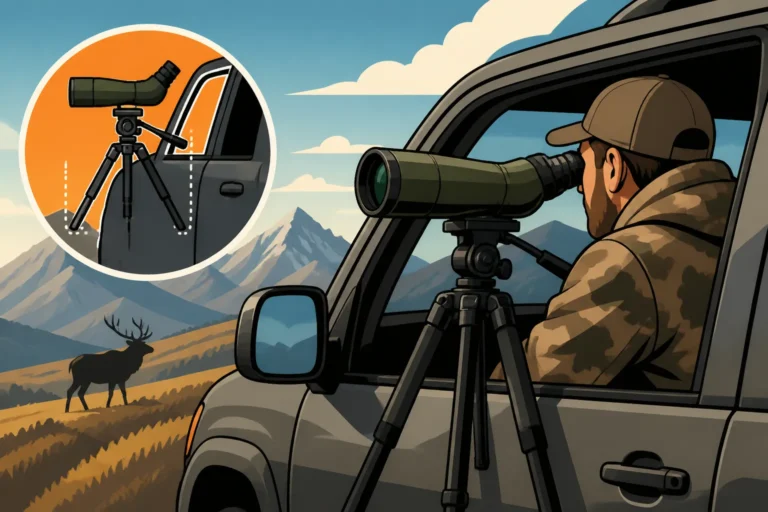
- Glassing: Wyoming's vast, open landscapes are tailor-made for glassing. A good pair of binoculars and a spotting scope are indispensable tools. Find a high vantage point, settle in, and systematically scan vast areas. This allows you to cover huge amounts of ground visually, locate animals, and observe their habits from a distance without disturbing them. Learning grid glassing a basin without missing bucks can be a game-changer for identifying game. Quality optics are an investment that pays dividends in Western hunting.
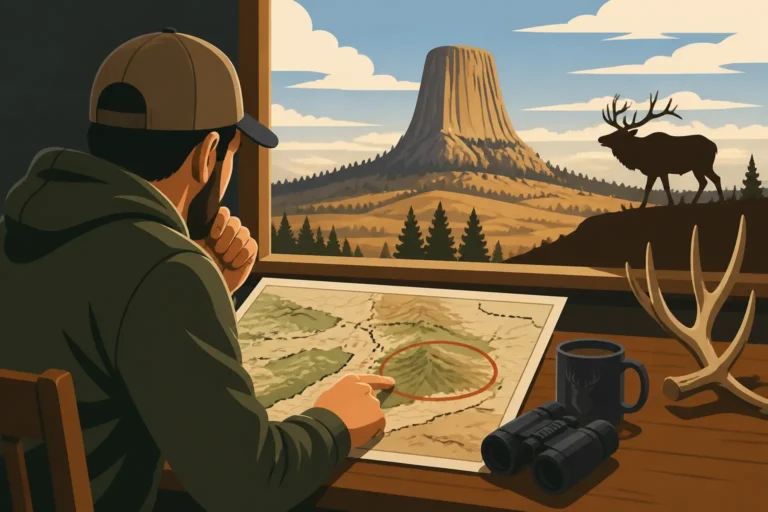
- E-Scouting: Before you even set foot in Wyoming, you can do a tremendous amount of scouting from your kitchen table. Tools like Google Earth, detailed topographic maps, and hunting platforms like GoHunt provide satellite imagery, public/private land overlays, and historical data that can help you identify potential access points, water sources, bedding areas, and travel corridors. You can mark waypoints, measure distances, and plan routes, all before you burn a single drop of gas. This is a perfectly legal and highly effective way to gain a significant advantage and is often the first step in e-scouting a unit before the season opens. Using tools like onX Public Land Layers in Wyoming can help you visualize the complex land ownership patterns and plan your entry and exit strategies for public ground.
- Understanding Habitat and Biology: Educate yourself on the specific behavior, habitat preferences, and seasonal movements of the game you're pursuing in Wyoming. Knowing when the elk rut actually peaks out west or when the mule deer rut actually starts can guide your timing and efforts. Combine this with geological features, vegetation types, and water availability, and you'll be able to predict where animals are likely to be, even without a camera watching for you.
By embracing these methods, you'll not only stay within Wyoming's legal framework but also develop a deeper connection to the land and the animals you pursue, making your hunt a more authentic and rewarding experience.
Disclaimer
Please remember that hunting regulations can change, and it is always the hunter's responsibility to verify the most current laws and regulations with the Wyoming Game and Fish Department before heading afield. This guide provides general information and should not be considered legal advice.