Are Drones Legal for Scouting in Wyoming?
It's incredibly tempting, isn't it? You're sitting there, planning out your next Wyoming hunt, maybe dreaming of that monster bull elk or a wide-racked mule deer, and the thought crosses your mind: "What if I could get a bird's-eye view?" Drones offer such a compelling promise of scouting efficiency, letting you cover vast, rugged country without taking a single step. But before you even think about launching that expensive piece of technology, you need to understand the crystal-clear rules that govern their use in Wyoming hunting. This guide will walk you through exactly what's permitted, what's definitely not, and why these regulations are in place.
The Straight Answer on Drones in Wyoming Hunting
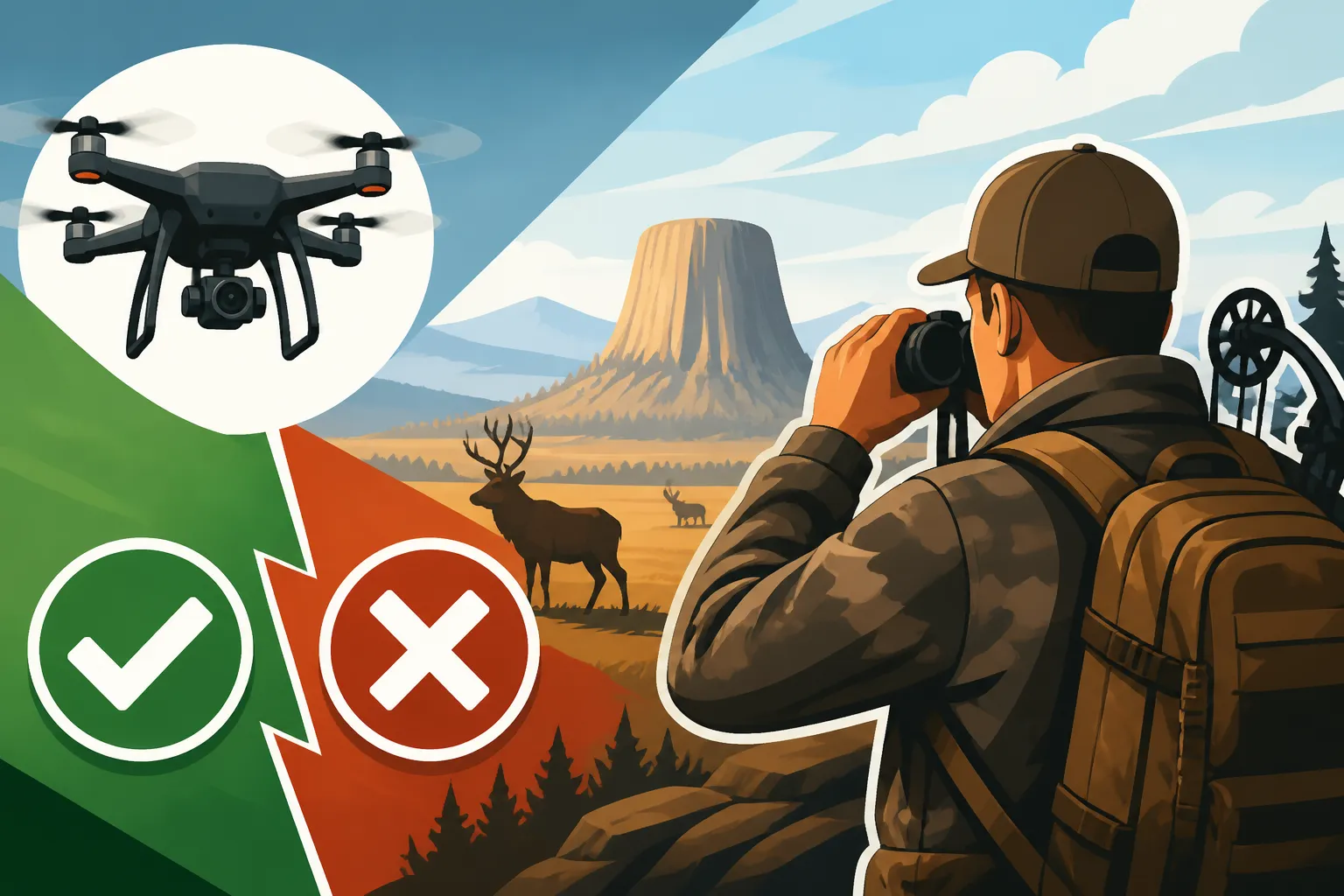
Let's cut right to the chase because this is a question many hunters grapple with, especially as technology advances. When it comes to using drones to aid in hunting in Wyoming, the answer is a resounding no. The Cowboy State is quite clear on this, and it’s a regulation deeply rooted in the principle of fair chase.
Federal and State Regulations for Drone Use
While the Federal Aviation Administration (FAA) governs drone airspace and safe operation, it's the Wyoming Game and Fish Department (WGFD) that sets the rules concerning their use in hunting. The WGFD regulations explicitly prohibit the use of any aircraft, including drones, for the purpose of aiding in the taking of game. This isn't just about spotting an animal and immediately shooting it from the drone, which is obviously illegal and unethical; it extends much further.
The language in Wyoming's statute, specifically in the Chapter 4, General Hunting Regulations, details that "no person shall take any big game animal, trophy game animal or game bird by the use of or with the aid of any aircraft, at any time, nor shall any person use any aircraft to spot or locate any big game animal, trophy game animal or game bird for the purpose of hunting or taking such big game animal, trophy game animal or game bird." This covers drones comprehensively. It means you cannot use a drone to locate animals, whether it's days before your hunt, hours before, or during the hunt itself, if that information is then used to aid your hunting efforts. The intent here is to prevent any technological advantage that removes the challenge and skill inherent in traditional hunting. It's about preserving the wildness of the chase.
Why the Rules Exist: Fair Chase and Technology
The core reason behind these restrictions, not just in Wyoming but across many states, is the long-held principle of fair chase. This ethical framework dictates that hunters should not have an unfair advantage over the animals they pursue. Hunting should be challenging, requiring skill, patience, and an understanding of the animal's behavior and habitat.
Imagine flying a drone over vast, rugged terrain, scanning for elk herds or mule deer bucks in areas that would take days to cover on foot. This technology would effectively eliminate much of the physical effort, tracking skill, and careful observation that define ethical hunting. It would transform hunting from an immersive wilderness experience into something more akin to a video game, greatly diminishing the value and meaning of the harvest. The regulations aim to safeguard the integrity of hunting, ensuring it remains an activity that respects both the animal and the challenge of the wild. It’s about ensuring that the hunter’s success comes from their woodsmanship, not from a remote-controlled technological eye in the sky.
Common Misconceptions and Nuances
It’s easy to get confused when new technologies emerge, and drone regulations are no exception. Many hunters try to find loopholes or assume certain uses are permissible. Let's clear up some of those common misunderstandings.
Scouting vs. Aiding in the Take
One of the biggest misconceptions revolves around the definition of "scouting" versus "aiding in the take." Many hunters might think, "Well, I'm just scouting with the drone days before the season, not actively hunting with it." However, Wyoming's regulations are written broadly enough that using a drone to locate game for the purpose of hunting is prohibited. This means even if you fly a drone a week before the season opener, find a big bull elk, mark its location, and then later go hunt that bull, you could be in violation.
Consider a hypothetical scenario: You're in a vast, roadless area of the Bridger-Teton National Forest, and you want to locate a herd of elk before your season opens. You launch a drone, fly it for miles, and spot a sizable group of elk in a timbered basin. You land your drone, pack up, and two days later, you hike into that basin, confident in knowing where the animals are. Even though you didn't fly the drone during the hunt, the information gained directly aided your ability to locate and potentially take those animals. The WGFD's stance is generally conservative on this, prioritizing fair chase over technological convenience. It's not just about the moment of the shot; it's about the entire process of finding and pursuing the animal.
Different Rules for Different Lands? Not Really
Another common thought might be, "Does it matter if I'm on private land or public land like BLM or National Forest?" The answer is generally no, the core hunting regulations regarding drones remain the same across all land types in Wyoming. Wyoming Game and Fish Department regulations apply statewide, regardless of whether the land is privately owned, federal (like Bureau of Land Management or National Forest), or state trust land.
While a private landowner might have their own rules about drone use on their property for other purposes (like surveying fences or checking livestock), they cannot override the state's hunting laws. You could technically use a drone on private property for non-hunting related activities, but if that drone use then directly or indirectly aids your hunting activities, it falls under the state's prohibition. For example, using a drone to check fence lines that happen to be frequented by deer and then using that intel to hunt them would likely be seen as a violation. Remember, the intent is crucial. The rule is designed to prevent hunters from gaining an unfair advantage over wildlife, and that ethical consideration doesn't change based on land ownership.
What You Can Do for E-Scouting and Planning
Just because drones are off-limits doesn't mean you're stuck in the Stone Age. Modern technology still offers incredible, legal tools to boost your scouting efforts from the comfort of your home.
Leveraging Satellite Imagery and Mapping Tools
This is where digital scouting truly shines and becomes an invaluable, legal asset. Instead of flying a drone, you can spend hours poring over detailed satellite imagery and topographical maps, identifying key features that will help you locate game. Tools like onX Hunt and GoHunt's insider research platform are game-changers for this. With these apps, you can mark public and private land boundaries, identify prime bedding areas, pinpoint water sources, analyze terrain for potential travel corridors, and even locate historical burn areas that often create excellent forage.
You can virtually walk the landscape, looking for saddles, draws, benches, and thick timber that provide cover and escape routes for animals. Learning how to effectively utilize features like satellite view, topo maps, and even 3D terrain views in these apps can give you a significant advantage. This method allows you to understand the lay of the land, anticipate animal movements, and plan your approach long before you even set foot in the field. It’s an art form that requires patience and a keen eye, but it pays dividends when the season arrives. If you're really looking to dig deep, check out our guide on E-Scouting a Unit Before the Season Opens for a step-by-step approach to virtual reconnaissance.
Boots-on-the-Ground Scouting and Traditional Methods
While technology helps immensely, there’s truly no substitute for getting your boots dirty. Actual physical scouting trips before the season opens are invaluable. This is where you confirm what you saw on your maps, learn current animal patterns, and get a real feel for the terrain. Using high-quality optics like binoculars and spotting scopes is absolutely critical for this. From a vantage point, you can glass vast areas, identify game, and watch their movements without disturbing them. You’ll want to understand Optics Power for Wyoming's Long Sightlines to pick the right glass for the expansive western landscape. Learning methods like Grid Glassing a Basin Without Missing Bucks can help you systematically scan terrain without overlooking potential animals.
Trail cameras, where legal (and understanding Trail Camera Rules on Wyoming Public Land is key), can also provide crucial intelligence on animal presence and movement patterns. Combining your e-scouting with physical trips allows you to confirm assumptions, find fresh sign, and get a current snapshot of the area. Plus, it’s an opportunity to truly connect with the land, understand wind currents, and practice your stalking techniques, which is vital when you consider Reading Wind on an Open-Country Stalk. These traditional methods are not only legal but also deeply satisfying, contributing to the overall challenge and reward of the hunt.
Penalties and Risks of Illegal Drone Use
Breaking hunting laws, even if it feels like a minor infraction related to scouting, can carry significant consequences that go far beyond a simple slap on the wrist.
What's at Stake: Fines, License Revocation, and Reputation
Wyoming takes its wildlife management and fair chase principles very seriously. If you're caught using a drone illegally to aid your hunt, you could face substantial fines, potentially ranging from hundreds to thousands of dollars. Beyond monetary penalties, there’s the very real risk of your hunting license being suspended or even permanently revoked, not just in Wyoming, but potentially across multiple states through interstate compacts.
Imagine putting in years, accumulating preference points, and investing significant money into a coveted Wyoming elk or deer tag, only to have your license suspended and your privileges stripped away because of an illegal drone flight. Additionally, any equipment used in the commission of a wildlife violation, including your drone, hunting rifle, or even your vehicle, could be confiscated. The financial and personal cost can be devastating, making any perceived advantage from a drone completely not worth it. The Wyoming Game and Fish Department and its wardens are vigilant, and they patrol remote areas where these activities might occur.
The Ethical and Community Impact
Beyond the legal ramifications, there's a significant ethical and community impact to consider. When hunters use illegal methods, it casts a shadow over the entire hunting community, fueling negative stereotypes and providing ammunition for anti-hunting narratives. It suggests that hunters are only interested in shortcuts and don't respect the animals or the rules of the game.
The hunting community in Wyoming, and indeed across the West, prides itself on ethical conduct and fair chase. Fellow hunters are often the first to notice and report suspicious activity, as they are invested in preserving the integrity of their sport. Engaging in illegal drone use undermines the hard work of wildlife agencies, conservation groups, and the vast majority of ethical hunters who adhere to the regulations. It erodes trust and diminishes the reputation of a time-honored tradition. By choosing to hunt ethically, you not only protect yourself from penalties but also uphold the values that sustain hunting for future generations.
Here's a quick comparison of legal versus illegal tech use for hunting:
| Technology/Method | Legal for Scouting/Hunting in Wyoming | Illegal for Scouting/Hunting in Wyoming |
|---|---|---|
| Drones/UAVs | No | Locating, spotting, or aiding in taking any big game or game bird |
| Satellite Imagery | Yes | N/A |
| GPS/Mapping Apps | Yes | N/A |
| GoHunt/onX Hunt | Yes | N/A |
| Binoculars/Spotting Scopes | Yes | N/A |
| Trail Cameras | Yes (with specific rules) | Check Trail Camera Rules on Wyoming Public Land for specifics |
| Electronic Calls | Yes (for predators/varmints) | Prohibited for big game or trophy game. See Electronic Calls and What Wyoming Allows |
| Vehicle Use | Yes (for access to hunt area) | Hunting from a vehicle, or using a vehicle to pursue game. See Hunting From a Vehicle |
Ultimately, while the allure of new tech like drones is strong, adhering to Wyoming's fair chase principles ensures a more rewarding, legal, and ethical hunting experience.
Disclaimer
Please remember that hunting regulations can change. It is always your responsibility to consult the most current Wyoming Game and Fish Department regulations directly before heading into the field. This guide provides general information and should not be considered a substitute for the official rulebooks.