The Rules on Hunting From a Vehicle
It can be incredibly frustrating to hit the wide-open spaces of Wyoming, ready for your hunt, only to realize you’re unsure about where you can legally drive or even stop your vehicle. Many hunters, especially those new to the Cowboy State or public land hunting, feel overwhelmed by the regulations around vehicle use. This guide is here to untangle the confusion, helping you understand the specific rules for hunting from a vehicle in Wyoming so you can stay legal and ethical while pursuing big game.
Understanding the "Road" in Wyoming Hunting Regulations
Wyoming has a lot of open country, and with that comes a lot of roads – or at least, what look like roads. But when it comes to hunting, the term "road" has very specific legal definitions that every hunter needs to understand. Misinterpreting these definitions can quickly lead to fines, citations, or even loss of hunting privileges. It’s not just about staying out of trouble; it's about respecting the land and ensuring a fair chase.
What Constitutes a Public Road
In Wyoming, a "public road" generally refers to any maintained road or highway that is open to public vehicle traffic. This includes everything from interstate highways and state routes down to county roads and even some designated two-track roads on public land that are clearly marked and regularly maintained for vehicle use. The key here is "maintained" and "open to public vehicle traffic." These are not always pristine paved surfaces; many public roads in Wyoming's backcountry are gravel, dirt, or even just graded earth. However, they are officially recognized and managed for public access. The Wyoming Game and Fish Department (WGFD) regulations are pretty clear that you cannot shoot from, or across, any paved public road or highway. It's a critical distinction to grasp before you even think about lifting your rifle.
Defining Off-Road and Two-Track Trails
Things get a bit trickier when you venture onto less defined paths. An "off-road" area is pretty much what it sounds like: anywhere that isn't a designated public road or a private road with permission. Driving off-road is almost universally prohibited on public lands in Wyoming unless specifically marked for such use. This is to protect the fragile ecosystems, prevent erosion, and maintain the wild character of these areas. Two-track trails, on the other hand, can be a grey area. Some two-tracks are officially designated and maintained as public roads, often indicated on maps or with signage, and are therefore legal to drive on. Others are merely historic travel ways, rancher trails, or even trails created illegally by previous users. These undesignated two-tracks are generally considered off-road travel, and driving on them could land you in hot water. Always err on the side of caution. If it’s not clearly marked or mapped as a road, it’s likely not a legal driving surface.
The Importance of Motor Vehicle Use Maps (MVUMs)
If there's one tool every hunter needs in their arsenal for navigating Wyoming's public lands, it's a Motor Vehicle Use Map (MVUM). These maps are issued by the U.S. Forest Service and Bureau of Land Management (BLM) and are the absolute gold standard for determining legal vehicle access on federal lands. An MVUM will explicitly show which roads, trails, and areas are open to motorized vehicles, which are seasonally closed, and which are completely closed. They are usually available for free from local Forest Service or BLM offices, or you can often download them digitally. Relying on general-purpose maps or navigation apps alone, even something like GoHunt which is excellent for overlays, can be misleading because they might not reflect the specific legal status of every two-track. Always consult the official MVUM for the area you're hunting. These maps are updated frequently, so it’s wise to get the latest version. Ignoring an MVUM is not considered a valid excuse if you’re caught driving in a closed area, which can carry significant penalties.
Legal Distances and Shooting From a Vehicle
The temptation to quickly glass an area or make a shot from the comfort of your truck can be strong, especially when the wind is whipping and the temperatures are dropping. However, Wyoming's rules on shooting from or near a vehicle are designed to promote fair chase and public safety, and they are quite strict. Understanding these nuances is paramount to staying legal and ethical in the field.
The "Roadway" Rule: No Shooting From, On, or Across
This is perhaps the most fundamental and widely misunderstood rule: you absolutely cannot shoot a firearm from, on, or across a public road or highway in Wyoming. This isn't just about safety for other drivers; it's also about preventing opportunistic road hunting. The definition of "road" here is broad and includes the shoulders and ditches alongside the main travel lanes. So, even if you pull over to the side, step out, and shoot from the ditch, you could still be in violation if that ditch is considered part of the roadway.
The law is designed to create a clear separation between vehicle use and active hunting. You need to physically remove yourself from the immediate vicinity of the road before taking a shot. How far exactly? While the regulations often use terms like "away from the traveled portion of the road," a good rule of thumb for safety and compliance is to be well clear of any area that could be considered part of the public right-of-way. This means stepping off the road, out of the ditch, and into the adjacent private or public land, ensuring you have clear legal permission to be there. This applies to big game, game birds, and even predators.
Shooting from a Parked Vehicle: What's Allowed and What's Not
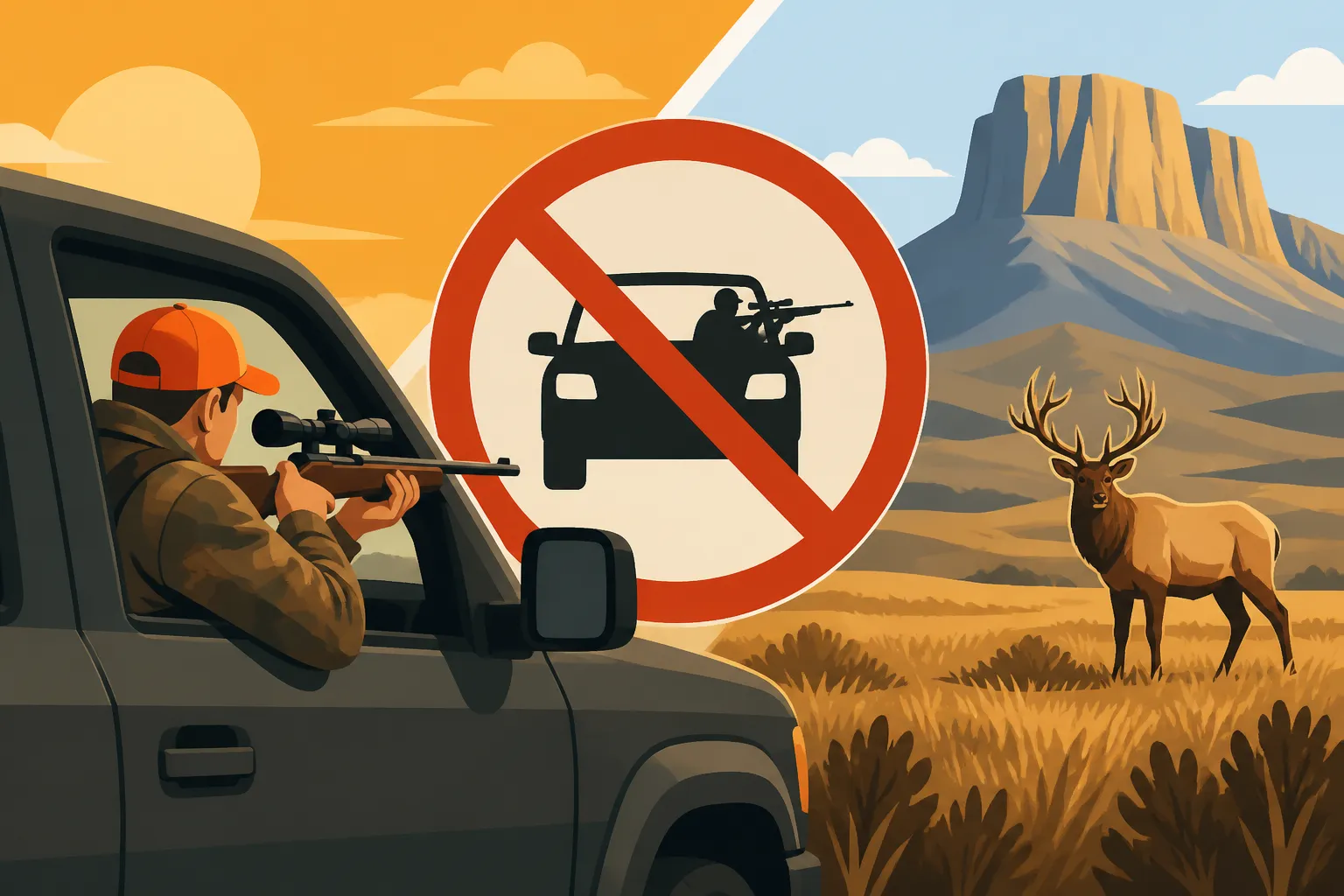
Many hunters wonder if they can simply park their truck, step out, and shoot, as long as they aren't on the road. The answer is: it depends, and often, it's a "no" for big game. While you can certainly use your vehicle to get to a hunting spot, the act of shooting directly from a parked vehicle (like leaning your rifle on the hood or shooting out the window) is generally prohibited for big game. The intent of the law is to separate the mode of transportation from the act of hunting.
You must dismount and remove yourself from the vehicle before attempting to harvest an animal. This means you need to exit the vehicle completely and establish a clear, stable shooting position that is independent of the vehicle itself. Some hunters even take a few steps away from the vehicle to ensure there's no ambiguity. For certain types of hunting, like varmints or predators, the rules can be different and sometimes allow for shooting from a parked vehicle, but for deer, elk, or antelope, assume you need to be out and away. Always check the specific regulations for the species you are pursuing, as they can have nuances.
Unloaded Firearms and Archery Equipment in Vehicles
Another crucial safety and legal point revolves around how you transport your weapons. In Wyoming, when traveling on a public road, all firearms must be unloaded. This means no round in the chamber and no magazine attached to the firearm if it's loaded. For a shotgun, the magazine tube must also be empty. Muzzleloaders must have the percussion cap or primer removed, or the pan powder removed for flintlocks.
This rule is strictly enforced and is designed to prevent accidental discharges and discourage road hunting. Even if you're just driving from one spot to another, if your firearm is loaded and accessible in the vehicle, you're looking at a serious violation. Archery equipment, on the other hand, typically doesn't have the same "unloaded" requirement, but it should still be transported safely and securely, usually cased, especially if broadheads are exposed. It’s always best practice to keep all hunting weapons cased and out of sight to avoid any misinterpretations from law enforcement or other hunters. Remember, the rules here are for public safety and the integrity of the hunt. You can read more about Wyoming Legal Firearm List for Big Game to ensure your chosen weapon complies with all regulations.
Vehicle Use for Game Retrieval and Off-Road Travel
So, you've successfully harvested your animal. Now what? Dragging a mature elk or mule deer buck miles through sagebrush and draws is a monumental task. Naturally, hunters want to use their vehicles for retrieval, but this is another area where regulations can be confusing and lead to trouble if not understood properly.
Retrieving Downed Game: Permission and Designated Routes
This is where many hunters get caught. You've got a downed animal, maybe 100 yards off a two-track, and it seems like a no-brainer to drive straight to it. Stop right there. While the regulations do allow for the use of vehicles to retrieve downed game, it’s almost never an open invitation to drive off-road wherever you please.
On public lands, vehicle retrieval is generally restricted to designated routes shown on an MVUM. If your animal falls far from such a route, you’re usually looking at a long drag, unless there's a specific, legally authorized game retrieval route, or you have a special permit (which are rare). The rule of thumb: If you wouldn't drive your truck there before you shot the animal, you probably shouldn't drive it there afterward for retrieval.
If the downed game is on private land, you absolutely must obtain explicit permission from the landowner before you drive a vehicle onto their property for retrieval. This is non-negotiable and essential for maintaining good hunter-landowner relations. Even if you have permission to hunt the private land, permission for off-road vehicle retrieval needs to be clarified. It’s a good idea to discuss retrieval plans with landowners beforehand. Always respect property boundaries, especially when thinking about Retrieving Game From Private Land in Wyoming.
When Off-Road Travel Is Permitted or Not
As a general rule, off-road travel for hunting or scouting purposes is prohibited on public lands in Wyoming. The only exceptions are specific areas designated for it, which are rare for hunting. This means sticking to established roads and designated two-track trails. These restrictions are vital for preventing habitat destruction, soil erosion, and maintaining the quality of the hunting experience for everyone.
Even seemingly minor off-road excursions can create new, illegal trails that other hunters might mistakenly follow, leading to further damage. If you're on a multi-use trail, ensure your vehicle is compliant with any specific ATV/UTV regulations for that area. Just because a trail looks well-used doesn't mean it's legal for your vehicle type or at all. When planning your hunt, use reliable mapping tools and cross-reference with MVUMs. GoHunt's detailed maps with public/private land overlays can be incredibly useful here, but remember, they aren't a substitute for the official MVUMs when it comes to vehicle access. They can, however, help you identify areas with good road access versus those requiring a deeper hike, which is crucial for preparing for the actual hunting effort.
Minimizing Impact and Ethical Considerations
Beyond the letter of the law, there's the spirit of ethical hunting. Driving off-road or in sensitive areas creates ruts, damages vegetation, and disturbs wildlife, potentially impacting other hunters and the environment. As responsible stewards of the land, we have an obligation to minimize our footprint. This includes parking in designated areas, staying on marked routes, and being mindful of conditions. If a road is wet and muddy, consider if driving on it will cause excessive damage. Sometimes, a longer walk is the more ethical choice.
Furthermore, excessive vehicle use can disrupt game patterns. Animals learn to avoid areas with heavy vehicle traffic. By minimizing your motorized presence, you contribute to a more natural and productive hunting environment for everyone, including future generations. Embracing a more foot-based approach not only helps preserve the land but also often leads to better hunting success as you cover ground quietly and observe more. Be sure to understand your responsibilities regarding Wanton Waste Rules Every Wyoming Hunter Should Know, which extends to how you retrieve and care for your harvested animal.
Exceptions and Special Considerations for Vehicle Use
While the general rules against shooting from roads and off-road travel are stringent, Wyoming does have a few exceptions and special considerations worth noting. These primarily relate to hunters with disabilities, predator hunting, and the unique rules that apply to private versus public land.
Handicapped Hunter Permits and Relaxed Rules
Wyoming Game and Fish does offer specific provisions for hunters with qualifying disabilities. These "Hunter with a Disability" permits can allow for certain modifications to standard hunting regulations, including permission to shoot from a stationary vehicle in some circumstances, or to use a vehicle for off-road game retrieval in designated situations.
However, these permits are not a blanket allowance. They are issued on a case-by-case basis after an application and review process, and they come with very specific restrictions on where and how these relaxed rules apply. For example, a permit might allow shooting from a stationary vehicle on private land with landowner permission, or on a specific public land parcel with prior WGFD approval. It's crucial for any hunter utilizing such a permit to understand its exact stipulations and carry all documentation in the field. Misuse of these permits is taken very seriously.
Predator and Varmint Hunting Differences
Here's where the rules often diverge significantly. For many predators and varmints in Wyoming, such as coyotes and prairie dogs, the restrictions on vehicle use are much less stringent than for big game. It is often permissible to shoot these animals from a stationary vehicle, or even from the roadway (if safe and not prohibited by local ordinance), especially on private land with permission.
This is largely due to the management philosophy for these species, which often encourages their take due to their impact on livestock or other wildlife. However, "less stringent" doesn't mean "no rules." Always consult the current WGFD regulations for the specific predator or varmint you intend to hunt. For instance, while you might be able to use electronic calls for predators (check Electronic Calls and What Wyoming Allows for specifics), vehicle-related shooting rules still require careful attention. Some counties or specific areas might have local ordinances that further restrict shooting near roads, even for varmints. Knowing the Wyoming Legal Shooting Hours for Big Game is critical, and these hours can sometimes differ for predators, adding another layer of complexity.
Private Land Rules vs. Public Land
This is arguably the biggest distinction when it comes to vehicle use while hunting. On private land, the landowner's rules generally take precedence, as long as they don't conflict with state law. If you have a landowner's explicit permission to drive off-road to retrieve an animal, or to shoot from a stationary vehicle (if allowed for the species), then you generally can. This is why cultivating good relationships with landowners is so important, especially in areas with a checkerboard of public and private property.
However, even on private land, you cannot shoot across a public road that traverses the property, nor can you violate any state laws regarding loaded firearms in vehicles on public roads. Always ensure your firearm is unloaded when traveling on public roads, regardless of whether you’re on private land or about to enter it. When navigating mixed landscapes, mapping tools like those from GoHunt or onX can be invaluable for differentiating public from private parcels and ensuring you're always aware of whose land you're on. This is especially vital when dealing with Road Closures Across Wyoming Public Land or Seasonal Winter Range Closures for Big Game, which might not apply uniformly across private holdings, but often affect access to private land.
Ultimately, whether on public or private ground, the core principle is responsibility. Understand the rules, respect the land, and act in a way that preserves hunting opportunities for everyone. Before you even head out, ensure you've checked all regulations and local advisories, including those for Trailhead Parking Rules for Wyoming Hunters if you plan to leave your vehicle and hunt on foot.
Disclaimer
Please note that hunting regulations, seasons, and access rules in Wyoming are subject to change. While this guide aims to provide accurate and up-to-date information, it is not a substitute for reviewing the current year's official Wyoming Game and Fish Department regulations. Always consult the official WGFD regulations and obtain any necessary permits or maps before heading afield.