Using Cutbanks and Draws to Close on Antelope
Hunting antelope in Wyoming is an experience unlike any other, full of vast, open landscapes that are breathtakingly beautiful yet incredibly frustrating when you’re trying to get within range of one of these speed demons. Their unparalleled eyesight and the sheer lack of traditional cover can make closing the distance feel impossible, leaving many hunters busted and discouraged. This guide is dedicated to a tried-and-true method for getting within striking distance: effectively utilizing cutbanks and draws to vanish from their sight and turn the odds in your favor.
The Challenge of Stalking Pronghorn in Open Country
When you picture hunting antelope, what often comes to mind are wide-open sagebrush flats stretching to the horizon. It's a gorgeous scene, but it also highlights the core challenge: there's nowhere to hide. Pronghorn are perfectly evolved for this environment, and understanding their adaptations is the first step to overcoming them.
Pronghorn's Unmatched Vision and Open Habitat
Let's be honest, pronghorn antelope have eyes that put a spotting scope to shame. They possess incredible binocular vision, a massive field of view that rivals almost any land animal, and can spot movement at truly astonishing distances – we're talking miles, not just hundreds of yards. It feels like they have a built-in radar for detecting anything out of place. This isn't just hyperbole; it's a physiological fact that shapes their survival and makes our job as hunters so incredibly tough. They thrive in those expansive, relatively flat to gently rolling plains precisely because they can see danger coming from a long way off and then use their blistering speed, reaching up to 60 miles per hour, to escape. Try approaching a herd in the open, and more often than not, they’ll simply melt away, leaving you wondering if they even saw you. It's a frustrating dance, but one that can be won with the right strategy.
For more details on how their vision impacts your hunt, take a look at our article on Pronghorn Eyesight and the Stalking Distance It Forces.
The Limitations of Traditional Cover
When we talk about "cover" in hunting, we often think of dense timber, thick brush, or perhaps a stand of aspens. Out in Wyoming's antelope country, that kind of cover is a rare luxury. You might find a patch of taller sagebrush, but it's usually not enough to completely conceal a crouching human, especially if you're trying to move. Rolling hills offer some undulation, but often their contours aren't deep or abrupt enough to truly hide your approach for any significant distance. You find yourself cresting a rise, only to realize the slight dip you were banking on offers no real concealment from that buck a quarter-mile away. It's this continuous exposure that makes a direct stalk across an open flat almost always a losing proposition. We need to think differently about what "cover" means in this landscape, and that's where geological features truly shine.
Reading the Landscape: Identifying Stalking Lanes
The key to successful antelope hunting in open country isn't finding dense woods; it's finding the subtle, yet crucial, terrain features that offer concealment. This means learning to "read" the ground for those hidden avenues.
What Exactly Are Cutbanks and Draws?
Okay, let's get down to the nitty-gritty. What exactly are we talking about when we say "cutbanks and draws"? Imagine a flat, seemingly endless prairie. Now, picture a place where water, over eons, has carved its way through the landscape.
- Draws: These are essentially natural depressions or small valleys, often gently sloping, that drain water. They might be dry most of the year, appearing as shallow troughs or longer, more defined washes. They offer horizontal concealment, allowing you to move through their bottom while remaining below the surrounding terrain. Think of them as natural trenches running through the land. They might be wide and subtle or narrow and deep, but their common trait is that they allow you to be out of sight from higher ground.
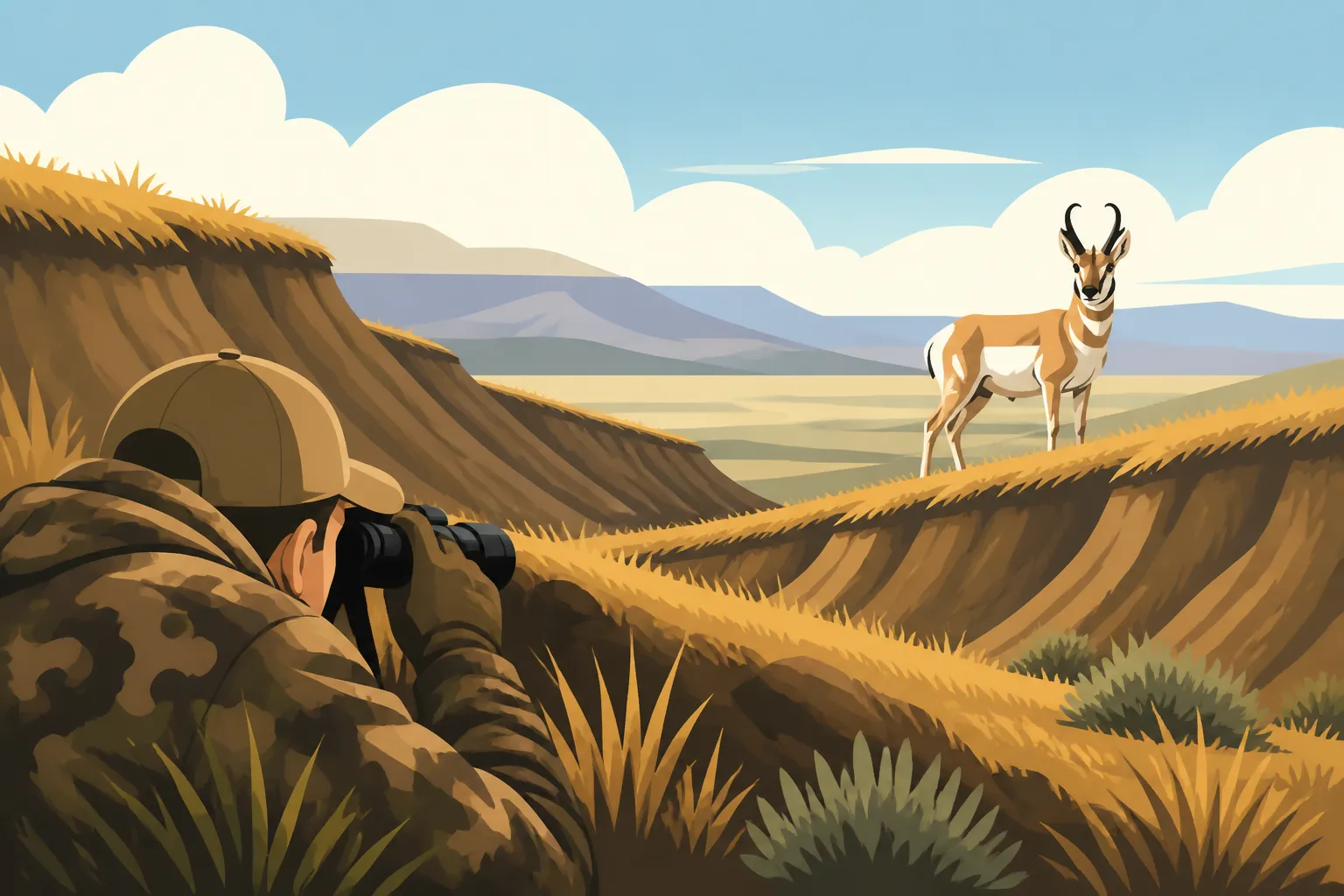
- Cutbanks: These are typically steeper, often vertical, banks formed by erosion, most commonly along the edges of draws, dry creek beds, or river drainages. They are literally where the land has been "cut" away. While a draw offers broad concealment, a cutbank offers immediate, vertical concealment. You can get right up against a cutbank, even if it's only 3-4 feet tall, and be completely hidden from view on the other side. They act as natural walls, allowing you to move parallel to them without being seen, often until you're ready to pop over the top for a shot. The beauty of these features is that they allow you to move while completely obscured, making them invaluable for getting close to wary antelope.
How to Spot Potential Cover from a Distance
Finding these subtle features from afar is an art form that significantly boosts your chances of success. It starts with good glass. A quality pair of binoculars (10x or 12x) and a powerful spotting scope (20-60x or higher) are absolutely essential for breaking down the vast landscape. Don't just scan; grid glass an area meticulously. Look for any changes in topography – slight dips, shadows that indicate a change in elevation, or variations in vegetation that might hint at a drainage.
When you're glassing, don't just look for antelope. Look for the terrain that hides an approach. Identify the highest points where you can survey, and then trace potential pathways from those vantage points down to where the antelope are. Are there any ribbons of different colored earth? Are there lines where the sagebrush seems to dip down, indicating a dry wash? These are your clues. Sometimes, a subtle change in the angle of the sun can cast a shadow into a draw, revealing its presence even from miles away. The more time you spend behind your optics, the better you'll become at discerning these critical stalking lanes. For tips on maximizing your glassing efforts, check out Optics Power for Wyoming's Long Sightlines.
Integrating Topographical Maps and Satellite Imagery
Before you even leave your kitchen table, modern technology can be your best friend in identifying these crucial stalking routes. Tools like GoHunt (and other mapping apps like onX Hunt) are invaluable for e-scouting. Open up the satellite imagery and zoom in. You'll often see distinct lines, shadows, or changes in vegetation density that betray the presence of draws, washes, and cutbanks. Switch to a topographical map layer, and those gentle depressions will become obvious contours. Look for tightly packed contour lines, indicating steep changes in elevation – these are often cutbanks. Wider, more gradual contour changes might point to larger draws.
Plotting potential stalks on these maps is an incredibly efficient way to plan your hunt. You can mark specific "approach corridors" that offer the best concealment from prevailing winds and the anticipated location of antelope. This kind of preparation significantly reduces wasted time and energy in the field. Before you pack your bags, take a deep dive into E-Scouting a Unit Before the Season Opens to understand how to leverage these tools for a successful hunt. Remember, the more you know about the ground before you step foot on it, the better equipped you'll be to adapt when the moment of truth arrives.
Executing the Stalk: Tactics for Using Topographical Features
Once you've identified your target buck and a potential stalking lane using a draw or cutbank, the real work begins. This phase requires immense patience, stealth, and a keen awareness of your surroundings.
The Art of the Low Crawl and Blind Approaches
The goal here is to become part of the landscape. When utilizing a draw, you want to stay as low as possible within its confines. This often means a low crouch, a bent-over shuffle, or, more often than not, a slow, deliberate crawl. Every movement needs to be calculated and quiet. Imagine the antelope has eyes in the back of its head and is constantly looking for threats. If the draw isn't deep enough to hide you completely, staying low means presenting the smallest possible profile above the skyline.
With cutbanks, the approach is similar but often more direct. You can walk right up to the base of a cutbank, totally hidden, and then move parallel to it. This is a "blind approach" because you won't see the antelope, and they won't see you, until you crest the bank. It's a game of faith and precise navigation using your mapped-out route. Before you pop your head over, try to visualize where the antelope will be based on your last observation. Use a small branch or your hat on a stick to slowly peek over the edge first, just in case. Always assume they are looking right at the spot you intend to appear. For a deeper dive into crucial stalking techniques, be sure to read our detailed article on Terrain That Hides an Approach.
Navigating the Terrain: When to Break Cover and When to Hold
This is arguably the most critical and nerve-wracking part of the stalk. You're moving along, hidden in a draw, and you need to get closer. You can't stay hidden forever, especially if the draw takes an unfavorable turn or peters out. Knowing when to break cover is a decision that can make or break your hunt.
- Assess the situation constantly: Are the antelope feeding? Are they bedded? Are they looking in your direction? A bedded antelope, especially one facing away or with its head down, offers a prime opportunity for a quick, low sprint across a short exposed section.
- Use the "lull" moments: Antelope often have periods of intense alertness followed by moments where their guard seems to drop slightly, perhaps when they're feeding heavily or socializing. These are your windows to make faster progress.
- Anticipate the next piece of cover: Always be looking ahead for the next cutbank, a clump of tall sage, or a slight rise that can offer temporary concealment. Move quickly and deliberately from one cover to the next.
- The half-step rule: If you need to expose yourself, do it in a way that minimizes your profile and exposure time. Sometimes, you'll need to crawl part of the way, then quickly get up and shuffle a few steps to the next bit of cover, dropping instantly as you arrive.
Remember, patience is paramount. Sometimes holding tight, even for an hour, while an antelope repositions itself can be the smartest move. Don't rush a good thing.
Closing the Distance: Getting Into Bow or Rifle Range
The final phase of the stalk is all about precision. You've used the terrain to get remarkably close, but now you need to seal the deal and get within your comfortable shooting range.
- Range it early, range it often: Before you make that final move, use your rangefinder to get distances to prominent landmarks around the antelope. This gives you reference points. As you creep closer, re-range. Knowing your exact distance will be crucial for an ethical shot.
- Consider your weapon: What constitutes "close enough" varies dramatically. For a bowhunter, you're ideally looking to get within 40-60 yards, which often means an agonizingly slow, low crawl right up to the edge of a cutbank or draw. For rifle hunters, 200-300 yards might be a comfortable shot, requiring less extreme measures but still emphasizing stealth. Understand your limits and practice extensively at those distances. Our article, How Close a Bowhunter Really Needs to Get, delves into the specific challenges and distances for archery.
- The final peek: When you're ready to make your move for the shot, do so with extreme caution. From behind a cutbank, slowly raise your head, binoculars in hand, to confirm the antelope's position and body language. If it's looking away or doesn't seem alarmed, prepare for your shot. If you're belly crawling across a flat, use the natural undulations of the ground to slowly bring your scope or sights up.
- Wind check: Before you commit, a final wind check is non-negotiable. Even a slight shift can carry your scent directly to their sensitive noses.
Remember, the goal isn't just to get close, but to get close undetected and in a position to make a clean, ethical shot. The hard work of the stalk should culminate in a confident shot, not a rushed or panicked one.
Practical Considerations and Common Pitfalls
Even with the best planning and execution, antelope hunting with cutbanks and draws is challenging. Knowing what to expect and how to avoid common mistakes can make a huge difference.
Wind Direction is Non-Negotiable
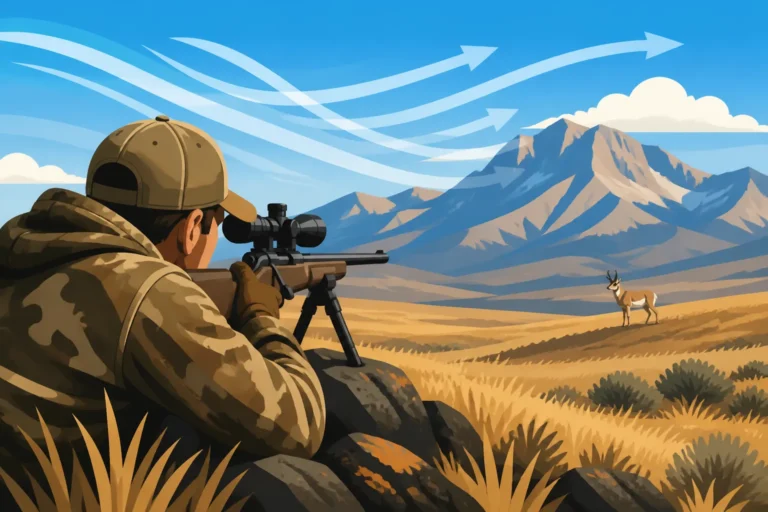
Seriously, if there's one thing that will bust your antelope stalk faster than anything else, it's a careless disregard for the wind. Pronghorn have an incredible sense of smell, and even in open country, your scent will travel. Before every stalk, confirm the wind direction. Use a wind indicator (powder or string) frequently. Draws and cutbanks can create tricky wind currents, swirling and funneling your scent in unexpected ways. Always, always try to approach with the wind in your face or quartering into it. Never put the wind at your back, even if it means a longer or more difficult stalk. A successful approach using these features is often a triangle: you, the antelope, and the wind. If you're not downwind, you're often done for. This is so important, we have a whole piece on it: Reading Wind on an Open-Country Stalk.
Patience and Persistence Pay Off
Let's be real: stalking antelope in Wyoming is not a quick affair. It's often a multi-hour commitment, sometimes spanning half a day for a single animal. You might spend 45 minutes crawling through prickly pear and loose gravel only to have a single doe bust you at 200 yards because you exposed your head for half a second too long. It's disheartening. It's frustrating. But this is the nature of the game.
The successful hunter isn't always the one who's fastest or strongest, but the one who can maintain their patience and persistence even after repeated failures. Be prepared to start over. Be prepared to back out and try again later. Sometimes, the best move is to let an antelope walk away, regroup, and look for another opportunity. That said, don't forget about alternative tactics like decoying, which can be incredibly effective when a stalk isn't an option. Our guide on Decoy Setups That Pull Pronghorn Bucks offers some great insights there.
Gear for a Successful Antelope Stalk
While fancy gadgets aren't everything, having the right gear can significantly improve your comfort and success rate when you're spending hours on your belly.
- Good Optics: As mentioned, high-quality binoculars and a spotting scope are indispensable. They allow you to survey the landscape for antelope and the hidden terrain features from a distance.
- Rangefinder: A reliable rangefinder is critical for accurately determining shooting distances and planning your final approach. Don't guess; know your yardage.
- Knee Pads & Gloves: Trust me on this one. Wyoming terrain is not forgiving. Kneeling and crawling through sagebrush, cacti, and sharp rocks will quickly wear you down without protection. A good pair of durable knee pads and tough gloves will save you a lot of pain and allow you to focus on the stalk, not your discomfort.
- Quiet Clothing: Any rustling or swishing fabric will telegraph your position in the vast quietness of the prairie. Opt for soft, quiet materials that won't make noise as you move.
- Low-Profile Backpack: You'll need to carry water, snacks, optics, and other essentials. A low-profile pack that doesn't hinder your ability to crawl or stay low is ideal.
- Mapping App: An app like
GoHuntor onX Hunt on your phone or GPS device is invaluable for navigating draws and ensuring you stay on track, especially when you're in a blind approach and can't see your target.
Using these tools effectively can mean the difference between getting busted and bringing home that hard-earned pronghorn.
Comparing Stalking Cover Options for Antelope
Here's a quick overview of different types of cover you might encounter and how they compare for antelope stalking:
| Cover Type | Description | Pros | Cons | Best Use |
|---|---|---|---|---|
| Draws | Natural depressions, dry washes, or shallow valleys. | Excellent for long, concealed movement; offers continuous cover. | Can be winding, adding distance; wind can swirl; may not hide standing hunter. | Extended approaches, moving parallel to antelope's line of sight. |
| Cutbanks | Steep, eroded banks along draws or creek beds. | Provides immediate, vertical concealment; allows close, blind approaches. | Often short in length; abrupt changes in elevation can be noisy; must expose fully to shoot. | Final stages of a stalk, getting into last 100 yards. |
| Rolling Hills | Gentle undulations in terrain, common in prairie. | Offers some concealment when moving between crests. | Insufficient vertical cover; easy to be skyline; often requires significant crawling. | Initial approaches at long distance, breaking up silhouette. |
| Tall Sagebrush | Denser, taller patches of sagebrush. | Can hide a crawling hunter or break up a silhouette. | Rarely tall enough for full concealment; crunchy and noisy; can limit visibility. | Supplemental cover within a draw or behind a rise. |
| Man-made Features | Fences, old farm equipment, small outbuildings (if present). | Provides solid, often unexpected, concealment. | Very rare; can be limited in direction of travel; often not natural to antelope habitat. | Opportunistic cover in agricultural fringes. |
Disclaimer
Hunting involves inherent risks, including but not limited to those associated with wildlife, firearms, and challenging terrain. Always prioritize safety, adhere to all local, state, and federal regulations, and consider consulting with experienced professionals or local game wardens for the most current and specific information. The information provided in this guide is for informational purposes only and should not be considered a substitute for professional advice or hands-on training.