How Outfitters Plan Emergency Evacuations
When you head deep into the rugged and remote wilderness of Wyoming for a hunt, the last thing anyone wants to think about is an emergency. Yet, the reality is that accidents, sudden illnesses, or unexpected weather events can happen in a heartbeat, leaving you miles from help and vulnerable. This guide aims to pull back the curtain on how reputable outfitters, the backbone of many successful backcountry hunts, meticulously plan and prepare for emergency evacuations, ensuring your safety is their utmost priority when things go sideways.
The Harsh Realities of Backcountry Emergencies
Stepping into Wyoming's vast landscapes means embracing a certain level of risk, especially when you're far from paved roads, cell service, and immediate medical attention. It's not about being fearful, but about being realistic and understanding the challenges that can arise. Good outfitters don't just hope for the best; they plan for the worst.
Common Scenarios That Can Go Wrong
Imagine traversing a steep, rocky incline, your heart pounding, when your foot slips, and you take an awkward fall, resulting in a sprained ankle or worse, a broken bone. Or perhaps, after a long day of strenuous hiking at high altitude, a fellow hunter suddenly experiences chest pains, far from any clinic. These aren't just hypothetical nightmares; they are very real situations that guides encounter. We're talking about everything from severe lacerations from field dressing a downed animal, to unexpected allergic reactions, to the onset of appendicitis when you're three days by horseback from the nearest trailhead. Even something as seemingly benign as sudden, drastic weather changes can quickly lead to hypothermia or frostbite if you're not prepared and can't get to shelter.
Beyond physical injuries or medical emergencies, there's also the risk of someone getting disoriented and separated from the group. Wyoming's terrain can be deceptive, with dense timber, rolling sagebrush hills, and deep canyons all looking similar after a long day or in fading light. A hunter might wander off tracking an animal, lose their bearings, and suddenly find themselves lost, adding a search and rescue component to an already stressful situation. The sheer remoteness often means hours, if not a full day, before professional help can even begin to reach your location.
Why DIY Hunters Often Underestimate Risk
For many experienced DIY hunters, the appeal of a self-guided adventure in Wyoming is undeniable. There's a profound sense of accomplishment in navigating the wilderness entirely on your own terms. However, it's crucial to acknowledge the significant difference in resources and preparedness between a seasoned outfitter's operation and a typical small group or solo DIY hunter. A DIY group, while perhaps having a satellite communication device, might not have someone with advanced medical training, nor the intricate knowledge of the local terrain to plan an efficient extraction route.
Consider the logistics: if a member of your DIY party breaks a leg deep in the Thorofare Wilderness, how will you stabilize them, keep them warm, and communicate your exact location and the nature of the injury to emergency services? Do you have a clear chain of command or a designated contact outside the field who knows your itinerary and can activate help? Outfitters, on the other hand, treat these challenges as part of their business model. They invest in specific training, specialized equipment, and established protocols that far exceed what most individual hunters can reasonably acquire or maintain. This isn't to say DIY is inherently unsafe, but rather that the margin for error is significantly wider, and the consequences of underpreparation can be dire. When comparing hunting styles, it's clear that Hunting Solo Against Hiring a Guide presents a stark difference in safety nets.
The Outfitter's Comprehensive Emergency Plan
A professional Wyoming outfitter views safety as an integral part of their service, not an afterthought. Their emergency planning is multi-layered, covering everything from preventing incidents to executing a rapid evacuation. They understand that a seamless operation often means that the client never even realizes the amount of planning that goes into mitigating risk.
Communication Protocols and Equipment
In the vastness of Wyoming, where cell service is largely nonexistent outside of towns, robust communication is the absolute lifeline in an emergency. Reputable outfitters deploy a variety of tools to ensure they can always reach help, and more importantly, be reached. Satellite phones are common, offering global coverage, though signal quality can sometimes be temperamental depending on terrain and weather. More frequently, guides rely on two-way satellite messengers like Garmin inReach or Zoleo devices. These allow for text-based communication, GPS tracking, and most critically, a dedicated SOS button that connects directly to a 24/7 global monitoring center, which can then coordinate with local Search and Rescue (SAR) teams.
Beyond satellite tech, many outfitters utilize powerful two-way radios within their hunting camps and between guides, allowing for immediate communication for logistical and safety purposes. A critical component of their communication protocol is a designated "base camp" or "home office" contact person who is not in the field. This person has a detailed itinerary of every hunt, knows the expected check-in times for each guide, and has a pre-arranged plan for initiating emergency protocols if a check-in is missed or an SOS message is received. This redundancy ensures that even if the primary guide is incapacitated, help will still be activated. Understanding Satellite Communication From a Hunting Camp is vital for both outfitters and clients.
Here’s a quick look at common communication tools outfitters might carry:
| Device Type | Primary Function | Pros | Cons |
|---|---|---|---|
| Satellite Phone | Voice communication, limited data | Global coverage, direct conversation | Expensive, bulky, can be finicky with signal |
| Satellite Messenger | Two-way text, GPS tracking, SOS button | Compact, reliable SOS, trackable, more affordable | Text-only, slower communication than voice |
| Two-way Radio | Short-range voice communication | Instant local communication, no subscription | Limited range, line-of-sight dependent, no external SOS |
| Emergency Beacon (PLB) | One-way distress signal (SOS only) | Highly reliable, direct to SAR, personal device for backup | No two-way communication, no tracking, expensive for single-use |
First Aid and Medical Preparedness
It's not enough to call for help; in a backcountry emergency, immediate action can be the difference between life and death. This is where an outfitter's investment in medical training truly shines. Many professional guides hold certifications far beyond a basic Red Cross course. You'll often find guides with Wilderness First Responder (WFR) or even Wilderness EMT (WEMT) certifications. These extensive courses focus specifically on prolonged patient care in remote, austere environments, teaching skills like wound management, splinting broken bones, treating hypothermia, managing allergic reactions, and recognizing and stabilizing serious medical conditions until definitive medical care can be reached. This level of expertise means they can provide a much higher standard of care than an average individual, sometimes for hours or even days, as an evacuation unfolds.
Along with advanced training, outfitters equip their camps and individual guides with comprehensive first aid kits. These aren't just band-aids and antiseptic wipes; they are often robust medical packs containing advanced wound dressings, trauma shears, splinting materials, medications for pain and allergies, hydration solutions, and sometimes even injectable epinephrine or other critical drugs. The ability to administer immediate and appropriate care, coupled with steady leadership in a crisis, is a cornerstone of an outfitter's emergency plan. This is a topic thoroughly explored in Wilderness First Aid on a Guided Hunt, and it highlights the specialized knowledge required.
Extraction Logistics: Getting You Out
Once an emergency has been identified and initial care provided, the next monumental task is extraction. The method of extraction depends entirely on the nature of the injury or illness, the terrain, and the proximity to accessible transportation. For minor injuries that don't impede movement, a slower, assisted walk-out might be feasible. For more serious situations, guides are adept at preparing a patient for transport, whether that's carefully packing them out on horseback using a travois or specialized litter, or utilizing an ATV or UTV if the terrain and regulations permit. Many outfitters operate on public lands, and they abide by Motorized Limits Inside Wyoming Wilderness or other travel management rules.
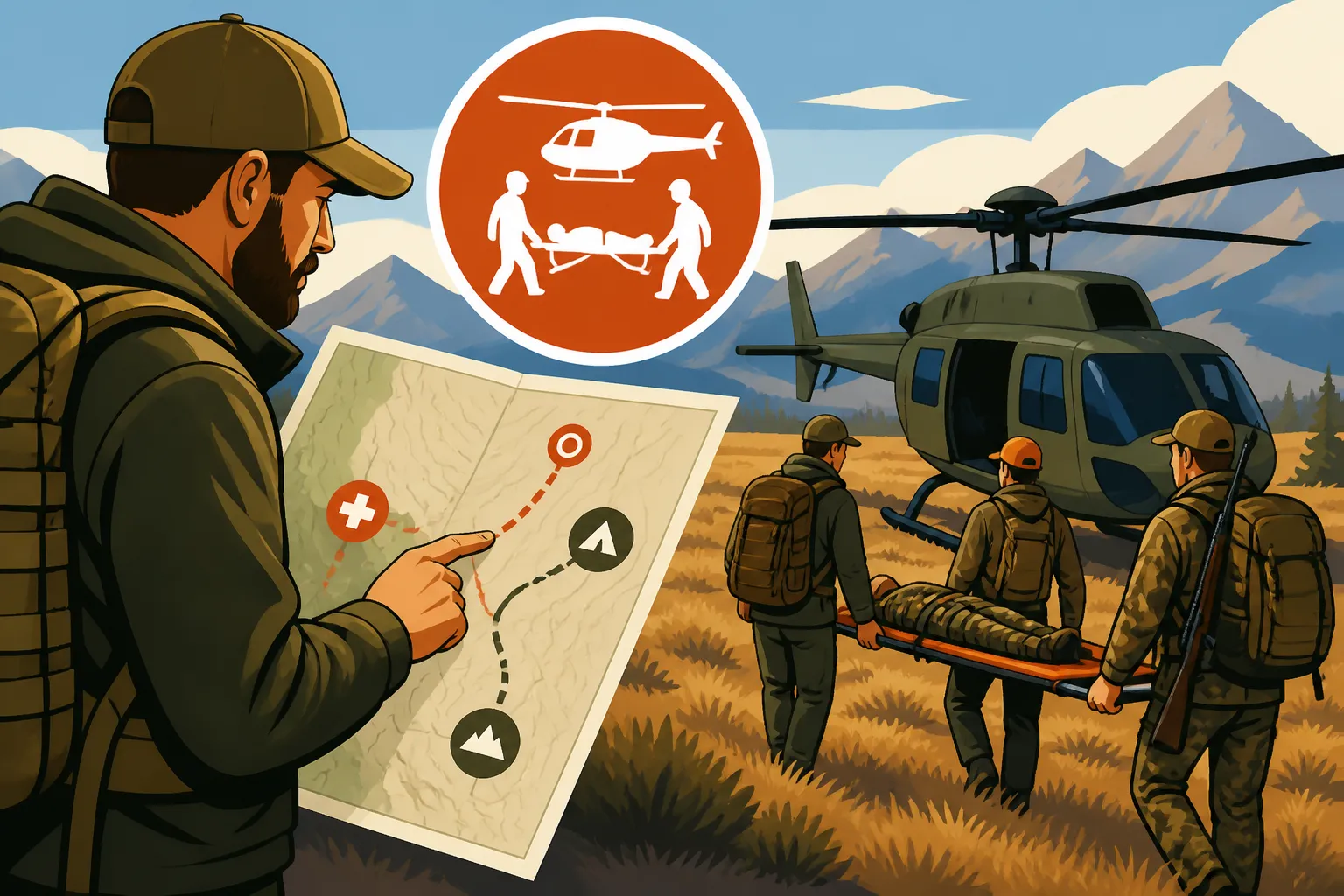
When injuries are severe or life-threatening, and speed is paramount, an outfitter will work directly with SAR to coordinate a helicopter evacuation. This is a complex operation involving precise GPS coordinates, clear communication about landing zones, and careful patient packaging. Helicopters are not a first resort; they are expensive, weather-dependent, and reserved for critical situations. However, having an outfitter who can efficiently communicate with SAR, provide accurate location data, and prepare a safe landing zone significantly expedites this process. Their deep understanding of the local area and established relationships with emergency services can shave precious hours off an evacuation timeline, which can be critical for survival.
Vetting an Outfitter for Safety Preparedness
Choosing an outfitter is a significant decision, and their safety planning should be a major factor in your choice. Don't just assume every outfitter has the same level of preparedness; it varies widely. Doing your homework beforehand can make all the difference should an unexpected event occur. When researching outfitters, whether through a platform like BookYourHunt or directly contacting them, always prioritize those who are transparent and proactive about their safety protocols.
Key Questions to Ask Before Booking
When you're making that initial call or sending an email, don't be shy about asking pointed questions regarding their emergency procedures. This isn't being paranoid; it's being responsible. Start by asking about their general emergency plan: "What is your protocol if a client becomes injured or ill in the backcountry?" Dig deeper: "What medical certifications do your guides hold? Are they Wilderness First Responders or higher?" Ask about their communication strategy: "What type of satellite communication devices do your guides carry, and how often do they check in with base camp?" You'll also want to inquire about their experience with past emergencies, not to dwell on negative events, but to gauge their response and learning from previous incidents.
It's also crucial to be upfront about your own medical history and physical condition. A good outfitter needs to know about any pre-existing conditions, allergies, or medications you're taking. This allows them to tailor their plans and ensure they have appropriate resources on hand. Asking about Questions Worth Asking Before You Book covers this and more. If an outfitter seems evasive, dismissive of your concerns, or claims they "never have emergencies," that should be a significant red flag. You can find more insights into what to watch out for in Red Flags When Booking a Wyoming Outfitter. Reputable services listed on GoHunt will often have detailed profiles that highlight these aspects, making your research easier.
The Role of the Wyoming Board of Outfitters
In Wyoming, the outfitting industry is regulated by the Wyoming Board of Outfitters and Professional Guides. This board is responsible for licensing outfitters and guides, ensuring they meet specific requirements for experience, financial solvency (through bonding), and insurance coverage. While the board doesn't dictate the minute details of an outfitter's emergency medical plan, the fact that an outfitter is licensed, bonded, and insured speaks volumes about their professionalism and adherence to established industry standards. These requirements offer a layer of protection and accountability for clients.
Before finalizing a booking, it's always a wise move to verify an outfitter's license number through the Wyoming Board of Outfitters. This simple step confirms they are operating legally and have met the state's baseline requirements. While a license doesn't guarantee a flawless hunt, it does indicate a certain level of compliance and professional commitment. You can learn more about this process in Verifying a Wyoming Outfitter's License Number. This due diligence is part of ensuring you're choosing a reputable operation that takes their responsibilities seriously, including client safety.
Client Responsibilities in an Emergency
While outfitters bear the primary responsibility for emergency planning, clients also have a crucial role to play. First and foremost, be honest and transparent about your physical condition and any medical issues you have. Don't exaggerate your fitness or minimize health concerns; this information is vital for your guide to assess risk and make informed decisions. A frank discussion about Physical Conditioning for a Mountain Hunt is always a good idea. Similarly, if you require Preparing for Altitude on a Wyoming Hunt, discuss this with your outfitter to understand how they manage acclimatization.
Secondly, listen to and follow your guide's instructions without question, especially in a stressful situation. They are the experts on the ground, trained for these scenarios. Carry the personal gear they recommend, such as appropriate layers for changing weather, a personal first aid kit, and any prescribed medications. Having a working knowledge of How Much Riding Ability a Horseback Hunt Needs is also key if you're on an equine-assisted hunt, as this can affect extraction options. Being prepared and cooperative makes the guide's job significantly easier and directly contributes to a safer outcome for everyone involved.
Costs and Coverage: What to Expect
An emergency evacuation, especially one involving specialized medical personnel or air transport, can be incredibly expensive. It's a critical component of emergency planning that many hunters overlook until it's too late. Understanding who bears these costs and how to mitigate them is essential for any hunter venturing into the backcountry.
Who Pays for Search and Rescue?
In Wyoming, like many states, Search and Rescue (SAR) services are often provided by volunteer organizations or local sheriff's departments and are typically free to the person being rescued. This means that the actual effort of locating you, reaching you, and providing initial aid and transport to an accessible trailhead usually won't result in a bill from the SAR team itself. However, this "free" service only covers a portion of the total incident. The moment you are transferred from SAR to an ambulance, a medical flight, or a private air evacuation service, those costs become your responsibility.
A helicopter air ambulance can easily run into tens of thousands of dollars, depending on the distance, the medical services provided onboard, and the type of aircraft. Ground ambulance transport, while less costly, is still a significant expense. If you're injured in a remote area and need to be flown directly to a major medical center, these bills can quickly become financially crippling, even if your health insurance covers some of the medical treatment. This is where specialized trip insurance becomes not just a recommendation, but a necessity for serious backcountry hunters.
Trip Insurance: A Non-Negotiable Consideration
This leads directly to the importance of comprehensive trip insurance that specifically includes medical evacuation coverage. While your personal health insurance might cover the medical treatment itself, it rarely covers the cost of getting you from a remote backcountry location to the nearest hospital. Medical evacuation insurance, often part of a broader travel insurance package, is designed to cover these exorbitant transportation costs, ensuring you can be evacuated by the most appropriate means, including helicopter, without incurring massive debt.
When choosing a policy, carefully read the fine print regarding evacuation. Some policies have geographical limits, others have specific exclusions for "hazardous activities" (which hunting might be categorized as), and some require you to use their specific network of evacuation providers. Don't assume a basic travel insurance policy will suffice; look for policies designed for adventure travel or backcountry activities. This investment, while an added expense, provides invaluable peace of mind. It also covers other unforeseen circumstances, like Reading the Cancellation and Refund Terms if you have to cancel your hunt due to illness or injury before you even leave home. When planning, you'll want to think about How Far Ahead to Book a Wyoming Hunt, and often, purchasing trip insurance early is beneficial.
Disclaimer
This article is for general informational purposes only and does not constitute professional advice. Laws, prices and regulations vary by location and change over time. Consult a qualified professional for guidance on your specific situation.