Migration Corridors and the Red Desert Herd
Wyoming mule deer migration corridors and the Red Desert herd reveal seasonal survival movements across vast open sagebrush plains.
Know what you’re after.
Big game, small game, upland birds, and waterfowl — identification, behavior, rut and migration timing, and how each species moves through the season.
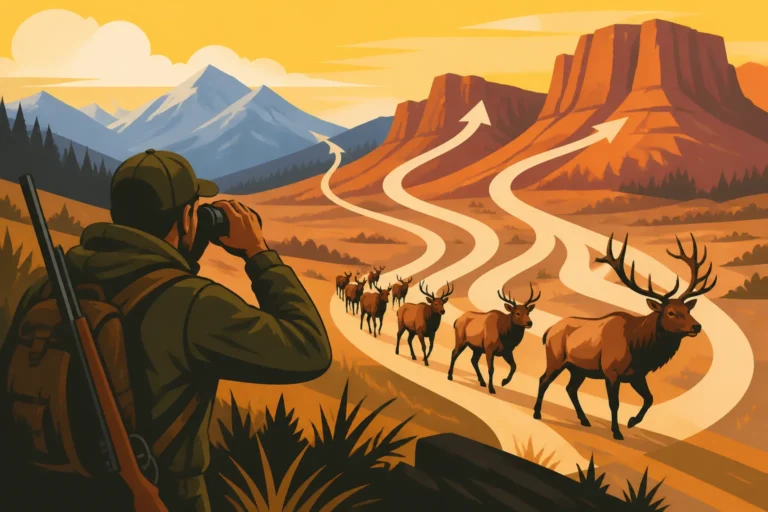
Wyoming mule deer migration corridors and the Red Desert herd reveal seasonal survival movements across vast open sagebrush plains.
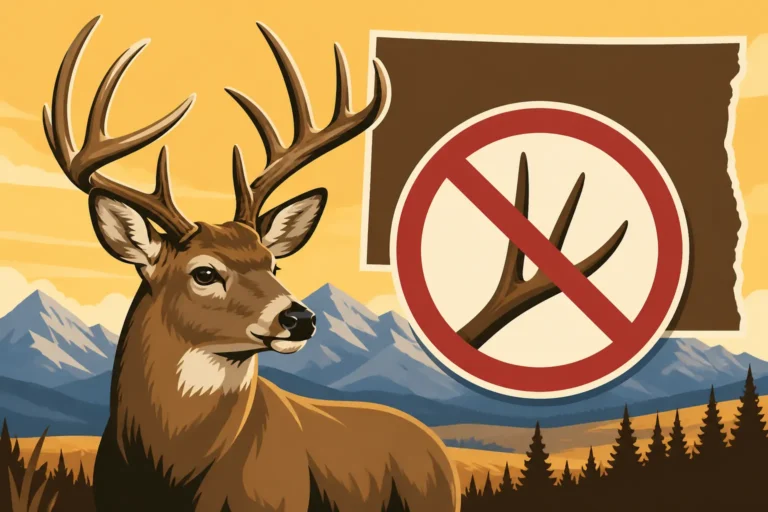
Wyoming deer hunting regulations detail antler point restrictions for the 2026 season, including the three points or better rule.
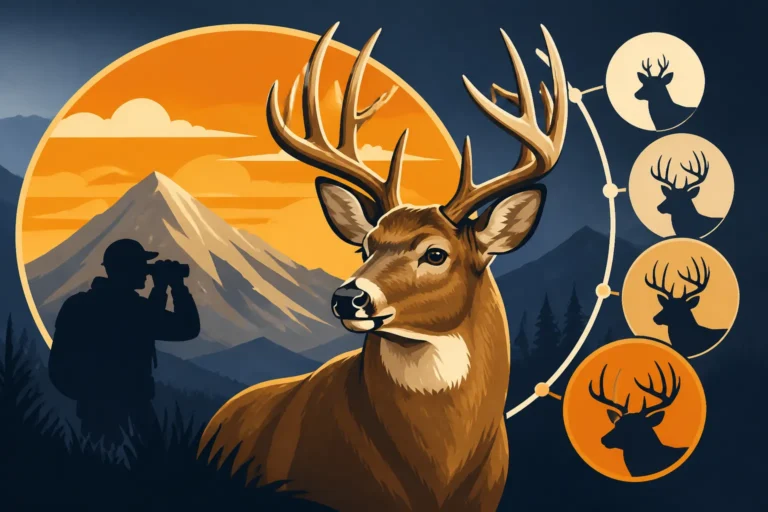
Wyoming mule deer populations now feature older bucks aged five to eight because severe winters killed vulnerable younger animals.
The Wyoming Range mule deer herd population falls below management objectives due to habitat and environmental challenges.
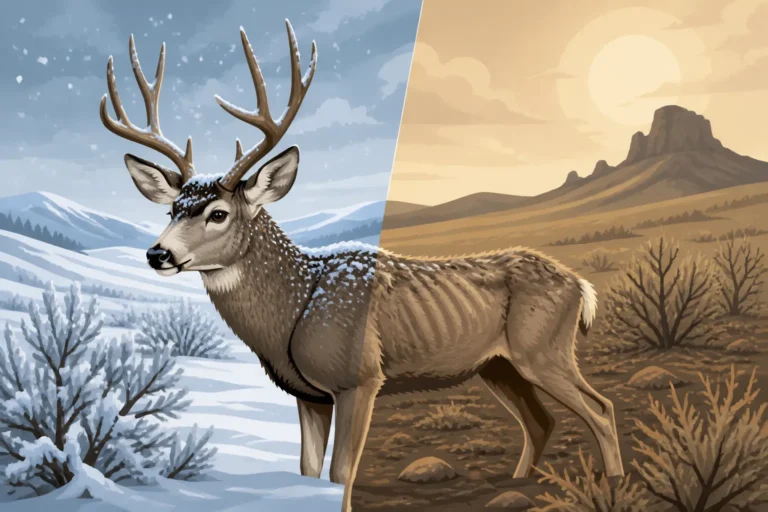
Wyoming mule deer populations suffered catastrophic losses from unprecedented winter snowfall, extreme cold, and a delayed spring.
Wyoming elk management uses selective harvest of bull and cow tags to maintain healthy herds across different hunt units.
Brucellosis in Wyoming elk and cattle explains how bacterial disease spreads and impacts western wildlife and livestock.
Chronic Wasting Disease on Wyoming feedgrounds explains prion transmission, elk herd impacts, and safety measures for hunters.
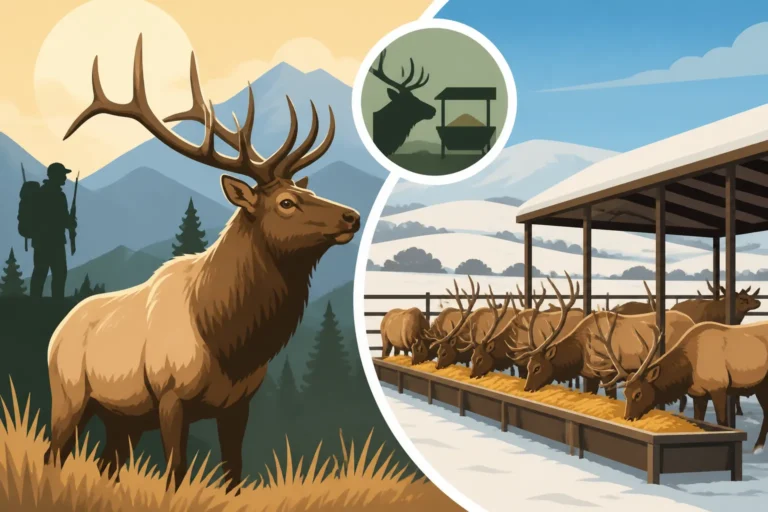
Wyoming elk feedgrounds began following the severe winter of 1909 to 1910 to prevent starvation and protect ranch haystacks.
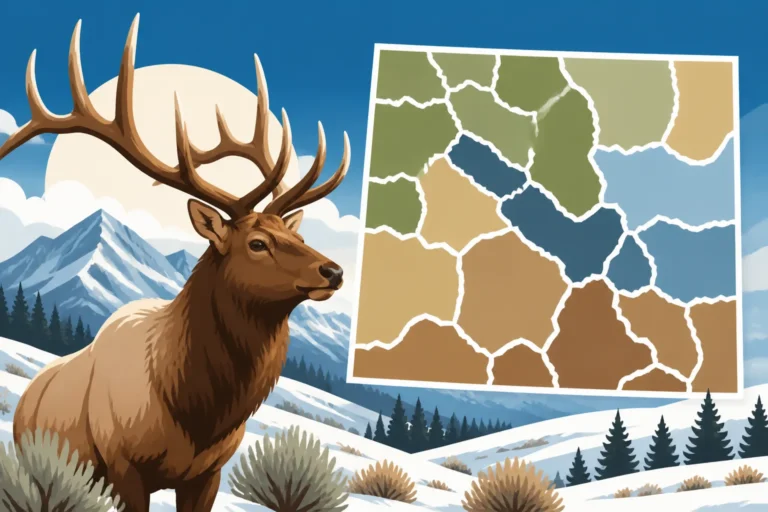
Wyoming elk herd units and winter ranges explain population goals, migration patterns, and wildlife management objectives.