Antler Point Restrictions Wyoming Kept for 2026
The confusion and frustration around antler point restrictions can make planning a Wyoming deer hunt feel like navigating a minefield. You spend hours poring over regulations, comparing hunt area maps, and then suddenly you're hit with a rule about "three points or better" that changes everything you thought you knew. It's enough to make even seasoned hunters scratch their heads. This guide is here to clear the air, diving deep into Wyoming's antler point restrictions, particularly those confirmed for the 2026 season, so you can hunt with confidence and stay well within the law.
Understanding Antler Point Restrictions in Wyoming
Wyoming's antler point restrictions (APRs) are a critical component of deer management, especially for mule deer, and they can significantly influence how and where you hunt. These rules aren't just arbitrary hoops to jump through; they're strategically designed to achieve specific conservation goals. Ignoring them can lead to serious consequences, from fines to license revocation, so a thorough understanding is paramount.
Why APRs Exist: Management Goals
The primary goal behind implementing antler point restrictions is often to improve the age structure and quality of a deer herd. By protecting younger bucks, particularly those with fewer than the required number of points, wildlife managers aim to allow them to mature, contribute to the breeding population for more seasons, and potentially grow larger antlers. This strategy seeks to shift the buck-to-doe ratio towards a more natural balance and provide a better hunting experience by increasing the likelihood of encountering mature animals. After a challenging winter like the What the 2022-23 Winter Did to Wyoming Mule Deer, such management tools become even more crucial for herd recovery. It's a long-term game, requiring patience and compliance from hunters.
Another reason for APRs is to spread hunting pressure more evenly across the buck population. If all bucks are legal, hunters might naturally target the most visible or easiest-to-find animals, which often happen to be younger, less experienced deer. By placing restrictions, hunters are forced to be more selective, encouraging them to pass on younger animals and focus on finding older, more mature bucks. This also helps reduce the "buck-at-first-sight" mentality, promoting more ethical and conservation-minded hunting practices.
The Basic "Three Points or Better" Rule
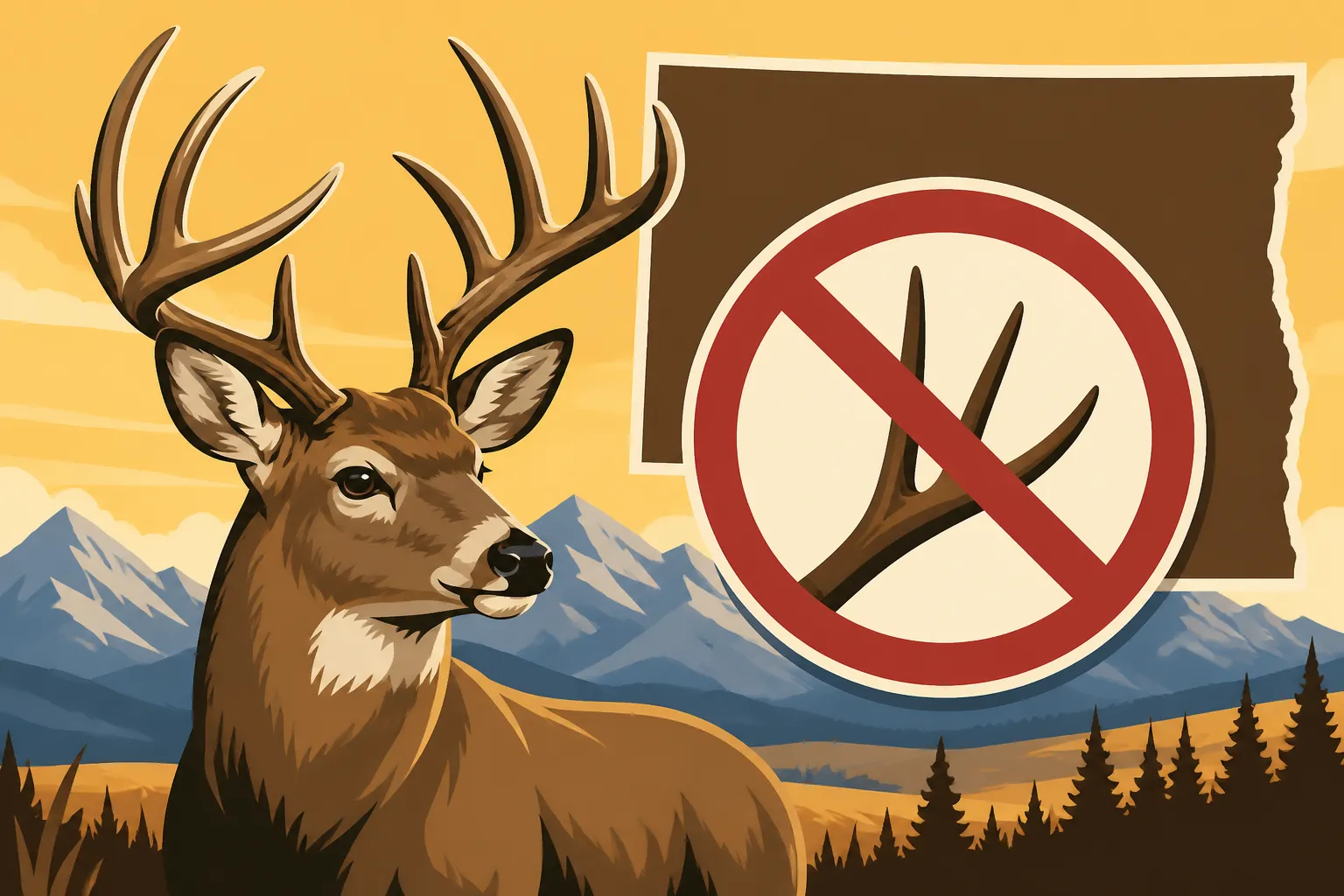
When most hunters talk about antler point restrictions in Wyoming, they're typically referring to the "three points or better" rule on at least one side. This means that for a buck to be legally harvested in an APR unit, it must have a minimum of three points that are at least one inch long, originating from the main beam, on at least one of its antlers. A common misconception is that it must be three points on each side, but the rule often applies to just one side, making certain bucks legal even if their other antler is a spike or only has one or two points.
It’s crucial to remember that this isn't a statewide rule; it applies only to specific hunt areas or license types that have been designated with these restrictions. Always consult the current year's hunting regulations booklet for your specific hunt area to confirm the exact requirements. What might be legal in one unit could be a violation just across the county line, leading to a very unpleasant interaction with game wardens. This is where planning tools like those found on GoHunt can be invaluable, offering detailed unit breakdowns and regulation summaries.
Distinguishing a Point From a Cheater or Burr
One of the trickiest aspects of APRs is accurately distinguishing a legal point from other antler growths, especially when you're glassing from a distance or making a split-second decision in the field. A "point" is generally defined as any projection off the main beam that is at least one inch long. This length is key. If it's shorter, it's typically not counted. Additionally, points must originate from the main beam itself, not from the base or burr of the antler.
Cheaters, sometimes called kickers or non-typical points, are often extra tines that grow off other tines rather than directly off the main beam. While they add to the impressive nature of a buck, they usually do not count towards the "three points or better" rule unless they meet the definition of a point originating from the main beam. Burrs, the rough, bony ring at the base of the antler where it attaches to the skull, never count as points. When in doubt, it's always safer to pass on a buck if you cannot definitively confirm it meets the minimum antler point requirement. Taking the time to properly Field Judging a Mule Deer Buck Quickly before you commit is critical for ethical hunting and staying within the law.
Specific Hunt Areas and Their 2026 APRs
Wyoming’s approach to antler point restrictions is not a one-size-fits-all strategy. Instead, these regulations are applied to specific deer hunt areas where wildlife managers have identified a need for particular herd management objectives. This means a hunter must meticulously check the regulations for their chosen unit, as the presence or absence of APRs can vary dramatically from one area to another.
Hunt Areas With Mandatory APRs
Several hunt areas in Wyoming are well-known for their antler point restrictions, often requiring bucks to meet the "three points or better on one side" criteria. These areas are typically managed for quality deer, aiming to foster an older age class of bucks. For instance, some units in the southwestern part of the state, or those bordering national parks, might have more stringent regulations to protect younger animals and improve the overall herd structure. These are often units where hunters expect a higher chance of encountering mature bucks, justifying the more selective harvest rules.
It's not uncommon for these specific hunt areas to also have different season dates or license types compared to units without APRs. This adds another layer of complexity that hunters must navigate. For example, a Type 1 general deer license might allow "any antlered deer" in one unit, but require "three points or better" in another. This highlights the importance of not just knowing if an APR exists, but where it applies, and how it interacts with your specific license. The Wyoming Game and Fish Department's online hunt planner is an excellent resource for cross-referencing these details, as are specialized platforms like GoHunt that provide an aggregated view of regulations.
Here's a generalized table illustrating how APRs might vary across different types of deer hunt areas in Wyoming for bull/buck licenses:
| Hunt Area Type | Typical APR | General Goal | Example Hunt Areas (Conceptual) |
|---|---|---|---|
| Quality Units | 3 points+ | Increase buck age structure, trophy potential | High-demand, limited quota areas |
| General Units | Any Antlered | Broader harvest, population control | Widespread, accessible areas |
| Recovery Units | 3 points+ | Protect young bucks, boost recruitment | Post-winter kill zones |
| Youth/Special Units | Any Antlered | Promote participation, opportunity | Designated youth hunt zones |
Note: This table is illustrative. Always refer to the official Wyoming Game and Fish Department regulations for specific hunt area rules and the 2026 season.
Understanding Region-Specific Rules
Wyoming is a vast state, and deer management strategies are tailored to the distinct ecological regions and herd objectives. This means that APRs are often concentrated within certain regions, reflecting local conditions, herd health, and population goals. For example, units in the mountains might have different APRs than those on the eastern plains or in the Red Desert. These regional differences can be confusing, especially if you plan to hunt in multiple areas or are new to hunting Wyoming.
For instance, you might find that Which Hunt Areas Require Three Points or Better are often concentrated in regions known for their mule deer populations where managers are actively trying to cultivate older, larger bucks. Conversely, some areas might have more liberal "any antlered deer" rules, especially where deer populations need to be managed through higher harvest rates or where antler quality is less of a primary management goal. Understanding these regional philosophies can help you anticipate the type of regulations you'll encounter and choose hunt areas that align with your hunting preferences.
How APRs Impact Mule Deer Management
Antler point restrictions are specifically powerful tools in mule deer management due to their life history and the pressures they face. Mule deer populations, particularly the iconic Wyoming Range deer herd, have experienced significant challenges, including harsh winters and habitat changes. APRs help ensure that a certain percentage of young bucks survive their first few hunting seasons, allowing them to breed and contribute genetically to the herd. This can lead to a more robust and resilient population over time.
By shifting harvest pressure away from younger bucks, APRs can indirectly increase the number of older, more experienced males in the herd. These older bucks are often more successful breeders, and their presence can lead to healthier fawns and improved overall herd vigor. While controversial for some hunters who prefer the simplicity of "any buck" hunting, the long-term benefits of APRs for mule deer quality and sustainability are widely supported by wildlife biologists. This careful balancing act is crucial for ensuring healthy populations for future generations of hunters.
Navigating Exceptions and Special Considerations
While APRs might seem straightforward at first glance, Wyoming's regulations often include important exceptions and special considerations that every hunter needs to be aware of. Overlooking these nuances can lead to misunderstandings that either prevent you from harvesting a legal animal or, worse, result in an unlawful harvest. It's truly in the details where compliance becomes clear.
The "Any Antlered Deer" Exception
Not all hunt areas or license types are subject to antler point restrictions. Many units, especially those with Wyoming General Deer Licenses Over the Counter, will offer an "any antlered deer" license type. This means that in these specific areas, any deer with at least one antler is considered a legal buck, regardless of the number of points. This provides hunters with more harvest opportunity and simplifies the field judging process, as the "three points or better" rule simply doesn't apply.
These "any antlered deer" units are often found in areas with higher deer populations, or where managers aim for a broader, less selective harvest. It's a common option for those seeking a meat animal or simply the experience of a general season hunt without the added pressure of antler assessment. However, it is absolutely paramount to verify that your specific license and hunt area explicitly state "any antlered deer" before you pull the trigger. Assumptions can lead to mistakes, so always double-check the current Wyoming Game and Fish regulations.
Youth Hunters and APRs
Wyoming recognizes the importance of introducing young people to hunting and often provides special provisions to make it more accessible. While a blanket exemption from APRs for youth hunters isn't universal, there can be specific situations or hunt areas where youth licenses might allow for the harvest of "any antlered deer," even in units that typically have APRs for adult hunters. This is often done to reduce complexity and increase success rates for beginners, ensuring a positive first hunting experience.
However, parents or mentors supervising youth hunters must still be intimately familiar with the regulations. These youth-specific exceptions are always clearly outlined in the annual hunting regulations. It's the responsibility of the adult to ensure the youth hunter understands and adheres to all applicable rules, including any modified APRs. Don't assume an exemption exists; confirm it. This attention to detail teaches young hunters the importance of ethical and legal hunting from the very start.
Archery Season vs. Rifle Season APRs
Another common area of confusion arises when comparing archery and rifle season regulations. While APRs typically apply regardless of weapon choice, there can be instances where certain archery-only seasons or hunt areas have slightly different antler restrictions or allowances. For example, some units might have "any antlered deer" during an early archery season, but then switch to "three points or better" once the general rifle season opens. This isn't a widespread difference, but it's important enough to warrant careful review.
The challenges of bowhunting, which often require much closer shot distances, can make field judging under pressure even more difficult. Combining the difficulty of getting close with the need to accurately count points adds a layer of complexity for archers. Therefore, paying close attention to whether the APRs for Wyoming's Statewide September Archery Deer Season differ from the later rifle seasons in your chosen unit is essential. Just like with any other regulation, the safest approach is to consult the specific season rules for your hunt area and weapon type.
The Impact of APRs on Hunter Strategy and Success
Antler point restrictions don't just exist on paper; they fundamentally alter how hunters approach their time in the field. From scouting to shot selection, APRs inject a layer of tactical decision-making that can be both challenging and rewarding. They encourage a different kind of hunting, one focused on patience, observation, and precision, rather than simply filling a tag.
Field Judging Bucks Under Pressure
Perhaps the most significant impact of APRs is on a hunter's ability to accurately Field Judging a Mule Deer Buck Quickly under real-world hunting conditions. It's one thing to look at photos or videos and count points; it's another entirely when a buck appears suddenly at dawn, moving through brush, or offering only a brief window of opportunity. The pressure to make a quick, accurate decision can be immense. Hunters need to develop sharp judgment skills, often requiring significant practice glassing deer and mentally counting points at varying distances and angles.
Passing on a buck because you can't definitively confirm its legality is a critical skill. It takes discipline to let a good-looking buck walk if you're uncertain about its point count, especially after hours or days of hard hunting. This often means carrying high-quality optics, spending more time glassing, and waiting for the animal to offer a clear view of its antlers before even considering a shot. Successful hunters in APR units learn to prioritize legal compliance over the urge to harvest quickly.
The Influence on Buck Age Structure
The stated goal of APRs is to influence the buck age structure within a herd, and in areas where they've been consistently applied, these regulations have indeed shown results. By protecting younger bucks, more of them survive to older age classes. This means hunters in APR units might actually encounter a higher percentage of older, more mature bucks than in areas with "any antlered" rules, assuming other factors like habitat and winter survival are favorable. This aligns with observations that in some areas, Why Surviving Bucks Are Older Than Usual, particularly after severe winters.
While it can mean fewer bucks are "legal" during any given season, the long-term benefit is a healthier, more balanced herd with a greater number of impressive, mature animals. For hunters who prioritize seeking out older, trophy-class bucks, hunting in APR units can be a strategic choice. It's a trade-off: fewer immediate opportunities for any buck, but potentially higher quality opportunities for mature bucks. This management approach is a significant factor in maintaining quality hunting experiences in Wyoming's cherished deer country.
Tools and Resources for Staying Compliant
Staying compliant with Wyoming's antler point restrictions requires more than just reading the regulations once. It demands ongoing research, careful planning, and utilizing the right tools. Thankfully, modern technology and dedicated resources make this much easier than it used to be.
One of the best ways to stay informed is through digital mapping and hunting planning platforms. Services like GoHunt are excellent for this, offering detailed unit breakdowns, draw odds, and often integrating regulation summaries. You can layer public and private land, visualize terrain, and even see historical harvest data – all of which can help you understand the context of APRs in a given area. These platforms are constantly updated, making them a more reliable source than outdated paper maps or last year's regulations.
Additionally, don't underestimate the value of talking to local Wyoming Game and Fish Department biologists or game wardens. They are the ultimate authority and can clarify any lingering questions you have about specific hunt areas or complex regulations. Many hunters also find success by utilizing online forums or social media groups dedicated to Wyoming hunting, where experienced individuals often share insights and interpretations of regulations. Just be sure to cross-reference any informal advice with official sources.
Beyond APRs: Other Wyoming Deer Regulations
While antler point restrictions are a critical piece of the puzzle, they are just one aspect of the comprehensive regulatory framework governing deer hunting in Wyoming. To ensure a legal and ethical hunt, it’s vital to understand the broader rules that apply, from license types to carcass handling. These regulations work in concert to manage deer populations and preserve the integrity of the hunting experience.
Doe and Fawn Licenses: When They Are an Option
Beyond the buck-focused APRs, Wyoming also issues licenses for antlerless deer, commonly referred to as doe and fawn licenses. These licenses play a crucial role in managing overall deer populations, especially in areas where herd numbers are high or where there's a need to reduce pressure on the buck segment of the herd. Hunting does and fawns is often a more accessible option for hunters, with higher draw odds and typically lower license costs. For example, you can often find Where Doe and Fawn Deer Licenses Remain even after the primary draw.
These licenses usually have specific hunt areas and season dates, and they are typically exempt from antler point restrictions since the target animal is antlerless. They provide an excellent opportunity to put high-quality venison in the freezer and are an integral part of responsible wildlife management. For many hunters, especially those with families or those seeking to fill their freezer, a doe or fawn tag is a valuable addition to their hunting strategy, complementing their pursuit of antlered deer.
Carcass Tagging and Evidence of Sex Rules
Once you've successfully harvested a deer in Wyoming, a new set of regulations kicks in: those related to tagging and evidence of sex. These are non-negotiable rules designed to ensure accountability and aid in wildlife management. Immediately after harvesting, you must punch and attach your carcass tag to the animal. This tag must remain with the carcass during transport, helping game wardens verify the legality of your harvest.
Furthermore, Wyoming has specific Carcass Coupon and Tagging Rules regarding evidence of sex and species. For antlered deer, a portion of the head, including the antlers, must often remain naturally attached to the carcass or a substantial portion of the meat during transport from the field. This allows officials to confirm the animal was indeed an antlered buck as per your license and the local APRs. Removing antlers too soon or improperly processing the animal in the field can lead to violations, even if the kill itself was legal. Always carry a copy of the regulations to understand these requirements for your specific hunt area.
Understanding General vs. Limited Quota Licenses
The type of license you hold significantly impacts where and when you can hunt deer in Wyoming. The state primarily uses two categories: general licenses and limited quota licenses. A The Wyoming General Deer License Explained typically allows hunting in broad regions, or "general hunt areas," and often has more liberal rules, including the "any antlered deer" option in many places. These licenses are generally easier to obtain, sometimes even available over-the-counter or with fewer preference points.
Limited quota licenses, on the other hand, are issued for specific hunt areas with a finite number of tags. These areas are often managed for quality, have higher hunter success rates, or target specific population objectives. Limited quota units are where you'll most frequently encounter antler point restrictions, as they are part of a more intensive management strategy. Drawing a limited quota tag usually requires applying through a lottery system, often accumulating preference points over several years. Understanding this distinction is crucial for planning your application strategy and knowing which regulations will apply to your hunt.
Disclaimer
Please remember that hunting regulations, including antler point restrictions, can change. The information provided in this guide is based on current understanding and confirmed regulations for 2026, but it is not a substitute for the official Wyoming Game and Fish Department regulations. Always consult the most current official regulations booklet for your specific hunt area and license type before heading into the field. State laws and departmental rules supersede any information presented here.