Getting a Wyoming Landowner Tag Through an Outfitter
It's no secret that drawing a coveted Wyoming big game tag can feel like winning the lottery, especially for non-residents. The odds for prime units often stack against you, leaving many hunters frustrated and wondering if they'll ever get to experience the incredible hunting opportunities the Cowboy State offers. This guide is here to unravel one of the most reliable pathways to a Wyoming hunt: understanding and leveraging landowner tags through a reputable outfitter. We'll dive deep into what these tags are, how they work, and why teaming up with an outfitter might be your best bet to put boots on the ground.
Understanding Wyoming Landowner Tags
Let's cut through the jargon and get to the heart of what a "landowner tag" really means in Wyoming. It's not a secret handshake or an under-the-table deal; it's a legitimate, established program designed to incentivize private landowners to support wildlife populations and provide hunting access. Many states have similar programs, but Wyoming's version plays a crucial role for hunters struggling to beat the draw odds.
What Exactly is a Landowner Tag?
In Wyoming, a landowner tag, often referred to as a "landowner license," is a big game license allocated by the Wyoming Game and Fish Department directly to qualified landowners. The primary goal behind these allocations is to foster goodwill with private landowners, whose property provides essential habitat, migration corridors, and winter range for wildlife. Since a significant portion of Wyoming is private land, securing access to these areas is vital for wildlife management and hunting opportunities. These tags are a way to give back to those who steward the land.
The landowner, in turn, can then use these tags themselves, or, more commonly, they can designate them to other hunters. For many out-of-state hunters, these designated tags become the golden ticket, circumventing the challenging public draw system entirely. This means you could potentially secure a tag for a desirable area without accumulating years of preference points, which can be a huge relief if you've been putting in for Wyoming Nonresident Elk Applications Close in Early February or When Wyoming Deer Applications Close for the Year for years with no luck.
Eligibility for Landowner Tags
Not just any property owner can get a landowner tag. The Wyoming Game and Fish Department has strict criteria to ensure the program serves its intended purpose. Generally, a landowner must own a certain minimum acreage of contiguous land, typically 160 acres for antelope and deer, and 640 acres for elk. This land must also provide a significant amount of forage and habitat for the specific big game species for which the tag is requested. It’s not about owning a small cabin plot; it's about providing substantive wildlife benefits.
Furthermore, the property must be accessible to the public for hunting during a portion of the season if the landowner opts to receive "public access" tags, or the landowner can designate "private access" tags where public hunting is not required. The number of tags a landowner receives is also proportional to the amount of habitat and the number of animals the property supports. This ensures that the program is tied directly to wildlife management and land stewardship, rather than just being a perk of property ownership.
Limitations and Considerations
While landowner tags offer a fantastic avenue for hunting, they do come with their own set of limitations. First, these tags are typically issued for specific species, usually deer, antelope, and elk. You won't find landowner tags for every single game animal in Wyoming. Second, the tags are often designated for particular hunt areas or even specific parts of the landowner's property. They aren't statewide passes.
Additionally, many landowner tags are for antlerless animals (does or cows) or for specific antler point restrictions, particularly for deer. While some outfitters do secure "any legal weapon" or "any elk" tags, it's more common to see tags designed to help manage herd numbers, which often target females or less mature males. It's crucial to understand exactly what kind of tag you're getting and what it allows you to hunt, including specific season dates which may differ from general season dates in the same hunt area. Always ask for these details upfront to avoid any surprises once you're in the field.
The Role of an Outfitter in Securing Landowner Tags
For most non-resident hunters, directly acquiring a landowner tag on your own is a monumental task. This is where a professional outfitter becomes an invaluable partner. They often have established relationships with landowners, navigating the complexities of the program on your behalf.
Why Outfitters are Key Connectors
Think of an outfitter as the bridge between eager hunters and willing landowners. Many landowners, while happy to participate in the tag program, simply don't have the time, desire, or resources to market their tags, vet potential hunters, or manage hunting logistics. This is particularly true for ranchers who are busy with their agricultural operations. An outfitter steps in to fill that void. They become the single point of contact, handling all the administrative details, scheduling, and often providing the actual hunting services.
Outfitters also bring expertise in understanding the nuances of the Wyoming Game and Fish regulations surrounding these tags. They know which properties qualify, what species are available, and how to properly transfer the tag designation to a hunter. This saves you an immense amount of legwork and potential headaches, ensuring you have a valid tag when you show up for your hunt. This specialized knowledge is a huge benefit, especially if you're navigating complex regulations around things like The Wyoming Hunter Education Birth Year Cutoff or Wyoming Legal Shooting Hours for Big Game for the first time.
How Outfitters Acquire Landowner Tags
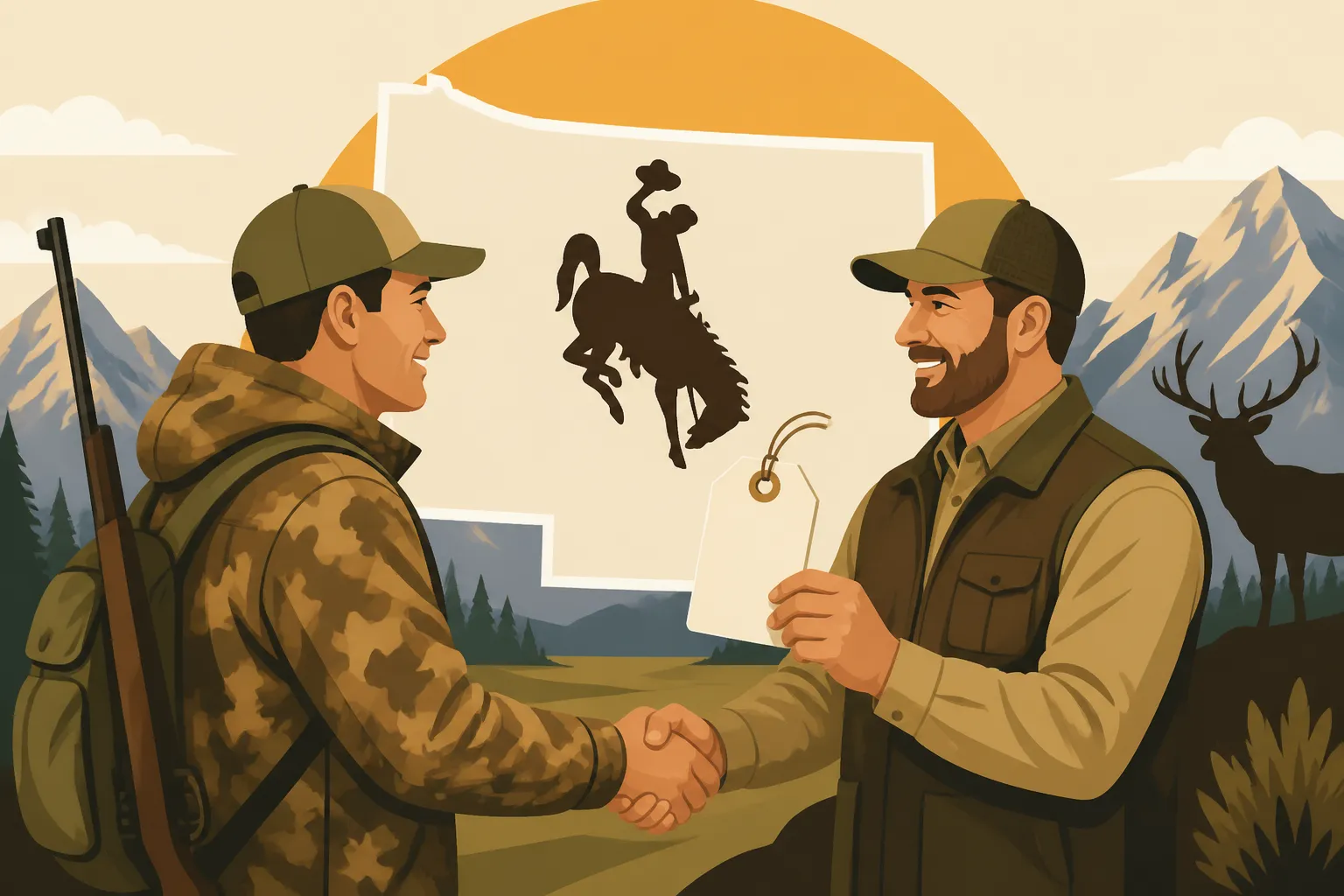
Outfitters generally have a few primary methods for acquiring landowner tags. The most common is through long-term leasing agreements with private landowners. An outfitter might lease hunting rights to thousands of acres of private ranch land for multiple years. This arrangement provides the landowner with a consistent income stream and the outfitter with guaranteed access and, crucially, the landowner tags associated with that property. In these scenarios, the outfitter then includes the designated landowner tag as part of their comprehensive hunt package. You're effectively paying for the access and the tag, bundled with guiding services.
Another method involves direct partnerships where an outfitter might work closely with a landowner to manage hunting on their property, splitting the revenue or operating on a commission basis. In some cases, outfitters might even purchase the designated landowner tags directly from a landowner who prefers not to be involved in the guiding aspect at all, and then resell them as part of a hunt package. Regardless of the specific financial arrangement, the end result for the hunter is typically a private land hunt with a guaranteed tag, often on prime habitat. Understanding these various models can help you appreciate the value proposition when you're considering Leasing Hunting Ground in Wyoming yourself, or evaluating an outfitter's offering.
What an Outfitter Offers Beyond the Tag
While the guaranteed tag is a massive draw, an outfitter provides a whole lot more than just paper. When you book a hunt through an outfitter, you're investing in a comprehensive experience. This typically includes expert guides who know the private property intimately – where the animals feed, bed, and travel. They've often scouted the area for weeks, sometimes months, prior to the season. This local knowledge is invaluable, especially on a property that might not show up on public land maps or where animal behavior is influenced by agricultural practices.
Beyond guiding, most outfitter packages include lodging, meals, and transportation during the hunt. Imagine returning to a comfortable lodge after a long day of hunting, enjoying a home-cooked meal, and strategizing for the next day's hunt with your guide. This takes away the stress of setting up camp, cooking, and navigating unfamiliar terrain. Outfitters also handle crucial logistics like game recovery, field dressing, and often transportation of your animal to a local meat processor or taxidermist. These services are often omitted from the base price, so be sure to inquire about What Outfitter Prices Almost Never Include to avoid surprises.
The Process of Booking a Landowner Tag Hunt
Booking a landowner tag hunt through an outfitter is a structured process that, when done correctly, ensures a smooth and successful experience. It starts with thorough research and clear communication.
Researching Outfitters and Their Offerings
The first step is to identify reputable outfitters who offer landowner tag hunts for your desired species and area. Websites like BookYourHunt and GoHunt can be excellent starting points, offering directories and reviews of various operations. However, don't stop there. Spend time on individual outfitter websites, looking for detailed descriptions of their hunts, photos, and testimonials. Pay close attention to specifics: what species do they specialize in? What hunt areas do they operate in? Do they offer landowner tag hunts specifically?
You'll also want to look for outfitters who are licensed and bonded through the Wyoming Board of Outfitters and Professional Guides. This is a critical step in vetting any operation. Looking Up a License in the Wyoming Outfitter Board will give you peace of mind and help ensure you're dealing with a legitimate business. Consider asking for references from past clients, and make sure to call them and ask candid questions about their experience. A thorough review of references is a key part of Vetting a Wyoming Outfitter Before You Send a Deposit.
Inquiring and Understanding the Package
Once you've narrowed down your choices, it's time to make contact. Don't be shy about asking questions—the more information you gather, the better informed your decision will be. Inquire about the exact nature of the landowner tag: Is it an "any legal weapon" tag or archery-only? Is it for a bull/buck or an antlerless animal? What are the specific hunt dates and location? What is the guaranteed success rate they typically see on these hunts, and how do they define "success"?
Beyond the tag itself, get a detailed breakdown of what the hunt package includes. Does it cover lodging, meals, guides, field transportation, and initial game processing? What about airport transfers, taxidermy referrals, or shipping costs for meat and trophies? Be clear about what's not included, such as your personal hunting license, conservation stamp, weapon, ammunition, or specialized gear. A good outfitter will provide a comprehensive list, but it's your responsibility to confirm every detail.
Securing Your Spot
Once you've chosen an outfitter and are satisfied with the details, the next step is to secure your hunt. This typically involves paying a deposit and signing a hunt contract. Read the contract thoroughly. Pay close attention to cancellation policies, refund terms, and what happens if you cannot make the hunt for unforeseen reasons. Some outfitters might offer payment plans, but deposits are usually non-refundable or only partially refundable, especially as the hunt date approaches.
For some landowner tag hunts, you might still be required to draw a general license from the state, with the landowner tag providing the access. In this scenario, it's crucial to understand the timing of the draw and whether the outfitter offers any contingency if you fail to draw the required general tag. This is why many hunters begin the booking process well in advance, sometimes a year or more out, especially for highly sought-after hunts. Booking Your Wyoming Hunt Before the Draw Runs is a common strategy to ensure you have everything lined up.
Advantages and Disadvantages of Landowner Tag Hunts
Like any hunting strategy, pursuing a landowner tag through an outfitter has its pros and cons. Weighing these against your personal hunting goals and budget is essential for a satisfying experience.
The Benefits
The most significant advantage of a landowner tag hunt is often the guaranteed tag. For many non-residents, this bypasses the often frustrating public land draw system, allowing them to plan their hunt with certainty. This alone can be worth the investment, especially if you have limited time or prefer not to spend years accumulating preference points.
Beyond the tag, these hunts typically offer access to private, often unpressured land. This means less competition from other hunters, higher animal densities, and often opportunities for more mature animals. You're not fighting for a parking spot at a public land trailhead or wondering if another hunter just spooked your target buck. The quality of habitat on private ranches can be exceptional, providing ideal conditions for big game to thrive away from public access roads. Furthermore, the personalized guiding service, comfortable accommodations, and logistical support provided by an outfitter can make for a much more relaxed and enjoyable hunting experience, allowing you to focus purely on the hunt itself.
Potential Drawbacks
The primary drawback for most hunters is the cost. Landowner tag hunts with an outfitter are significantly more expensive than a DIY public land hunt. You're paying for guaranteed access, a professional guide, lodging, meals, and the convenience of a fully managed experience. This cost can be prohibitive for some budgets, making it an investment that needs careful consideration. While you are paying for premium access, it’s worth noting that The Average Cost of a Guided Wyoming Elk Hunt can vary wildly based on species, trophy potential, and duration.
Another potential disadvantage is the reduced "DIY" aspect. For hunters who relish the challenge of solo scouting, navigating public land, and handling all their own logistics, a fully guided landowner hunt might feel less like an adventure and more like a service. While you'll still be hunting, much of the planning and execution is managed for you. Additionally, specific hunt dates or areas might be less flexible than if you drew a general public land tag, as the outfitter's schedule is often set well in advance with their landowner agreements.
Important Considerations Before You Commit
Before you commit to a landowner tag hunt through an outfitter, there are a few final, crucial points to consider. These will help ensure your expectations align with the reality of the experience.
Cost Versus Value
It's easy to look at the price tag of a guided landowner hunt and flinch. However, it's essential to consider the value proposition. You're not just buying a tag; you're investing in a curated experience that includes expert guidance, prime private land access, often higher success rates, and all the logistics handled for you. For many hunters, especially those traveling from out of state with limited time, this convenience and increased chance of success far outweigh the cost difference compared to a multi-year effort to draw a public tag.
Think about the cost of repeated unsuccessful draws, the time spent scouting public land that might be heavily pressured, and the expenses associated with a DIY trip (gas, food, lodging, equipment) that might not yield a tag. For some, the peace of mind and increased probability of success offered by an outfitter and a landowner tag represent true value. This is especially true when considering hunts for highly desirable species or in premium units.
Vet Your Outfitter Thoroughly
I cannot stress this enough: do your homework on the outfitter. A significant investment requires a significant amount of due diligence. Beyond checking their license with the Wyoming Board of Outfitters, dig into their reputation. Read reviews, but be discerning. Contact references and ask pointed questions about their guides' professionalism, animal knowledge, camp conditions, and safety protocols. What happens if someone gets hurt? What are the Bear Safety Practices in an Outfitter Camp if you’re in grizzly country?
Inquire about their typical success rates for the specific hunt you're interested in, and how those rates are calculated. Ask about their guiding philosophy—is it a high-volume operation, or do they focus on a personalized experience? A good outfitter will be transparent and happy to answer all your questions. Be wary of any operation that seems evasive or pushes you to book quickly without providing sufficient information.
Understanding Your Contract
Finally, always, always, always read your contract carefully before signing and sending a deposit. This legal document outlines the terms of your agreement, including what is included, what is not, the total cost, payment schedule, and crucial cancellation or refund policies. What happens if you get sick? What if the weather turns severe and impacts the hunt? Are there any hidden fees, like "trophy fees" that might kick in if you harvest an animal exceeding a certain size?
Clarity now prevents disappointment later. If anything in the contract is unclear, ask for clarification in writing. Ensure all promises made verbally are reflected in the written agreement. Understanding things like Typical Deposit Amounts Wyoming Outfitters Ask and Reading the Cancellation and Refund Terms can prevent a lot of heartache if unforeseen circumstances arise.
| Feature | Landowner Tag Hunt (Outfitter) | Public Draw Hunt (DIY) |
|---|---|---|
| Tag Acquisition | Guaranteed through outfitter/landowner relationship | Highly competitive, relies on draw odds/preference points |
| Access | Private land, often unpressured and prime habitat | Primarily public land, often crowded, requires extensive scouting |
| Cost | Significantly higher (includes guide, lodging, food, tag access) | Lower initial cost (license, gear, travel, food) |
| Convenience | High (logistics handled, comfortable camp, expert guidance) | Low (requires extensive planning, cooking, navigation, setup) |
| Success Rates | Generally higher due to private land and guide expertise | Varies widely based on hunter skill, scouting, and pressure |
| "DIY" Factor | Lower (more of a service, less self-reliance) | High (full control over planning, execution, and effort) |
| Flexibility | Limited to outfitter's schedule and landowner agreements | More flexible in terms of dates and locations (within regs) |
Disclaimer
This article is for general informational purposes only and does not constitute professional advice. Laws, prices and regulations vary by location and change over time. Consult a qualified professional for guidance on your specific situation.