Locator Bugles for Finding Bulls at Dawn
There’s nothing quite like the hopeful anticipation that comes with breaking dawn in the Wyoming backcountry, but that hope can quickly turn to frustration when the elk refuse to talk. You’re standing there, shivering slightly in the crisp morning air, listening for that tell-tale bugle, and all you hear is the wind whistling through the pines. It’s a common scenario that leaves many hunters wondering how to pinpoint those silent bulls. This guide is all about cutting through that morning quiet, specifically focusing on how to effectively use locator bugles to get a response and find those elusive elk when they’re not giving themselves away.
The Art of the Locator Bugle: Why and When It Works
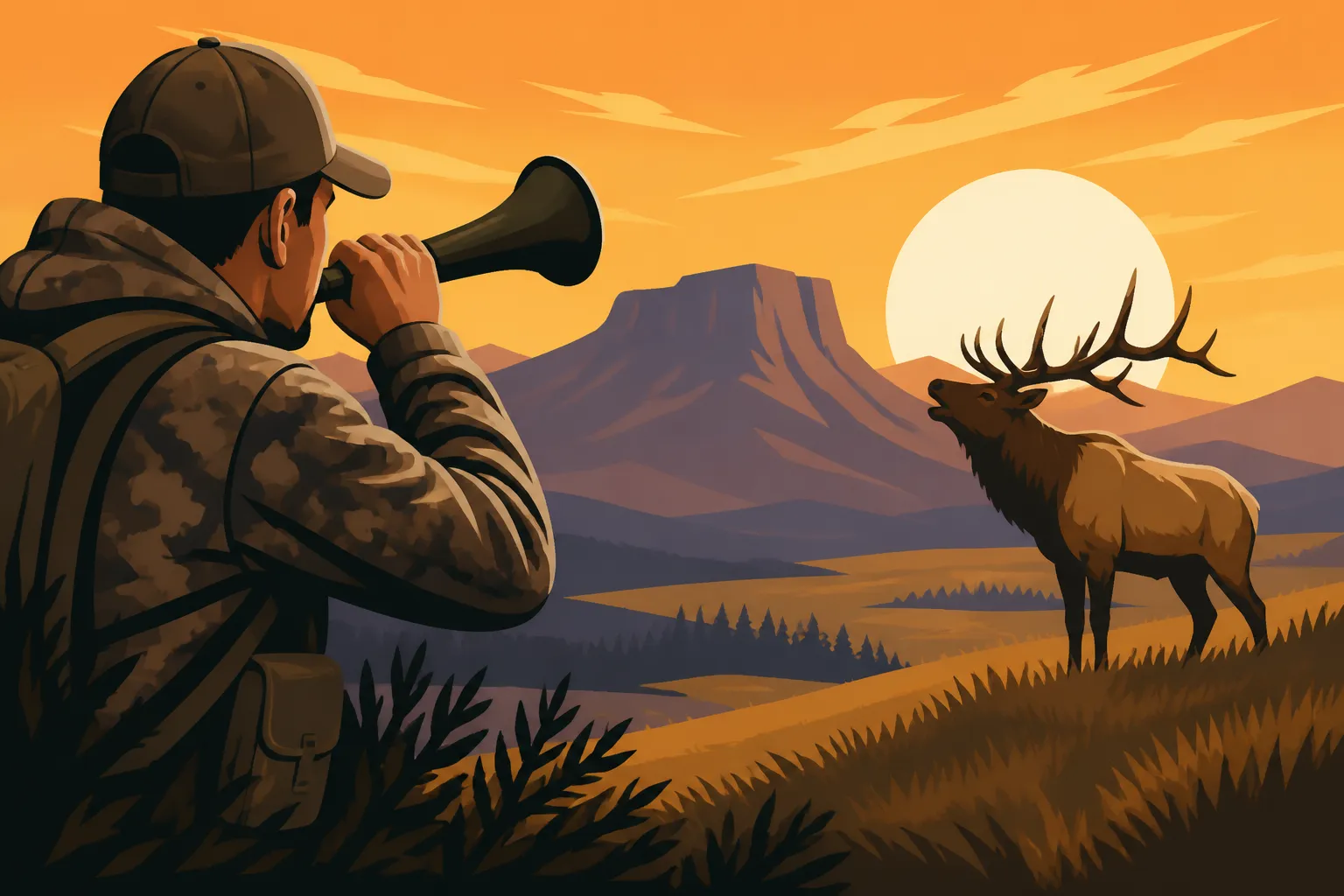
Hunting elk, especially a mature bull, is often a game of hide-and-seek. They are magnificent, intelligent animals, and they don't always advertise their presence. This is where the locator bugle steps in, acting as a crucial tool in your early morning strategy. It’s not about challenging a bull to a fight right off the bat, but rather about prompting a response, a soft sound that gives away his location without necessarily drawing him straight into your lap.
Understanding Elk Behavior at Dawn
Think about it from an elk's perspective: as the sun begins to lighten the eastern sky, they've likely been feeding all night in open parks or on south-facing slopes. Their primary instinct now is to move towards their bedding areas, typically denser timber, north-facing slopes, or deep draws where they can feel safe and secluded for the day. During this transition, they're often less vocal than they might be later in the morning or during the peak of the rut. They're focused on moving, browsing, and settling in.
The challenge for us hunters is exactly this: how do you find an animal that’s deliberately trying to be quiet? You can walk miles, hoping to stumble upon fresh tracks or catch a glimpse, but that’s incredibly inefficient. This is particularly true in vast landscapes like Wyoming's Bighorn Mountains or the expansive Shoshone National Forest, where elk have endless places to disappear. A locator bugle becomes your auditory scouting tool, allowing you to cover vast amounts of ground, sonically speaking, without moving a muscle. It’s a way to wake up the woods, so to speak, and see who’s listening.
The Psychology Behind a Locator Bugle
The beauty of a locator bugle lies in its subtlety, or rather, its intended subtlety. You're not trying to imitate a raging bull spoiling for a fight. Instead, you're aiming for a call that suggests another elk is in the vicinity – perhaps a younger bull, or simply a vocal one. This type of call often piques a bull's curiosity, or sometimes, he simply can't resist responding to another elk's presence in his territory, even if it's a soft, sleepy grumble. It’s less of a direct challenge and more of an inquiry: "Hey, anyone out there?"
Different vocalizations can serve as locator calls. A short, sharp bugle, a series of quick chirps, or even a deep chuckle can all work. The key is that it's a sound that elk recognize and often respond to, even if they’re not in a mood to actively engage in a full-blown bugling match. Many experienced hunters refer to this as a "shock gobble" effect, similar to how turkey hunters use an owl hoot or crow call to get a tom to gobble on the roost. For elk, it's about breaking the morning silence with something unexpected, yet familiar enough to elicit an involuntary response. Even a quick spike or raghorn might give a half-hearted answer, which can still lead you to the bigger bulls nearby.
Mastering the Locator Bugle Technique for Wyoming Bulls
Executing a locator bugle effectively isn't just about blowing into a call. It's a strategic process that involves selecting the right call, understanding the nuances of volume, and knowing exactly where and when to deploy your vocalizations in the vastness of Wyoming's elk country. It takes practice and a keen ear, but when done right, it can drastically improve your chances of finding elk at first light.
Choosing Your Locator Call and Volume
When it comes to elk calls, you have a few options in your arsenal. Diaphragm calls offer hands-free operation and a wide range of sounds, from soft mews to piercing bugles. Bugle tubes, often used with a diaphragm or external reed, add volume and resonance, making your calls carry further across wide-open spaces. External reed calls are user-friendly and can produce incredibly realistic sounds with practice. For locator purposes, any of these can work, but the volume and tone are far more critical than the specific brand or type.
You need to gauge the environment. Are you in thick timber in the Medicine Bow National Forest, where sound is muffled, or gazing across a vast basin in the Red Desert, where sounds can carry for miles? In dense cover, a softer, shorter bugle might be all you need to elicit a close-range response without blowing out any nearby elk. When surveying a large drainage or a timbered draw in the Bridger-Teton, a longer, more resonant bugle might be necessary to reach distant ears. Start with a moderate volume and listen carefully. If there’s no immediate response, you can try increasing the volume on your next series of calls. This method helps avoid spooking close-by animals while still reaching those further out. Always consider the wind – sound travels with it, not against it. A good hunting app like GoHunt can help you visualize the terrain and wind patterns, guiding your calling strategy.
Strategic Calling: Where and When to Call
Timing and placement are everything with a locator bugle. The prime window is usually right at legal shooting light, when elk are making their move from feeding to bedding. Position yourself on a high vantage point, a saddle, or the edge of dark timber. These spots allow your calls to carry effectively and provide good listening posts. You're looking for areas where elk are likely to be transitioning, often along ridgelines or near water sources.
Your calling sequence should be short, sharp, and confident, but not overly aggressive. A quick, two-second bugle followed by a brief chuckle, then silence. The silence is just as important as the call itself. You need to give the elk time to respond, and sometimes that response can be surprisingly delayed. Wait a full two to five minutes, straining your ears for any sound – a distant moan, a grunt, a rustle in the leaves. Don't be discouraged by silence. Elk are masters of stealth, and they might simply be moving away quietly. If you suspect you're in an area where elk are commonly pressured, check out resources on Calling Elk on Pressured Wyoming Public Land for tips on how to adapt your calling. Move a quarter to half-mile, change your location, and try again. Patience is your most valuable asset here.
Interpreting Responses and No Responses
When a bull responds to your locator bugle, it's an exhilarating moment, but the hunt isn't over – it's just beginning. The type of response can tell you a lot. A soft moan or distant chuckle usually indicates a bull who is aware of your presence but not overly aggressive. He's letting you know he's there without committing to a full-blown confrontation. A full-blown roar, on the other hand, suggests a more dominant bull who might be ready to challenge. Pay close attention to the direction and perceived distance of the sound. Does it sound like he's moving, or stationary?
And what about silence? Don't let a lack of response immediately make you pack up. Silence doesn't always mean there are no elk. It might mean they’re moving silently, are not interested, or simply haven’t heard you. Older, wiser bulls, especially, might choose to remain quiet, observing the situation before committing to a vocal response. They’ve heard it all before. If you get no response, reposition yourself. Go around a ridge, drop into a different drainage, or simply wait longer. Sometimes, the most subtle responses are the hardest to hear, but the most crucial to finding a bull. Adjust your approach – if aggressive bugles aren't working, maybe a softer cow call will entice a response.
Beyond the Bugle: Integrating Locator Calls into Your Dawn Strategy
A locator bugle is a powerful tool, but it's just one piece of a much larger puzzle. To truly maximize your chances of success during those critical dawn hours, you need to integrate your calling strategy with other essential hunting methods. Combining auditory cues with visual scouting, understanding terrain, and having a flexible approach will make you a far more effective elk hunter in Wyoming's diverse landscapes.
Pairing With Glassing and Scouting
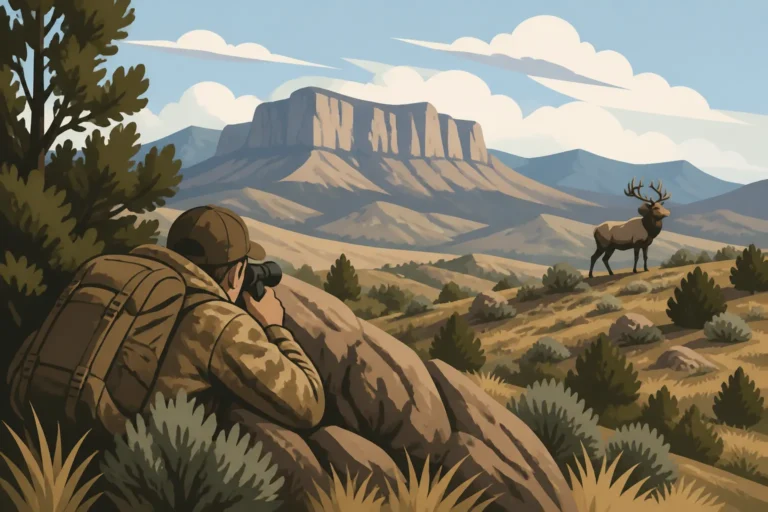
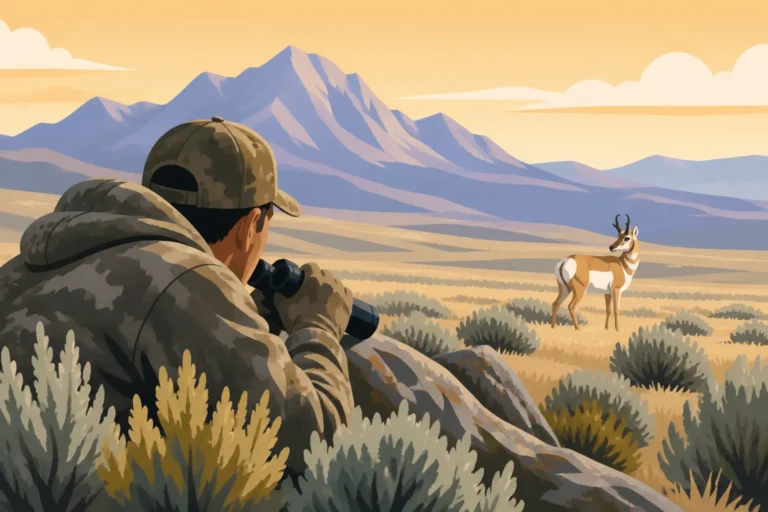
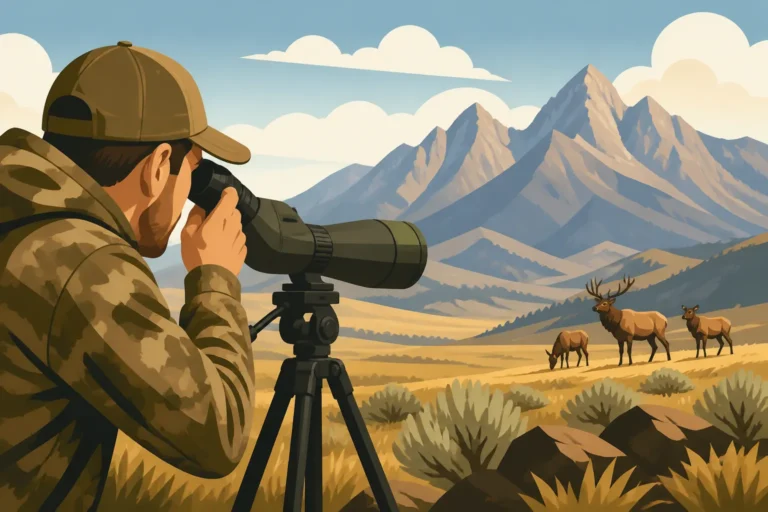
Never put all your eggs in the bugling basket. While locator calls can tell you where an elk might be, glassing can confirm it visually and offer crucial details about the size of the animal, its direction of travel, and the surrounding terrain. As the sun rises, get those binoculars or spotting scope up. After a series of locator calls, pause and intently scan the timber edges, open parks, and distant slopes. You might spot movement, a flash of antler, or a herd emerging even if they didn't vocalize. Effective glassing, like Grid Glassing a Basin Without Missing Bucks, is a skill that complements calling perfectly, especially in wide-open country. GoHunt is a fantastic resource for identifying prime glassing points and understanding elk migration patterns in specific hunt units, helping you choose where to focus your efforts visually and audibly.
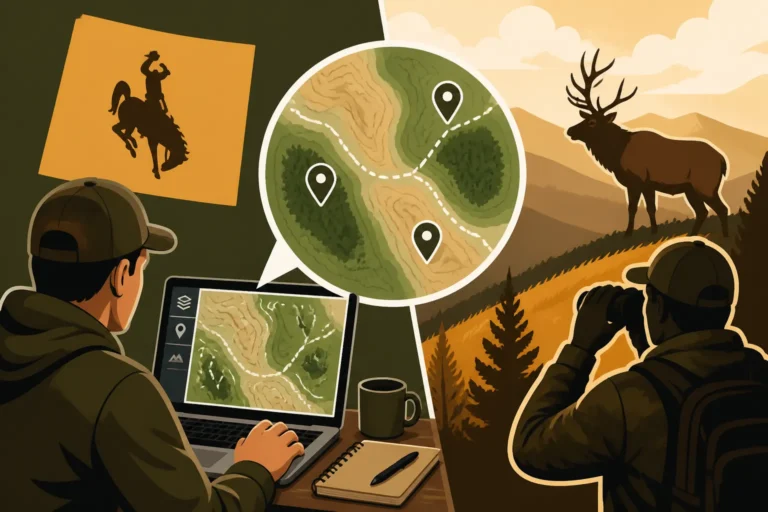
Pre-season scouting is another non-negotiable step. Knowing the landscape, identifying potential feeding and bedding areas, and understanding historical elk movements (whether through Scouting a Wyoming Unit From Your Kitchen Table or boots-on-the-ground recon) will inform your calling locations. If you know a particular basin or timber patch typically holds elk, you can position yourself strategically to send out those locator calls more effectively. Different terrain dictates whether calling or visual searching takes precedence; in dense forest, calling might be your primary method, while in open sagebrush, glassing will likely dominate.
Moving in on a Responsive Bull
Once a bull responds to your locator bugle, the game changes. The locator call has served its purpose; now you transition from searching to stalking. Your goal is no longer just to get a response, but to close the distance for a shot. This means becoming incredibly stealthy. Wind direction becomes paramount – always keep it in your favor. Use terrain features like ridges, draws, and dense timber for cover, just as you would when using Terrain That Hides an Approach to sneak up on a bedded deer. You want to move quickly but quietly, constantly checking the wind and listening for any further vocalizations or sounds of movement from the bull.
At this stage, you'll likely want to switch from locator bugles to more subtle calls, such as soft cow mews or chirps. These sounds are less alarming and can help keep the bull calm, or even draw him a few extra steps if he's curious about a "cow" moving towards him. Don't overcall; let the bull come to you if he's inclined. If he hangs up, a very soft, intermittent call might nudge him along. Knowing How Close a Bowhunter Really Needs to Get is critical here, but even with a rifle, getting closer reduces variables and increases your chances of a clean shot.
The Role of Cow Calls and Mews as Locators
While bugles are often the go-to for locator calls, sometimes a soft cow call or a series of quiet mews can be surprisingly effective, especially on bulls that have grown wary of aggressive bugles. Picture this: you're hunting in a unit where Wyoming Elk Season Dates Are Set Hunt Area by Hunt Area, and the elk have heard a lot of bugling already. A lone cow call, sounding inquisitive or perhaps a little lost, can sometimes trigger a response from a bull who wouldn't answer a challenge. It taps into a different instinct – not aggression, but social cohesion or even curiosity.
This tactic is particularly useful for older, more experienced bulls who tend to be less vocal and more cautious. They've survived multiple hunting seasons and know that a loud bugle often means danger. A subtle cow call can be just the ticket to get them to reveal their general whereabouts with a soft grunt or a distant chuckle. Understanding Bugle and Cow Call Timing Through the Rut is also important, as the effectiveness of these calls can shift throughout the season. Having a variety of calls, including a good external reed or diaphragm call to make convincing mews and chirps, provides a versatile arsenal. GoHunt resources often highlight when and where these alternative locator calls perform best, depending on specific herd behavior or hunting pressure in areas like the National Elk Refuge, where Wyoming's Elk Feedgrounds and Why They Exist can lead to different calling dynamics.
| Call Type | Primary Sound | Ideal Use Case | When to Use |
|---|---|---|---|
| Short Bugle | Quick, sharp "EEEE-AH!" | Announcing presence, soliciting distant responses | First light, across open basins, high vantage points |
| Soft Bugle | Muffled, shorter "Eee-ah-uh" | Subtle inquiry, less aggressive | Closer timber, pressured areas, after initial silence |
| Chuckle | Grunting, guttural "uh-uh-uh" | Curiosity, often accompanies a bugle, but can stand alone | Close-range, to suggest another bull, after a soft bugle |
| Cow/Calf Mew | Soft, nasal "Mee-uh" | Non-threatening locator, for wary or silent bulls | Pressured areas, thick cover, targeting less aggressive bulls |
| Estrous Chirp | Higher-pitched, shorter "Chirp!" | Can elicit a response from rutting bulls | During the peak rut, when seeking responsive bulls |
Disclaimer
Hunting is an inherently dangerous activity. This guide provides information for educational and entertainment purposes only and should not be considered a substitute for official regulations, professional instruction, or personal judgment. Always consult the most current Wyoming Game and Fish Department regulations and local laws before participating in any hunting activities. Ensure you have the proper licenses, permits, and landowner permissions. Be safe, ethical, and responsible in the field.