Satellite Communication From a Hunting Camp
There's a unique knot of anxiety that tightens in your gut when you head deep into the Wyoming backcountry: the worry of being completely out of touch. Whether you're chasing elk through vast wilderness or stalking antelope across endless sagebrush, reliable communication often feels like an impossible dream. This guide is all about cutting through that isolation, helping you understand how satellite communication can be your lifeline, keeping you safe and connected when cell service vanishes into thin air.
Why Traditional Cell Service Fails in Wyoming's Backcountry
If you've spent any time hunting out here, you know the drill. One minute you have two bars, the next, absolutely nothing. That "No Service" message can pop up just a few miles outside of town, let alone when you're 20 miles into a national forest. This isn't just an inconvenience; it can be a genuine safety concern. The sheer scale and ruggedness of Wyoming's landscape are the primary culprits behind this communication black hole.
The Vastness of Wyoming's Terrain
Wyoming isn't just big; it's vast. We're talking about massive mountain ranges, deep canyons carved by ancient rivers, and seemingly endless plains. Cell towers need line-of-sight to function properly. When you're tucked into a timbered draw on the side of the Bighorns or picking your way through the broken country of the Red Desert, that line-of-sight often simply doesn't exist. Signal bounces off mountains, gets absorbed by thick timber, or just dissipates over immense distances. It's not a conspiracy, it's just physics playing out in a truly grand landscape. You can feel utterly alone out there, and for good reason – your phone often is alone.
Spotty Coverage Even Near Towns
It’s easy to think that if you’re within sight of a small town like Dubois or Meeteetse, you’ll have service. But even in these areas, once you deviate from the main highway or dip into a gulch, your signal can drop to zero instantly. Imagine trying to coordinate a rendezvous with hunting partners, or checking in with loved ones, only to be met with dead air. It’s a frustrating reality for many hunters. This unreliable coverage means that even on a less remote hunt, having a backup communication plan isn't just smart, it's essential for peace of mind. Trying to call out from your deer camp after a long day, only to realize your phone is a fancy brick, can be incredibly disheartening.
Understanding Satellite Communication Options for Hunters
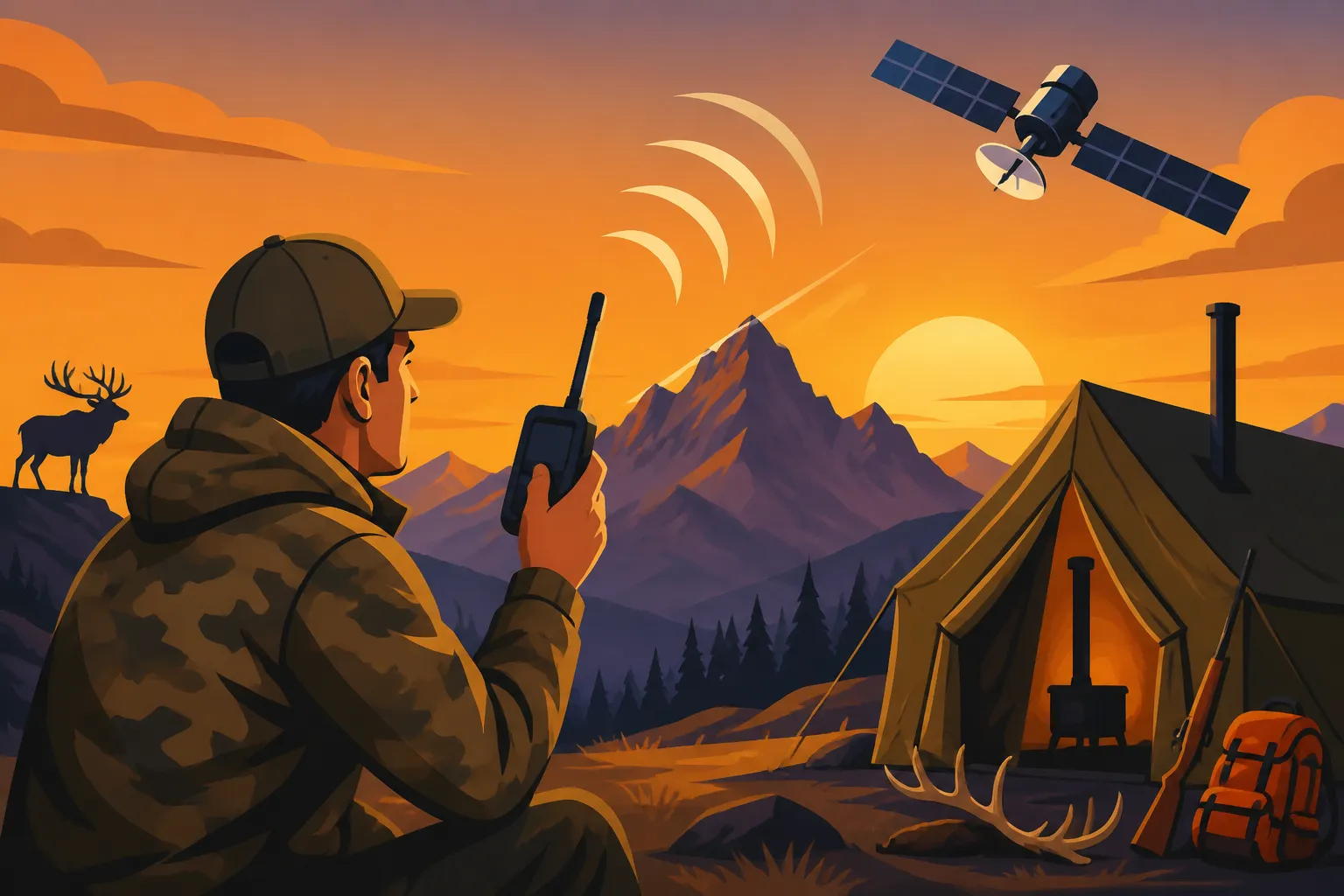
Given the unreliability of traditional cell service, many savvy Wyoming hunters are turning to satellite communication devices. These gadgets don't rely on ground-based towers; instead, they communicate directly with satellites orbiting the Earth. This global coverage is what makes them so invaluable in remote areas. However, not all satellite communication is created equal, and understanding the differences can help you choose the right tool for your specific hunting needs.
Satellite Messengers InReach, Zoleo, and Spot
Satellite messengers are probably the most popular choice for hunters who want to maintain some level of contact and have an emergency lifeline without the full commitment and cost of a satellite phone. Devices like the Garmin inReach, Zoleo, and Spot are designed primarily for two-way text messaging and tracking. Think of them as super-durable, basic communicators that work anywhere on Earth. You can send pre-set messages ("I'm okay," "Heading back to camp") or custom texts, which is a game-changer when you're out of range. Many also have a tracking feature, allowing friends and family to follow your progress on a map, which is great for peace of mind.
The biggest draw for hunters, though, is the dedicated SOS button. When activated, this sends your precise location and a distress signal to a 24/7 emergency response center. They will then coordinate with local search and rescue teams, which in Wyoming often means the county sheriff's department. This isn't just for life-threatening situations; it can be for a serious injury, getting hopelessly lost, or even assisting a fellow hunter in distress. It’s an immediate, direct line to help when every second counts. While they don't offer voice calls, their reliability for messaging and emergency alerts makes them a cornerstone of backcountry safety. They are often rugged, waterproof, and have excellent battery life, built to withstand the rigors of a multi-day hunt.
Satellite Phones: Iridium and Globalstar
If you need more than just text messaging, a full-fledged satellite phone is the next step up. Brands like Iridium and Globalstar offer devices that allow for actual voice conversations from virtually anywhere on the planet. For an outfitter coordinating multiple camps, or a hunter who absolutely needs to be reachable for work or family, a satellite phone provides that crucial voice connection. This means you can have a real conversation, explain a complex situation, or simply hear a loved one's voice, which can be invaluable on a long, remote hunt.
However, this added functionality comes with a higher price tag, both for the device itself and the service plans, which are typically more expensive than messenger plans. The devices tend to be larger and heavier than messengers, and battery life, while good, might not match the extended endurance of some dedicated messengers. But for situations where clear, immediate voice communication is paramount – perhaps an extended trip deep into the Wind River Wilderness or a multi-week expedition where you're truly isolated – a satellite phone offers an unparalleled level of connectivity. They excel when you need to provide detailed information quickly, without the back-and-forth of text messages.
Hybrid Devices and Smartphone Integration
The world of satellite communication is always evolving, and we're seeing more hybrid devices that try to offer the best of both worlds. Many satellite messengers now pair seamlessly with your smartphone via Bluetooth, allowing you to type messages using your phone's familiar keyboard and view maps on its larger screen. This makes sending messages much faster and more convenient than fiddling with tiny buttons on the device itself.
Some newer devices are even combining features, offering both messaging and limited voice capabilities, or acting as Wi-Fi hotspots for other devices. This integration can significantly enhance the user experience, turning your rugged satellite communicator into a more versatile tool. When you're planning your hunt, perhaps with tools from GoHunt for e-scouting a unit before the season opens, considering how your communication device integrates with your existing tech can simplify your workflow and keep your pack lighter. Always make sure to check the specific features and plan requirements, as these integrated solutions can sometimes come with their own set of nuances regarding data usage and connectivity speeds.
Key Features and Considerations for Hunters
Choosing the right satellite communication device isn't just about picking one off the shelf. As hunters, we face unique challenges in the field – harsh weather, rough terrain, long days, and the constant need to manage gear. Understanding the specific features that cater to these realities will ensure your device is a true asset, not just another piece of kit.
SOS Functionality and Emergency Response
This is arguably the single most important feature of any satellite communication device for a hunter. Accidents happen. Weather can turn on a dime, leaving you stranded. Injuries, even minor ones like a twisted ankle miles from the trailhead, can become serious without prompt help. The SOS button provides a direct link to an international emergency response coordination center. These centers are staffed 24/7 by professionals who can pinpoint your exact location and communicate with local search and rescue services – often the county sheriff and volunteer SAR teams here in Wyoming.
When you press that button, it's not just a signal into the void. The responders will attempt to communicate with you via two-way text messages through your device to understand the nature of your emergency. This critical exchange allows them to dispatch the appropriate resources, whether it's an ambulance, a helicopter, or ground teams. Before your hunt, ensure your emergency contacts are updated and that anyone at home knows you're carrying one of these devices and understands How Outfitters Plan Emergency Evacuations if you're using a guide. Testing the SOS feature (many devices offer a test mode) and understanding the process is vital. It’s the ultimate safety net, offering peace of mind to both you and your loved ones.
Battery Life and Charging in the Field
Long days in the field demand gear that can keep up. Satellite communication devices are no exception. You don't want your lifeline dying on day three of a seven-day hunt, especially when you're focused on things like Reading Wind on an Open-Country Stalk or patiently Glassing Wyoming Basins Before You Take a Step. When evaluating devices, pay close attention to the advertised battery life. Many modern messengers boast impressive endurance, often lasting for days or even weeks on a single charge, especially when used primarily for check-in messages and tracking at intervals.
However, actual battery performance depends heavily on usage: frequent messaging, continuous tracking, or using it as a smartphone interface will drain it faster. Planning for recharging is crucial. Many hunters pack portable power banks or even small solar chargers. These can be lifesavers for topping up your device, especially if you're in a drop camp or doing an extended backpacking hunt. Consider how you'll manage power for all your electronics, especially when putting together The Gear List Your Outfitter Will Send. A dead battery renders any device useless, so a robust power management strategy is just as important as the device itself.
Ruggedness and Ease of Use
Wyoming hunting isn't a walk in the park. Your gear is going to get bounced around, exposed to dust, mud, rain, snow, and extreme temperatures. A satellite communication device needs to be built tough. Look for models with high IP ratings for water and dust resistance, and robust casings that can withstand drops and impacts. It's not just about surviving; it's about functioning when you need it most.
Beyond durability, consider ease of use, especially when wearing gloves, in low light, or under stress. Can you easily navigate the menu, type a message, or hit the SOS button without fumbling? Some devices have physical buttons that are easier to operate than touchscreens in cold or wet conditions. The learning curve should be minimal. You don't want to be reading a manual when you're trying to describe a critical situation to an emergency responder. Practice sending messages, setting up tracking, and familiarizing yourself with all its functions before you ever head out into the field.
Integrating Satellite Communication into Your Hunt Plan
A satellite communicator isn't a magic bullet; it's a tool that works best when integrated into a well-thought-out hunt plan. From the moment you start planning your trip to the final retrieve, understanding how to leverage your device enhances both safety and overall communication efficiency.
Pre-Trip Planning and Communication Protocols
Before you even leave your driveway, establish clear communication protocols with your hunting partners and family at home. Decide on specific check-in times and how frequently you'll send messages. Will it be once a day? Twice? What kind of information will those messages contain? Simple "all good" check-ins are common, but you might also share your location at the end of the day or a brief summary of your hunting progress.
For instance, if you're venturing into a remote area like the Bridger-Teton National Forest, which falls under Wilderness Rules Every Wyoming Nonresident Should Know, your communication plan might be more stringent. Discuss who the primary contact person will be for emergencies and ensure they understand how to interpret your messages and what steps to take if they don't hear from you. Having a designated individual monitoring your progress and being aware of your general itinerary is a critical safety measure. You might even use a platform like BookYourHunt to find and vet an outfitter, and part of that vetting process should involve understanding their communication protocols, especially in remote areas.
Sharing Your Location and Progress
One of the most powerful features of modern satellite messengers is the ability to share your location. This isn't just for emergencies; it can be incredibly useful for coordinating with partners or simply letting loved ones at home track your progress. Many devices allow you to set up a public sharing page where chosen contacts can view your route on a map, often updated at regular intervals.
This feature is particularly valuable when you're hunting in vast, open country where visibility is limited, or if you're hunting alone. Imagine your wife back home, anxiously checking your progress as you push deeper into the mountains. Seeing your dot move across the map provides immense reassurance. If you're on a multi-day hike-in hunt for elk, your partners can see your last known position if you get separated. It's a proactive safety measure that keeps everyone informed without constant direct communication, conserving battery life for when you really need it. This can also be helpful for those who use tools like GoHunt for their trip planning, as they can track their real-time progress against their pre-scouted routes.
Cost of Service Plans and Device Purchase
While satellite communication offers invaluable safety and convenience, it's important to be realistic about the costs involved. The devices themselves represent an initial investment, ranging from a couple of hundred dollars for basic messengers to over a thousand for high-end satellite phones. Like any technology, prices can fluctuate, so always check the latest offerings from various providers.
Beyond the device, you'll need a service plan. These are typically subscription-based, with monthly or annual fees. Plans vary widely based on the features included (e.g., number of text messages, tracking intervals, voice minutes, SOS coverage). Some plans are seasonal, allowing you to activate them only during hunting season, which can save money if you're not using the device year-round. While we can't give you exact numbers, be prepared to budget for both the upfront hardware cost and an ongoing subscription fee. When you're planning your overall hunt budget, considering What Outfitter Prices Leave Out, remember that these communication costs are a part of your personal gear and safety investment. Comparing different providers and their plan structures is highly recommended to find one that best fits your usage patterns and budget.
| Device Type | Primary Function | Voice Calls | Typical Battery Life | Pros | Cons |
|---|---|---|---|---|---|
| Satellite Messenger | Two-way text, tracking, SOS | No | Long (days to weeks) | Lightweight, durable, cost-effective plans, robust SOS | No voice, message input can be cumbersome |
| Satellite Phone | Voice calls, limited text, SOS | Yes | Moderate (hours to days) | Full voice communication, global reach | Higher cost, bulkier, shorter battery life |
| Hybrid Device | Text, tracking, SOS, smartphone link | Limited | Long | Combines best features, user-friendly text | Can be more complex, price may vary |
Disclaimer
This article is for general informational purposes only and does not constitute professional advice. Laws, prices and regulations vary by location and change over time. Consult a qualified professional for guidance on your specific situation.