The Gear List Your Outfitter Will Send
Packing for a Wyoming hunting adventure can feel like preparing for an expedition to another planet, especially if you're coming from out of state or this is your first time chasing big game in the Rockies. The sheer variety of terrain, the unpredictable weather that can swing from sunny and warm to snowing in a single afternoon, and the physical demands of the hunt itself can leave even seasoned hunters wondering if they've got everything covered. This guide will walk you through the essential components of the gear list your outfitter will send, helping you understand why each item matters and how to prepare thoroughly for your hunt of a lifetime.
Why Your Outfitter's Gear List is Your Bible
When you book a guided hunt in Wyoming, your outfitter isn't just selling you a service; they're inviting you into their world, a world where preparedness can mean the difference between a successful, comfortable hunt and a miserable, potentially dangerous one. That gear list isn't just a suggestion; it's the distilled wisdom of years spent navigating the mountains and plains of Wyoming, often in harsh conditions. Ignoring it, or assuming your "good enough" gear from back home will suffice, is a common rookie mistake that can derail your entire trip.
Experience-Backed Recommendations
Outfitters know their hunt areas like the back of their hand. They understand the specific challenges of their terrain, whether it's the steep, rocky climbs of the Teton Wilderness or the expansive, windswept sagebrush flats of the Red Desert. They've seen countless clients arrive under-prepared or with inappropriate gear, and they’ve learned firsthand what works and what doesn't. Their recommendations for items like waterproof gaiters for deep snow or a specific type of durable pack are rooted in real-world experience, not just generic advice. Trusting their expertise here is paramount. You might be accustomed to hunting whitetails in dense timber where rain gear is secondary, but in the open country of Wyoming, a sudden downpour or a blizzard can quickly turn a chilly day into a hypothermic nightmare if you’re not properly equipped.
Safety and Comfort for the Entire Crew
Beyond your personal comfort, your gear choices also impact the safety and efficiency of the entire hunting party. If you're constantly cold, wet, or struggling with ill-fitting boots, you slow down the group, distract the guides, and potentially put yourself and others at risk. A guide's primary responsibility is your safety, and they rely on you to come prepared to handle the elements. Think about a scenario where the group needs to make a quick push across a ridge to get on a bull elk; if your boots fail, or your pack isn't able to carry essential gear, it impacts everyone. They're not just recommending a sleeping bag; they're recommending one that will keep you alive and rested when temperatures drop to single digits during a late-season deer hunt. A well-prepared hunter is a team player, ensuring that everyone can focus on the hunt itself.
Deciphering the Standard Wyoming Gear List
Most outfitter gear lists will cover similar categories, but the specific items and quantities might vary based on the duration, type of hunt (archery vs. rifle), and time of year. Understanding the "why" behind each category helps you make informed choices. When looking for outfitters, platforms like BookYourHunt often provide detailed descriptions of their hunts, which can give you an early idea of the conditions and therefore the gear requirements.
Clothing: The Art of Layering
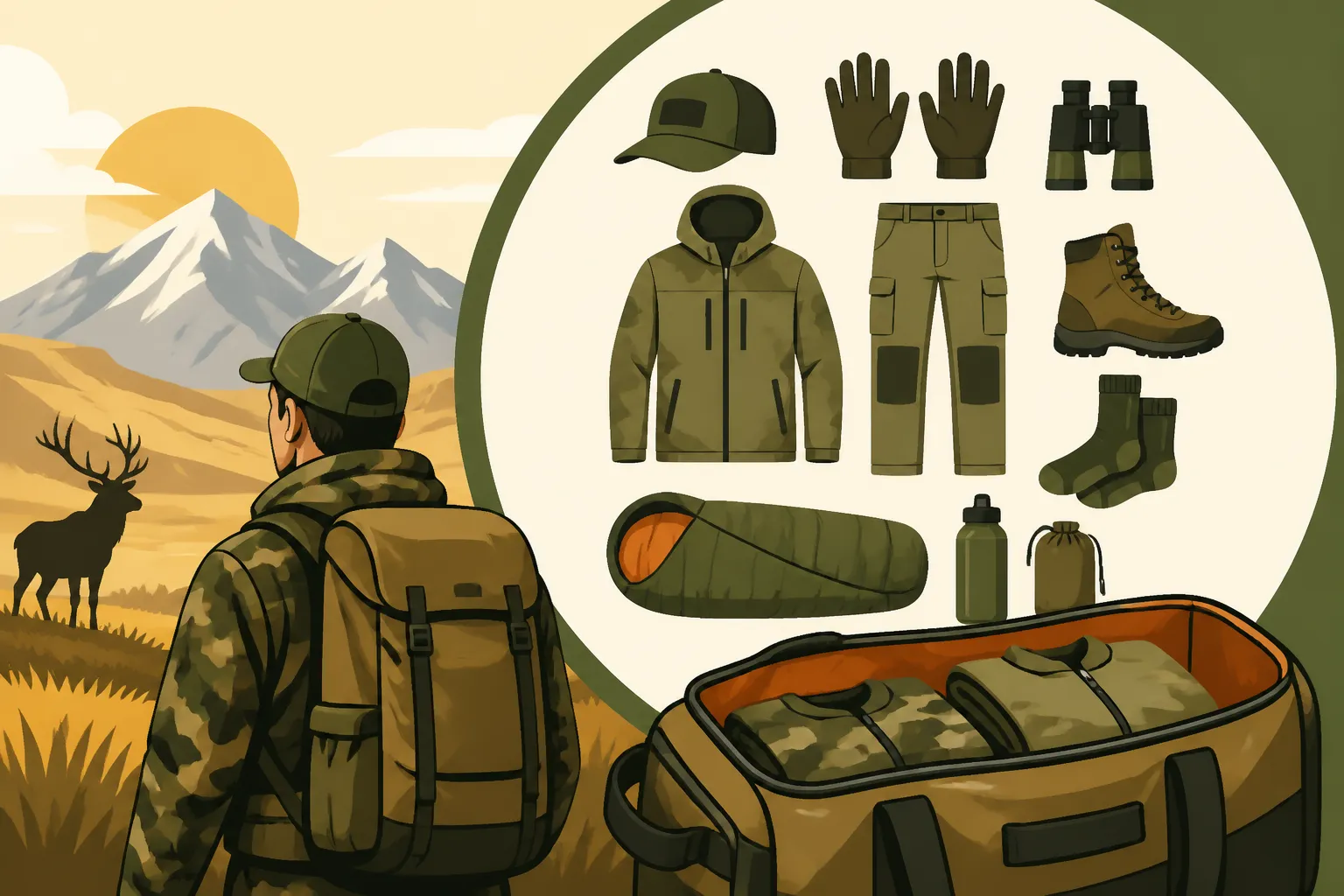
Wyoming weather is famously unpredictable. You can experience all four seasons in a single day, or even within a few hours. This is why layering is not just a concept here; it's a survival strategy. Your outfitter's list will emphasize this, often breaking clothing down into distinct layers.
- Base Layers: These are your first line of defense, designed to wick moisture away from your skin. Synthetic materials or merino wool are preferred because they retain insulating properties even when wet. Cotton, on the other hand, absorbs moisture and chills you quickly – it's often explicitly forbidden on serious gear lists. Imagine hiking hard up a mountain, sweating profusely, then stopping to glass a basin. If your base layer is cotton, that sweat turns to ice against your skin as soon as you stop moving. Merino wool or quality synthetics prevent this, keeping you warm even in damp conditions. You'll likely need several sets for a multi-day hunt.
- Mid-Layers: These provide insulation and warmth. Fleece jackets, puffy vests, or lightweight down jackets fall into this category. They are designed to trap warm air close to your body. You'll layer these over your base layers, adding or removing them as your activity level and the temperature dictate. A good mid-layer should be breathable enough to wear while moving, but warm enough to wear during periods of inactivity. If you're doing a strenuous stalk on a mule deer, you might shed some mid-layers, only to put them back on when you reach your vantage point to begin glassing.
- Outer Shell: This is your protection against wind, rain, and snow. A quality outer shell should be waterproof, windproof, and breathable. Look for durable materials that can stand up to brush and rocks. A good jacket and pants set are critical. Even if the forecast looks clear, a pop-up thunderstorm or an unexpected snow flurry is always possible in the mountains. Getting soaked can lead to hypothermia, even in above-freezing temperatures. Many outfitters will specify a quiet material, especially for archery hunts, where every rustle can spook game.
- Headwear, Handwear, and Socks: Don't underestimate these items. A warm beanie or stocking cap is essential, as a significant amount of body heat is lost through the head. Gloves or mittens that allow for dexterity (shooting, operating optics) while providing warmth are key. You'll want multiple pairs of wool or synthetic socks, both thin liner socks and thicker insulating socks, to prevent blisters and manage moisture. Nothing ruins a hunt faster than cold, wet, blistered feet. Always pack more socks than you think you'll need.
Footwear: Your Foundation for Success
Your boots are arguably the most important piece of gear for a Wyoming hunt. You'll be spending long days on your feet, often traversing steep, uneven, and rocky terrain.
- Hiking Boots: Outfitters will typically recommend sturdy, broken-in, waterproof hiking boots with good ankle support. Boots that are too heavy or too stiff can lead to fatigue, while flimsy boots won't protect your feet from sharp rocks or provide adequate support on sidehills. Make sure your boots are thoroughly broken in before your hunt to avoid blisters. Leather or synthetic options are fine, but ensure they have a waterproof membrane. If you're hunting elk in the high country, your guide might even suggest a more mountaineering-style boot for extra support and warmth.
- Camp Shoes/Slippers: After a long day in your hunting boots, having a comfortable pair of camp shoes or slippers to change into around camp is a luxury you'll appreciate. This allows your hunting boots to dry out and gives your feet a much-needed break. These are often forgotten but can significantly boost morale.
Optics: Seeing is Believing
Wyoming is a land of vast distances, and effective hunting often begins with effective glassing. Your outfitter’s list will strongly feature optics.
- Binoculars: A good pair of 10×42 or 12×50 binoculars are standard issue for Western hunting. You'll spend hours behind them, spotting animals at great distances. Quality glass makes a huge difference in low light conditions and clarity.
- Spotting Scope: For serious long-range glassing, especially for mule deer or sheep, a spotting scope (often 60x or 80x magnification) on a sturdy tripod is indispensable. This allows you to evaluate animals from miles away without disturbing them. Your outfitter may have one, but having your own means less waiting.
- Rangefinder: Knowing the exact distance to your target is crucial for ethical shooting, especially in open country with variable terrain. A good rangefinder that works out to 1,000 yards or more is a must-have.
Personal Items and Essentials
This category covers everything that ensures your health, hygiene, and overall well-being in the field.
- Toiletries: Keep it minimal and scent-free. Toothbrush, toothpaste, small soap, any personal medications.
- First-Aid Kit: While your outfitter will have one, a small personal kit for blisters, minor cuts, and headaches is a smart addition.
- Headlamp: Absolutely essential for navigating camp in the dark, packing out animals after sundown, or getting to your stand before dawn. Always carry extra batteries.
- Water Bottle/Hydration System: Staying hydrated at elevation and during strenuous activity is vital. A Nalgene bottle or a hydration bladder in your pack is a must. Your outfitter will tell you about water sources, but you need to carry your own.
- Small Day Pack: This is for daily essentials: extra layers, snacks, water, optics, first-aid, and emergency gear when you leave the main camp for the day.
- Sleeping Bag: Your outfitter will specify a temperature rating based on the season and altitude. Do not skimp here. A good sleeping bag is crucial for getting proper rest in cold mountain nights. For drop camps or spike camps, this is an absolutely critical item.
- Sleeping Pad: Equally important for insulation from the cold ground and for comfort. An inflatable sleeping pad will make a huge difference in your ability to recover overnight.
Customizing Your Gear for the Specific Hunt
While the outfitter's list provides a solid foundation, you can fine-tune your packing based on additional research and communication. Utilizing resources like GoHunt can help you delve into specific hunt areas, understanding the terrain, typical weather patterns, and even past harvest data, which can all influence your gear choices.
Archery vs. Rifle Seasons
Archery season typically occurs earlier in the fall when temperatures can still be warm, but it also demands stealth. Your clothing needs to be quiet and allow for maximum range of motion. Rifle season usually happens later when cold, snow, and wind are more common, requiring heavier insulation and robust weather protection.
| Gear Category | Archery Season Considerations | Rifle Season Considerations |
|---|---|---|
| Clothing | Quiet fabrics, lighter insulation, scent control emphasis. | Heavier insulation, durable waterproof outer layers, blaze orange requirements. |
| Footwear | Stealthy soles, good ankle support for stalking. | Warm, waterproof boots for snow/cold, aggressive traction. |
| Optics | High-quality binoculars for long-range spotting before closing. | Same, but also considering low-light performance for dawn/dusk. |
| Weapon | Bow, arrows, broadheads, release aid, quiver, arm guard. | Rifle, scope, ammunition, sling, cleaning kit. |
| Accessories | Rangefinder, wind checker, grunt tube/calls, scent eliminator. | Rangefinder, shooting sticks/bipod, game bags, knife. |
For example, Whether Lighted Nocks Are Legal for Bowhunters might be a question specific to archery season. Similarly, you'll want to review Wyoming Legal Firearm List for Big Game if you're bringing a rifle.
Wilderness vs. Ranch Hunts
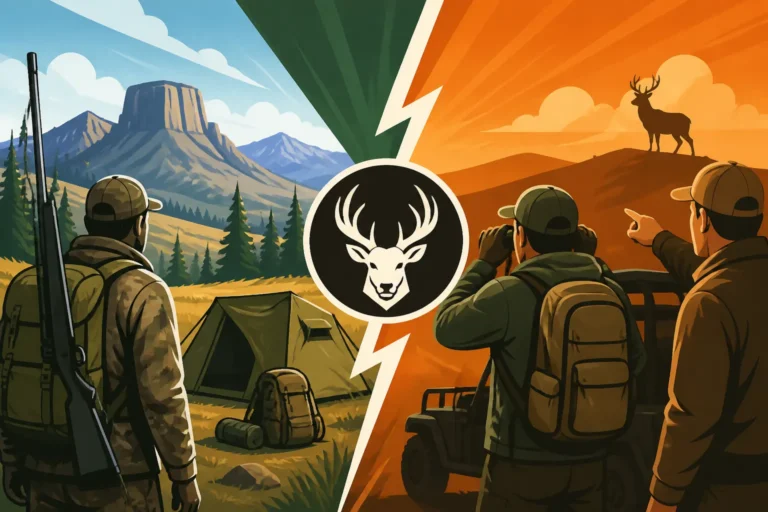
A wilderness hunt, especially one involving a horse pack-in or a multi-day backpacking trip, will require lighter, more compact, and more durable gear. Every ounce matters, and every item needs to serve multiple purposes. Think about compact cooking systems, lightweight shelter, and minimal personal items. Wilderness Rules Every Wyoming Nonresident Should Know will dictate how you operate and what gear you can even bring in.
A ranch hunt on private land might allow for more amenities and easier access to vehicles or a lodge, meaning you can bring a bit more comfort gear. However, the core hunting gear—clothing, boots, optics, weapon—should remain top-notch, regardless of the level of creature comforts available at camp. Even on a ranch, you'll still be out in the elements.
Altitude and Physical Conditioning
Wyoming hunts often take place at high altitudes, where the air is thinner and physical exertion is magnified. Your gear list won't explicitly tell you to get in shape, but preparing for Physical Conditioning for a Mountain Hunt and Preparing for Altitude on a Wyoming Hunt is crucial for actually using the gear effectively. Lightweight gear, breathable layers, and a hydration system all become even more important when every breath feels like a struggle. Make sure your pack fits well and is comfortable to carry for hours on end.
Last-Minute Checks and Common Mistakes
Before you even step out the door, and certainly before you meet your outfitter, a thorough gear check is essential.
Test Everything Before You Go
Don't wait until you're in camp to discover that your headlamp batteries are dead, your boots leak, or your rain jacket zipper is jammed. Set up your tent (if bringing one), test your stove, check your optics, and ensure your weapon is sighted in and functioning perfectly. Wear your entire hunting outfit, including your pack, and go for a strenuous hike. This "dress rehearsal" will identify any chafing points, uncomfortable gear, or overlooked items. If you have any doubts, resolve them before you leave home.
Don't Overpack, But Don't Underpack Essentials
It's a delicate balance. Overpacking means carrying unnecessary weight, which saps energy. Underpacking means missing critical items, leading to discomfort or even danger. Stick to the outfitter's list. If something isn't on it, think carefully before adding it. Focus on multi-use items and reliable, high-quality gear. Remember that items like Arrow Weight That Gets Through an Elk or Best All-Around Caliber for a Western Hunt are decided long before you pack your bag, but ensuring you have enough of those critical supplies is part of the "gear check."
Communicate with Your Outfitter
If you have questions about specific items on the list, or if you're unsure about a piece of gear you own, call your outfitter. They are there to help and would much rather clarify things beforehand than deal with a problem in the field. This also builds rapport and shows them you're taking the hunt seriously. They might even have spare items or suggestions for local gear shops if you need something last minute once you arrive in Wyoming.
Your outfitter's gear list is more than just a packing checklist; it's a blueprint for a successful and safe hunting experience in the demanding, yet incredibly rewarding, landscape of Wyoming. Take it seriously, prepare thoroughly, and you'll be well on your way to an unforgettable adventure.
Disclaimer
This article is for general informational purposes only and does not constitute professional advice. Laws, prices and regulations vary by location and change over time. Consult a qualified professional for guidance on your specific situation.