The Landowner Exemption From Wyoming’s Guide Rule
Hunting in Wyoming is a dream for many, but navigating the rules can feel like trying to track a mature bull through fresh snow—confusing and prone to missteps. One of the trickiest regulations, especially for nonresidents, revolves around the requirement for guides. It's easy to assume that if you're hunting on private land, you're exempt from all guide rules, or that any resident friend can be your "guide" in the wilderness. This comprehensive guide is here to untangle the nuances of the landowner exemption from Wyoming's guide rule, helping both residents and nonresidents understand exactly what's allowed and what isn't.
Understanding Wyoming's General Guide Requirements for Nonresidents
Before we dive into any exemptions, it's essential to grasp the baseline rules for guides in Wyoming. This is where a lot of the initial confusion often begins, and knowing the core regulations helps illuminate why specific exemptions exist in the first place. Wyoming has put these rules in place for a blend of safety, game management, and to support the state's outfitting industry.
The Mandatory Wilderness Guide Rule
One of the most talked-about regulations for nonresident hunters is the mandatory guide requirement when hunting certain big game species within designated wilderness areas. Imagine spending years collecting preference points, finally drawing that dream bighorn sheep tag or a coveted bull elk license, only to discover you can't hunt it without a professional guide. This is a very real frustration many hunters face. The rule isn't meant to be punitive; it's deeply rooted in the logistics and inherent dangers of hunting in vast, remote wilderness. These areas, like portions of the Bridger-Teton or Shoshone National Forests, are rugged, unforgiving, and demand a high level of expertise to navigate safely and ethically.
For specific species such as elk, moose, bighorn sheep, or mountain goat, if you're a nonresident and you're planning to hunt inside a designated wilderness area, you generally need to be accompanied by a licensed Wyoming professional outfitter or guide. This requirement ensures that hunters have someone with deep knowledge of the terrain, local game movements, and emergency protocols. It's a layer of safety and responsible hunting that Wyoming takes seriously. Without this understanding, you could inadvertently put yourself in a tough spot or even risk a violation. You can explore Which Wyoming Hunts Legally Require a Guide for a full breakdown.
Who Qualifies as a Resident Guide for Nonresidents?
So, if a nonresident hunter needs a guide in wilderness areas, what exactly defines a "guide" in Wyoming? This is where many resident hunters and their nonresident friends often get confused, hoping to bypass the costs of a professional outfitter by having a buddy tag along. The state makes a clear distinction: there are licensed professional guides (who work for licensed outfitters) and then there are resident "guides" who can assist nonresidents under very specific, non-commercial conditions.
A resident who wants to guide a nonresident in a wilderness area, thus fulfilling the mandatory guide requirement, must submit a resident guide affidavit to the Wyoming Game and Fish Department before the hunt. This affidavit is a formal document stating that the resident meets certain criteria, including being at least 18 years old, a Wyoming resident, and not receiving any compensation, direct or indirect, for their guiding services. This means no money, no gear, no "favors" exchanged for the guiding itself. The spirit of the law is that this is a friendly gesture, not a business transaction. It allows a resident to share their love of hunting and knowledge of Wyoming with a nonresident friend or family member without forcing them to hire a professional. This avenue provides a lifeline for many who simply want to experience a hunt with someone they know and trust, rather than a stranger. You can learn more about Can a Resident Friend Guide You Legally?.
The Landowner Exemption: Guiding on Deeded Property
Now let's get to the heart of the matter for many private land hunters: the landowner exemption. This isn't a blanket "free pass" from all guide regulations, but it does offer specific allowances for those hunting on land they own. It addresses the practical reality that if you own the land, you should have the right to manage access and hunting opportunities on it, within reason.
When a Landowner Can Offer Access Without an Outfitter License
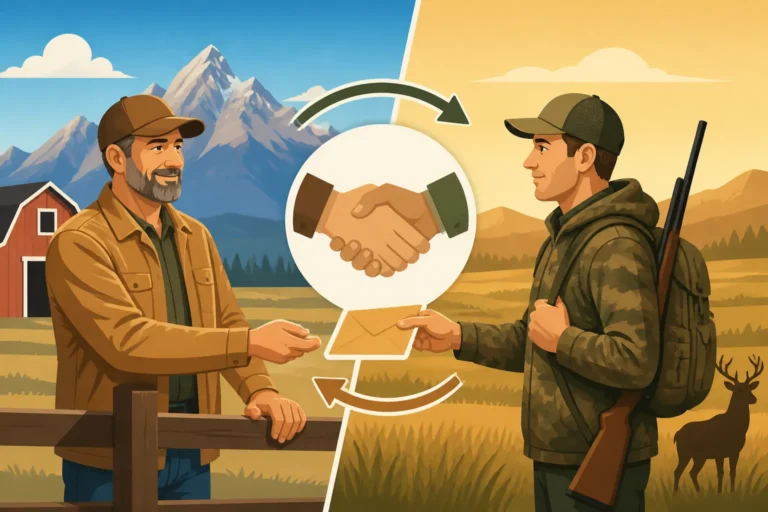
For many landowners in Wyoming, their property offers prime hunting opportunities. They might lease out hunting rights, charge for access, or host friends and family. The good news is that if you're a landowner and you're hosting hunters on your own deeded land, you generally do not need a licensed outfitter to guide them, provided you are not holding yourself out as a commercial guide service. This is a crucial distinction. If you own a ranch and want to charge a nonresident a "trespass fee" for access to hunt deer, or provide lodging and meals while they hunt, you can do that without an outfitter license. The fees are for access or services related to accommodation, not for guiding them in the traditional sense of leading them to game, calling, tracking, etc., for a fee specifically for guiding.
This exemption exists because the state recognizes a landowner's right to control their private property. It allows for a less formal arrangement than a full-blown guided hunt. It’s perfect for the rancher who wants to manage game on their property, generate some additional income by offering access, or simply share their land with hunting guests. However, if that landowner starts advertising "fully guided elk hunts" for a fee that clearly implies a guiding service beyond mere access or lodging, they would likely need to be a licensed outfitter, or employ one. This exemption is really about the scope of the services being offered and the primary purpose of the compensation.
Landowner vs. Lessee: Who Can Actually Guide?
Another common point of confusion arises when private land is leased. If you're leasing a ranch for hunting, do you, as the lessee, qualify for the "landowner exemption"? Generally, no. The exemption is typically tied to the actual deeded owner of the property or their immediate family. A lessee, even if they have exclusive hunting rights, is not the landowner in the eyes of this particular regulation.
This means if you're a nonresident who has leased private ground in Wyoming, and you're hunting within a designated wilderness area that happens to overlap with or be accessed directly through that leased land, you would still be subject to the wilderness guide requirement. The landowner exemption wouldn't apply to the lessee in that scenario for the wilderness guide rule. However, if the hunting is solely on private deeded land that you are leasing, and the landowner is providing you with access, and you are not in a designated wilderness area requiring a guide, then you generally won't need a guide to hunt that private land. It's a fine line, but one that could save you a lot of headache and potential legal trouble. Always clarify with the actual landowner and the Game and Fish Department if you're unsure about your specific situation.
Navigating Compensation on Private Land Hunts
Compensation is another area where misunderstandings run rampant with the landowner exemption. As mentioned, a landowner can absolutely charge for access to their private land, or for lodging and meals associated with a hunt. These are legitimate business practices. What they generally cannot do is charge a fee specifically for guiding services if they are not a licensed outfitter or employing one. The moment a landowner starts receiving direct payment for taking hunters out, finding game, calling, tracking, and actively managing their hunt in a commercial capacity, they step into the territory of a professional guide or outfitter, which requires proper licensing.
Think of it this way: a rancher charges you to stay in their cabin and hunt their fields for deer. That's fine. But if that rancher then says, "For an extra thousand dollars, I'll take you out in my truck, show you where the big bucks are, and help you stalk," that crosses the line into guiding services requiring a license. The distinction is about the service being compensated. It’s about ensuring fair play for licensed outfitters who invest heavily in their businesses and meet rigorous state requirements, and preventing unlicensed operations from undercutting them. When planning your hunt, whether you're using a resource like BookYourHunt to find potential operations or using GoHunt to scout land, pay close attention to the details of what is being offered and what the fees cover.
The Landowner's Role as an Uncompensated Wilderness Guide
Now let's connect the dots to the wilderness guide requirement specifically. This is where a resident landowner can act as an uncompensated guide, but it's a very specific application of the "exemption." It's less about their land ownership directly and more about their resident status combined with fulfilling the affidavit.
Meeting the Resident Guide Affidavit Requirements
If you're a nonresident hunter planning an elk, moose, bighorn sheep, or mountain goat hunt in a Wyoming wilderness area, and you're hoping to avoid hiring a professional outfitter, a resident landowner can serve as your uncompensated guide. However, this isn't automatic. The resident (who happens to be a landowner) must meet all the standard resident guide affidavit requirements. This means they must be a Wyoming resident, at least 18 years old, and critically, they must complete and submit a resident guide affidavit to the Wyoming Game and Fish Department prior to the hunt. This document formally declares their intention to accompany you and confirms that they will not receive any form of compensation for their services.
This is a formal process, not just a handshake agreement. It's a way for the state to keep track of who is entering wilderness areas with nonresidents and to ensure accountability. Many hunters overlook this step, thinking their friend's status as a landowner or even just a resident is enough. But the paperwork is essential. Failing to file the affidavit could lead to significant penalties for both the nonresident hunter and the resident "guide," including fines and potentially loss of hunting privileges. Make sure you understand What the Resident Guide Affidavit Must Name if you're considering this option.
The Strict No-Compensation Rule for Resident Guides
Let's reiterate this because it's the most common pitfall: there is a strict no-compensation rule when a resident, including a landowner acting as a resident guide, fulfills the mandatory guide requirement for a nonresident in a wilderness area. This means no money, no gifts, no swapping services, no "I'll buy all the gas and food for the trip." The intent is for the resident to provide their time and expertise purely out of friendship or familial ties.
The state is serious about protecting its licensed outfitting industry. Allowing uncompensated resident guides helps nonresidents experience Wyoming's wilderness, but it's carefully regulated to prevent it from becoming a loophole for unlicensed commercial guiding. The moment there's any perceived compensation, the arrangement becomes illegal, and the individual acting as the guide would be considered an unlicensed outfitter, facing severe penalties. This means if your kind landowner friend offers to be your wilderness guide, you cannot offer them anything in return for their guiding services. You can split camp costs, sure, but not compensate them for their time or knowledge as a guide. It really drives home the point about the true spirit of the resident guide rule.
Practical Considerations for Hunters and Landowners
Navigating these regulations can feel like a labyrinth, but with careful planning and clear communication, both hunters and landowners can ensure they're on the right side of the law.
Due Diligence: Verifying Landowner Status and Intentions
For nonresident hunters looking to utilize the landowner exemption (either for private land access without a formal outfitter, or for a resident landowner to serve as an uncompensated wilderness guide), due diligence is paramount. Never assume. Always verify. This means:
- Confirming Land Ownership: Ask to see proof of ownership for the land where you'll be hunting. A reputable landowner will have no issue providing this. Be wary of any vague claims or resistance.
- Clarifying Services and Compensation: Get a clear, written understanding of what services are being provided and what your payments cover. Is it just access? Does it include lodging? Meals? Is there any "guiding" involved, and if so, is it truly uncompensated if you're in a wilderness area? This clarity prevents disputes later on.
- Understanding Boundaries: Use tools like GoHunt or other mapping apps to understand public vs. private land boundaries, and to identify if any portion of your hunt takes you into a designated wilderness area. Just because you start on private land doesn't mean you won't cross into public wilderness that triggers the guide rule.
- Resident Guide Affidavit: If a resident landowner is acting as your wilderness guide, confirm that they have filed the necessary resident guide affidavit with Wyoming Game and Fish before you even set foot in the field. Ask for proof of submission.
Taking these steps protects both you and the landowner from accidental violations. It's about being a responsible hunter and ensuring a smooth, legal experience. You can even check to see Who Qualifies for a Wyoming Landowner Tag if you're exploring that avenue.
When to Consider a Licensed Outfitter Instead
While the landowner exemption and resident guide affidavit offer viable alternatives for some, there are many situations where hiring a licensed Wyoming outfitter is simply the best, safest, and most straightforward option.
Consider a professional outfitter if:
- You're hunting complex wilderness terrain: These areas require deep knowledge, and outfitters specialize in them. They understand game movements, weather patterns, and emergency protocols in ways a casual resident guide might not.
- You value professional logistics: Outfitters handle everything from camp setup, cooking, packing horses, to game retrieval. This frees you up to focus purely on the hunt. What a Fully Guided Wyoming Elk Hunt Includes can give you an idea of the scope of services.
- You need guaranteed legal compliance: A licensed outfitter takes on the responsibility of ensuring all regulations, including guide requirements, are met. You don't have to worry about affidavits or compensation rules.
- You want dedicated guiding services: If you truly want someone actively helping you locate, stalk, and call game, that's what a professional guide provides as part of a commercial service. Trying to replicate this informally can quickly lead to legal issues if compensation is involved.
- You're short on time or local knowledge: For nonresidents traveling a long distance, a professional outfitter often provides the most efficient and effective way to hunt challenging Western game species. They've done the pre-scouting and know the area.
Ultimately, the choice depends on your budget, experience, desired level of assistance, and the specific hunt you're undertaking. A table can help visualize some of these differences:
| Feature | Fully Guided Hunt (Licensed Outfitter) | Landowner Exemption (Private Land Access) | Resident Uncompensated Wilderness Guide |
|---|---|---|---|
| Guide Status | Licensed Professional Outfitter/Guide | Landowner (unlicensed for guiding fee) | Resident (unlicensed, affidavit filed) |
| Location | Any legal hunting area (public/private) | Deeded private land | Designated wilderness areas |
| Compensation | Fees for services, access, lodging | Fees for access, lodging (not guiding) | NONE (strict) |
| Services Provided | Guiding, logistics, camp, meals, packing | Access to land, sometimes lodging/meals | Guiding (locating, stalking, safety) |
| Liability/Regulation | Managed by outfitter (bonded/insured) | Landowner (for access); Hunter (for hunt) | Hunter (primary); Resident (affidavit) |
| Nonresident Guide Rule | Satisfied | N/A (unless in wilderness) | Satisfied |
| Legal Documentation | Outfitter Contract | Access Agreement/Lease | Resident Guide Affidavit (prior to hunt) |
Making an informed decision means weighing these factors carefully. Resources like Book Your Wyoming Hunt Before the Draw Runs often point to professional outfitters for complex hunts, while others like GoHunt focus on providing the tools for self-guided trips. Both have their place, but understanding the legal framework, especially the landowner exemption, is crucial for everyone involved.
Disclaimer
This article is for general informational purposes only and does not constitute professional advice. Laws, prices and regulations vary by location and change over time. Consult a qualified professional for guidance on your specific situation.