Guiding Hunters on Leased Deeded Land
For many hunters, the dream of a successful Wyoming hunt often runs into the brick wall of access. Public land can be crowded, and drawing a coveted tag takes years of preference points. This guide dives deep into the world of hunting on leased private land in Wyoming, specifically addressing the rules and realities for those who facilitate or guide hunts on such ground.
Understanding Leased Deeded Land for Hunting in Wyoming
Wyoming is a state of vast open spaces, but a significant portion of that landscape is private, or "deeded," land. While public lands offer incredible opportunities, the draw of exclusive access to private ground, often rich with game, is undeniable for many hunters. This is where the concept of "leased deeded land" comes into play, offering a bridge for hunters to access these private havens.
What "Leased Deeded Land" Actually Means
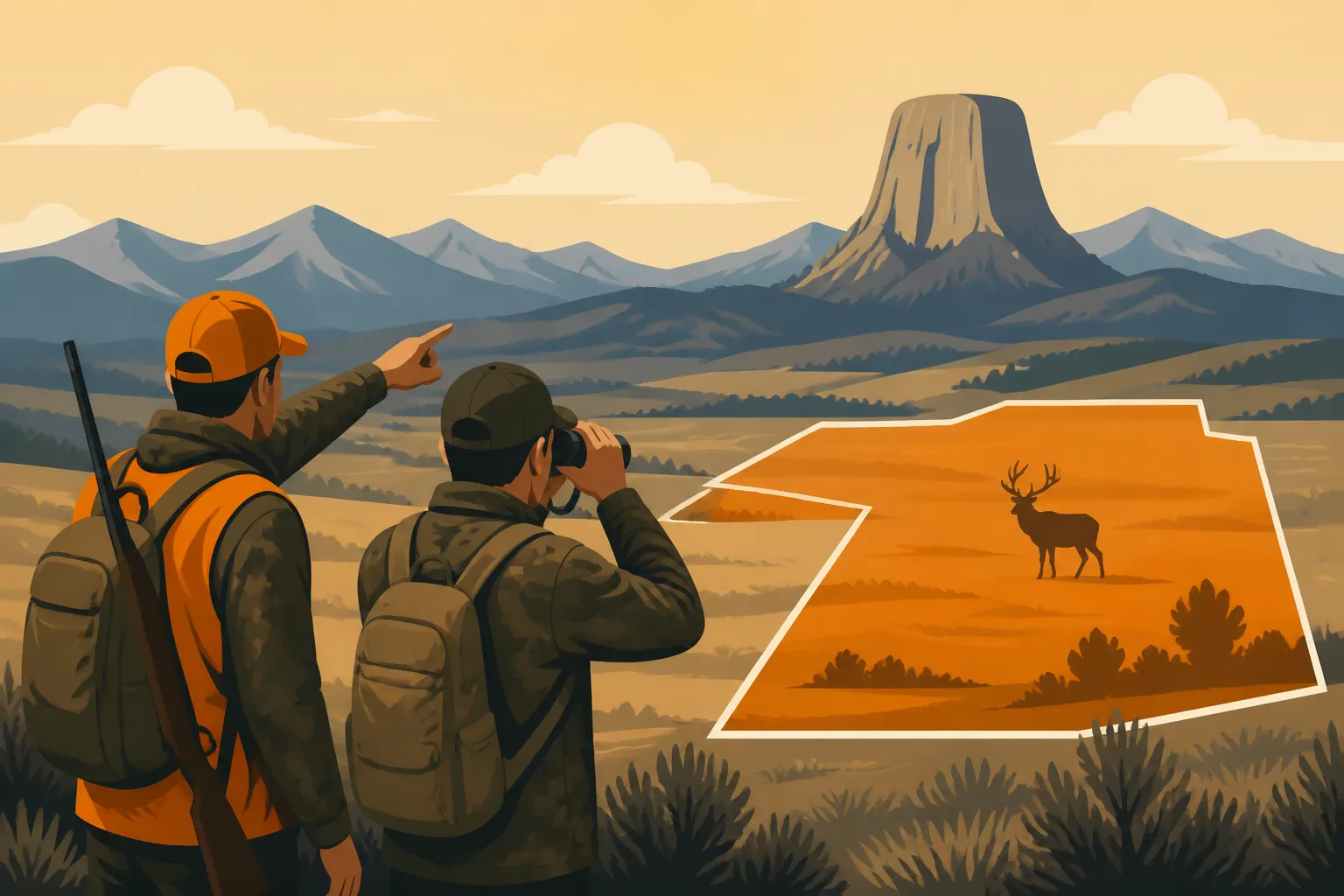
When we talk about "leased deeded land" in the context of hunting, we're referring to private property where the landowner has granted hunting rights to another party, typically for a fee. This isn't public land, nor is it land that the outfitter or guide necessarily owns themselves. Instead, it's a formal agreement, often a contract, that allows a hunting outfitter, a private hunting club, or even an individual to utilize the land for hunting purposes during a specified period. The landowner retains ownership, but the hunting rights are temporarily transferred or shared. This arrangement is common across the West, providing landowners with an income stream and hunters with access to prime, often less-pressured, habitat.
Think of a rancher with thousands of acres of prime deer or antelope country. They might not want to guide hunts themselves, or perhaps they want to ensure professional management of their hunting resource. They could then lease the exclusive hunting rights to a licensed outfitter. That outfitter then runs guided or unguided hunts on that leased property, bringing in clients. The specifics of the lease agreement—what species, how many hunters, what dates, and any habitat stipulations—are all part of the private deal between the landowner and the leasing entity.
The Allure of Private Land for Hunters
The appeal of hunting on leased private land is multifaceted and deeply rooted in a hunter's desire for quality experiences. Firstly, these lands often boast better game quality and higher success rates. Landowners, or the outfitters who lease from them, often practice rigorous game management, controlling hunting pressure and ensuring a healthier, more mature animal population. This means a better chance at a trophy animal or simply a more consistent hunting experience. Imagine stalking a big mule deer buck without having to worry about another hunter pushing him over the ridge or beating you to your spot at dawn.
Secondly, private land offers a level of exclusivity and reduced pressure that public lands simply cannot match. On public ground, particularly for sought-after species like elk or mule deer, you're competing with countless other hunters. This can lead to crowded trailheads, pressured animals, and a less enjoyable experience. On leased deeded land, you know exactly who else is (or isn't) on the property. This controlled environment allows for more deliberate hunting strategies, less disturbance, and often, a more intimate connection with the land and the wildlife. Many hunters are willing to pay a premium for this peace of mind and the enhanced hunting opportunity it provides.
Navigating Access Agreements and Contracts
For anyone involved in offering or participating in hunts on leased deeded land, the access agreement or contract is paramount. This document is the legal framework that defines the rights and responsibilities of all parties involved: the landowner, the outfitter or lessee, and by extension, the hunter. These contracts typically spell out:
- Duration of the Lease: How long are the hunting rights granted? Is it for a specific season, a year, or multiple years?
- Species Covered: What animals can be hunted? Is it elk, deer, antelope, or a combination?
- Number of Hunters: Limits on the total number of hunters, or hunters per specific period, to manage pressure.
- Permitted Activities: What hunting methods are allowed (archery, rifle, muzzleloader)? Are ATVs permitted? Are game cameras allowed? What about camping?
- Liability and Insurance: Who is responsible if an accident occurs? This is a huge component and often requires specific insurance coverage from the outfitter.
- Game Management Stipulations: Often, the landowner or outfitter will have rules about harvest quotas, minimum antler sizes, or even restrictions on shooting does, all designed to enhance the quality of the herd.
- Payment Terms: The financial details, including lease fees, payment schedules, and any additional charges.
It's absolutely crucial for anyone entering into such an agreement to read it thoroughly and understand every clause. If you're a hunter booking a trip, ensure your outfitter has a solid, legal lease agreement in place with the landowner. Don't hesitate to ask questions. A reputable outfitter will be transparent about their agreements and the conditions under which they operate. Platforms like BookYourHunt often feature outfitters who clearly outline their private land access, but due diligence on your part is still key.
The Role of Guiding on Leased Private Land
The lines between simply granting access and providing a fully guided hunt can sometimes feel blurry, especially on private land. However, Wyoming law has specific definitions that dictate when a licensed guide or outfitter is required. Understanding these distinctions is crucial for both those offering hunts and those participating in them.
When a Guide is (and Isn't) Required on Leased Land
A common misconception is that if you're hunting on private land, you don't need a guide. In Wyoming, this isn't always true. The state's primary guide requirement for non-residents specifically applies to hunting "big game or trophy game animals on any wilderness area." This rule means if an outfitter is taking clients into a designated federal wilderness area, they must have a licensed guide, and there's a limit of one guide for every two non-resident hunters.
However, if the leased deeded land is not within a wilderness area, or if the hunt does not involve entering a wilderness area, then the wilderness guide requirement generally does not apply. This means a non-resident hunter could, in theory, hunt unguided on private leased land if the outfitter or landowner simply grants access and doesn't provide "guiding services" as defined by the state. This doesn't mean no one needs a license, just that the specific wilderness rule isn't the trigger.
The critical distinction comes down to what constitutes "guiding services." If the person facilitating the hunt is merely providing permission to access the land, providing a map, and perhaps a place to stay, but not accompanying the hunter, providing assistance in locating game, or actively directing the hunt, they might not fall under the strict definition of requiring a guide license. However, if they are doing any of these things for compensation, even on private land, they generally do need to be properly licensed.
Who Can Guide on Leased Deeded Land
In Wyoming, anyone who "advertises, offers to provide, or provides guiding services" for compensation must hold an outfitter license or be a licensed professional guide working under a licensed outfitter. This applies whether the land is public or private. So, if someone is actively taking clients onto leased private land, helping them locate game, track animals, set up stands, or otherwise assisting in the pursuit of big game for money, they must be part of the state's outfitting and guiding regulatory framework.
This means:
- Licensed Outfitters: An individual or entity that holds an outfitter license can lease deeded land and then run guided hunts on it, employing licensed professional guides. They are fully regulated by the Wyoming Board of Outfitters and Professional Guides.
- Licensed Professional Guides: These individuals work for a licensed outfitter and are the ones typically out in the field with clients. They must be licensed by the state and are under the direct supervision of the outfitter.
- Landowners: As we'll discuss in the next section, there's a specific exemption for landowners guiding on their own deeded land. However, this exemption typically does not extend to guiding on land they lease from another owner, unless they themselves are a licensed outfitter or guide.
It’s important to understand that a private landowner simply allowing someone to hunt on their land, even for a fee (sometimes called a trespass fee or access fee), is generally not considered "guiding" if the landowner provides no further assistance in the hunt itself. But the moment they step into an active role of assisting the hunter in the field, for compensation, they enter the regulated world of guiding.
Outfitter vs. Landowner Facilitated Hunts
The difference between an outfitter-run hunt on leased land and a landowner-facilitated hunt can be subtle but has significant legal and practical implications.
Outfitter-Facilitated Hunts on Leased Land:
These are typically comprehensive packages. A licensed outfitter has secured a lease agreement with a private landowner, giving them exclusive or semi-exclusive hunting rights. The outfitter then markets these hunts to clients, providing a full range of services that can include:
- Pre-hunt scouting
- Guiding services in the field (finding game, tracking, field dressing)
- Meals and lodging
- Transportation during the hunt
- Expert advice and equipment lists
In this scenario, the outfitter is responsible for ensuring all guides are licensed, that they comply with all state regulations, and that their operation is bonded and insured. Hunters are paying for a professional service and should expect a certain level of professionalism and legal compliance. Many outfitters advertise these private land opportunities through online booking platforms or through their own websites, often showcasing the quality of game found on these exclusive properties. If you're looking for these types of services, sites like BookYourHunt can help you find reputable operations.
Landowner-Facilitated Hunts (often referred to as trespass fees or access fees):
In this model, a landowner might charge a fee simply for access to their property for hunting. They are generally not providing guiding services. They might provide a basic map of the property boundaries, a gate code, and perhaps a general idea of where game has been seen, but they do not accompany the hunter or actively assist in the hunt. The hunter is essentially on a self-guided hunt on private property. The legal requirements for the landowner in this situation are much less stringent, as they are not acting as an outfitter or guide. They are simply selling access to their private property.
Hybrid Scenarios:
Sometimes, a landowner might offer more than just access but less than a fully guided trip. This could include providing lodging, basic meals, or retrieving a downed animal. If these additional services cross the line into "assisting in the taking of game" for compensation, the landowner (or the person providing the services) might inadvertently be acting as an unlicensed guide or outfitter, which carries penalties. This is why clarity in the agreement and understanding the legal definitions is paramount.
Legalities and Licensing for Guiding on Leased Ground
Navigating the legal landscape of guiding in Wyoming, especially on private leased land, can be complex. It's not as simple as just getting permission from the landowner. The state has a robust regulatory framework designed to protect both hunters and the integrity of the resource.
Wyoming's Outfitter and Guide Licensing Framework
Wyoming takes its outfitting and guiding industry seriously. The Wyoming Board of Outfitters and Professional Guides is the governing body that licenses and regulates anyone offering commercial hunting or fishing guiding services in the state. This means that if you are charging money to lead hunters to game, assist them in the field, or otherwise "outfit" them for a hunt, you must be licensed. This applies to operations on both public and private land.
The framework requires:
- Outfitter License: The primary license. An outfitter is an individual or business that advertises, offers, or provides guide services. They are responsible for the entire operation, including their employees, and must meet strict requirements for experience, bonding, and insurance.
- Professional Guide License: Individuals who work for a licensed outfitter and physically guide clients in the field must hold a professional guide license. They operate under the outfitter's umbrella and are directly responsible to the outfitter and the state board.
The key takeaway here is that the location of the hunt—whether it's public land, private owned land, or private leased land—doesn't change the fundamental requirement for licensure if "guiding services" are being provided for compensation. If you're being paid to show someone where to hunt, assist in stalking, call game, or track animals on leased deeded land, you need to be part of this licensing system. This ensures a level of accountability, safety, and ethical conduct. Every Wyoming Guide Works Under a Licensed Outfitter, and this structure is designed to maintain professional standards.
The Landowner Exemption from Wyoming's Guide Rule
This is a crucial nuance that often causes confusion. Wyoming law does provide a specific exemption for landowners, stating that they generally do not need an outfitter or guide license to guide hunters on "their own deeded land." This makes sense: a rancher should be able to host and assist hunters on the property they own without needing to go through the entire licensing process.
However, the critical distinction for this article is "their own deeded land." This exemption typically does not extend to land that the individual merely leases from another party. If a landowner (let's call him Rancher A) leases hunting rights from another landowner (Rancher B) and then proceeds to "guide" paying clients on Rancher B's land, Rancher A would generally need an outfitter license or be working under one. The exemption is tied directly to ownership.
Here's a table to clarify:
| Scenario | Guiding License Required? | Explanation |
|---|---|---|
| Landowner guides on their own deeded land for pay | NO | Exempt under state law, as long as they own the land. |
| Licensed Outfitter guides on leased deeded land for pay | YES | The outfitter holds the lease and operates under a full outfitter license, employing licensed guides. |
| Individual (not a licensed outfitter/guide) guides on leased deeded land for pay | YES | This individual is providing guiding services for compensation on land they do not own, thus requiring an outfitter or professional guide license. The landowner exemption does not apply. |
| Landowner offers access only (trespass fee) on their own or leased land | NO | If no guiding services are provided (no active assistance in the hunt), it's generally considered selling access, not guiding. |
It's vital for hunters to understand this difference. If you're booking a hunt on private land and the person offering the services claims to be exempt as a "landowner," ensure they actually own the land where the guiding will take place. For more details on this, see The Landowner Exemption From Wyoming's Guide Rule.
Ensuring Compliance: What to Look For
As a hunter, how can you ensure that the person or entity guiding you on leased deeded land is operating legally? It's your responsibility to do your homework to protect yourself and ensure you're participating in a legitimate operation.
Here are key things to look for and questions to ask:
- Verify Licensing: Always ask for the outfitter's license number. You can then Verifying a Wyoming Outfitter's License Number directly with the Wyoming Board of Outfitters and Professional Guides. A reputable outfitter will readily provide this. Be wary if someone is hesitant or gives you a vague answer.
- Proof of Lease: While you might not get to see the full contract, a legitimate outfitter should be able to assure you they have a current and valid lease agreement for the property you'll be hunting. Ask about the acreage and boundaries.
- Insurance and Bonding: Licensed outfitters are required to carry specific insurance and bonding. This protects both the outfitter and the clients in case of unforeseen circumstances. Don't be afraid to ask about their coverage.
- Clear Communication: A professional outfitter will have clear communication about what's included in your hunt package, the legal aspects, and expectations for both parties. Questions to Ask a Wyoming Outfitter are critical here.
- References and Reviews: Check references from past clients. Look for consistent positive feedback. While online reviews can be helpful, direct references are often more insightful. Be aware of Red Flags When Booking a Wyoming Outfitter, such as overly aggressive sales tactics or promises that sound too good to be true.
- Contract Details: Ensure you receive a written contract that outlines all the services, dates, costs, and cancellation policies. This protects you in case of any disputes.
By taking these steps, you can significantly reduce your risk and ensure you're booking a legitimate and enjoyable hunting experience on leased deeded land in Wyoming. Tools like GoHunt and BookYourHunt often feature licensed outfitters, but the ultimate verification is always with the Wyoming Board of Outfitters directly.
Benefits and Considerations for Leased Land Hunts
Hunting on leased deeded land in Wyoming, often with a professional guide, offers a distinct experience compared to a do-it-yourself public land adventure. There are significant advantages, but also important considerations regarding cost, ethics, and land stewardship.
The Advantages for Hunters
The primary draw of hunting on leased private land, especially with a professional outfitter, revolves around the quality of the hunting experience and the increased likelihood of success. Here’s why hunters often choose this route:
- Higher Success Rates: Private lands, particularly those managed for hunting, often have more abundant game and less pressure. This translates to a significantly higher chance of filling your tag, especially for trophy-class animals. Outfitters who lease these lands meticulously scout and manage them, putting their clients in the best possible position for a successful hunt.
- Reduced Hunting Pressure: Unlike public lands where you might encounter dozens of other hunters, leased private land offers exclusivity. This means undisturbed animals, less competition for prime spots, and a more peaceful, immersive hunting experience. You can implement slower, more deliberate hunting strategies without fear of another hunter pushing game your way or claiming your glassing point.
- Potential for Larger Animals: Controlled hunting pressure and thoughtful game management often allow animals to reach older age classes, resulting in larger antlers or horns. Many of the truly immense animals harvested in Wyoming each year come from carefully managed private ranches.
- Comfort and Convenience: Guided hunts on leased private land often come with amenities like comfortable lodging, home-cooked meals, and transportation during the hunt. This takes much of the logistical burden off the hunter, allowing them to focus entirely on the hunt itself. For those who can afford it, this level of service can transform a grueling backcountry trip into a more relaxed and enjoyable adventure.
- Expert Guidance: With a professional guide, you benefit from their extensive knowledge of the local terrain, animal behavior, and hunting techniques. They can read the land, understand game movements, and make real-time decisions that dramatically increase your odds of success. They'll also handle field dressing and often transport your game, further simplifying the process.
Cost Versus Public Land DIY
The enhanced experience and increased odds on leased private land come with a higher price tag. This is arguably the biggest consideration for hunters weighing their options.
- Financial Investment: A fully guided hunt on prime leased deeded land can be a significant investment. What a Guided Wyoming Elk Hunt Costs or Typical Mule Deer Outfitter Rates in Wyoming can range from several thousand dollars to well over ten thousand, depending on the species, duration, and level of service. This typically covers guiding fees, meals, lodging, and sometimes even initial meat processing. However, it usually doesn't include your license fees, tags, travel to Wyoming, taxidermy, or tips for your guide.
- DIY Public Land Hunt: In contrast, a do-it-yourself public land hunt primarily involves the cost of your license, fuel, food, and gear. While certainly cheaper upfront, it demands a much greater investment of time, research, and physical effort. Success rates can also be lower, and the hunting experience itself can be more challenging due to pressure and rugged terrain.
The decision between a costly private land guided hunt and a more affordable DIY public land hunt often boils down to a hunter's budget, available time, desired success rate, and personal hunting philosophy. For some, the guaranteed access and high odds on private land are worth every penny. For others, the challenge and self-reliance of a public land hunt are part of the adventure, even if it means lower odds. It's a personal choice, but understanding the financial implications is key.
Ethical Considerations and Land Stewardship
Hunting on private leased land also brings with it important ethical considerations and responsibilities regarding land and wildlife stewardship.
- Respect for Private Property: Even with a lease or an access agreement, you are still on private property. Respecting boundaries, gates, fences, and any landowner rules is paramount. Treat the land as if it were your own, or better. This includes ensuring all litter is removed, gates are closed, and no damage is done to property. Remember, a good relationship with landowners is essential for maintaining these hunting opportunities.
- Game Management Practices: Many outfitters and landowners who lease hunting rights are deeply invested in responsible game management. This might include adhering to specific antler point restrictions beyond state regulations, taking only mature animals, or participating in harvest data collection. Hunters on these lands have an ethical obligation to support these efforts, which contribute to the long-term health and quality of the wildlife resource.
- Fair Chase: While private land might offer a higher concentration of animals, the principles of fair chase still apply. This means using ethical hunting methods, avoiding excessive advantage, and allowing the animal a reasonable chance to escape. A good outfitter will reinforce these principles.
- Hunter Behavior: Your actions on leased land reflect not only on you but also on the outfitter and the hunting community as a whole. Maintaining a positive image, demonstrating ethical behavior, and showing appreciation for the access are crucial for ensuring these types of opportunities continue.
Ultimately, hunting on leased deeded land in Wyoming can offer unparalleled experiences, but it requires a clear understanding of the legal requirements, a significant financial commitment, and a strong commitment to ethical hunting and land stewardship. Whether you're considering Leasing Hunting Ground in Wyoming yourself or booking a hunt with an outfitter, doing your homework ensures a rewarding and compliant adventure.
Disclaimer
This article is for general informational purposes only and does not constitute professional advice. Laws, prices and regulations vary by location and change over time. Consult a qualified professional for guidance on your specific situation.