The Exchange of Guide Services Rule Explained
Hunting in Wyoming, especially as a nonresident, often feels like navigating a legal labyrinth, and few rules cause more confusion and anxiety than those surrounding guiding services. You dream of sharing a backcountry adventure with a trusted resident friend, but suddenly you're faced with questions about "compensation" and "exchange of services" that can make your head spin. This guide is here to untangle the complexities of Wyoming's "Exchange of Guide Services Rule," ensuring you understand what's allowed, what's strictly forbidden, and how to plan a legal and truly memorable hunt without inadvertently breaking the law.
The Core of Wyoming's Guide Service Regulations
Let's start by laying down the foundation: Wyoming takes its outfitting and guiding regulations seriously. The state's intent is to ensure fair chase, protect wildlife resources, and maintain a professional industry for those who legitimately offer hunting services. For hunters, this means there are clear lines drawn, particularly when a nonresident wants to hunt in specific areas or seeks assistance from a resident.
Who Needs a Licensed Outfitter (and When)
The first and most critical piece of information for nonresidents is the wilderness guide requirement. If you're a nonresident and plan to hunt bighorn sheep, moose, or elk in any designated wilderness area within Wyoming, you absolutely must hire a licensed professional outfitter or be accompanied by a resident guide. This isn't a suggestion; it's a hard and fast rule designed to ensure safety, minimize environmental impact, and provide a controlled experience in some of the state's most challenging terrains. Many folks don't realize this isn't just about elk; that dream bighorn sheep tag in a wilderness unit also carries this requirement. It's a significant financial and logistical consideration that can really impact your hunt planning. For a deeper dive, check out Wyoming's Wilderness Guide Law for Nonresidents.
Beyond wilderness areas, a licensed outfitter provides a full suite of services that go far beyond just guiding you to game. They often supply horses, camp logistics, food, and crucial local knowledge. Their primary role is to ensure a safe, organized, and legal hunt, providing clients with access to areas and expertise they might not otherwise possess. Whether you're chasing mule deer in the Red Desert or elk in the Bighorns, an outfitter can be invaluable, especially if you're unfamiliar with the terrain or species. These professionals are well-versed in Wyoming Requires One Guide for Every Two Nonresident Hunters regulations, ensuring all legal requirements are met.
The "Guiding for Compensation" Clause
This is where things can get truly murky for a lot of hunters, especially those with good intentions. Wyoming law clearly states that it's illegal for any person to guide or offer to guide for compensation without being licensed as an outfitter or guide. "Compensation" isn't just a handshake with cash exchanging hands. It's a broad term that covers a lot more than just direct payment. Think about it: if your resident buddy takes time off work, uses his truck and fuel, provides his scouting knowledge, and feeds you all week, and then you offer to cover his mortgage payment or buy him a new rifle in return, that's almost certainly going to be viewed as compensation. The law aims to prevent unlicensed individuals from operating as de facto guides, undermining the regulated outfitting industry and potentially putting hunters at risk.
Even seemingly innocent exchanges can trip you up. A resident friend who consistently helps nonresidents hunt, expecting or receiving something of value in return—whether it's equipment, future favors, or covering disproportionate expenses—could find themselves in hot water. The spirit of the law is to distinguish between genuinely helping a friend on a shared adventure and providing a professional service without the proper licensure. Many hunters get confused, thinking "as long as no money changes hands, it's fine." But the rules are designed to look beyond just cash, scrutinizing any reciprocal benefit. It's a nuanced area that requires careful consideration to avoid unknowingly crossing the line. For a clearer understanding of the stakes, it's worth reading up on Why a Resident Guide Cannot Be Paid.
Understanding the "Exchange of Guide Services" Exception
Now, let's talk about the specific exception that often causes the most confusion: the "exchange of guide services" rule. This rule is designed to allow resident friends to assist nonresidents, but it comes with very strict stipulations to prevent it from being exploited as a loophole for unlicensed guiding. It's a lifeline for many hunting friendships, but it requires absolute adherence to the legal framework.
The Resident Friend Exemption and Its Limits
Wyoming does allow a bona fide resident, who holds a valid license for the species being hunted, to act as a guide for one or more nonresidents without receiving compensation, provided they meet specific criteria. This is often referred to as the "resident friend" exception. However, it's not a free-for-all. The resident must file a "Resident Guide Affidavit" with the Wyoming Game and Fish Department before the hunt begins. This affidavit is crucial; it explicitly states that no compensation will be exchanged, either directly or indirectly. It's a legal document that carries weight, and misrepresenting facts on it can lead to serious repercussions. You can learn more about this process in The Affidavit a Wyoming Resident Guide Must File.
Furthermore, the resident guide must be in direct "sight and voice contact" with the nonresident hunter(s) at all times while guiding. This means they must be close enough to see and hear each other without aid of artificial devices, except for hearing protection or correction. You can't drop your buddy off at a trailhead, drive to another basin, and then radio him instructions. That's not sight and voice contact. This specific requirement ensures that the resident is genuinely participating in the hunt and supervising the nonresident, rather than simply directing from afar. It's a critical component of ensuring safety and compliance in the field, especially in vast, rugged Wyoming terrain. For a more detailed explanation of this requirement, check out What Direct Supervision Means in the Field.
What "No Compensation" Truly Means in Practice
This is the really tricky part that trips up many well-meaning hunters. "No compensation" means just that: no money, no goods, no services, and no reciprocal favors that could be reasonably interpreted as payment for guiding services. So, what is allowed, and what crosses the line?
What's Generally Allowed:
- Sharing Direct Expenses: This includes things like splitting the cost of gasoline for the hunting vehicle, sharing groceries for camp meals, or equally dividing the cost of a rented cabin or motel room. The key here is equal sharing of costs directly related to the hunt, without one party disproportionately benefiting. For example, if you're driving 10 hours from Colorado and your Wyoming buddy is driving 30 minutes, it's fine to split the gas money for hunting activities during the hunt, but you can't pay for his initial drive to meet you.
- Voluntary Contribution to Camp Duties: Everyone pitching in to set up tents, cook meals, clean dishes, or pack out game is perfectly acceptable. This is just part of being a good hunting partner.
- Sharing Equipment for the Hunt: One person bringing a shared tent, the other bringing a stove, or using one person's spotting scope collaboratively is fine. The focus is on shared use for the collective hunting experience.
What Crosses the Line (and is considered compensation):
- Paying for Travel Expenses to/from the Hunt: If you cover your resident friend's plane ticket to fly into a more remote area or pay for their entire drive to the hunting destination from their home, that's compensation.
- Providing Free or Discounted Lodging/Meals Outside the Immediate Hunt: Offering your resident friend a free stay at your vacation home for a week, or paying for all their food and drink for weeks leading up to or following the hunt, would likely be seen as a reciprocal benefit for their guiding services.
- Gifts with a Clear Value Tied to the Guiding: Giving your resident friend a new rifle, a high-end optic, or a significant amount of cash as a "thank you" for their guiding efforts is absolutely compensation. The intent behind the gift will be scrutinized.
- Performing Services in Exchange: If your nonresident friend, who happens to be a carpenter, offers to build your resident guide a new deck in exchange for guiding services, that's a direct exchange of services, and therefore compensation.
- Disproportionate Sharing of Costs: If a nonresident pays for 90% of all expenses for the resident, even if the resident is "sharing" camp duties, it could be seen as an indirect form of compensation. The sharing must be genuinely equitable.
The rule exists to prevent commercial activity from being masked as a friendly outing. It's crucial for both the resident and nonresident to be absolutely transparent and ensure there's no misunderstanding about what "no compensation" means. When in doubt, err on the side of caution. For more specifics, ensure you understand Can a Resident Friend Guide You Legally?.
Practical Implications for Hunters
Understanding the "exchange of guide services" rule isn't just about reading the regulations; it's about applying them in the real world to ensure your hunt is stress-free and legal. The last thing anyone wants is a run-in with law enforcement over a misunderstanding or an innocent mistake.
Avoiding Accidental Violations and Penalties
The consequences of violating Wyoming's guiding regulations are significant and can sour a hunting trip beyond repair. Penalties can include substantial fines, forfeiture of your harvested game, and even revocation of your hunting privileges for a period of time, not just in Wyoming but potentially in other states as well through interstate compacts. Imagine finally drawing that coveted elk tag, only to have your trip cut short and your animal seized because your well-meaning resident friend inadvertently violated the "no compensation" rule. It's a devastating scenario that's entirely avoidable with proper planning and communication.
To avoid these pitfalls, both the resident and nonresident must engage in transparent and honest communication before the hunt. Discuss all potential expenses, logistical arrangements, and the specific duties everyone will undertake. Make a clear, written agreement if it helps clarify expectations. Don't leave anything to assumption. If there's any gray area, contact the Wyoming Game and Fish Department directly for clarification. They are there to help you understand the rules, not just enforce them. It's always better to ask a question beforehand than face penalties later. Platforms like GoHunt and BookYourHunt offer resources that can help research regulations or connect with licensed professionals who already operate within the legal framework, reducing the risk of accidental violations.
Planning a Legal and Ethical Hunt
A legal hunt is an ethical hunt, and it starts long before you set foot in the field. When planning a hunt that involves a resident friend assisting a nonresident, clarity is paramount. Start by completing and filing the Resident Guide Affidavit well in advance of your trip. Ensure both parties fully understand the "sight and voice contact" requirement and plan your hunting strategies accordingly. This might mean adjusting your traditional hunting style to ensure you're always together, rather than splitting up to cover more ground.
It's also important to remember the limit on how many nonresidents one resident guide may accompany. Generally, a resident guide can only accompany a maximum of two nonresidents at any given time. This restriction, detailed further in How Many Nonresidents One Resident Guide May Take, is another layer of control to ensure proper supervision and prevent a single resident from operating a large, unregulated guiding operation. Adhering to these limits is critical. By taking the time to understand and respect these regulations, you're not just protecting yourselves legally, but also contributing to the integrity of Wyoming's hunting heritage and ensuring a fair chase environment for all.
Here’s a simple table to help visualize the differences between various forms of assistance:
| Aspect | Fully Licensed Outfitter | Resident Guide (Affidavit) | Hunting with Friends (No Guiding) |
|---|---|---|---|
| Required for | Wilderness elk/moose/sheep (nonresident); convenience/expertise for any hunt | Wilderness elk/moose/sheep (nonresident, alternative to outfitter) | Any hunt where no guiding is occurring or required |
| Compensation | Required, direct payment for services rendered | Absolutely forbidden (direct or indirect) | Forbidden for any guiding services |
| Licensing | Commercial license, bonded, insured, regulated by WBOA | Must possess valid hunting license for species; files affidavit | Must possess valid hunting license for species |
| Supervision | Provides professional guidance and assistance | Must maintain direct "sight and voice contact" | No formal supervision requirement beyond general hunting safety |
| Client Ratio | Varies by outfitter/permit, often 1:1 or 1:2 | One resident guide can accompany up to two nonresidents | No specific ratio, depends on group dynamics |
| Responsibilities | Logistics, camp, expertise, safety, legal compliance | Assists in finding game, tracking, basic camp help; ensures legal compliance | Shared responsibilities, mutual assistance |
| Regulatory Body | Wyoming Board of Outfitters and Professional Guides | Wyoming Game and Fish Department | Wyoming Game and Fish Department |
When a Commercial Outfitter is the Right Choice
Despite the intricacies of the resident guide rules, there are many situations where hiring a fully licensed commercial outfitter isn't just convenient, but absolutely the best and most appropriate decision for your Wyoming hunting adventure. These professionals offer a level of service and expertise that simply cannot be replicated by even the most dedicated resident friend, especially in challenging environments.
The Benefits of a Licensed Professional
Opting for a licensed outfitter provides immense peace of mind and significantly elevates your chances of a successful and compliant hunt. These professionals are, by definition, experts in their craft. They spend countless hours scouting, understanding game movements, and navigating the nuances of specific hunt units. They possess specialized equipment, from horse strings for deep wilderness access to advanced optics for glassing vast open country, which many individual hunters simply don't have. Their knowledge of terrain, weather patterns, and animal behavior is invaluable, especially if you're traveling from out of state and are unfamiliar with the unique challenges of a Wyoming hunt. You can also rest assured that they are well-versed in all state regulations, including those concerning Wyoming Sets Bow Draw Weight at 40 Pounds, 50 for Elk or What Wyoming Counts as a Legal Firearm for Big Game, minimizing your risk of an accidental violation.
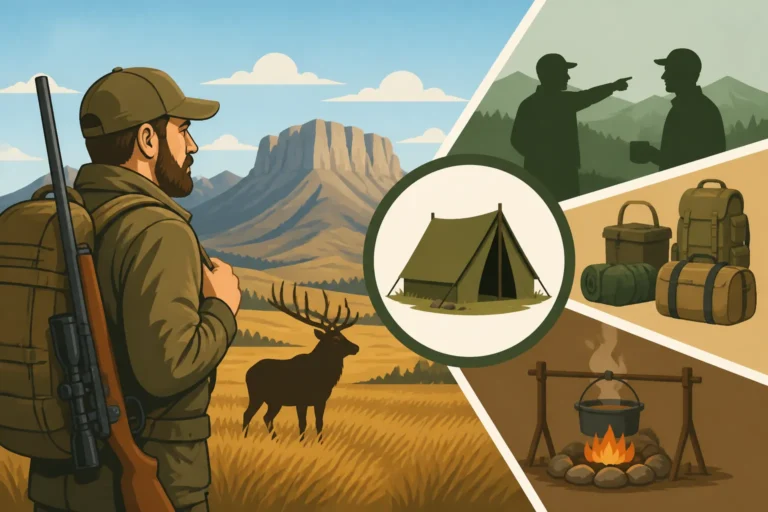
Beyond finding game, outfitters handle all the logistical headaches. This often includes setting up comfortable camps, providing nourishing meals, and assisting with game retrieval and packing, which can be monumental tasks in rugged western landscapes. For nonresidents, especially those hunting in wilderness areas where a guide is mandatory, an outfitter is the most straightforward and legally compliant option. They are bonded, insured, and regulated by the Wyoming Board of Outfitters and Professional Guides, offering a layer of consumer protection and accountability that informal arrangements simply can't provide. While the cost is an important consideration, the value in expertise, logistics, and legal compliance is often well worth the investment for an unforgettable and worry-free experience. If you're pondering the overall cost, take a look at What a Guided Wyoming Elk Hunt Costs.
Finding a Reputable Wyoming Outfitter
The process of selecting an outfitter might seem daunting, given the investment involved, but it's a crucial step that deserves thorough research. Your first stop should always be the Wyoming Board of Outfitters and Professional Guides (WBOAG). This is the official state agency that licenses and regulates all outfitters and guides operating in Wyoming. You can verify an outfitter's license, check their standing, and even review any complaints filed against them. This due diligence is essential and can save you a lot of grief down the line. You can start your verification process by reading Looking Up a License in the Wyoming Outfitter Board.
Beyond official checks, seek out references from past clients and review independent testimonials. Websites and platforms like BookYourHunt or GoHunt can be excellent resources for finding reputable outfitters, often providing detailed profiles, hunt offerings, and client reviews that give you a clearer picture of their services and success rates. When you connect with an outfitter, don't hesitate to ask detailed questions about their experience, hunt areas, success rates, what's included in the price, and their cancellation policies. A reputable outfitter will welcome your questions and provide clear, honest answers. Always get everything in writing, including dates, pricing, services, and refund terms. Asking key questions from Questions Worth Asking Before You Book will help you cover all bases. This careful vetting process ensures you're partnering with a professional who will provide a safe, legal, and ultimately rewarding hunting experience in Wyoming.
Disclaimer
This article is for general informational purposes only and does not constitute professional advice. Laws, prices and regulations vary by location and change over time. Consult a qualified professional for guidance on your specific situation.