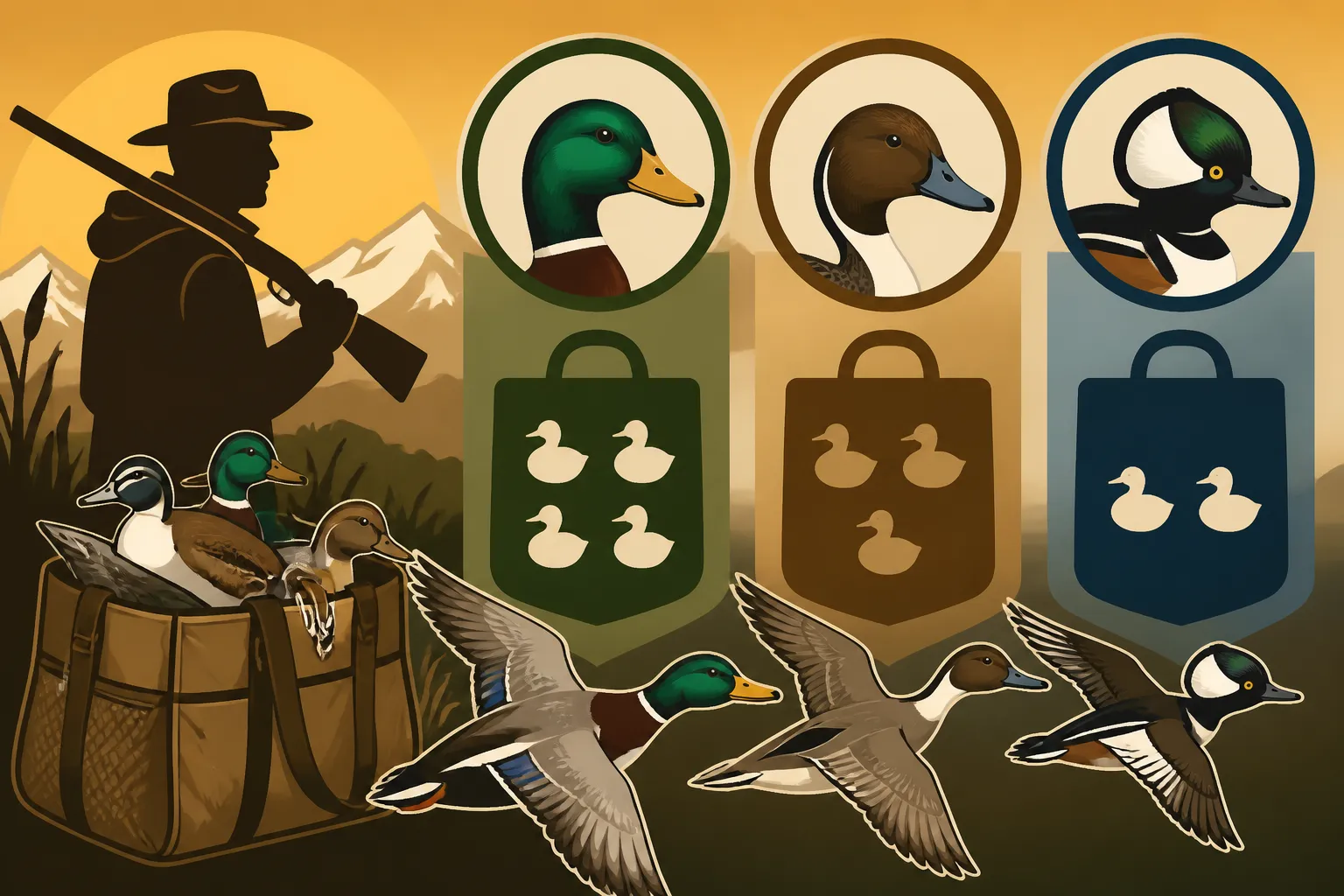
Duck Bag Limits Broken Down by Species
Trying to understand the intricate world of duck bag limits in Wyoming can feel like navigating a maze while blindfolded. It's not just a free-for-all out there when it comes to waterfowl; each species, from the smallest teal to the largest mallard, often has its own set of rules, and missing even one detail can land you in hot water. This guide is going to break down the complexities of Wyoming's duck bag limits by species, offering clarity and practical advice so you can hunt confidently and legally.
The Foundation of Wyoming's Waterfowl Regulations
Before we dive into the specifics of individual duck species, it's crucial to understand the overarching framework that governs waterfowl hunting in Wyoming. Unlike big game, where a single tag typically grants you one animal of a specific type, duck hunting operates on a daily bag limit system. This means you can harvest a certain number of ducks per day, but that total daily bag is often made up of various sub-limits for different species. It's this layered approach that can often trip up even seasoned hunters.
Why Regulations Vary by Species
The primary reason for species-specific bag limits boils down to conservation and population management. Ducks, while often grouped together in a hunter's mind, are incredibly diverse. Some species, like mallards, might have robust, widespread populations that can sustain a more generous harvest. Others, such as certain diving ducks or pintails, may be experiencing population declines or face specific habitat challenges that necessitate stricter limits. These regulations are designed to ensure sustainable hunting opportunities for future generations. Wildlife biologists constantly monitor populations, migration patterns, and breeding success to make informed decisions about bag limits each year. The data they collect, combined with regional and national waterfowl management plans, directly influences the numbers you see in the regulations pamphlet.
Consider, too, the varying vulnerability of different species. Some ducks are more easily hunted due to their behavior or preferred habitat, making them more susceptible to overharvest without careful management. For example, dabbling ducks, which feed in shallow water and often decoy readily, might need different oversight than a fast-flying scaup that frequents large, open water bodies. Understanding this underlying logic helps underscore the importance of accurate identification in the field and adherence to the rules.
The Role of State and Federal Agencies
Waterfowl management in North America is a cooperative effort, primarily between the U.S. Fish and Wildlife Service (USFWS) and state wildlife agencies like the Wyoming Game and Fish Department. The USFWS sets the broad frameworks and flyway-wide harvest strategies, considering continental populations and migratory patterns. Within these federal guidelines, Wyoming then establishes its specific seasons, zones, and daily bag limits, tailored to local conditions, hunter participation, and state-specific conservation goals.
This partnership is essential for managing species that migrate across multiple states and even international borders. For hunters, it means that while the general season structure might feel familiar year to year, the specific limits can and do change. It's not enough to remember last year's limits; you absolutely must consult the current year's Wyoming Game and Fish regulations for waterfowl, usually available online and in print well before the season opens. Relying on outdated information is a surefire way to accidentally violate the rules.
Common Duck Species and Their Bag Limit Structures
Now let's get into the nitty-gritty of the ducks you're likely to encounter on Wyoming's waters and how their bag limits are typically structured. It's rarely a single number for all ducks; instead, you'll find a general daily bag limit with specific restrictions on certain species within that total. This requires careful attention and positive identification before pulling the trigger.
Mallards and Pintails: The Iconic and the Regulated
Mallards are, without a doubt, the quintessential duck for many hunters. They're abundant, widespread, and generally have a relatively generous daily bag limit, often forming the backbone of a hunter's bag. However, even with mallards, there can be specific restrictions, particularly concerning hen mallards. Often, only a certain number of hen mallards are allowed within the total mallard limit to protect breeding populations. Distinguishing between drake and hen mallards, especially on the wing, is a fundamental skill every waterfowl hunter needs to master. Their distinct plumages, even in flight, offer clear identification cues.
Pintails, on the other hand, often face much stricter regulations. Their populations have experienced fluctuations, leading to conservative bag limits, sometimes as low as one or two birds per day. This means if you harvest a pintail early in your hunt, you need to be acutely aware of that restriction for the rest of the day. The graceful, elongated neck and distinct tail feathers of a drake pintail make them fairly easy to identify, but vigilance is key. Accidental harvest of an over-limit pintail is a common, and easily avoidable, mistake. Hunters might use tools like GoHunt to familiarize themselves with common waterfowl species and their habitats before the season.
Teal, Wigeon, and Gadwall: Dabblers with Nuances
Teal (blue-winged, green-winged, and cinnamon) are beloved for their speed and agility, and they often migrate earlier in the season. Their combined bag limit can be quite generous, reflecting their healthy populations. However, identifying the specific species of teal can be challenging for new hunters, though often the regulations group them together. Blue-winged teal are usually early migrants and have a distinct sky-blue patch on their wing. Green-winged teal are smaller and faster, often showing a brilliant green speculum. Cinnamon teal are less common in many parts of Wyoming but can show up, particularly during early seasons. Because their limits are generally combined, the critical thing is knowing you've identified a teal correctly.
American Wigeon and Gadwall are two other common dabbling ducks that often have a decent bag limit. Wigeon are distinctive with their white belly and often a white patch on the wing of the drake. Gadwall are more subtly colored, often referred to as "grey ducks," but drakes display a striking white speculum in flight. These species typically fall under the general duck bag total without overly restrictive individual limits, but it's always worth confirming the exact numbers for the current season. Being able to correctly identify these birds on the wing is essential for staying within the legal limits and enjoying a successful hunt.
Divers and Sea Ducks: Different Habits, Different Rules
When you move to diving ducks, the rules can change again. Species like canvasbacks, redheads, scaup (bluebills), ring-necked ducks, and goldeneyes spend more time on larger, deeper bodies of water. Their flight patterns, often lower to the water and in tighter groups, distinguish them from dabblers. Limits for divers are often more restrictive, especially for canvasbacks and redheads, which can sometimes be as low as one or two birds per day due to population concerns. Scaup limits have also seen significant changes over the years, often fluctuating based on continental survey data.
Sea ducks, like mergansers, are generally less sought after for table fare but are still legal to hunt and have their own specific bag limits. Common, Red-breasted, and Hooded Mergansers are all found in Wyoming, usually on larger rivers and lakes. Their distinctive long, serrated bills are adapted for catching fish, and their limits are often separate from other duck species. It's imperative to distinguish these from other ducks, especially when they might be sharing the same water.
Here’s a simplified, illustrative table outlining how daily bag limits might be structured. Remember, these numbers are for illustration only. Always check the official Wyoming Game and Fish Department regulations for the current season.
| Species Category/Sub-Limit | Illustrative Daily Bag Limit | Illustrative Species-Specific Limit (within total) | Key Identification Tip |
|---|---|---|---|
| Total Daily Duck Bag | Often 6-7 ducks | ||
| Mallards | (Included in total) | Often 4 mallards, with 2 hens max | Drakes: Green head, white neck ring; Hens: Mottled brown |
| Pintails | (Included in total) | Often 1-2 pintails | Drakes: Long tail, brown head, white stripe on neck |
| Canvasbacks | (Included in total) | Often 1 canvasback | Drakes: Red head, white body, black chest; Hens: Brown head, grey body |
| Redheads | (Included in total) | Often 2-3 redheads | Drakes: Round red head, grey body, black chest |
| Scaup (Bluebills) | (Included in total) | Often 3 scaup (may fluctuate) | Drakes: Black head, grey back, white sides |
| Wood Ducks | (Included in total) | Often 2-3 wood ducks | Drakes: Iridescent multi-colored head, ornate patterns |
| Mergansers (all species) | Often 5 mergansers | Long, narrow, serrated bills |
This table shows how a general daily duck limit might have "slots" for specific, more sensitive species, emphasizing the importance of identification.
Navigating the Nuances of Duck Hunting Regulations
Understanding the basic species-specific limits is just the starting point. There are always additional layers to waterfowl regulations that every hunter must be aware of to ensure a legal and ethical hunt. This includes not just what you can shoot, but how you can hunt and where.
Hen Identification and Sex-Specific Limits
As mentioned earlier with mallards, some species have sex-specific limits. This means you might be allowed more drakes than hens of a particular species. This rule is designed to protect the reproductive potential of the population, as hens are vital for nesting and raising broods. Learning to distinguish sexes on the wing is a crucial skill. For many species, drakes have more vibrant, distinct plumage, while hens are often duller, providing camouflage for nesting. However, during the early season or in poor light, this can be challenging.
Practicing identification with field guides, online resources, and even hunting videos can greatly improve your skills. It's far better to pass on a shot if you're uncertain of a bird's species or sex than to risk a violation. The implications of misidentification extend beyond just individual birds; it directly impacts the conservation efforts aimed at sustaining healthy waterfowl populations. Hunting responsibly means prioritizing identification over volume.
Bag Limits vs. Possession Limits
Another critical distinction to grasp is the difference between a daily bag limit and a possession limit. The daily bag limit is the maximum number of birds you can legally harvest in one day. The possession limit, however, refers to the maximum number of birds you can have in your possession at any given time, including those from previous days' hunts. This limit is often two or three times the daily bag limit. For example, if the daily limit for mallards is four, the possession limit might be twelve. This rule applies whether the birds are fresh from a hunt, in your freezer at home, or at a taxidermist.
This distinction becomes particularly important if you're on a multi-day hunt or if you process and store your birds at home. You can't just keep shooting your daily limit indefinitely; once you reach your possession limit, you must stop hunting that species until some of your birds are consumed or legally gifted to others, bringing your total possession below the limit. Keep careful records of your harvests, especially if you plan to transport game across state lines, as federal regulations also apply to migratory birds. How Soon You Must Tag a Downed Animal and Field Dressing and Carcass Transport Rules Explained are critical to understand here.
Checking Current Regulations: Your Annual Homework
I cannot stress this enough: always consult the official Wyoming Game and Fish Department regulations for the current hunting season. These regulations are published annually, usually in late summer or early fall, well in advance of the waterfowl opener. They detail all bag limits, possession limits, shooting hours, legal methods, and specific unit restrictions. These documents are the definitive source of truth, and ignorance of the law is never an excuse.
You can find these regulations on the Wyoming Game and Fish Department website, often as a downloadable PDF, or pick up a physical copy at license vendors and Game and Fish offices. Beyond just bag limits, pay close attention to season dates, which can vary by zone, and any special permits required, such as a federal migratory bird hunting stamp (Duck Stamp) or a Wyoming conservation stamp. Even though the core principles remain, details can shift based on population surveys and management goals. Tools like GoHunt can be invaluable for finding current regulation summaries and mapping out public access points and hunt areas. E-Scouting a Unit Before the Season Opens can help you visualize your hunting plans.
Practical Tips for Staying Legal and Ethical
Duck hunting is a dynamic pursuit, and maintaining legality while enjoying your time afield requires more than just knowing the numbers. It demands diligence, preparation, and a commitment to ethical hunting practices.
Field Identification Skills: Practice Makes Perfect
Developing strong field identification skills is perhaps the most crucial aspect of staying legal with species-specific bag limits. Ducks often fly fast, in low light, and in challenging weather conditions, making snap judgments difficult. Here's how to improve:
- Study Field Guides: Keep a waterfowl identification guide handy, even if it's just an app on your phone. Review it frequently, focusing on key features like size, shape, flight pattern, wing beats, and distinct plumage markings (especially speculums and head colors).
- Observe Without Shooting: Spend time watching ducks without a gun in hand. Use binoculars to observe their behavior, how they fly, how they land, and their identifying marks. This builds a mental library of what each species looks like in various conditions.
- Learn Drake vs. Hen: Pay special attention to the differences between drakes and hens, especially for species with sex-specific limits. Many guides highlight these distinctions.
- Know Your Local Birds: While a guide covers all species, focus on the ducks most common to your specific hunting areas in Wyoming. Waterfowl Along the North Platte River highlights common species in that region.
- When in Doubt, Don't Shoot: This is the golden rule. If you can't positively identify the species or sex of a duck, don't take the shot. There will always be another opportunity, and maintaining legality and ethics is paramount.
Understanding Your Hunting Location
Where you hunt can also influence bag limits and regulations. Different waterfowl zones or specific hunt areas might have slightly different rules or season dates. For instance, areas closer to certain refuges or specific habitats might have unique provisions. Always check if your chosen hunting spot falls under any special regulations.
Consider also the type of water you're hunting. Large reservoirs might hold more diving ducks, while marshy sloughs and river bottoms are prime for dabblers. Understanding the habitat and the species it typically attracts can help you anticipate what you'll encounter and mentally prepare for identification. Wyoming Small Game Seasons at a Glance includes waterfowl as part of the bigger picture of small game hunting opportunities.
Ethical Hunting and Conservation
Beyond the letter of the law, ethical hunting practices are deeply intertwined with conservation. This means minimizing crippling loss, making clean shots, and retrieving every downed bird. It also means understanding the spirit of the regulations – that they are there to protect the resource, not just to create hoops for hunters to jump through.
By adhering to bag limits and practicing responsible hunting, you contribute directly to the health of Wyoming's waterfowl populations. Every hunter plays a role in ensuring that these migratory birds continue to grace our skies and provide hunting opportunities for generations to come. Your diligence in learning and following the specific bag limits for each duck species is a testament to your respect for the wildlife and the hunting tradition. It’s also good to know about rules for other species; for example, Hunting Coyotes in Wyoming Year Round outlines rules for predators.
Ultimately, hunting ducks in Wyoming is a rewarding experience, but it demands a commitment to understanding and respecting the rules. With careful preparation, diligent field identification, and an annual review of the regulations, you can enjoy successful and legal waterfowl hunts for years to come.
Disclaimer
This article is for general informational purposes only and does not constitute professional advice. Laws, prices and regulations vary by location and change over time. Consult a qualified professional for guidance on your specific situation.