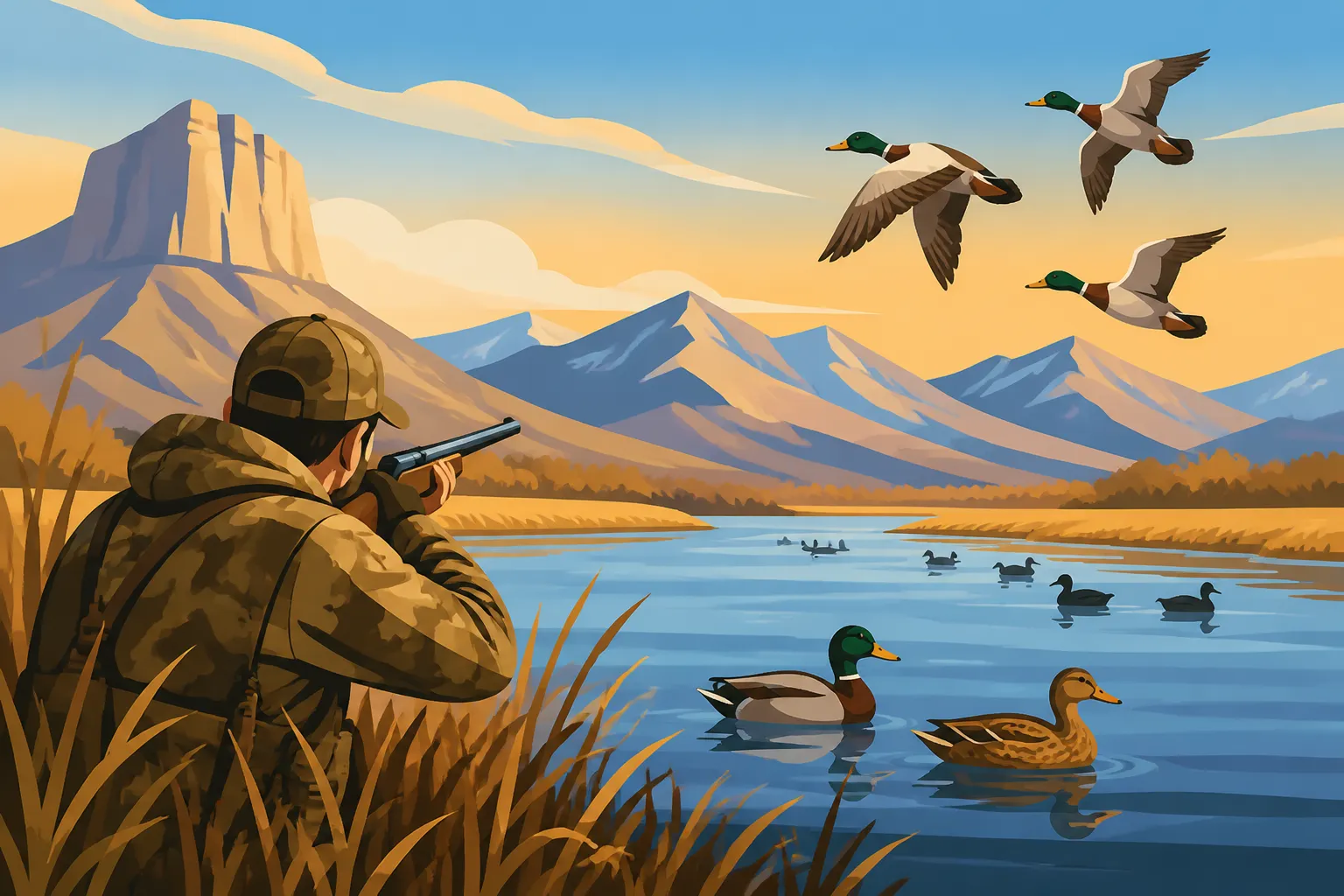
Waterfowl Along the North Platte River
Chasing ducks and geese along the North Platte River in Wyoming sounds like a dream for many waterfowlers, but anyone who's tried it knows it's a unique beast. The shifting flows, limited access, and often wary birds can make it feel like you're always a step behind. This guide will walk you through the realities, opportunities, and critical strategies for a successful waterfowl hunt along this iconic Wyoming waterway, helping you navigate its challenges and maximize your chances.
The North Platte River's Allure for Waterfowl
The North Platte River isn't just a scenic ribbon of water; it's a vital artery for migratory waterfowl in Wyoming, offering food, rest, and refuge. From its headwaters in Colorado, it snakes its way through the state, providing crucial habitat for a variety of ducks and geese. However, this isn't uniform habitat, and understanding its nuances is the first step to a successful hunt.
Understanding River Features and Bird Preferences
The river's character changes dramatically along its length, and so do the prime hunting spots. You'll find everything from wide, slow-moving sections with sandy islands to narrower, faster stretches with rocky banks and deeper holes. Ducks, particularly mallards, gadwalls, and teal, tend to gravitate towards slower moving water, especially where oxbows, back channels, and small side sloughs create calmer feeding areas. These spots often feature submerged vegetation, shallow mud flats, or proximity to agricultural fields. Geese, especially Canada geese, also use these slower stretches but will frequently loaf on large sandbars or feed in nearby corn and alfalfa fields, flying to the river for water and roosting.
River bends are often key features. The inside bend typically deposits sediment, creating shallower water and sandbars that ducks and geese love to loaf on, especially in the mornings before heading out to feed, or during midday for a rest. The outside bend, conversely, is usually deeper and faster, but can hold birds looking for refuge or diving ducks in larger main channels. Warm water discharges from power plants or industrial operations, if present, can create ice-free oases in late season, concentrating birds when other water sources freeze solid. Always be on the lookout for these micro-habitats, as they can be game-changers, particularly when the mercury drops.
Seasonal Migrations and Species to Target
The North Platte witnesses waves of migratory birds throughout the fall and winter, making timing a crucial factor. Early in the season, typically late September through October, you're more likely to encounter local birds and early migrants like teal (blue-winged and green-winged), pintails, and wigeon. These birds are often less wary, and a well-placed decoy spread in a slough or quiet backwater can produce fast action. As October progresses into November, the migration kicks into full gear. You'll see increasing numbers of mallards, gadwalls, and a mix of diving ducks like common goldeneyes, buffleheads, and canvasbacks, especially in the larger, deeper sections of the river.
By late November and into December, the focus often shifts to mallards and Canada geese. These birds are typically much more educated, having run the gauntlet of hunters further north. Decoy spreads need to be meticulously placed, calling needs to be realistic and subtle, and concealment becomes paramount. The river itself can start to freeze in sections, especially in colder years, concentrating birds into remaining open water or around those aforementioned warm water areas. Understanding these general migration patterns, which often align with the Wyoming Duck Season Framework Explained and How Long Goose Season Runs in Wyoming, will help you plan your trips and manage your expectations for the species you're likely to encounter.
Accessing the North Platte River for Waterfowl Hunting
Access is perhaps the biggest challenge for many hunters on the North Platte. While the river itself is navigable in many places, the land immediately bordering it is often a patchwork of private and public ownership. Understanding where you can legally put in, hunt, and take out is critical, not just for success, but for staying out of trouble.
Navigable Water and Public Land Hotspots
Wyoming recognizes the public's right to float navigable waters, which generally includes the North Platte. This means you can legally be on the water itself, even if the banks are private. However, setting foot on private land without permission, even if you’re just pulling your boat over, is trespassing. This makes planning your put-in and take-out points on public ground absolutely essential. Look for Bureau of Land Management (BLM) land, State Trust Land, and designated Wyoming Game and Fish Department (WGFD) access areas. These spots are often clearly marked on maps and offer legal entry and exit points.
Tools like GoHunt can be invaluable here. Their detailed land ownership maps allow you to meticulously scout sections of the river from home, identifying public parcels, state land, and WGFD access points where you can launch a boat or set up for a hunt. It's not just about finding public land on the map; it's about understanding how to get to it and then how to utilize the river effectively once you're there. Always double-check current WGFD regulations and maps, as access points can change, and specific rules might apply to certain areas. For more on navigating public lands, consider researching Floating In on Wyoming's Navigable Water and Wyoming State Trust Land Hunting.
The Realities of Private Land and Gaining Permission
Much of the prime waterfowl habitat along the North Platte is bordered by private ranchland and agricultural fields. These areas often offer less pressured hunting and excellent opportunities, but they require permission. This can be a hurdle, as many landowners are hesitant to grant access, especially during peak hunting season. It's a matter of respect and building relationships. Start early, well before the season opens, and approach landowners in person if possible. Be polite, offer to help with chores, and always be clear about your intentions.
If you do secure permission, be an exemplary guest. Leave no trace, close gates, respect property boundaries, and offer to share some of your harvest. Sometimes, outfitters have secured leases on private ground, and while this comes with a cost, it can be a reliable way to access quality hunting. Don't underestimate the value of scouting from public road easements (where legal) to see where birds are concentrating before you even try to knock on a door. Remember, a landowner's trust is hard-earned and easily lost.
Boat Launches and Logistics
Hunting the North Platte effectively often means hunting from the river or using a boat to access otherwise unreachable public land. This requires careful consideration of boat launches and logistics. Small jon boats, canoes, or even large kayaks are often ideal. They're maneuverable in current, can carry decoys and gear, and draw shallow enough water to navigate various river conditions. Research publicly accessible boat ramps or designated put-in points. Some WGFD access areas provide these.
Consider the entire float, not just the put-in. How far will you float? Where is your take-out point, and is it accessible by vehicle? Is there a shuttle available, or will you need two vehicles? The river flow can impact your timing significantly. A seemingly short float can turn into an all-day ordeal if the current is slow, or you might overshoot your take-out if it's running fast. Always scout your launch and retrieve points, and have a solid plan for vehicle shuttles.
Key Strategies for North Platte Waterfowling
Hunting the North Platte requires a flexible approach. The birds are often pressured, and the dynamic environment means what works one day might not the next. Adaptability, scouting, and a keen understanding of bird behavior are your best assets.
Decoy Spreads and Concealment for River Hunting
Decoy spreads on the river are different than in a static pond. You're often dealing with current, so rigging decoys on a main line with heavy weights or using individual anchor lines is essential to prevent them from washing downstream. For ducks, a spread that mimics a feeding flock in calmer water, perhaps near a sandbar or in a back eddy, is effective. Include a few motion decoys, like spinning wing or jerk rigs, to add realism, especially on days with little wind. For geese, larger full-body or shell decoys placed on sandbars or adjacent fields are typically best. Remember, less can be more; a realistic, well-placed small spread often outperforms a huge, unnatural one.
Concealment is paramount. River banks offer natural cover like willows, cottonwoods, and brush. Utilize these heavily. Portable blinds, often camouflaged to match the riverbank vegetation, can also be effective. If hunting from a boat, camouflaging your boat with natural materials or a boat blind is crucial. The North Platte birds see a lot of hunting pressure, and they will flare at the slightest hint of danger. Pay attention to your skyline and ensure you blend seamlessly into your surroundings. Don't be afraid to get creative with natural cover you find on location.
Calling Tactics and Reading the Birds
Calling on the North Platte demands nuance. Early in the season, ducks might respond to more aggressive calling, but as the season progresses, subtle clucks, feed calls, and soft quacks are often more effective for ducks, especially mallards. For geese, short, sharp clucks and murmurs that mimic a contented flock are usually better than loud, continuous honking. The goal isn't just to make noise; it's to sound like inviting, non-threatening birds.
Always watch the birds' reactions. If they're flaring or avoiding your calls, ease off. If they're circling but not committing, try softer, more sporadic calls. Sometimes, no calling at all is the best strategy, especially for wary geese. Understanding how to Bugle and Cow Call Timing Through the Rut for elk might seem unrelated, but the principle of timing and subtlety in calling applies across all species and can be a transferable skill for reading animal behavior.
Reading the Weather, Water, and Bird Behavior
The river environment is constantly changing, and successful hunters are those who can read these shifts. Wind direction and speed are critical, affecting both bird flight patterns and how your decoys behave. Birds typically land and take off into the wind, so position your blind and decoys to take advantage of this. A strong headwind can push birds lower, making them more accessible. Tools like GoHunt can help you check real-time weather forecasts, including wind patterns, which can inform your setup even before you leave the house.
Water levels and flow rates also play a significant role. High water can flood out traditional sandbars and feeding areas, pushing birds to higher ground or different river sections. Low water can expose new mud flats and make access more challenging for boats. Watch for changes in ice conditions as winter progresses. Open water areas, however small, will attract birds. Pay close attention to how birds are using the river on any given day. Are they feeding actively? Are they just loafing? Are they flying low or high? Their behavior will tell you where to set up and what tactics to employ.
Essential Gear for a North Platte Waterfowl Hunt
Preparation is key, and having the right gear can make or break your North Platte hunting experience. The combination of cold weather, moving water, and often remote locations demands thoughtful packing.
Boat and Decoy Selection
As mentioned, a sturdy, stable boat is often essential. Jon boats are popular due to their durability and shallow draft. Canoes and kayaks can work for more agile hunters, especially if you're not hauling a huge spread. Whatever you choose, ensure it's river-worthy and you're comfortable operating it in current. Decoy-wise, a mix of mallards, gadwalls, and a few pintails or wigeon often covers your bases for ducks. For geese, larger Canada goose decoys, typically full-bodies or shells, are preferred. Don't forget heavy anchor weights and strong lines to keep your decoys from floating away in the current.
A reliable method to transport your gear is also important. Decoy bags, dry bags for clothing and electronics, and waterproof containers for essentials will save you a lot of headaches when dealing with water.
Layering, Waders, and Weather Protection
Wyoming weather is notoriously unpredictable, especially along river corridors where wind can cut through you. Layering is not just recommended; it's mandatory. Start with a good moisture-wicking base layer, add insulating mid-layers like fleece or down, and top it off with a waterproof and windproof outer shell. You'll want to be able to shed or add layers as the day progresses and your activity level changes.
Breathable, insulated waders are a must-have for setting decoys, retrieving birds, and navigating shallow spots. Chest waders are usually preferred over hip waders for the added protection against deep water. Choose waders with sturdy boots for traversing muddy or rocky river bottoms. Always bring waterproof gloves, a warm hat, and spare dry socks. There's nothing worse than wet feet in cold weather.
Safety First on the River
Hunting on moving water carries inherent risks. A personal flotation device (PFD) is non-negotiable, whether you're in a boat or wading. Even strong swimmers can get into trouble in cold, moving water if they fall in unexpectedly. Always let someone know your float plan, including your put-in and take-out points and estimated times. Carry a fully charged cell phone (in a waterproof case) and consider a satellite communication device like an inReach, especially if you're in remote areas without cell service.
Pack a first-aid kit, a headlamp with extra batteries, fire-starting materials, and emergency food and water. Be mindful of ice conditions; never venture onto thin or unstable ice. Respect the power of the river, and never take unnecessary risks. Being prepared for the unexpected ensures your North Platte waterfowl hunt is not only successful but safe.
Disclaimer
This article is for general informational purposes only and does not constitute professional advice. Laws, prices and regulations vary by location and change over time. Consult a qualified professional for guidance on your specific situation.