Why Wyoming Muzzleloaders Need .40 Caliber and 50 Grains
The thrill of chasing big game in Wyoming with a muzzleloader is something truly special. There's a raw, traditional challenge to it that connects you to the history of hunting. But let's be honest, figuring out the specific regulations for muzzleloaders in the Cowboy State can feel like navigating a maze, especially when it comes to the nitty-gritty details like caliber and powder charge. Many hunters get confused about what's legal and what's not, potentially leading to a ruined hunt or worse. This guide is dedicated to breaking down those critical requirements, particularly the .40 caliber and 50-grain minimums, so you can head into the field confident that your setup is completely above board.
Why Wyoming Has Specific Muzzleloader Rules
It might seem like a lot of hoops to jump through, but Wyoming's Game and Fish Department has very specific reasons for setting these muzzleloader regulations. They're not just trying to make things difficult; they're aiming to balance opportunity, ethical hunting, and fair chase, while also ensuring the welfare of the state's incredible big game populations.
The Philosophy Behind Muzzleloader Restrictions
At its heart, the strictness around muzzleloader regulations in Wyoming, and indeed in many western states, stems from a desire to preserve the traditional essence of the hunt. Muzzleloaders are inherently more challenging to load and shoot accurately at longer distances than modern centerfire rifles. The regulations are designed to reflect this, preventing muzzleloaders from becoming simply "single-shot rifles" with modern capabilities that would negate the spirit of primitive weapon seasons. It's about maintaining a hunting experience that emphasizes woodcraft, stalking ability, and making that crucial first shot count, often at closer ranges. The state aims to provide hunting opportunities that cater to different preferences, and the muzzleloader seasons offer a unique, more primitive challenge.
Ensuring Ethical and Effective Harvest
Beyond tradition, a major driver for regulations like the .40 caliber minimum and the 50-grain powder charge is to ensure humane and ethical harvests. Wyoming wants hunters to use equipment capable of dispatching big game quickly and cleanly. A projectile that is too small or lacks sufficient energy can lead to wounded animals and prolonged suffering, which is something no ethical hunter wants. The .40 caliber minimum, for example, is established because it's generally considered the smallest practical bore size that can deliver sufficient projectile mass and wound channel for large game animals like deer and elk. Similarly, the 50-grain powder charge minimum ensures that the projectile is launched with enough velocity and kinetic energy to penetrate deeply and reliably through bone and tissue, reaching vital organs. This isn't just about hunter success; it's about respecting the animal and minimizing suffering in the field.
The Role of Traditional Hunting Methods
Wyoming deeply values its hunting heritage, and muzzleloaders play a significant role in that story. From mountain men to early settlers, muzzleloaders were the tools of survival and sustenance. While modern technology has advanced exponentially, the regulations attempt to keep muzzleloading within a framework that mirrors its historical limitations. This means a focus on simple, robust designs, avoiding advanced optics, and ensuring that the weapon's power aligns with what would have been historically effective. This commitment to traditional methods helps foster a sense of connection to the past, offering hunters a different kind of challenge and a unique way to experience the vastness of Wyoming's wilderness. It ensures that those who choose this path are genuinely engaging in a more "primitive" form of hunting, where skill, patience, and woodsmanship are paramount.
Decoding the .40 Caliber Minimum
The .40 caliber minimum for muzzleloaders in Wyoming is one of those rules that often raises questions. It’s not just a random number; it's a carefully considered benchmark for effectiveness on big game.
What Constitutes a Legal Muzzleloader Caliber
When Wyoming regulations state a ".40 caliber minimum" for muzzleloaders when hunting big game, they're talking about the actual diameter of the bore, and subsequently, the projectile. This means that if you're planning to hunt deer, antelope, elk, or moose, your muzzleloader must be at least .40 caliber. This rules out smaller calibers like .32 or .36, which are popular for small game or target shooting, but simply don't have the kinetic energy or wound channel potential deemed sufficient for larger animals.
For example, a hunter bringing a vintage .50 caliber Hawken rifle, or a modern .45 or .50 caliber inline muzzleloader, would easily meet this minimum. However, if you brought your grandfather's beautiful .36 caliber Kentucky long rifle, while historically significant, it wouldn't be legal for big game in Wyoming. It's crucial to check your specific firearm's stamped caliber, as sometimes replica firearms may deviate slightly from historical calibers. Remember, this rule is about the minimum, so going larger—like a .45 or .50 caliber—is perfectly fine and often preferred for elk or moose due to the increased energy and projectile weight. For more details on other weapon types, you might want to read about Minimum Muzzleloader Caliber for Wyoming Big Game.
The Impact of Caliber on Different Big Game Species
While the .40 caliber is the minimum across the board for big game in Wyoming, the effectiveness of a particular caliber can vary greatly depending on the species you're pursuing.
- For Deer and Antelope: A .40 caliber muzzleloader, paired with an appropriate bullet and powder charge, is generally sufficient for mule deer, whitetail, and pronghorn antelope. These animals are smaller-bodied than elk or moose, and a well-placed shot from a .40 caliber can be highly effective. The key here, as with any hunting, is shot placement and understanding the animal's anatomy.
- For Elk and Moose: While technically legal, a .40 caliber might be considered on the lighter side for truly large animals like elk and moose. Many experienced elk hunters often opt for .45 or .50 caliber muzzleloaders when chasing these formidable animals. The larger calibers allow for heavier bullets, which in turn carry more kinetic energy and offer better penetration through thick hides, heavy bone, and dense muscle. An elk or moose can soak up a lot of energy, and having an ample caliber ensures you have the best chance for a quick, clean kill, even if the shot isn't perfectly broadside. This isn't to say a .40 can't kill an elk, but it requires even more precise shot placement and often a heavier, harder bullet to ensure adequate penetration.
Common Caliber Misconceptions and Clarifications
There are a few common misunderstandings that pop up regarding muzzleloader calibers. One frequent question revolves around using sabots. A sabot allows a smaller diameter bullet to be fired from a larger bore. For instance, you might shoot a .40 caliber bullet from a .50 caliber muzzleloader using a sabot. This is generally permissible, as long as the bore itself is at least .40 caliber. The rule pertains to the gun's bore, not necessarily the actual diameter of the projectile you're using with a sabot. However, some jurisdictions might have nuances on projectile diameter, so always consult the most current regulations. In Wyoming, the focus is on the bore size meeting the minimum.
Another misconception is confusing rifle calibers with muzzleloader calibers. While a .40 caliber centerfire rifle cartridge delivers immense energy, a .40 caliber muzzleloader, despite the same numerical designation, operates at significantly lower velocities and pressures. Hunters often compare the two, but they are very different in terms of terminal ballistics. Always approach muzzleloader hunting with an understanding of its unique characteristics and limitations, irrespective of similar caliber numbers in modern firearms.
Understanding the 50-Grain Powder Charge
Just like the caliber, the minimum 50-grain powder charge isn't an arbitrary number. It's a fundamental requirement to ensure that your projectile has enough "oomph" to perform its job effectively.
Defining the Minimum Propellant Requirement
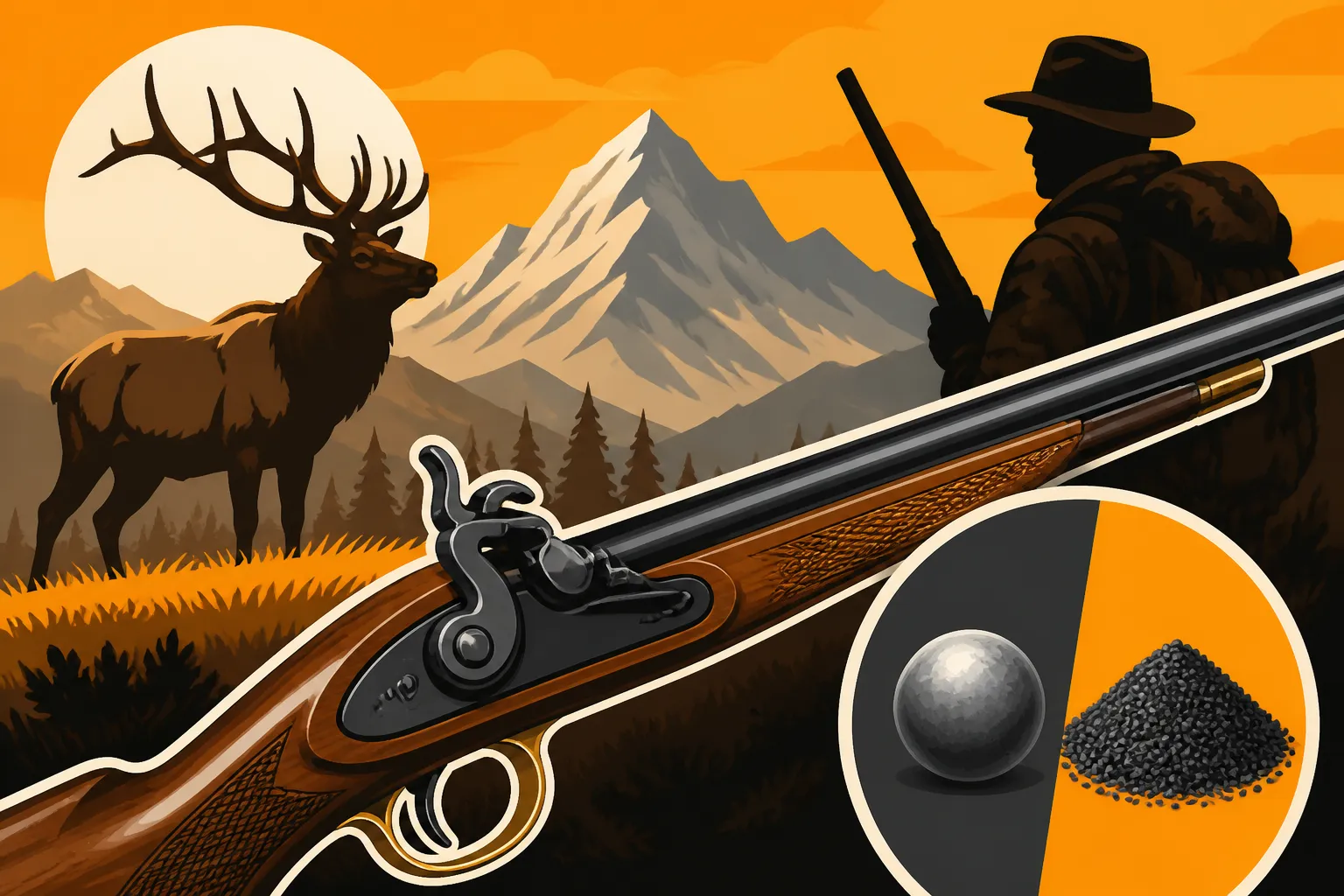
Wyoming regulations stipulate a minimum 50-grain equivalent powder charge. This "equivalent" part is crucial, especially when discussing modern black powder substitutes. Traditionally, black powder was measured by volume, and 50 grains by volume was a standard minimum for big game. With the advent of substitutes like Pyrodex, Triple Seven, or Blackhorn 209, these powders are often denser or more powerful than traditional black powder. Therefore, their measurement is usually expressed as a "black powder equivalent" in terms of volume.
For instance, if a substitute powder states that 70 grains by volume is equivalent to 70 grains of black powder, then using 50 grains by volume of that substitute would satisfy the 50-grain equivalent minimum. It's important to remember that measuring by weight is generally not how black powder or its substitutes are regulated or measured for charge (unless specifically stated by the manufacturer for certain products like Blackhorn 209). Most traditional and substitute powders are loaded by volume, using a powder measure. If you're using a modern substitute, always refer to the manufacturer's recommendations for volumetric equivalency to traditional black powder to ensure you meet the legal minimum. This minimum charge is a safeguard against under-powering your projectile, which could lead to poor velocity, insufficient penetration, and an unethical harvest. The state is making sure that The Powder Charge a Legal Muzzleloader Needs is truly adequate.
Measuring Powder and Substitutes Accurately
Accuracy in powder measurement is paramount, not just for legality, but for safety and consistent performance. Most muzzleloader powders, especially black powder and many substitutes, are measured using a volumetric powder measure. These are usually brass or plastic tubes marked in grains (by volume). You scoop the powder, level it off, and pour it down the bore.
- Traditional Black Powder: With real black powder, consistency is key. Using a reputable brand like Goex or Swiss black powder and a reliable volumetric measure will ensure you're meeting the minimum.
- Pyrodex and Triple Seven: These are common substitutes. They are designed to be measured volumetrically, just like black powder. For example, 50 grains by volume of Pyrodex P or RS (or Triple Seven FFG) would meet the 50-grain equivalent rule.
- Blackhorn 209: This is a more modern, cleaner-burning substitute that is often measured by weight with a scale, or with specific Blackhorn 209 volumetric measures, because its density differs from traditional black powder. If using Blackhorn 209, you must follow the manufacturer's instructions for measuring to ensure you meet the 50-grain black powder equivalent. For example, 70 grains by weight of Blackhorn 209 might be equivalent to a larger volume of black powder. The most critical takeaway here is to read the instructions on your specific powder. When dealing with substitutes, understanding Measuring Blackpowder Substitutes by Volume, Not Weight is essential. Never guess or assume; always verify.
The Relationship Between Powder, Velocity, and Energy
The powder charge directly dictates the velocity and, consequently, the kinetic energy of your projectile. A higher powder charge (within safe limits for your muzzleloader) generally translates to higher velocity and more kinetic energy. This kinetic energy is what enables the bullet to penetrate deep enough to reach vital organs and cause hydrostatic shock, leading to a quick, humane kill.
- Velocity: A projectile needs a certain minimum velocity to expand reliably (if it's an expanding bullet) and to maintain a flat trajectory. Too little powder means a sluggish projectile that drops rapidly and might not expand.
- Kinetic Energy: This is a measure of the energy transferred to the animal upon impact. A 50-grain powder charge with a .40 caliber or larger projectile ensures a baseline level of energy transfer. For larger, tougher animals like elk, many hunters will push their charge closer to 90-110 grains (volumetric equivalent) to maximize energy and penetration, especially when coupled with heavy bullets. This increased energy gives you a better margin of error and ensures the projectile can break through heavy bone if necessary. Without adequate powder, even a perfectly placed shot might lack the energy to fully penetrate or create enough trauma for a quick kill, leading to a frustrating tracking job and potential loss of the animal.
Projectile Requirements: Beyond Just Caliber
While caliber and powder charge are crucial, the actual projectile you choose is equally important for ethical hunting. Wyoming has rules that guide these choices to ensure effectiveness.
Full-Bore Projectiles Versus Saboted Bullets
This is an area where regulations can sometimes be quite specific, varying by state or even by specific hunting season. In Wyoming, for muzzleloader seasons, hunters are typically allowed to use both full-bore projectiles and saboted bullets, as long as the base caliber rule is met.
- Full-Bore Projectiles: These are bullets that are the same diameter as the bore of your muzzleloader. For a .50 caliber muzzleloader, a .50 caliber lead round ball or a .50 caliber conical bullet (like a Maxi-Ball or PowerBelt AeroLite) would be a full-bore projectile. They engage the rifling directly and are often traditional choices, especially for slower twist rates. Full-bore projectiles are generally very heavy for their diameter, offering excellent penetration.
- Saboted Bullets: A sabot (pronounced SAY-bo) is a plastic cup or sleeve that surrounds a smaller-diameter bullet, allowing it to be fired through a larger bore. For example, a .45 caliber bullet can be loaded into a .50 caliber muzzleloader using a .50-to-.45 caliber sabot. Sabots allow hunters to use modern, aerodynamic, high-performance rifle bullets in their muzzleloaders. This is popular because it allows for greater accuracy and flatter trajectories, especially with modern inline muzzleloaders.
As long as the minimum bore requirement (e.40 caliber) is met, both types are typically legal in Wyoming, though it’s always wise to double-check the latest regulations. Some states have "no-sabot" rules in specific muzzleloader seasons to further restrict modern performance, but Wyoming generally allows them.
Material and Design Considerations for Muzzleloader Bullets
The material and design of your projectile have a massive impact on its terminal performance.
- Lead vs. Copper/Alloy: Traditional muzzleloader projectiles are almost exclusively lead. Lead is dense and soft, allowing for good expansion and energy transfer. Modern saboted bullets, however, often mimic centerfire rifle bullets, utilizing copper jackets, bonded cores, or even all-copper construction (like Barnes Expander MZ). These modern designs offer controlled expansion, high weight retention, and deep penetration, which can be particularly advantageous on tough animals like elk.
- Bullet Shape and Weight: Whether you choose a round ball, a conical bullet, or a modern pointed bullet, the shape and weight are critical.
- Round Balls: Excellent for smaller game, but generally lack the mass and ballistic coefficient for big game beyond very close ranges, especially with the 50-grain powder minimum.
- Conical Bullets: Heavier than round balls, conicals like Maxi-Balls or lead PowerBelts offer better penetration and energy retention. They are a great choice for traditional muzzleloaders.
- Modern Saboted Bullets: These often have Spitzer (pointed) or hollow-point designs, optimized for aerodynamics and rapid expansion upon impact. Brands like Hornady SST, Federal Premium Trophy Copper, or Barnes MZ series are popular choices. When choosing, consider the balance between weight (for penetration) and design (for expansion). For a heavy-boned animal like an elk, a heavier, tougher bullet designed for deep penetration is often preferred, even if it means slightly less initial expansion.
Ensuring Adequate Expansion and Penetration
The goal of any hunting bullet is to create a devastating wound channel through vital organs. This requires both adequate expansion and sufficient penetration.
- Expansion: An expanding bullet increases its diameter upon impact, creating a larger wound channel and transferring more energy. However, too much expansion can limit penetration. For muzzleloader velocities, which are generally lower than centerfire rifles, a bullet designed to expand reliably at lower speeds is crucial.
- Penetration: This is arguably the most critical factor for big game. A bullet must penetrate deep enough to reach the heart, lungs, and other vital organs, ideally passing through both sides to create an exit wound for a blood trail. A heavy, well-constructed bullet, even if it doesn't expand dramatically, will often out-perform a lighter, highly expanding bullet when hitting heavy bone or dense muscle. For big game in Wyoming, especially the larger species, prioritize a projectile that offers reliable, deep penetration in conjunction with your minimum .40 caliber and 50-grain charge. Look for bullets that have a good reputation for punching through tough hides and ribs.
Legal Ignition Systems and Sights
Wyoming's muzzleloader rules also extend to how your gun is ignited and what kind of sights you can use, again aiming to maintain a traditional challenge.
Permitted Ignition Sources: Percussion Caps and 209 Primers
The ignition system is what sets off the powder charge in a muzzleloader. Wyoming's regulations are pretty clear on what's allowed:
- Percussion Caps: These are the classic ignition system for traditional muzzleloaders, including cap-and-ball revolvers and percussion rifles. They come in various sizes (e.g., #10, #11) and are placed on a nipple, where the hammer strikes them to ignite the powder. Many traditional side-lock and even some modern inline muzzleloaders still use percussion caps. They are fully legal.
- 209 Primers: These are shotgun primers and have become the standard for most modern inline muzzleloaders. They offer a hotter, more reliable ignition, especially in adverse weather conditions. Inline muzzleloaders are designed to accept 209 primers directly into their breech plug. The robust nature of 209 primers contributes to better consistency and reduced misfires, making them a popular choice for serious hunters. These are also perfectly legal in Wyoming.
What's typically not allowed are systems that rely on modern cartridge primers that are not 209s or older flintlock mechanisms that are less reliable in wet conditions. The focus is on percussion-based ignition systems.
The Open Sight Rule for Muzzleloaders
This is a significant distinction that really emphasizes the traditional aspect of muzzleloader hunting in Wyoming. For any dedicated muzzleloader season, only open or "iron" sights are permitted. This means:
- No Scopes: You cannot use any magnifying optic on your muzzleloader during a muzzleloader-specific season. This includes traditional telescopic scopes, red dot sights, or any other device that offers magnification.
- No Fiber Optic Sights (with magnification): While many modern muzzleloaders come equipped with bright fiber optic front and rear sights, which are considered "open sights," it's important to understand these are still a form of iron sights and are usually legal. The critical distinction is the lack of magnification. If it helps you see the front post clearer without magnifying the target, it's generally fine.
- No Electronically Powered Sights: This includes illuminated reticles within a scope, or sights that project a dot or crosshair using battery power. The rule is strictly about non-magnifying, non-electronic sighting systems.
This open sight rule fundamentally changes the game. It forces hunters to get closer to their quarry, practice more diligently at shorter ranges, and hone their marksmanship skills without the aid of modern optics. It's a challenging but rewarding aspect of muzzleloader hunting. For general big game seasons where muzzleloaders might be allowed as a legal firearm (check specific hunt areas!), a scope might be permitted, but for dedicated muzzleloader seasons, it's strictly open sights. Always confirm the specific regulations for your hunt area and season type.
Modern Muzzleloaders and Traditional Spirit
The evolution of muzzleloaders has brought us highly accurate, reliable inline rifles that bear little resemblance to their historical counterparts, yet they still operate on the black powder principle. While these modern inlines with 209 primers and fiber optic sights push the boundaries of "traditional," Wyoming's rules (like the open sight restriction) work to keep them grounded in the spirit of primitive hunting. Brands like CVA and Traditions offer excellent modern inline muzzleloaders that, when equipped with legal open sights, are perfectly compliant with Wyoming's regulations and provide an accessible entry point for hunters interested in this challenging pursuit. It's a balance between embracing some technological improvements for safety and reliability, while still preserving the unique challenge that defines muzzleloader hunting.
Muzzleloader Hunting Seasons and Licensing
Understanding Wyoming's muzzleloader rules isn't just about your equipment; it's also about knowing when and where you can use it. Muzzleloaders often have unique season structures.
Dedicated Muzzleloader Seasons in Wyoming
Wyoming offers specific, often shorter, dedicated muzzleloader seasons for various big game species. These seasons typically occur outside the general rifle seasons, sometimes before or after, providing a unique opportunity for hunters.
- Limited Entry: Many dedicated muzzleloader seasons are limited quota, meaning you have to apply and draw a tag. These tags can be highly coveted, especially in areas known for quality animals.
- Specific Dates: The dates for these seasons are published annually in the Wyoming Game and Fish Department's regulations. They are often short, perhaps only a week or two, which adds to the challenge and intensity of the hunt.
- Weapon Restriction: During these dedicated seasons, only muzzleloaders meeting all the state's requirements (e.g., .40 caliber, 50-grain minimum, open sights) are legal. This means no archery equipment, and certainly no modern firearms. This specialization creates a level playing field for muzzleloader enthusiasts. Checking the Wyoming Hunt Planner on the GoHunt platform can be incredibly helpful for researching specific muzzleloader seasons and their past draw odds, helping you strategically plan your application.
General Season Muzzleloader Use and Weapon Choice
It's important to distinguish between dedicated muzzleloader seasons and using a muzzleloader during a general firearms season.
- General Firearm Seasons: In many general big game seasons, a muzzleloader that meets the minimum legal firearm requirements (which can include .40 caliber and 50-grain for muzzleloaders) can be used. This means you could take your muzzleloader into a regular rifle season, but you would be competing with hunters using modern scoped rifles, which might put you at a disadvantage in open country.
- Optics during General Season: If you are hunting with a muzzleloader during a general firearm season where scopes are allowed for rifles, you might be able to use a scope on your muzzleloader, if the specific area regulations don't prohibit it. However, for any dedicated muzzleloader season, the open sight rule is strictly enforced. It is absolutely critical to check the specific regulations for the hunt area and license type you draw. A Type 1 elk tag, for example, might allow general rifle season hunting where a muzzleloader could be used, but a Type 9 muzzleloader-only tag would impose the strict open sight rule. This differentiation can be confusing, so always read the specific season regulations booklet thoroughly. Furthermore, some Wyoming Hunt Areas That Limit Your Weapon Choice might have additional restrictions, so never assume.
Navigating Draw Odds and Special Authorizations
Drawing a tag for a dedicated muzzleloader season can require patience and strategy, especially for non-residents.
- Preference Points: Wyoming uses a preference point system for its draws. Accumulating points over several years can increase your odds of drawing a coveted muzzleloader tag, especially for species like elk or limited quota deer.
- Research Draw Odds: Utilizing resources like GoHunt's Insider platform, or the Wyoming Game and Fish Department's draw odds reports, is invaluable. You can see how many points it historically takes to draw a specific muzzleloader tag in a particular unit. This informs your application strategy.
- Special Authorizations/Accessibility: In some cases, hunters with disabilities might be eligible for special authorizations regarding weapon choice or modifications. However, these are specific exemptions and require official application and approval. For the average hunter, the standard regulations apply.
Optimizing Your Muzzleloader for Wyoming's Backcountry
Meeting the legal requirements is just the first step. To have a successful and enjoyable muzzleloader hunt in Wyoming, you need to optimize your equipment and skills for the challenging conditions.
Pre-Season Tuning and Maintenance Essentials
A muzzleloader is a simpler machine than a modern rifle, but it still demands meticulous attention to detail before and during the season.
- Cleaning and Inspection: Start with a thorough cleaning. Disassemble your muzzleloader, clean the bore, breech plug, and all internal components. Inspect for any rust, wear, or damage. Replace worn-out nipples, O-rings, or seals. A clean gun is an accurate and reliable gun.
- Breech Plug Maintenance: The breech plug is crucial for consistent ignition. Ensure it's clean and its flash hole is clear. A fouled or damaged breech plug can lead to misfires or hangfires.
- Component Consistency: If you're using sabots, ensure they are in good condition. Inspect your primers for any defects. Consistency in every component, from powder to bullet to primer, is key to accuracy.
- Trigger and Action: Check that your trigger pull is crisp and safe. Ensure all screws are tightened appropriately. For percussion rifles, make sure the hammer falls solidly on the nipple.
Realistic Practice Distances and Field Marksmanship
This is where the rubber meets the road. With open sights and a single shot, precision is paramount.
- Practice at Known Ranges: Don't just shoot at 50 yards. Practice at various distances you expect to encounter, perhaps from 25 to 100 yards. Most muzzleloader shots on big game, especially elk, are ideally taken within 75-100 yards with open sights. Knowing The Effective Range of a Muzzleloader on Elk is critical for ethical shot selection.
- Field Positions: Practice shooting from field positions, not just a bench. Kneeling, sitting, off shooting sticks, or even prone positions will mimic real hunting scenarios. The more comfortable you are with these positions, the better your chances in the field.
- Simulate Loading: Practice loading quickly and smoothly, especially in cold weather or under pressure. Imagine you've missed a first shot and need a rapid follow-up (though a true follow-up in the field with a muzzleloader is rare, it’s good to be proficient).
- Bullet Drop Compensation: Understand your muzzleloader's trajectory with your chosen load. With open sights, you'll need to learn holdover for longer shots. A good practice regimen will reveal exactly how much drop to expect at 75, 100, and even 125 yards.
Gear Considerations for a Successful Muzzleloader Hunt
Beyond the muzzleloader itself, specific gear choices can make or break your hunt.
- Loading Supplies: Carry plenty of pre-measured powder charges in sealed tubes, extra primers, and projectiles. A quick loader is essential for efficient reloading.
- Cleaning Supplies: A small bore brush, patches, and a cleaning solvent are critical for cleaning in the field, especially if you have to shoot and reload multiple times or hunt in wet conditions. A dry patch run down the bore after each shot can significantly improve accuracy for subsequent shots.
- Ignition Reliability: Consider a capper for percussion caps, making it easier to load in cold or gloved hands. For 209 primers, ensure they are stored in a waterproof container.
- Weather Protection: Muzzleloaders are more susceptible to moisture. Keep your powder dry with waterproof containers, and consider a "nipple protector" or a piece of electrical tape over the muzzle to prevent moisture from entering.
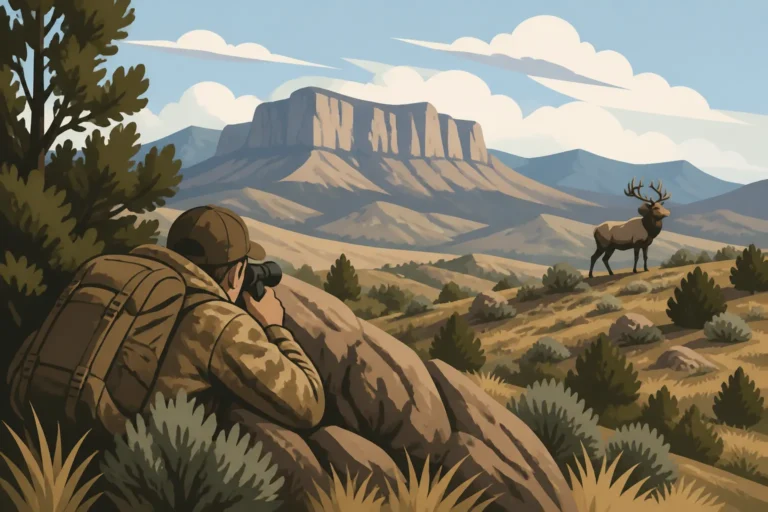
- Optics: While you can't have a scope on your muzzleloader during a dedicated season, a good pair of binoculars and a spotting scope are indispensable for Glassing Wyoming Basins Before You Take a Step and identifying game at long distances before beginning your stalk. Remember, you'll need to close the distance significantly to make an ethical shot with open sights.
| Muzzleloader Component | Legal in Wyoming (Dedicated Season) | Notes |
|---|---|---|
| Caliber | .40 or larger | Minimum bore diameter of .40 inches. Common calibers like .45 and .50 are also legal. |
| Powder Charge | 50 grains equivalent minimum | Must be 50 grains by volume (or equivalent for substitutes) of black powder or approved substitute. |
| Projectiles | Full-bore and Saboted | Both are generally legal, as long as the base caliber rule is met. Choose heavy, well-constructed bullets for big game. |
| Sights | Open / Iron Sights Only | No magnification allowed. This includes no optical scopes, red dots, or electronic sights. Fiber optic open sights are typically permitted. |
| Ignition | Percussion Cap or 209 Primer | Both traditional percussion caps (#10, #11) and modern 209 shotgun primers are acceptable. |
| Propellant Type | Black Powder & Approved Substitutes | Real black powder (FFg, FFFg), Pyrodex, Triple Seven, and Blackhorn 209 are common examples. Always follow manufacturer's measuring instructions for substitutes. |
Common Pitfalls and Frequently Asked Questions
Even with the best intentions, it's easy to make mistakes when navigating muzzleloader rules. Being aware of common pitfalls can save you a lot of headache.
Avoiding Unintentional Violations
Hunters, especially those new to muzzleloading or hunting in Wyoming, can easily fall into traps that lead to unintentional violations.
- Ignoring Season-Specific Rules: The biggest mistake is assuming one set of rules applies to all seasons. A muzzleloader that's legal in a general firearm season might be illegal in a dedicated muzzleloader season due to sight restrictions. Always read the specific regulations for your exact hunt area and license type.
- Incorrect Powder Measurement: Using a scale to measure powder that should be measured by volume, or not understanding the volumetric equivalency of substitutes, can lead to charges below the 50-grain minimum. Again, read the instructions on your powder.
- Using Scopes in Muzzleloader Seasons: This is perhaps the most common and easily avoided violation. A scoped muzzleloader, no matter how legal the rest of its components, is not permitted during a muzzleloader-only season.
- Not Carrying Proof: Always have your license, tags, and hunter education certification (if required) on your person. Carrying Proof of Certification in the Field is non-negotiable. Game wardens are out there to ensure everyone is playing by the rules, and being unprepared can create unnecessary hassle.
The Difference Between Legal and Ethical Choices
Just because something is legal doesn't always mean it's the most ethical choice for your hunt.
- Minimum Caliber vs. Optimal Caliber: A .40 caliber is legal for elk, but many seasoned hunters would argue a .45 or .50 caliber provides a larger margin of error and ensures a more ethical kill on such a robust animal. Think about the animal's welfare and your capabilities.
- Maximum Range with Open Sights: While you might be able to hit a target at 150 yards with open sights on a perfect day from a bench rest, asking that of yourself in a field setting under pressure is a different story. Ethically, you should limit your shots to distances where you can consistently place a bullet into a vital zone every single time, which for most hunters with open sights is 75-100 yards, perhaps 125 at the absolute max with extensive practice. Pushing beyond your effective range drastically increases the risk of wounding an animal.
- Bullet Choice: A legal bullet might be available, but an ethical hunter chooses the best bullet for the job – one that offers reliable expansion and deep penetration for the specific species and size of animal they are hunting.
Getting Official Clarifications from Game and Fish
When in doubt, always go to the source. The Wyoming Game and Fish Department (WGFD) is there to help clarify regulations.
- Read the Regulations Booklet: The first step should always be to thoroughly read the current year's WGFD hunting regulations booklet. These are available online and often provide detailed diagrams and explanations.
- Visit the WGFD Website: Their website (wgfd.wyo.gov) is a treasure trove of information, including hunt planners, FAQs, and contact information.
- Contact a Warden or Office: If you still have questions, don't hesitate to call your local WGFD regional office or contact a game warden. They are the ultimate authority and can provide accurate, up-to-date information. It's far better to ask a question beforehand than to face a violation in the field.
Disclaimer
Please note that hunting regulations, seasons, and requirements can change frequently. While every effort has been made to provide accurate and up-to-date information, this guide is for informational purposes only. It is the individual hunter's responsibility to consult the most current official Wyoming Game and Fish Department regulations prior to any hunting activity to ensure full compliance.