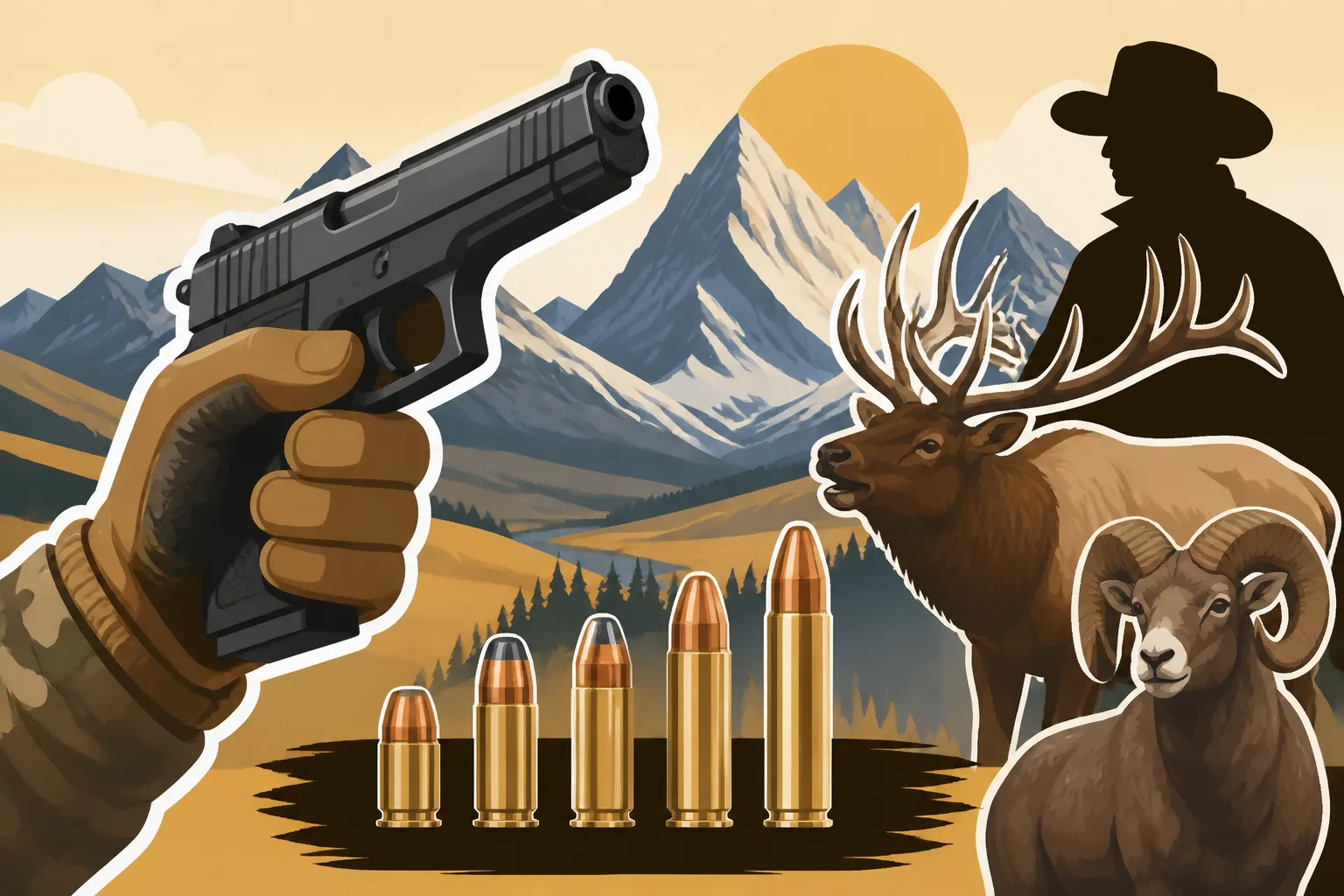
Handgun Caliber Minimum for Big Game Hunting
Stepping into the world of big game hunting in Wyoming can feel like navigating a maze, especially when it comes to the nitty-gritty details of legal firearms. You've got your sights set on an incredible Western adventure, perhaps with a handgun, but the rules and regulations around minimum calibers can be downright confusing, leaving you second-guessing whether your trusty sidearm is even legal for that mule deer or pronghorn. This guide is here to untangle that confusion, breaking down Wyoming's specific requirements for handgun calibers so you can hunt confidently and ethically.
Understanding Wyoming's Core Handgun Regulations
Wyoming, like many states, has very clear guidelines to ensure that hunters are using appropriate equipment for ethical harvests. These rules aren't just arbitrary; they're in place to minimize suffering for the animal and maximize the hunter's success. When it comes to handguns for big game, there are specific caliber and ammunition criteria you absolutely need to know before you even think about heading afield.
The .40 Caliber Minimum Explained
Let's cut right to the chase: for most big game species in Wyoming, the minimum caliber for a handgun is .40. That's a critical number to remember. This isn't just a suggestion; it's a hard and fast rule set by the Wyoming Game and Fish Department. So, if you're planning to pursue deer, antelope, elk, or moose with a handgun, anything smaller than a .40 caliber simply won't be legal. This means your beloved 9mm, .38 Special, or .357 Magnum, while great for other purposes, generally falls short for big game hunting here.
The .40 caliber rule is rooted in the principle of sufficient kinetic energy and bullet diameter to ensure a humane kill. Smaller calibers, even with powerful loads, often lack the consistent energy transfer and tissue damage necessary to quickly dispatch a large animal like a mature elk or even a robust mule deer buck. Imagine spending years drawing a coveted tag, only to discover in the field that your firearm isn't legal, or worse, that it's inadequate for the task at hand. That's a nightmare scenario no one wants. This .40 caliber minimum applies across the board for big game, a category that includes everything from pronghorn to black bear. It’s always a good idea to consult the current year's regulations booklet, which you can usually find on the Wyoming Game and Fish website or through resources like GoHunt, just to confirm any changes. For a broader look at what other weapons are allowed, you might find our guide on Wyoming Legal Firearm List for Big Game incredibly helpful.
Barrel Length and Ammunition Considerations
Beyond the caliber itself, Wyoming also specifies requirements for handgun barrel length and the type of ammunition. For a handgun to be considered legal for big game, it must have a barrel length of at least five inches. This isn't just about accuracy; a longer barrel generally allows for more complete powder burn, leading to higher muzzle velocities and, consequently, greater energy from the bullet. A shorter barrel might make a handgun more concealable, but it significantly compromises its effectiveness as a big game hunting tool.
When it comes to ammunition, there's another crucial detail: the cartridge case must be at least 1.75 inches in length. This requirement is essentially a way to ensure that the handgun is chambered for a genuinely powerful cartridge, not just a smaller round loaded to higher pressures. For example, a .44 Magnum, .45 Long Colt, .454 Casull, or a .500 S&W Magnum would typically meet both the .40 caliber minimum and the 1.75-inch case length requirement, provided the barrel is at least five inches long. These are serious cartridges designed to deliver substantial force.
It's also important to note that you must use expanding bullets. Full metal jacket (FMJ) ammunition, while common for target practice, is explicitly illegal for hunting big game in Wyoming. The reason is simple: FMJ bullets tend to punch through an animal without expanding, creating a small wound channel and often failing to transfer enough energy to cause a rapid, humane kill. Expanding bullets, like soft points or hollow points designed for hunting, mushroom upon impact, creating a larger wound channel and increasing the likelihood of hitting vital organs effectively. Always double-check your ammunition to ensure it's specifically designed for hunting and meets the expanding bullet criteria. Don't leave this to chance; verify everything before your hunt.
Practical Implications for Big Game Species
So, you understand the baseline rules, but how does this translate to actual hunting scenarios for different species you might pursue in Wyoming? The effectiveness and ethical considerations of handgun hunting can vary significantly depending on the size and resilience of the animal.
Handgun Hunting for Deer and Antelope
Handgun hunting for deer and antelope is certainly feasible and can offer a unique challenge. For species like mule deer and pronghorn, a legal handgun in the .40 caliber class—think .44 Magnum or .45 Long Colt—is generally considered adequate within reasonable ranges. These animals are typically smaller than elk or moose, and a well-placed shot from a powerful handgun can be highly effective.
However, "reasonable ranges" is the key phrase here. Handguns, by their nature, are typically not as accurate as rifles, and their effective range for clean kills on big game is significantly shorter. While you might practice hitting targets at 100 yards with your rifle, a handgun hunter should probably be thinking about shots within 50-75 yards, perhaps even closer, especially in a hunting scenario where adrenaline is high. The wide-open spaces of Wyoming mean you'll often encounter deer and antelope at much greater distances, requiring excellent stalking skills to close the gap. A good rangefinder is absolutely critical, as is knowing your personal limitations and the effective range of your specific handgun and ammunition combination.
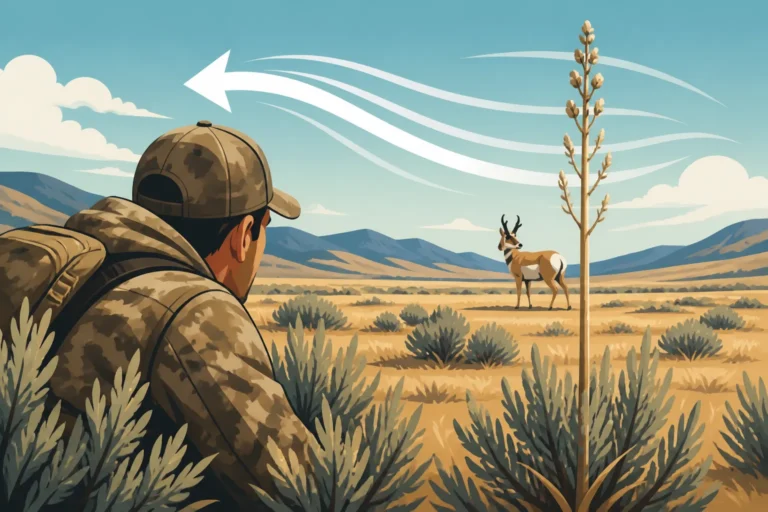
For antelope, with their keen eyesight and tendency to flee at the slightest disturbance, getting within handgun range can be an incredible feat of stalking. Many hunters find that the challenge of Stalking Pronghorn Across Wyoming's Open Sagebrush is amplified exponentially when limited to handgun distances. Similarly, mule deer in mountainous or broken terrain demand careful planning and execution to get close enough for a high-probability shot. You really need to practice extensively from various field positions—standing, kneeling, using a rest—to ensure you can make that shot when it counts.
Considerations for Elk and Other Large Game
When we talk about elk, moose, or even black bear, the bar for ethical handgun hunting rises considerably. While a .40 caliber handgun technically meets the minimum legal requirement, many experienced hunters would argue that for these larger, tougher animals, you should consider something with even more power and energy. Calibers like the .454 Casull, .460 S&W Magnum, or .500 S&W Magnum are often preferred for their increased stopping power, which can be crucial on an animal as resilient as an elk.
Elk are notoriously tough, with heavy bone structure and a deep chest cavity. A marginal hit with an inadequate handgun could lead to a wounded animal and a long, difficult, or even unsuccessful recovery. The margin for error is much smaller. If you're considering handgun hunting for elk, you need to be an exceptional shot, intimately familiar with your firearm, and absolutely committed to making only the highest percentage shots. This isn't a task for a casual handgun hunter.
Moose and bear present similar, if not greater, challenges due to their size, strength, and potential for aggression. While a handgun can be legal, its efficacy as a primary hunting tool for these species is often debated among hunters. Most hunters pursuing moose or bear opt for high-powered rifles due to their increased accuracy, range, and kinetic energy. If you plan to handgun hunt for these animals, extensive practice, knowledge of their anatomy, and a commitment to extremely close-range shots are non-negotiable. It's often recommended to carry bear spray as a backup, especially in grizzly country, regardless of your chosen firearm. Our resource on Which Big Game Species Require a Fifty-Pound Bow shows how even archery has specific minimums for different game, highlighting the importance of matching equipment to animal size.
| Species | Wyoming Handgun Caliber Minimum | Recommended Handgun Calibers (Ethical) | Typical Effective Range (Yards) | Key Considerations |
|---|---|---|---|---|
| Pronghorn | .40 Caliber | .44 Mag, .45 Long Colt, .45 ACP +P | 50-75 | Requires excellent stalking, flat trajectory helps. |
| Mule Deer | .40 Caliber | .44 Mag, .45 Long Colt, .454 Casull | 50-75 | Tougher than antelope, shot placement crucial. |
| Elk | .40 Caliber | .454 Casull, .460 S&W Mag, .500 S&W Mag | 30-50 | Very tough animal, demand extreme power and accuracy. |
| Black Bear | .40 Caliber | .454 Casull, .460 S&W Mag, .500 S&W Mag | 30-50 | Potential for aggression, require immediate stopping power. |
| Moose | .40 Caliber | .454 Casull, .460 S&W Mag, .500 S&W Mag | 30-50 | Massive animal, absolute top-tier performance required. |
Note: The "Recommended Handgun Calibers" are suggestions for ethical hunting, often exceeding the legal minimum for improved effectiveness.
Navigating the Nuances and Common Misconceptions
The rules for handgun hunting, while seemingly straightforward on paper, come with plenty of real-world nuances and misconceptions that can trip up even experienced hunters. Understanding these subtle distinctions is key to a safe, legal, and successful hunt.
When a Handgun Might Be the Right Choice and When It's Not
A handgun can be an incredibly rewarding tool for hunting, offering a level of challenge and intimacy with the animal that a rifle sometimes doesn't. It forces you to become a better stalker, to truly understand terrain, wind, and animal behavior. For some, the idea of taking a big game animal with a handgun is the ultimate hunting achievement. For instance, if you're hunting in thick timber or dense brush where shots are inherently close, a powerful handgun might be a perfectly suitable, even preferred, option. Some hunters also use handguns as a backup weapon, although for that purpose, you'd still need to ensure it meets the legal requirements if it's intended to be used on game.
However, it's vital to be realistic about its limitations. If you're new to handgun hunting, or if your primary goal is simply to fill a tag on a challenging species like elk in wide-open country, a handgun might significantly reduce your odds of success. Wyoming's vast, open landscapes often present long-range shot opportunities that are simply beyond the ethical capabilities of a handgun. Trying to force a handgun into a situation better suited for a rifle often leads to missed shots, wounded animals, and disappointment. You need to honestly assess your skills, the terrain, and the specific hunt conditions. For more detailed insights into different legal firearms, check out our piece on What Wyoming Counts as a Legal Firearm for Big Game.
Another scenario where a handgun might not be the best choice is if you're not comfortable with the recoil or handling of larger caliber handguns. The .40 caliber minimum can mean a significant jump in recoil compared to common target pistols. If you can't shoot a .44 Magnum or .454 Casull accurately and comfortably under pressure, then it's not an ethical hunting tool for you, regardless of its legality. Your ability to consistently place a shot in a vital area is paramount.
Ensuring Ethical and Legal Handgun Use in the Field
Beyond just meeting the minimum caliber, ethical and legal handgun use in the field requires diligence and preparation. First and foremost, practice, practice, practice! This isn't just about shooting paper targets at a static range. Practice from various field positions, simulating the shots you might encounter while hunting. Work on quick target acquisition, managing recoil, and maintaining accuracy even when your heart rate is up. Understand your effective range for different sized targets and stick to it religiously.
Before you ever step foot in a hunting unit, ensure you have the correct tags and licenses. Using a resource like GoHunt can be incredibly helpful for researching specific hunt units, understanding draw odds, and staying on top of application deadlines. They often provide detailed maps and data that can help you select areas where closer-range opportunities might be more common, which is especially important for handgun hunters. Always carry your hunter education card if required—for example, Anyone Born After 1965 Needs Wyoming Hunter Education—and any other necessary permits.
Another critical aspect is thoroughly understanding the specific hunt area regulations. While the general state regulations set minimums, certain hunt areas might have additional restrictions or special provisions. Always read the current year's Wyoming Game and Fish regulations for your chosen unit. For example, some areas might be archery-only during certain seasons, where a handgun would be illegal to use. Pay close attention to rules regarding Suppressors and Lighted Nocks: What Wyoming Permits if you are considering any accessories for your handgun.
Finally, ethical hunting always comes down to shot placement and knowing when not to take a shot. If an animal is too far, moving erratically, or the shot angle isn't ideal, wait. No trophy is worth wounding an animal. Patience and discipline are hallmarks of a responsible hunter, especially when using a challenging tool like a handgun for big game. It's about respecting the animal and the hunt.
Disclaimer
Please remember that hunting regulations can change. It is always the hunter's responsibility to consult the most current Wyoming Game and Fish Department regulations before heading into the field. This guide provides general information and should not be considered a substitute for official legal documentation.