Playing Wind Direction on an Open Sagebrush Stalk
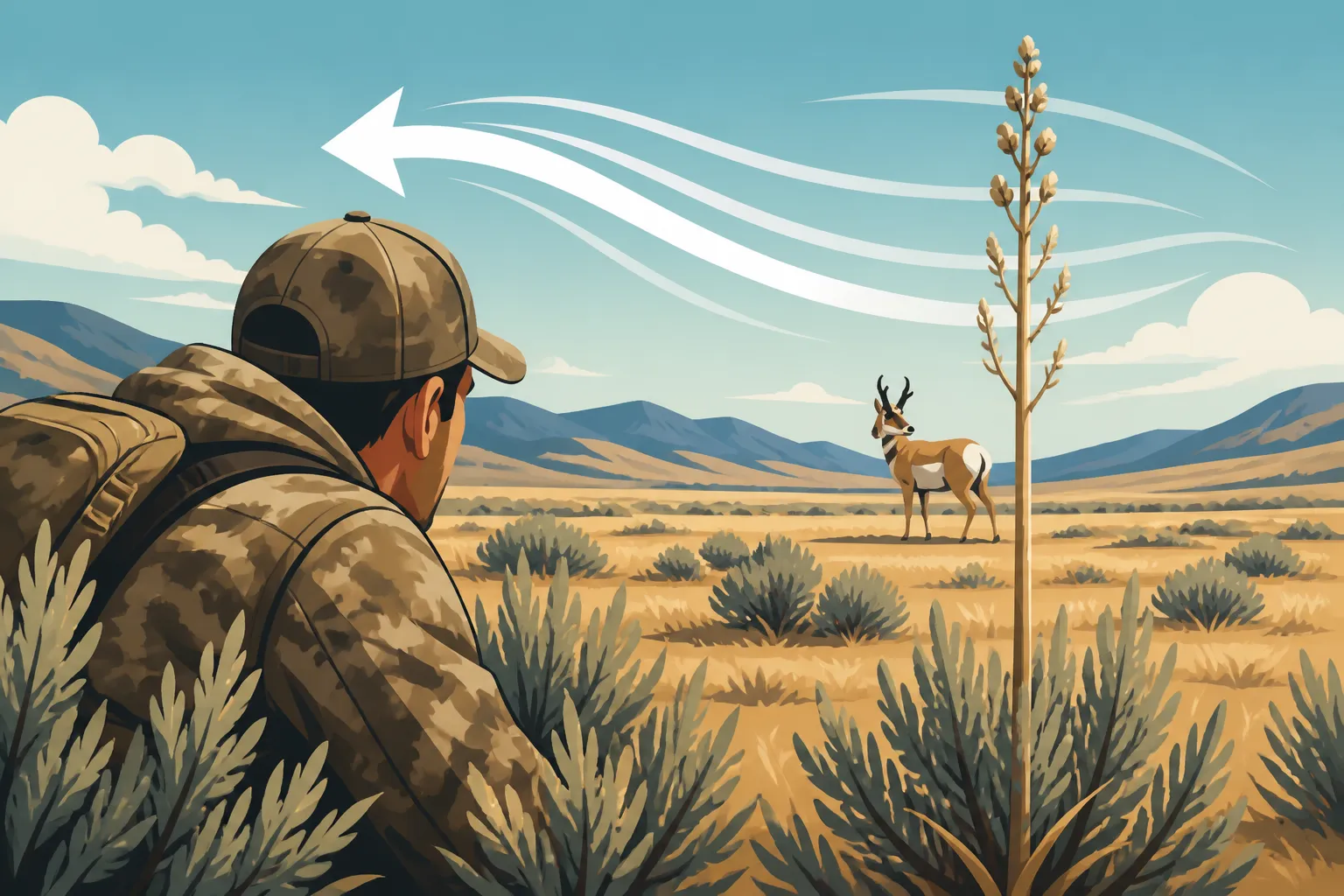
There’s almost nothing more frustrating than putting in all the effort for a perfect stalk across miles of sagebrush, only to have a sudden shift in wind direction send your scent right to a mature buck or bull, blowing your chances entirely. We've all been there, watching that dream animal vanish over the horizon, knowing it was the wind, not our footsteps, that gave us away. This guide is all about mastering the art of reading and playing the wind in Wyoming's vast, open sagebrush country, helping you get within range unnoticed.
Understanding Wyoming's Shifty Winds
Wyoming's landscape is famous for its wide-open spaces, and with those wide-open spaces comes wind, often relentless and notoriously unpredictable. It's not just a constant breeze; it's a dynamic force that can make or break a hunt, especially when you're trying to close the distance on an animal with an incredible sense of smell like an elk or a pronghorn. Truly understanding how wind behaves in this environment is the first step to becoming a more successful hunter.
The Unpredictable Nature of Mountain and Desert Air Currents
You might think wind is just wind, but in Wyoming, it's a living, breathing entity that changes with topography, temperature, and even the time of day. Out in the vast sagebrush flats and rolling hills, there are often fewer large obstacles to break up the air currents, leading to broad, sweeping winds that can shift direction or intensity without much warning. These aren't just gentle breezes; we're talking about gusts that can make holding binoculars steady a chore, let alone trying to pinpoint a specific scent path. One moment, the wind might be steadily pushing from the west, giving you a clear approach, and the next, a localized thermal or a change in weather pattern can cause it to swirl wildly, turning your advantage into a liability in seconds. It’s this erratic behavior that makes open country hunting so challenging and, frankly, so rewarding when you get it right. Don't underestimate the subtle shifts; a slight change can carry your scent further than you'd expect.
How Thermals and Katabatics Influence Scent
The science behind wind in mountainous and high-desert environments often boils down to thermals and katabatics. These are daily wind patterns driven by temperature differences. As the sun rises and warms the earth, the air closer to the ground heats up and begins to rise. This creates an upslope thermal effect, where the wind generally flows uphill. If you're hunting in the morning, stalking up a draws or ridge line, the wind will likely be moving with you, carrying your scent away from animals above. However, as evening approaches and the ground cools, the air becomes denser and flows downhill. This is the katabatic or "drainage" wind, and it's something every hunter needs to be acutely aware of.
Imagine you're trying to still hunt an elk out of a basin in the Bighorn Mountains. In the morning, you'd want to be below them, as the air (and your scent) rises. In the evening, you'd want to approach from the side or above, as the cold air drains downhill. Ignoring these natural flows is a surefire way to get busted. Even in relatively flat sagebrush country, subtle elevation changes, like shallow coulees or river bottoms, can create miniature thermal and katabatic drafts that drastically affect your scent cone. Learning to anticipate these daily shifts is crucial.
Reading the Wind in Open Sagebrush Country
Successfully playing the wind isn't just about knowing it exists; it's about actively reading it, both before you even leave the truck and throughout your stalk. This means using a combination of traditional wisdom, modern tools, and constant vigilance.
Visual Cues and Analog Tools for Wind Assessment
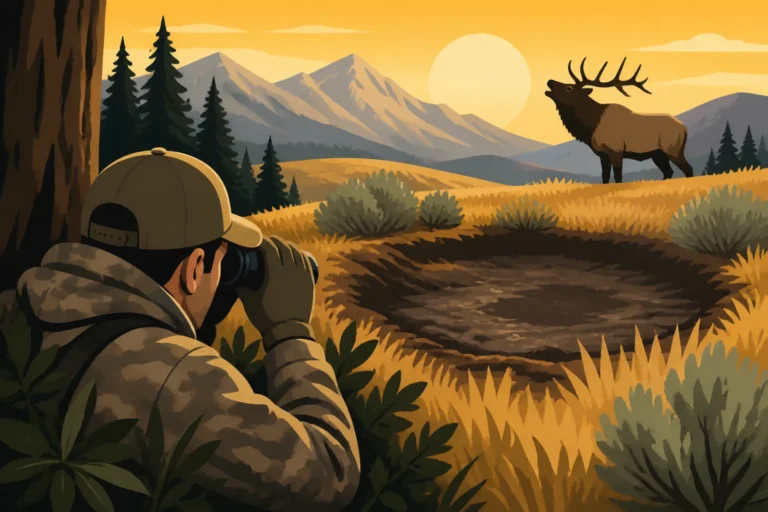
When you're out in the field, sometimes the simplest tools are the most effective. A small bottle of unscented powder, like talcum powder or baking soda, or a dedicated wind checker, is your best friend. A quick puff will show you the exact direction and even give you a sense of the wind's strength. I always carry one in a breast pocket for quick access. Beyond that, start looking for natural indicators. Watch how the grass blades bend, observe the tops of the sagebrush as they ripple, or even toss a few dry leaves or a pinch of dust into the air. If you're near water, look at the surface tension – small ripples or a glassy surface can tell you a lot. Smoke from a distant campfire, even though less common in pure sagebrush, can offer big-picture insight.
Another critical visual cue is how animals react to the wind. If you see a herd of pronghorn or mule deer with their heads up, constantly looking in one direction, they're probably using the wind to detect threats. Pay attention to how the hair on their bodies ruffles; it can tell you a lot about micro-currents. When you're Reading Wind on an Open-Country Stalk, these small details become huge. It's a skill that takes practice, but the more you pay attention, the more intuitive it becomes.
Using Digital Tools for Pre-Scouting and Real-Time Intel
In this day and age, we have an incredible advantage with digital mapping and weather apps. Before you even head out, spend some time e-scouting your unit. Tools like GoHunt can provide detailed topographical maps that show elevation changes, natural funnels, and potential wind corridors. Look for areas where the terrain might create predictable wind patterns. Are there deep canyons or river bottoms that will channel air? Are there broad, exposed ridges where the wind will be constant?
Once you're in the field, a good weather app on your smartphone can be invaluable for real-time wind speed and direction. However, always remember that these are regional forecasts and local conditions can vary wildly. Don't rely solely on your phone. Use it as a general guide, then confirm with your physical wind checker. I like to check my app, get a general idea, and then verify with actual sagebrush movement and my powder. It’s a combination that gives you the most accurate picture. For hunters who spend a lot of time preparing their hunt, knowing E-Scouting a Unit Before the Season Opens can really help with wind planning.
Stalking Strategies Based on Wind Direction
Once you've got a handle on how to read the wind, the next step is applying that knowledge directly to your stalking strategy. This is where the rubber meets the road, and where good planning turns into successful hunting.
Approaching Animals with the Wind in Your Favor
The golden rule of stalking is simple: keep the wind in your face, or at the very least, across your body. Never let it blow from you to the animal. This seems obvious, but it's astonishing how often hunters get tunnel vision on the animal and forget this fundamental principle. When you're planning your approach, take a moment, step back, and map out your route. Use the terrain to your advantage. Are there draws, ridges, or large sagebrush clumps that can help mask your movement while keeping the wind consistent? Consider how Terrain That Hides an Approach can also aid in maintaining a favorable wind direction.
For example, if you're Stalking Pronghorn Across Wyoming's Open Sagebrush and the wind is coming from the west, you want to approach from the west, heading east. If the animal is on the north side of a ridge and the wind is from the south, you might need to drop into a parallel drainage, circle widely, and come up from the north to keep your scent out of their nose. Sometimes, the "easiest" path isn't the best path. It might mean adding a mile or two to your stalk, or waiting an hour for the thermals to shift, but it drastically increases your chances of success. Patience is a virtue, especially when the wind is your primary concern. Always be ready to adjust.
Dealing with Swirling Winds and Contingency Plans
Open country, especially with varied terrain like that found around the Red Desert or parts of Carbon County, can produce maddeningly swirling winds. One minute, your wind checker shows a perfect headwind, and the next, it's blowing from directly behind you. This is where contingency planning comes into play. Firstly, slow down. If the wind is swirling, rushing your stalk will almost certainly lead to getting busted. Secondly, identify safe zones or "pockets" in the terrain where the wind might be more consistent, even if it's just for a few yards. These could be the lee side of a significant hill, a deep cutbank, or even a dense stand of tall sage.
When the wind is truly unpredictable, sometimes the best strategy is to become the "rock." Find a spot with good cover and visibility, and simply wait. Observe the animal and the wind. Often, these swirling patterns are temporary, and a more consistent direction will emerge. This is especially true during the middle of the day when thermals are at their most active. Another tactic, if feasible, is to try to approach when the animal is bedded, as they are less likely to pick up a subtle scent shift if they aren't actively moving and testing the air. Have a plan B, and even a plan C, for your approach. Using digital tools like GoHunt, you can often see how wind typically funnels through drainages or over ridges, allowing you to predict these tricky spots.
When to Abort a Stalk Due to Unfavorable Wind
This is probably the hardest lesson for any hunter to learn, but sometimes, the best decision is to call off a stalk. It hurts, especially after hours of effort and a long hike, but pushing a stalk with a bad wind rarely ends well. If the wind is consistently blowing your scent toward the animal, or if it's swirling so erratically that you can't predict its behavior for more than a few seconds, it’s time to back out. The last thing you want to do is educate that animal, making it even harder to hunt next time.
Recognize the signs:
- Constant U-turns: Your wind checker keeps turning 180 degrees.
- Animal Agitation: The animal seems nervous, constantly testing the air, even if it hasn't pinpointed you yet.
- No Clear Approach: There's simply no route that keeps your scent consistently away from the animal, even with significant detours.
It's far better to retreat quietly, live to hunt another day, and leave that animal undisturbed. Often, by pulling back and rethinking your strategy, you might find another opportunity later that day or the next morning when conditions are more favorable. It could even be a chance to utilize a different access point, perhaps one that requires a longer hike but offers a more dependable wind. Remember, a successful hunt isn't just about getting close, it's about getting close without being detected, and the wind is your most significant ally or adversary in that endeavor.
Here's a quick comparison of common wind indicator tools:
| Wind Indicator Type | Pros | Cons | Best Use Case |
|---|---|---|---|
| Powder/Talcum Bottle | Highly accurate for immediate direction; silent | Can run out; limited visibility in strong wind | Close-range, precise wind checks during stalk |
| Milkweed/Dandelion Seeds | Very sensitive to light breezes; natural, quiet | Seasonal availability; hard to carry in bulk | Detecting faint air currents |
| String/Yarn Attached to Bow/Rifle | Always available; constant visual cue | Less precise for subtle shifts; can snag | General wind direction, especially in cover |
| Wind Flag/Ribbon on Pack | Good for broad direction awareness | Can be influenced by body movement; less subtle | Broad awareness while moving/glassing |
| Weather App (e.g., GoHunt) | Long-range forecasts; broad patterns; wind speed | Localized micro-currents often differ | Pre-hunt planning; general area awareness |
Ultimately, mastering wind direction in Wyoming's open sagebrush country is a continuous learning process. It demands patience, keen observation, and a willingness to adapt your plans on the fly. By understanding how the wind works, utilizing both analog and digital tools, and making smart, wind-informed decisions, you'll significantly increase your chances of getting within effective range of that next trophy. So grab your wind checker, study your maps, and get ready to dance with the Wyoming breeze on your next adventure.
Disclaimer
The information provided in this guide is for general informational purposes only and does not constitute legal advice. Hunting regulations, seasons, and access rules can change frequently. Always consult the most current Wyoming Game and Fish Department regulations and local land management agency rules before planning any hunting activity.