Sage Grouse, Pheasant and Wyoming’s Bird Country
If you're anything like me, you've probably spent countless hours dreaming of big game hunts in Wyoming—elk bugling in the mountains, antelope streaking across the sagebrush, or a monster mule deer buck in the timber. But let me tell you, if you limit your Wyoming hunting aspirations to just big game, you're missing out on some of the most exciting, accessible, and utterly rewarding hunting experiences the Cowboy State has to offer: upland birds. This guide is all about opening your eyes to the incredible world of sage grouse, pheasants, and a whole host of other feathered game that call Wyoming home, along with the know-how to pursue them successfully.
The Unique Appeal of Wyoming's Upland Bird Hunting
Wyoming might be famous for its elk and deer, but for those of us who love the smell of spent shotgun shells and the thrill of a flushing bird, the state's upland hunting scene is a hidden gem. It offers a completely different rhythm and challenge than chasing big game, one that often brings you closer to the land and tests your skills in new and exciting ways.
Beyond Big Game: A Different Kind of Challenge
Let's be honest, most of us who hunt in Wyoming are drawn by the allure of a bull elk or a trophy mule deer. And for good reason! Those hunts are epic, demanding, and unforgettable. But there's a certain magic to upland bird hunting that stands apart. It's less about the long hours behind binoculars on a distant hillside, and more about the immediate, explosive action of a covey flush. The physical demands are different, too. Instead of grueling climbs at altitude, you're often covering miles of varied terrain on foot, sometimes in thick cover, sometimes across wide-open flats, always alert for that sudden burst of wings.
This type of hunting really hones your shotgunning skills. Unlike a rifle shot at a stationary animal, hitting a pheasant or a grouse in full flight requires lightning-fast reflexes, precise lead, and a smooth swing. It's a dance between hunter and dog, where communication and trust are paramount. And let's not forget the dogs! For many, myself included, upland bird hunting isn't just a pursuit; it's a partnership with a loyal canine companion, whose nose and drive add an entirely new dimension to the experience. Watching a well-trained pointer lock up on scent or a flusher burst into a thicket is a thrill all its own, a testament to years of training and shared adventures.
Ultimately, bird hunting offers a more intimate connection with the landscape. You're walking through it, feeling the crunch of sagebrush underfoot, smelling the damp earth in a river bottom, and experiencing the smaller, intricate details of Wyoming's diverse ecosystems. It's a chance to slow down, appreciate the nuances, and find deep satisfaction in a different kind of harvest.
Diversity Across the Cowboy State's Landscapes
One of the truly wonderful aspects of bird hunting in Wyoming is the sheer variety of habitats you can explore, and the different species you'll encounter within them. From the high desert sagebrush to the lush river bottoms and the timbered mountains, Wyoming really is bird country. Each landscape offers a unique challenge and a distinct flavor of hunting.
Imagine starting your morning in the vast sagebrush sea, glassing for sage grouse, then transitioning in the afternoon to a winding river bottom, hoping for a vibrant pheasant flush. Or perhaps you're scrambling over rocky hillsides in pursuit of chukar, only to find blue grouse later in the day among the aspens. This diversity means you can literally spend weeks exploring different parts of the state and have a completely fresh experience with each hunt. It's this patchwork of environments that supports everything from the iconic sage grouse, a true emblem of the West, to the tenacious ring-necked pheasant, a staple of agricultural areas.
Beyond these two main attractions, Wyoming offers chances at sharp-tailed grouse in the prairie grasslands, and in the higher elevations, you'll find blue grouse (also known as dusky grouse) and even ruffed grouse. Each species demands a slightly different approach, a different kind of dog, and a different type of terrain to conquer. This means that a bird hunter in Wyoming is constantly learning, adapting, and expanding their skillset, making every trip an adventure in discovery. The state's topography isn't just beautiful; it's a living, breathing mosaic of opportunity for those willing to chase feathers.
Navigating Wyoming's Sage Grouse Country
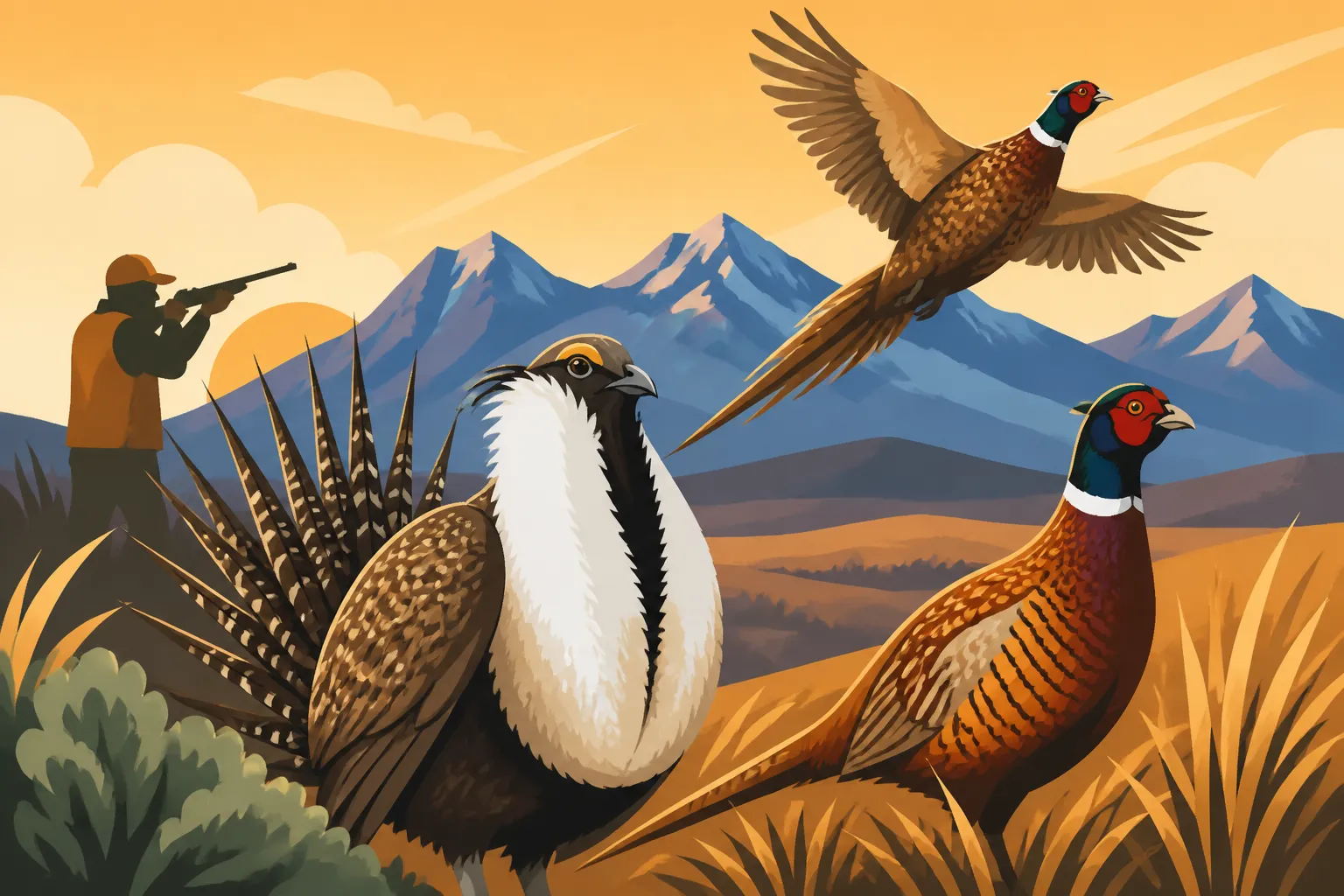
The sage grouse is arguably the most iconic upland bird in Wyoming, deeply tied to the vast sagebrush landscapes that define much of the state. Hunting them is an experience steeped in the wild, open West, demanding keen eyes and plenty of walking.
Understanding Sage Grouse Habitat and Behavior
When you think of sage grouse, you should picture endless expanses of sagebrush. This isn't just a preference; it's an absolute necessity for their survival. Sagebrush provides everything they need: food, cover from predators, and nesting sites. These birds are highly specialized, relying almost exclusively on sagebrush for their diet, especially during the winter months when other forage is scarce. Their unique diet gives their meat a distinct, sometimes strong, flavor that some hunters love and others find challenging.
Sage grouse are generally quite large, often bigger than a pheasant, with a stately presence. They tend to be found in groups, especially outside of breeding season, and can be remarkably well-camouflaged against the sagebrush. They often prefer areas with taller, denser sagebrush where they can find ample cover. You'll typically find them feeding in the mornings and late afternoons, often moving to more open areas or lekking grounds (breeding sites) at dawn. During the hotter parts of the day, they'll usually hunker down in the shade of the thickest sagebrush available, making them incredibly difficult to spot until you're right on top of them. Their elusive nature is part of what makes pursuing them so rewarding.
Understanding these patterns is key. If you're out stomping through open sage in the middle of a warm afternoon, your chances of a flush are slim. Focusing your efforts on early mornings and late evenings, especially near subtle draws, saddles, or areas with a mix of different sagebrush species, will significantly increase your odds. Remember, these birds can also be surprisingly adept runners, so even if you spot them on the ground, closing the distance for a shot can be a real challenge.
Regulations, Seasons, and Conservation Efforts
Wyoming takes the management of its sage grouse populations very seriously, and for good reason. These birds face numerous conservation challenges. As such, regulations are carefully crafted and can change. Generally, sage grouse seasons typically run for a shorter period, usually in September, and are often restricted to specific hunt areas. It's absolutely crucial to consult the current year's Wyoming Game and Fish Department regulations for specific opening and closing dates for the areas you plan to hunt. You'll find that How Long Wyoming's Sage Grouse Season Runs can vary widely, sometimes only for a few weeks, sometimes even shorter in certain sensitive areas.
Bag limits for sage grouse are usually quite conservative, often only one or two birds per day, with possession limits typically double the daily bag. The Sage Grouse Bag Limit Explained outlines these specifics, emphasizing the need for every hunter to be fully aware of the local rules. These strict limits are in place to help manage populations and ensure sustainable hunting opportunities. It’s not about how many birds you can take, but about the quality of the hunt and contributing to conservation.
Indeed, Why Sage Grouse Populations Worry Biologists is a topic of significant concern. Habitat loss due to energy development, agricultural conversion, and invasive species like cheatgrass, along with the increasing frequency of wildfires, all pose serious threats to sage grouse numbers. Hunters play a vital role in conservation efforts. Through license fees and excise taxes on hunting equipment, we directly fund habitat improvement projects, research, and population monitoring that benefit sage grouse and countless other species. By adhering to regulations and practicing ethical hunting, we ensure these magnificent birds continue to thrive in their sagebrush home for generations to come. Your participation in sage grouse hunting isn't just about bagging a bird; it's about being an active partner in the future of this iconic Western species.
Effective Hunting Strategies for Sage Grouse
Hunting sage grouse often begins with your eyes, not your feet. Because they are large birds in open country, they can often be spotted from a distance, especially in the early morning or late evening. A good pair of binoculars or a spotting scope can be invaluable for glassing large sage flats and identifying birds feeding or congregating. Look for movement, or even just dark clumps that seem out of place. Once spotted, a careful stalk, using terrain features like draws or ridges for cover, can get you within range.
However, often you won't spot them before they flush. This is where covering ground effectively comes into play. Many hunters employ a systematic grid pattern, working into the wind, to ensure they cover prime habitat thoroughly. A well-trained pointing dog can be a tremendous asset, locking up on scent and allowing you to move in for the flush. Flushers can also be effective, but the key is to manage their range to keep birds from flushing too far out. Sage grouse will often hold tight, but once they go, they are powerful flyers.
For equipment, a 12- or 20-gauge shotgun is typical, often with a modified or improved cylinder choke for the initial shot, as flushes can be close and explosive, but they can quickly gain distance. Shells with 5 or 6 shot are generally effective, providing enough pellets for a clean kill on these larger birds without over-penetrating. Always carry plenty of water, as sage grouse country is often dry and remote, and be prepared for long walks. Tools like GoHunt's satellite imagery can be incredibly helpful for identifying areas with dense sage and planning your routes through vast terrain.
Pursuing Pheasants in Wyoming's River Bottoms and Croplands
While sage grouse embody the vastness of the high desert, ring-necked pheasants represent the fertile river bottoms and agricultural lands of Wyoming. Hunting pheasants offers a different, often more action-packed experience, perfect for those who enjoy working thick cover with a strong bird dog.
Prime Pheasant Territories in Wyoming
Unlike their sagebrush-dwelling cousins, pheasants thrive in environments where agriculture meets riparian zones. Think of sprawling cornfields, wheat stubble, dense cattail sloughs, and tangled shelterbelts along rivers and creeks – these are prime pheasant territories in Wyoming. The eastern half of the state, particularly along the North Platte River and its tributaries, and portions of the Big Horn Basin, are well-known hotspots for ringnecks. Counties like Goshen, Platte, and Sheridan consistently produce good pheasant numbers.
These areas provide the critical elements pheasants need to survive: abundant food sources from agricultural crops, dense nesting cover, and thick thermal cover to escape winter winds and predators. You'll often find them concentrated in areas where multiple types of cover converge, such as where a cornfield borders a cattail marsh, or a shelterbelt runs adjacent to a flowing creek. These transition zones offer both food and escape routes, making them magnets for birds.
The key to finding pheasants is recognizing this specific type of habitat. While Wyoming has vast tracts of public land, many of the best pheasant areas are on private property. However, don't let that deter you; programs like Access Yes (which we’ll get into later) open up significant private ground for public hunting. Scouting these areas, either physically or using mapping tools, to identify prime cover types will greatly increase your success. Look for fields left unharvested, thick ditches, and any dense vegetation that provides thermal protection and escape cover.
Seasons, Licenses, and Stocking Programs
Pheasant season in Wyoming typically opens in the fall, often in October, and can run through December or even into January in some areas. This extended season provides ample opportunity to get out and chase birds. It's always best practice to check the current year's Wyoming Game and Fish Department regulations for the precise dates and any area-specific rules that might apply, as these can sometimes be adjusted. You can find detailed information on The Wyoming Pheasant Opener and Bag Limit in the official regulations, which specify the daily and possession limits for the species.
To hunt pheasants, you'll generally need a valid Wyoming hunting license and a conservation stamp. The conservation stamp helps fund habitat restoration and public access initiatives across the state, benefiting all wildlife. For non-residents, a small game license is typically required, and these are often readily available.
Wyoming Game and Fish also runs active stocking programs to supplement wild populations and enhance hunting opportunities, particularly on public lands or through their various access programs. Where Wyoming Releases Pheasants Each Fall is information that's often shared by the department, detailing which areas receive birds. These releases usually happen before and during the season, concentrating birds in accessible areas like Wildlife Habitat Management Areas (WHMAs) and some Hunter Management Areas (HMAs). This can be a fantastic opportunity, especially for younger hunters or those new to pheasant hunting, as it provides a higher chance of encountering birds. The Pheasant Bag Limit Explained details the number of birds you can legally harvest daily and have in possession, which is generally quite generous compared to native species.
Tactics for Successful Pheasant Hunting
When it comes to pheasant hunting, a good bird dog isn't just an asset; it's practically a necessity for consistent success. Pheasants are notorious runners, and a well-trained dog, whether a pointer or a flusher, can dramatically increase your chances of getting a bird in the air within shotgun range. Pointers will hold birds until you walk in for the flush, while flushers will systematically work cover, pushing birds out. Training your dog to stay within effective shotgun range is paramount.
Hunting pheasants often involves a combination of strategies. For thick cover like cattail sloughs or dense CRP fields, a line of hunters walking abreast, with dogs working in front, is highly effective. The goal is to push birds towards an open end or toward "blockers" strategically placed downwind. Pheasants will often run ahead of the line, trying to escape on the ground, so a persistent and wide-ranging dog is invaluable. Don't be afraid to slow down and work cover meticulously; pheasants can hold incredibly tight.
For shotguns, a 12- or 20-gauge is the standard, often with a modified or improved cylinder choke. Pheasants are tough birds, so a heavier load with 4, 5, or 6 shot is recommended to ensure clean kills. Don't skimp on ammunition; you might shoot more than you expect! Scouting tools like GoHunt's mapping services can provide invaluable insights into satellite imagery, showing detailed agricultural fields, dense riparian zones, and potential travel corridors for birds, allowing you to plan your hunts more effectively. This digital reconnaissance can save you precious time and boot leather, pinpointing areas where pheasants are most likely to hold up.
Exploring Wyoming's Other Upland Bird Opportunities
Beyond the headliners of sage grouse and pheasant, Wyoming's diverse ecosystems harbor a surprising array of other upland bird species, each offering a unique hunting experience. From the high prairie to the rugged mountains, there's always another feather to chase.
Sharp-Tailed Grouse: The Prairie Dancers
Sharp-tailed grouse, often called "sharptails," are true gems of Wyoming's prairie and shrub-steppe environments. You'll find them in areas with a mix of native grasslands, scattered shrubs, and often near agricultural fields that provide winter food sources. These birds are known for their spectacular lekking (breeding) dances in the spring, a sight to behold. In the fall, they tend to gather in coveys, sometimes quite large, making for exciting flushes.
Hunting sharptails often involves walking through rolling hills of grass and low shrubs. Like pheasants, they can be runners, so a good dog is a huge advantage. They tend to flush in a characteristic upward, then horizontal flight, often offering a good target. Look for them in the eastern and central parts of Wyoming where suitable grassland habitat remains. Seasons generally align with other grouse species, typically opening in September, and bag limits are usually a few birds per day. They offer a more subtle flavor than sage grouse, often quite mild and delicious.
While not as widespread as sage grouse, areas with intact native prairie and limited development are key to finding sharptails. Again, using detailed maps to identify these specific habitat types is crucial.
Chukar Partridge and Mountain Grouse
For the physically adventurous upland hunter, Wyoming offers chukar partridge. These hardy birds prefer incredibly steep, rocky, arid terrain, typically in canyon country or on rugged, brushy slopes. Chukar are known for being tough to hunt, often requiring significant vertical hiking. They frequently flush downhill, making for incredibly fast and challenging shooting. Found in limited, localized populations, primarily in the Big Horn Basin and other arid mountain ranges, chukar hunting is not for the faint of heart, but the reward of a successful hunt in such wild country is immense.
Higher up in the mountains, among the pines, firs, and aspens, you'll find Wyoming's "mountain grouse." This primarily refers to blue grouse, also known as dusky grouse. These birds spend much of their lives in the timber, often feeding on conifer needles, especially in winter. They can be found from the foothills right up to timberline. Hunting them usually involves still-hunting through the woods or working logging roads and clear-cuts with a dog. They often hold tight, sometimes flushing vertically from underfoot, or can "tree," perching on a branch, offering a more deliberate shot. Ruffed grouse, with their distinctive drumming, are less common but can be found in limited areas with dense aspen or willow thickets, particularly in the northern mountains like the Bighorns.
Seasons for mountain grouse typically open in September and often extend later into the fall than sage grouse seasons. Bag limits are usually quite reasonable, reflecting their more dispersed populations. Hunting mountain grouse is a wonderful excuse to explore Wyoming's stunning high country in the crisp fall air, away from the crowds of big game hunters.
Waterfowl and Small Game: Expanding Your Horizons
While this guide focuses primarily on upland birds, it’s worth noting that Wyoming also offers fantastic Waterfowl and Small Game Across Wyoming opportunities. If you're geared up for bird hunting, you're often just a small adjustment away from chasing ducks, geese, or even cottontail rabbits.
Wyoming's major rivers, like the North Platte, Green, and Big Horn, as well as its many reservoirs, are magnets for migrating waterfowl. Depending on the season and location, you can find strong populations of various duck species (mallards, teal, pintails) and several species of geese (Canada geese, snow geese). Waterfowl hunting requires different tactics, often involving decoys and blinds, but it's another thrilling wing-shooting option that complements an upland bird trip.
Beyond birds, Wyoming has abundant small game species. Cottontail rabbits are widespread and can be hunted throughout much of the year, providing excellent table fare and a fun challenge, especially for new hunters or those with beagles. Snowshoe hares offer a winter hunting opportunity in the higher elevations. These animals often occupy similar habitats to certain bird species, meaning you might encounter them incidentally or specifically target them as part of a varied hunting itinerary. Expanding your horizons to include these species means more time in the field and more opportunities to enjoy Wyoming's diverse wildlife.
Public and Private Land Access for Bird Hunters
One of the biggest anxieties for any hunter, especially in a state like Wyoming with its mix of land ownership, is knowing where you can legally hunt. For bird hunters, understanding access is paramount, as prime habitats can span both public and private ground.
Navigating Wyoming's Public Land Holdings
Wyoming is famously rich in public lands, with vast tracts managed by the Bureau of Land Management (BLM) and the U.S. Forest Service. For the bird hunter, these lands offer incredible freedom and opportunity. Large expanses of BLM land, often characterized by sagebrush, are excellent for sage grouse and sharp-tailed grouse. National Forests, with their timbered slopes and aspen groves, are prime for blue and ruffed grouse.
However, simply knowing that public land exists isn't enough. You need to know where it is and how to access it legally. This is where modern mapping technologies become indispensable. Apps like GoHunt, along with the Wyoming Game and Fish Department's own public land viewer, provide detailed overlays of land ownership, showing public, private, state, and tribal lands. These tools are critical for identifying accessible parcels and, just as importantly, for respecting private boundaries. Getting accurate information is crucial, as trespassing, even accidentally, can lead to serious consequences.
Always remember that public land often has specific rules regarding vehicle use, camping, and other activities. Familiarize yourself with the regulations for the specific land management agency (BLM, Forest Service) in the area you plan to hunt. Dispersed camping is often allowed, providing a fantastic way to immerse yourself in the hunting experience, but be mindful of fire restrictions and Leave No Trace principles. The more effort you put into understanding the maps and regulations, the more confident and successful your public land bird hunts will be.
Access Yes and Hunter Management Areas (HMAs)
While Wyoming has vast public lands, some of the best bird hunting, especially for pheasants, often lies on private agricultural ground. Recognizing this, the Wyoming Game and Fish Department developed the incredibly successful Access Yes program, designed to open up private and sometimes inaccessible state land to public hunting. Access Yes Opens Private Wyoming Ground to Public Hunters is a game-changer for bird hunters.
The program works by providing landowners with incentives to allow public access for hunting, fishing, and trapping. This creates "Walk-In Areas" (WIAs) and "Hunter Management Areas" (HMAs). Walk-In Areas typically require no advance permission; you simply consult the maps, find an open area, and walk in to hunt. Hunter Management Areas, on the other hand, usually require a free, printable permission slip from the Wyoming Game and Fish Department website, often specific to that HMA, which you carry with you while hunting. These permission slips help manage hunter numbers and ensure that landowners aren't overwhelmed.
Both WIAs and HMAs are typically well-marked with yellow signs in the field, making them easy to identify. However, it's absolutely vital to always check the most current Access Yes maps and regulations before you go, as areas can change from year to year, and some may have specific seasonal closures or rules (e.g., foot traffic only, specific species allowed). These programs are a testament to the collaborative spirit between landowners and the Game and Fish Department, providing amazing opportunities that would otherwise be unavailable. Always respect the land, leave gates as you find them, and follow all posted rules to ensure these programs continue to thrive.
Responsible Hunting Practices and Land Ethics
Being a responsible hunter goes far beyond simply following the law; it's about embodying a strong land ethic and acting as an ambassador for the hunting community. This is especially true when hunting on private lands opened through programs like Access Yes, where landowner generosity is key. Always leave no trace, packing out everything you pack in, including spent shotgun shells. Leaving trash or creating a mess is a surefire way to get an area closed to public access.
Respecting landowners means closing all gates you open, even if you think they're supposed to be open. Avoid driving off established roads, as this can damage fields, create erosion, and upset the landowner. If you encounter livestock, give them a wide berth and move slowly. If you happen to encounter the landowner, take a moment to thank them for the access. A simple gesture of gratitude can go a long way in ensuring these access programs continue.
Beyond private lands, ethical considerations extend to the resource itself. Practice good sportsmanship, never shoot over limits, and always strive for clean, ethical kills. Be aware of your surroundings and other hunters, especially in popular areas. By upholding the highest standards of conduct, we not only ensure continued access but also contribute to the positive public perception of hunting. Every hunter has a role to play in safeguarding our hunting heritage and the wild places we cherish for future generations.
Essential Gear and Preparation for Wyoming Bird Hunts
Heading into Wyoming's diverse bird country requires specific gear and careful preparation. Whether you're chasing sage grouse in vast plains or pheasants in dense river bottoms, having the right equipment and being properly ready can make all the difference between a frustrating trip and a memorable hunt.
Shotguns, Ammunition, and Choke Selection
The choice of shotgun for Wyoming upland birds is largely a matter of personal preference, but some gauges and actions tend to be more popular. A 12-gauge is perhaps the most versatile, offering a wide range of loads suitable for everything from quail to large sage grouse. A 20-gauge is a lighter, quicker-handling option, excellent for pheasants and grouse, especially when carrying it for miles on end. Some even prefer a 28-gauge or .410 for smaller birds, but for the general mix found in Wyoming, a 12 or 20 is a safe bet. Over-and-under or side-by-side shotguns are classic and reliable, while semi-automatics and pump-actions offer quicker follow-up shots, which can be crucial on a covey flush.
Ammunition selection depends on the bird. For the larger, tougher sage grouse and pheasants, you'll want heavier loads with shot sizes typically ranging from 4 to 6. These provide enough energy and pellet mass for clean kills. For smaller birds like sharp-tailed grouse or mountain grouse, 7.5 or 6 shot is generally sufficient. Always ensure you're using lead shot unless you're hunting within areas that specifically require non-toxic shot (e.g., some waterfowl areas, though this is less common for upland).
Choke selection is also vital. For dense cover where birds flush close and fast (like pheasants in cattails), an Improved Cylinder or even Skeet choke can be ideal for a wide pattern. For more open country where shots might be longer (like sage grouse or sharptails), a Modified choke provides a tighter pattern with more reach. Some hunters use a combination, such as Improved Cylinder in the first barrel and Modified in the second on a double barrel, or a multi-choke system on a single-barrel shotgun to adapt to varying situations. Always practice with your chosen setup to understand its pattern and effective range.
Clothing, Footwear, and Navigation Tools
Wyoming weather is notoriously unpredictable, especially in the fall. Layers are your best friend. Start with a moisture-wicking base layer, add insulating layers (fleece or down), and top with a durable, windproof, and waterproof outer shell. Blaze orange is often required for safety during rifle seasons, and it's always a good idea when bird hunting, especially if you're hunting with a group or dogs. Look for vests or hats with plenty of orange visibility.
Footwear is perhaps the most critical item for comfort and safety. You'll be covering many miles over uneven, sometimes rocky or muddy terrain. Invest in comfortable, waterproof, ankle-supporting hunting boots that are well broken in. Nothing ruins a hunt faster than blisters. Gaiters can also be a lifesaver, keeping burrs, stickers, and debris out of your boots and socks.
For navigation, don't rely solely on cell service, as it's often nonexistent in remote Wyoming areas. A reliable handheld GPS device or a robust mapping app on your smartphone (like GoHunt, which allows for offline map downloads) is essential. Supplement this with a physical compass and a paper map as a backup. Knowing how to use all three can literally be a lifesaver. Other crucial items include plenty of water (dehydration is a real risk), a basic first-aid kit (for you and your dog), a game vest with a large pouch for carrying birds, and basic bird processing tools like a knife and game shears. Always carry a whistle for your dog and a means of communication, such as a satellite messenger, if hunting alone or far off the beaten path.
The Indispensable Role of a Good Bird Dog
For most serious upland bird hunters, the experience is incomplete without a well-trained bird dog. A good dog doesn't just improve your success rate; it transforms the entire hunt into a dynamic partnership. Pointers, like German Shorthaired Pointers, English Pointers, or Brittany Spaniels, are fantastic for covering ground, finding birds, and holding them until you can walk in for the flush. Flushers, such as Labrador Retrievers or Springer Spaniels, excel at systematically working dense cover, putting birds into the air, and retrieving them after the shot.
Beyond finding and retrieving, a dog also greatly reduces the likelihood of wounded birds escaping, minimizing waste and ensuring a more ethical hunt. The bond you build with a hunting dog through training and shared experiences is truly unique and forms the core of the upland hunting tradition for many.
However, bringing a dog into Wyoming's diverse and sometimes harsh environment requires preparation. Always carry extra water for your dog, especially in arid sagebrush country. Canine first-aid kits, including items for cuts, thorns, and snakebites, are highly recommended. Protective gear, like a chest protector or boots, can shield paws from rough terrain, cactus, and sharp stubble. Be mindful of ambient temperatures; dogs can overheat quickly, especially when working hard. Taking care of your hunting partner ensures both their safety and many more seasons of shared adventures in Wyoming's bird country.
Upland Bird Species Comparison Table
Here's a quick reference table to help you compare the main upland bird species you might encounter in Wyoming:
| Species | Primary Habitat | Typical Season (Approx.) | Daily Bag Limit (Approx.) | Hunting Difficulty | Key Traits & Tips |
|---|---|---|---|---|---|
| Sage Grouse | Vast sagebrush flats | Sept. (short window) | 1-2 birds | Moderate to High | Large bird, can be seen from distance, often hold tight then powerful flush. Glassing is key. |
| Ring-necked Pheasant | Agricultural fields, river bottoms, dense cover | Oct. – Dec./Jan. | 3 birds | Easy to Moderate | Strong runner, explosive flush, loves thick cover. Best with a good flusher dog. |
| Sharp-tailed Grouse | Native grasslands, shrub-steppe | Sept. – Oct. | 2-3 birds | Moderate | Often found in coveys, can run. Look for rolling prairie. |
| Chukar Partridge | Steep, rocky, arid canyons | Sept. – Dec. | 4-6 birds | High (physical) | Fast fliers, often flush downhill. Demands extreme physical fitness. |
| Blue (Dusky) Grouse | Mountain timber, aspens | Sept. – Oct. | 2-3 birds | Moderate | Often hold tight or tree. Look in coniferous forests and aspen stands. |
| Ruffed Grouse | Dense aspen, willow thickets | Sept. – Oct. | 2-3 birds | Moderate (localized) | Fewer in Wyoming, found in specific moist timber areas. Known for their "drumming." |
Note: Season dates and bag limits are approximate and can vary annually by hunt area. Always consult the current Wyoming Game and Fish Department regulations for precise information.
Disclaimer
Please remember that hunting regulations, season dates, and access programs in Wyoming are subject to change. Always consult the most current Wyoming Game and Fish Department regulations before planning and embarking on any hunt. Safety should always be your top priority in the field.