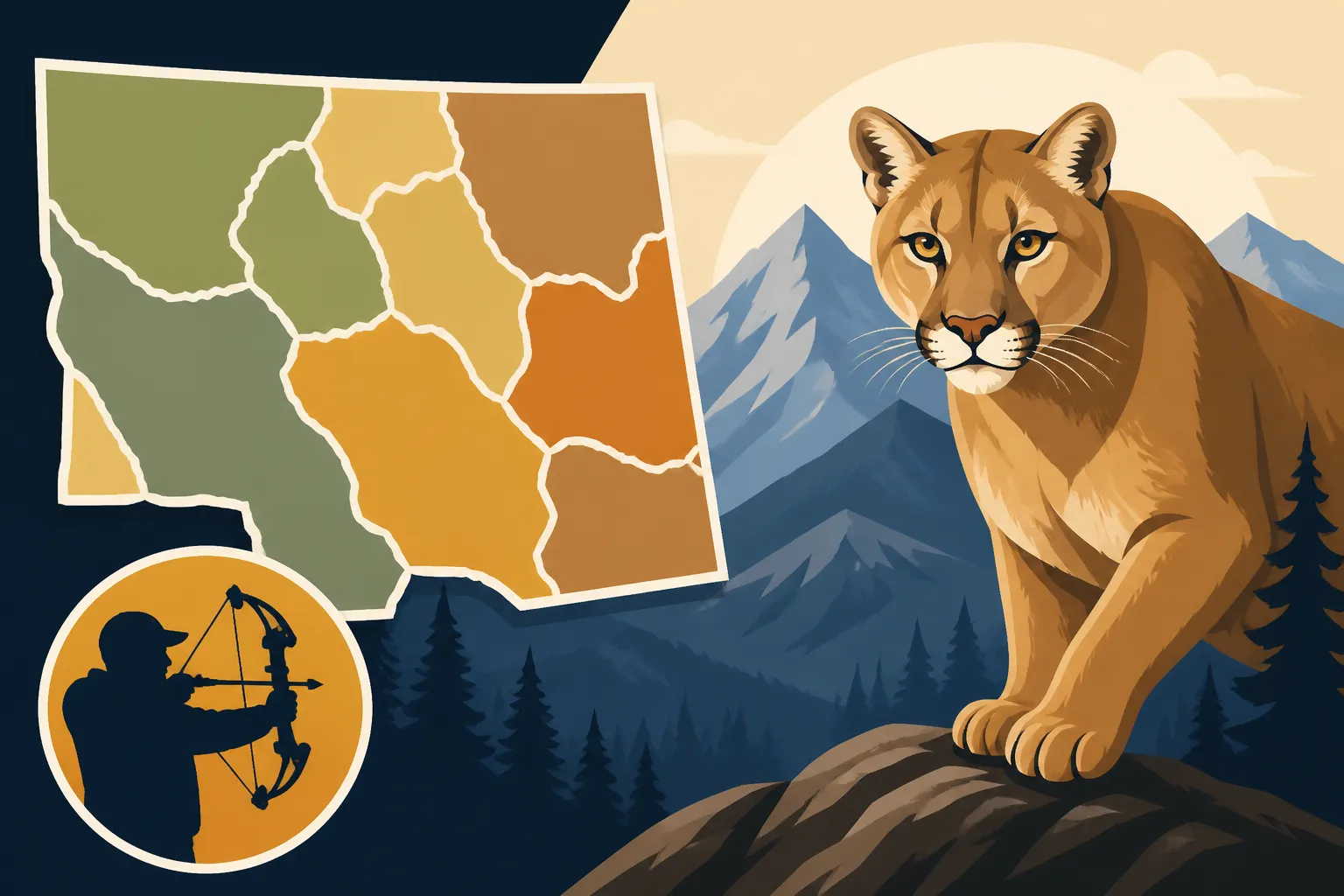
Wyoming Mountain Lion Quota Areas
For hunters who dream of pursuing mountain lions in Wyoming, the thought of a carefully planned trip getting cut short by a sudden season closure is a real and often disheartening concern. It’s a unique challenge that comes with hunting these elusive predators, and navigating the state’s complex quota system requires a clear understanding of how these seasons operate. This guide will walk you through the ins and outs of Wyoming's mountain lion quota areas, helping you prepare for a successful hunt while staying compliant with the regulations.
Understanding Wyoming's Mountain Lion Management
Hunting mountain lions in Wyoming isn't like chasing deer or elk where you generally have fixed season dates. Instead, the state manages its cougar population through a sophisticated quota system designed to maintain healthy numbers and distribute harvest pressure effectively. This approach aims to provide hunting opportunities while preventing overharvest in specific areas.
Why Quotas Are Necessary for Mountain Lion Conservation
Mountain lions, also known as cougars or pumas, are apex predators, and their populations are naturally lower density than herbivores like deer or elk. This means they are more susceptible to overharvest if not managed carefully. The Wyoming Game and Fish Department uses quotas to fine-tune harvest rates, ensuring that localized populations remain stable and viable for the long term. These quotas are set annually based on population estimates, harvest data from previous seasons, and habitat assessments. It’s a delicate balancing act to provide hunting recreation and maintain ecological balance.
Beyond population control, quotas also play a role in mitigating potential conflicts with livestock and other wildlife populations, especially in areas where lion numbers might be impacting prey species or ranching operations. The system allows for flexibility, letting the department adjust harvest levels quickly in response to changing conditions or new data.
How Quotas Differ from Fixed Big Game Seasons
Unlike big game seasons for species like elk or deer, where hunting dates are typically set months in advance and remain consistent regardless of how many animals are harvested, mountain lion seasons are dynamic. A mountain lion season opens on a specific date, but it can close abruptly once the pre-determined harvest quota for that particular hunt area (or "quota area") is met.
This means you can't just look at a calendar and assume the season will run its full course. For instance, a lion season might be scheduled from September 1 to March 31, but if the quota of, say, four male lions is reached by October 15, that season is immediately closed for male lions in that specific area. This dynamic nature adds a layer of complexity and urgency to mountain lion hunting, requiring hunters to be constantly aware of current harvest numbers. It's a key distinction from most other hunting opportunities in the state.
Navigating Wyoming's Lion Quota Areas
Wyoming is divided into numerous hunt areas, and for mountain lions, these are further defined by specific quota regulations. Understanding how these areas are delineated and what each quota entails is crucial for any hunter planning to pursue these secretive animals.
Identifying Specific Mountain Lion Quota Areas
The Wyoming Game and Fish Department (WGFD) meticulously divides the state into numerous hunt areas, and each one can have its own specific mountain lion quota. These "quota areas" are often geographically distinct, defined by rivers, roads, major drainages, or other natural and man-made boundaries. You can't just assume that a general deer or elk hunt area designation applies identically to lions; it's vital to consult the current year's hunting regulations specifically for mountain lions.
For example, you might find that while a particular mountain range is covered by one broad elk unit, it could be split into two or three different lion quota areas, each with its own separate harvest limits. These distinctions are critical because harvesting a lion in the wrong area, or in an area that has already met its quota, carries serious penalties. Maps provided by the WGFD or through mapping apps like GoHunt are invaluable for clearly understanding these boundaries. Knowing these specific areas is your first step to a legal and ethical hunt.
Understanding Male, Female, and Total Quotas
Within each mountain lion quota area, the regulations often specify not just a total harvest limit, but also distinct quotas for male and female lions. This is a critical component of conservation, as female lions are the reproductive engine of the population. Limiting the harvest of females helps ensure the long-term health and growth of the cougar population.
A typical quota might look something like this: "Total Quota: 6 lions (of which no more than 2 may be female)." This means once two female lions are harvested in that area, the female season closes, even if the total quota of six lions hasn't been met. The male season might continue until four more males are harvested, or until the overall season end date. Hunters must be able to confidently identify the sex of a mountain lion in the field, which can be challenging and often requires close observation. Misidentifying a female as a male can lead to inadvertent closure of the female quota and potential citations for the hunter. This level of detail in the quota system underscores the sophisticated management applied to these elusive animals.
| Hunt Area (Hypothetical) | Total Quota | Male Quota | Female Quota | Season Start | Current Harvest (Male/Female) | Status (Open/Closed) |
|---|---|---|---|---|---|---|
| Bear River (Area 1) | 5 | 4 | 1 | Dec 1 | 3 Male / 1 Female | Female Closed |
| Shoshone (Area 2) | 8 | 5 | 3 | Dec 1 | 2 Male / 0 Female | Open |
| Ferris Mountains (Area 3) | 3 | 2 | 1 | Dec 1 | 1 Male / 0 Female | Open |
| Laramie Range (Area 4) | 4 | 3 | 1 | Dec 1 | 3 Male / 1 Female | Both Closed |
Note: This table uses hypothetical data for illustrative purposes only. Always consult current Wyoming Game and Fish Department regulations for official information.
How Mountain Lion Quotas Work in Practice
The theory of quotas is one thing, but the reality of hunting under them involves vigilant monitoring and swift action. It’s a system that places a significant responsibility on the hunter to stay informed and react quickly to changes.
Real-Time Monitoring and Sudden Closures
One of the most anxiety-inducing aspects of hunting mountain lions in Wyoming is the real-time nature of the quota monitoring and the potential for sudden closures. The Wyoming Game and Fish Department works tirelessly to track harvests as they happen. When a hunter successfully takes a lion, they are required to report it promptly – usually within 24 hours – to the department. This harvest information is then logged, and once the quota for a specific area (or for a specific sex within that area) is met, the season closes immediately.
This isn't a "we'll let you know next week" scenario. Closures can be announced with very little warning, sometimes just a few hours' notice, via the WGFD website, press releases, and often through hunter messaging systems or phone calls to those who have purchased licenses. This means hunters need to be diligent about checking for updates, even daily, especially as the harvest numbers approach the quota limit. Many dedicated hunters utilize services or apps, like those provided by GoHunt, that can help track real-time harvest data and alert them to potential closures, giving them every possible advantage to react in time. The frustration of being in the field, maybe even trailing a lion, only to discover the season just closed, is a valid concern that many hunters share.
The Critical Role of Mandatory Harvest Reporting
The entire quota system hinges on the mandatory and timely reporting of all mountain lion harvests. When you successfully take a mountain lion, your responsibility doesn't end with tagging the animal. You are legally required to present the skull and pelt to a Wyoming Game and Fish Department official for inspection and sealing within a specified timeframe, usually within a few days of harvest. This process is crucial for collecting biological data, such as age, sex, and physical condition, which helps biologists make informed management decisions for future seasons.
More importantly for the quota system, this reporting is how the department knows how many lions have been taken in each area. Delaying reporting, or failing to report, can skew the harvest data, potentially leading to an area remaining open past its quota or causing confusion. The department takes this seriously, and failure to report a harvest can result in significant penalties. It’s a collective responsibility – every hunter’s prompt reporting contributes to the integrity of the system and helps ensure fair and sustainable hunting opportunities for everyone. This system is also how the department monitors quotas for other species like black bear, which also have specific quotas and requirements for hunters, as outlined in the article, When the Fall Bear Season Opens in Wyoming.
The Impact of Quotas on Hunter Strategy
Hunting under a quota system fundamentally changes how you approach your hunt. It introduces a dynamic element that requires adaptability, advanced planning, and often, a willingness to shift gears quickly.
Pre-Season Planning and Research
Long before you ever set foot in the field, successful mountain lion hunting under a quota system demands extensive pre-season planning and research. This isn't just about finding good habitat; it's about understanding the nuances of the quotas themselves. You'll want to dive deep into past harvest data for specific hunt areas – easily found on the WGFD website or through mapping platforms. Look at which areas consistently meet quotas quickly, and which tend to stay open longer.
Consider the timing of your hunt. Early season hunts might offer more flexibility before quotas are approached, but later in the season, you might be racing against the clock. Scouting a Wyoming Unit From Your Kitchen Table becomes even more critical when quotas are involved. Utilize online resources like the official Wyoming Game and Fish Department website and tools like the Wyoming Hunt Planner to pore over regulations, map boundaries, and historical success rates. Some hunters even call the regional WGFD offices directly to ask about local conditions and the likelihood of quick closures. This meticulous preparation can make all the difference when the season finally opens.
In-Season Adaptability and Backup Plans
The unpredictable nature of mountain lion quotas means that adaptability during the season is paramount. You simply cannot go into a hunt with only one game plan. Imagine you've spent days in a specific quota area, diligently tracking, only to check your phone and see that the female quota has been met, or even the entire area has closed. This is a common and genuinely frustrating scenario. Having backup plans is essential.
This could mean identifying secondary or tertiary quota areas that are still open, potentially in a different part of the state. It might mean being prepared to quickly shift your focus to a different species if your lion hunt closes prematurely. Hunters often keep a close eye on the Wyoming Mountain Lion Quota Areas status updates from the WGFD. For those who travel a long distance for their hunt, this flexibility often translates to having a wider net of potential hunting grounds or even considering a different type of license. Being willing and able to change your plans on short notice can turn a potentially disappointing closure into a renewed opportunity.
The Role of Technology in Quota Tracking
In today's hunting world, technology has become an indispensable tool for staying on top of mountain lion quotas. Gone are the days of relying solely on phone calls or hoping a printed regulation booklet remains accurate. Modern hunters leverage a variety of digital resources to monitor harvest numbers and closure announcements in near real-time.
Mapping applications with public land overlays and hunt area boundaries are foundational, allowing you to clearly see where one quota area ends and another begins. But for quota species, the most valuable tools are those that provide live updates from the Wyoming Game and Fish Department. Many experienced hunters rely on platforms like GoHunt, which aggregates WGFD data to provide quick access to current harvest tallies, allowing you to track how close each quota area is to its limit. They also help filter and analyze data for Mountain Lion Quotas by Hunt Area. Setting up email or text alerts directly from the WGFD is also highly recommended. This proactive use of technology empowers hunters to make informed decisions, minimize wasted time in closed areas, and maximize their chances of being in the right place at the right time before a season closure.
Important Considerations Beyond Quotas
While understanding quotas is central to mountain lion hunting in Wyoming, other crucial regulations and practical considerations are just as important for a safe, ethical, and legal hunt.
Required Licenses and Special Permits
Before you even think about quotas, you need to ensure you have the correct licenses and any necessary special permits. For mountain lion hunting in Wyoming, you'll need a valid Wyoming hunting license, typically a small game or predatory animal license, depending on residency and the specific regulations for that year. Always check the current Where the Current Wyoming Regulations Are Posted because requirements can change. Non-residents, in particular, need to be meticulous in understanding their licensing obligations, which can differ significantly from resident requirements.
Beyond the basic license, there might be additional permits or stamps required. For instance, a Conservation Stamp is generally necessary for all hunters. It’s also crucial to remember that hunting certain species in particular wilderness areas might trigger specific guide requirements, so always consult the regulations regarding Do You Need a Guide to Hunt Wyoming if you plan on hunting in designated wilderness. Failure to possess the proper documentation can result in hefty fines and the loss of hunting privileges, so take the time to acquire everything you need well in advance of your hunt.
Hound Hunting Regulations and Ethics
A significant portion of mountain lion hunting in Wyoming is conducted with the aid of hounds, a method that is both traditional and highly effective for these elusive predators. However, Hound Hunting for Mountain Lions comes with its own specific set of regulations and ethical considerations that every hunter must understand.
Wyoming has strict rules regarding the use of hounds, including requirements for licensing dogs, ensuring they are under control, and adhering to fair chase principles. For example, hunters must ensure their dogs don't harass non-target wildlife or trespass on private land. The ethical use of hounds also means understanding when to call off a chase, such as if the lion appears overly stressed or the terrain becomes too dangerous for the dogs or hunters. It's about respecting the animal and the spirit of the hunt. Additionally, knowing about rules regarding Hunting Mountain Lions Behind a Pack of Hounds is fundamental. Hunters also need to be aware of the Wyoming Mountain Lion Pelt Sealing Requirement and ensure they comply immediately after harvest.
Field Dressing and Carcass Requirements
Once a mountain lion is successfully harvested, proper field dressing and adherence to carcass requirements are critically important. Wyoming Game and Fish regulations mandate specific procedures to ensure the ethical handling of the animal and to facilitate data collection for wildlife management.
Typically, you are required to preserve the skull and pelt, often with evidence of sex naturally attached, and present it for inspection and sealing at a WGFD regional office or designated check station within a specified timeframe, usually 72 hours. This is essential for the department to collect biological samples and confirm the sex and age of the animal, which is vital for monitoring population health and verifying quota adherence. The carcass itself must be handled to prevent waste, meaning edible portions should be salvaged, though mountain lion meat is not always widely consumed. Understanding these regulations, including the proper documentation and tagging of the animal immediately after harvest, is crucial. For detailed instructions on what needs to be done, hunters should refer to the section on Mountain Lion Harvest Reporting Requirements in the current WGFD regulations. These rules ensure that every harvest contributes valuable data to the ongoing conservation efforts for Wyoming's incredible mountain lion population.
Disclaimer
Please note that hunting regulations, quotas, and season dates are subject to change. Always consult the most current Wyoming Game and Fish Department regulations before planning or undertaking any hunting activity. This guide is intended for informational purposes only and should not be considered a substitute for official legal documents or expert advice.